
Immune checkpoint inhibitors have transformed cancer treatment by restoring the immune system’s ability to recognize and attack malignant cells. Therapies targeting PD-1 and PD-L1 have improved survival across several malignancies, including lung cancer, bladder cancer, melanoma, and head and neck cancer. However, despite these advances, many patients do not achieve durable responses, and understanding the factors that influence immunotherapy effectiveness remains a major challenge in oncology.
While treatment response is often associated with tumor characteristics such as PD-L1 expression, tumor mutational burden, and immune-cell infiltration, increasing attention is being directed toward factors outside the tumor that may influence antitumor immunity. Lifestyle-related exposures, including alcohol consumption, are particularly relevant because they can affect immune function and may represent modifiable contributors to treatment outcomes.
A study published in Science Signaling on November 17, 2026, titled Alcohol Use Reduces the Efficacy of Anti-PD1 Immunotherapy by Disrupting Antitumor Immunity, by Kristen N. Gilley, Jason Garness, Ali Khan, and colleagues, investigated whether alcohol exposure could influence the effectiveness of immune checkpoint inhibitors. Combining experimental models of lung and bladder cancer with retrospective clinical data, the researchers found that alcohol impaired immunotherapy responses, altered immune-cell populations within tumors, and increased the expression of TIGIT, an inhibitory immune checkpoint receptor.
Importantly, the investigators demonstrated that blocking TIGIT could restore anti-PD-1 activity in alcohol-exposed mice, identifying a potential mechanism of resistance and a possible therapeutic strategy for future investigation.
Alcohol Exposure and Immunotherapy Outcomes: What Did the Study Find?
To investigate the relationship between alcohol consumption and immunotherapy effectiveness, the researchers used mouse models of lung squamous cell carcinoma and bladder cancer, alongside a retrospective analysis of patients treated with anti-PD-1 therapy. In the experimental models, mice received repeated moderate or heavy ethanol exposure for five weeks before tumor implantation, with exposure continuing during immunotherapy. The investigators then evaluated tumor growth, survival, treatment response, and changes in antitumor immune activity.
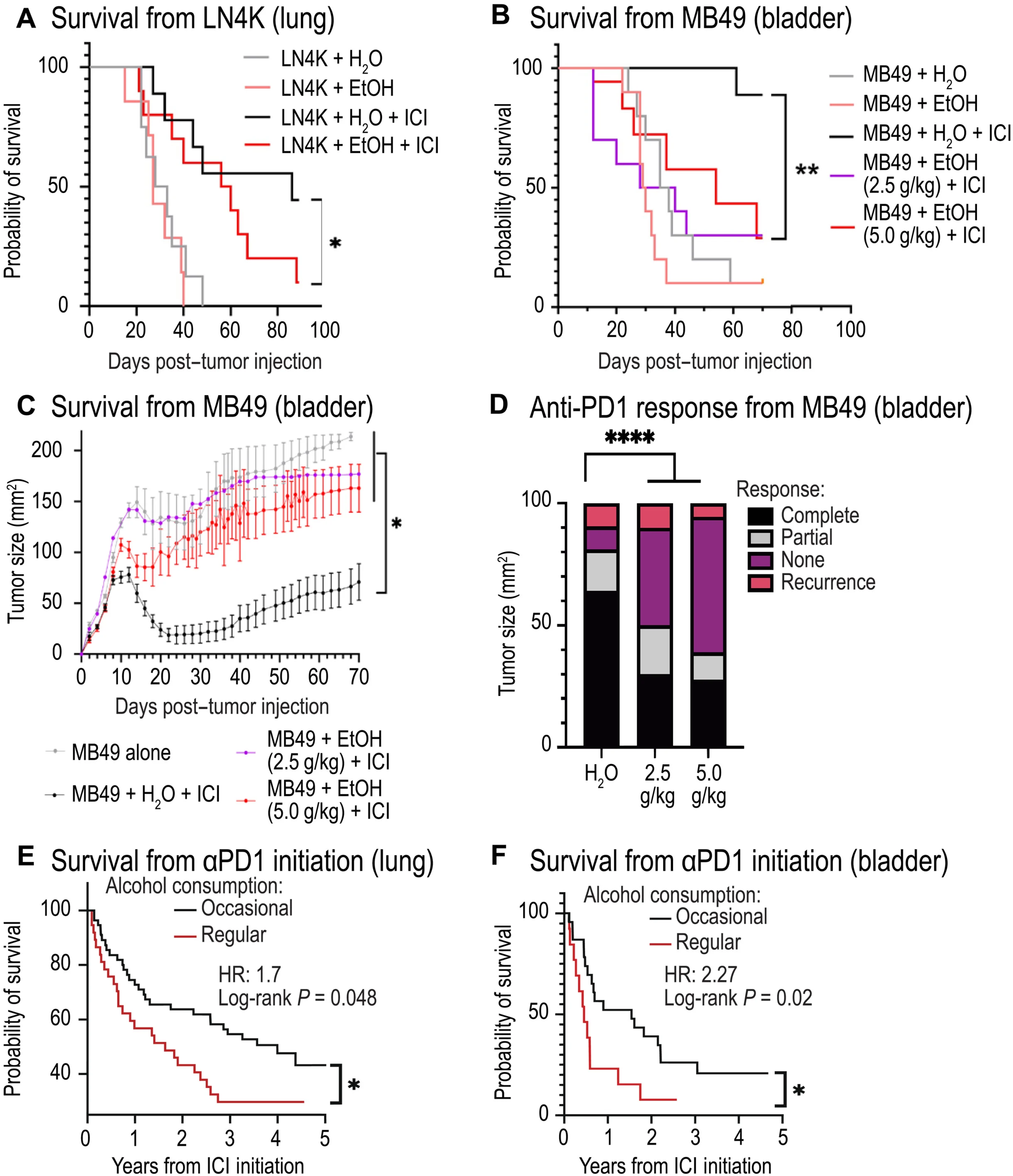
In the lung cancer model, treatment with anti-PD-L1 and anti-CTLA-4 antibodies increased median survival from approximately 30 days to 86 days in mice without ethanol exposure. However, in alcohol-exposed mice, median survival during immunotherapy was reduced to approximately 58 days, indicating a substantial loss of treatment benefit. Similar findings were observed in the bladder cancer model, where anti-PD-1 therapy produced survival rates of 88.9% in control mice, compared with less than 30% among mice exposed to either moderate or heavy ethanol regimens.
Alcohol exposure also reduced the proportion of mice achieving complete tumor responses and increased the proportion of nonresponders. Interestingly, ethanol did not significantly affect survival in the absence of immune checkpoint inhibition in these models, suggesting that its major effect was related to interference with the immune response generated by treatment rather than simply accelerating tumor progression.
The researchers then examined whether similar associations could be identified in patients receiving immunotherapy. They retrospectively analyzed individuals treated with nivolumab or pembrolizumab at the University of North Carolina between 2014 and 2018, including patients with lung cancer, bladder cancer, melanoma, and head and neck cancer. Patients were categorized according to self-reported alcohol consumption, comparing occasional drinkers who consumed less than one drink per week with regular drinkers who consumed approximately eight drinks per week on average.
Among 93 patients with lung cancer, including 55 occasional drinkers and 38 regular drinkers, regular alcohol consumption was associated with shorter survival following anti-PD-1 initiation. The association remained statistically significant in multivariable analyses that considered clinical factors such as age, sex, body mass index, and smoking status. A similar unfavorable survival pattern was observed among patients with bladder cancer, although the findings were less definitive after adjustment for smoking and other variables.
No statistically significant association was identified in the melanoma or head and neck cancer cohorts. However, these analyses were limited by small patient numbers and incomplete alcohol-use information, preventing reliable conclusions about differences between tumor types.
Together, the experimental and clinical findings suggest that regular alcohol consumption may interfere with the survival benefit of immune checkpoint inhibitors. Nevertheless, the human data remain observational and cannot establish that alcohol directly caused poorer outcomes.
How Does Alcohol Disrupt Antitumor Immunity?
To understand the biological mechanisms underlying these findings, the investigators examined immune-cell populations within the tumor microenvironment, tumor-draining lymph nodes, and spleen. Their analyses revealed that ethanol exposure altered both the number and functional characteristics of immune cells involved in tumor control.
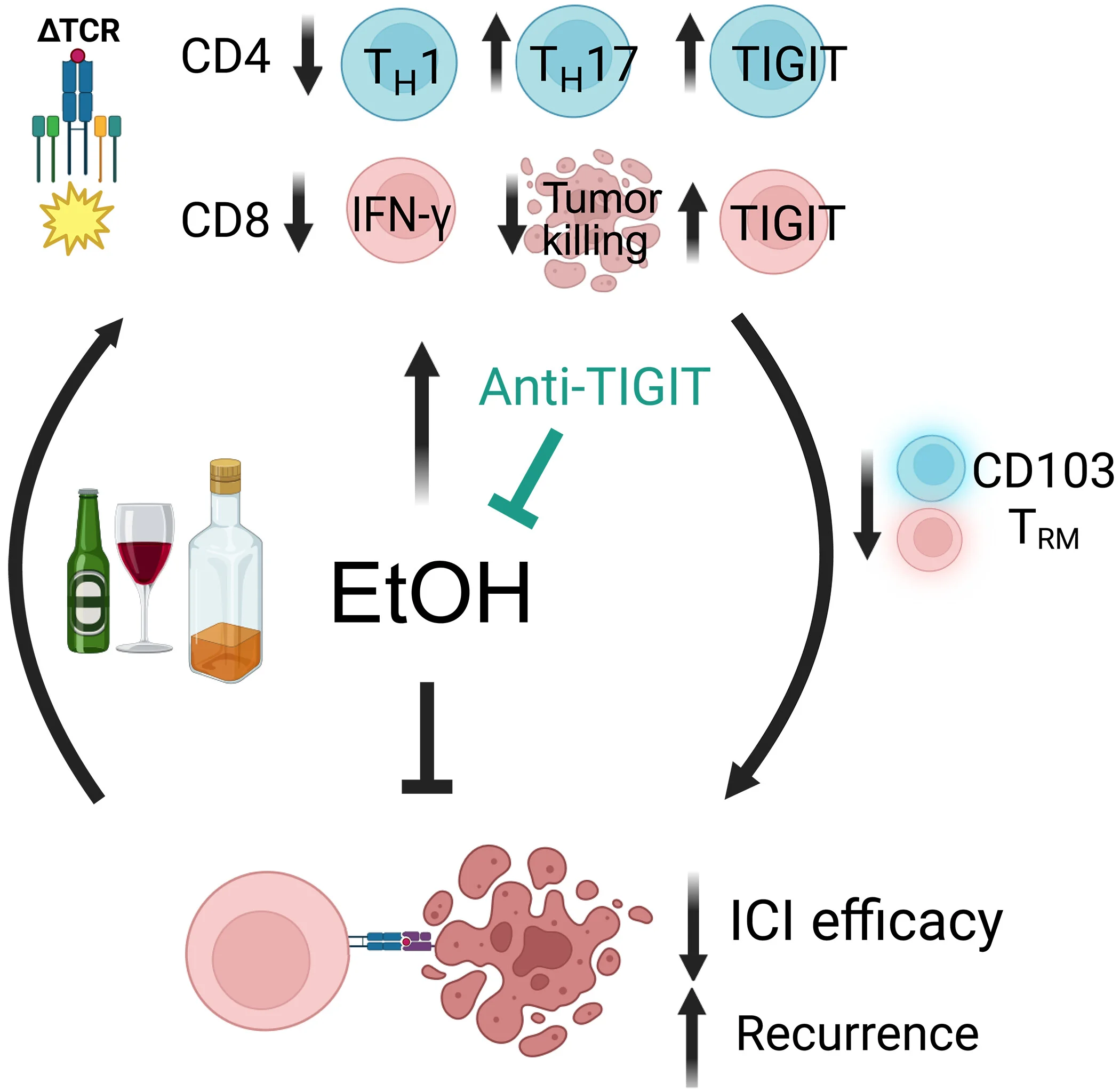
One of the most important findings was a reduction in tumor-infiltrating CD4+ and CD8+ T cells. These immune cells are essential for effective checkpoint inhibitor responses because CD4+ T cells coordinate antitumor immunity, while CD8+ T cells directly recognize and destroy malignant cells. By reducing their presence within tumors, alcohol may limit the immune system’s ability to eliminate cancer cells even when inhibitory PD-1 signaling is blocked.
Alcohol exposure also altered the differentiation of CD4+ T cells. The researchers observed a reduction in T helper 1 (TH1) cells, which support antitumor immune responses, together with an increase in TH17 cells. This shift is important because TH1-associated immune activity contributes to effective tumor recognition and cytotoxic T-cell responses, whereas TH17 signaling can have context-dependent effects and may contribute to tumor-promoting inflammation in certain settings.
Beyond changes in T-cell populations, ethanol increased markers associated with immune suppression. In the spleen, alcohol exposure was associated with increased regulatory T-cell populations and greater expression of the anti-inflammatory cytokine IL-10. These changes suggest that alcohol can influence both local antitumor immunity and systemic immune regulation, potentially creating conditions that reduce the effectiveness of checkpoint blockade.
The investigators also examined whether alcohol directly affected T-cell function. Experiments using mouse CD8+ T cells demonstrated that ethanol exposure suppressed activation pathways following T-cell receptor stimulation, reduced interferon-gamma production, and impaired the ability of cytotoxic T cells to kill target tumor cells. Similar functional changes were observed in experiments involving human CD8+ T cells, including reduced expression of activation markers CD69 and CD25 and impaired interferon-gamma responses in two of three donors.
These findings provide mechanistic support for the hypothesis that alcohol does more than change immune-cell numbers. It may also weaken the functional capacity of T cells to recognize and eliminate malignant cells, thereby limiting the effectiveness of therapies designed to restore antitumor immunity.
TIGIT Emerges as a Potential Mechanism of Immunotherapy Resistance
One of the most significant discoveries involved TIGIT, an inhibitory immune checkpoint receptor expressed on T cells and other immune populations. TIGIT contributes to immune regulation by limiting T-cell activation and can participate in the development of dysfunctional or exhausted immune states within the tumor microenvironment.
The researchers found that ethanol exposure increased TIGIT expression on both CD4+ and CD8+ tumor-infiltrating T cells. Increased TIGIT expression was also observed in splenic CD8+ T cells, while other inhibitory receptors, including PD-1 and LAG-3, did not show comparable changes in the tumor immune-cell analysis.
This finding suggests that alcohol exposure may promote an alternative inhibitory pathway that remains active despite PD-1 blockade. In other words, blocking PD-1 may not fully restore T-cell activity if alcohol-associated immune changes increase signaling through another inhibitory receptor.
To investigate whether TIGIT contributed functionally to reduced immunotherapy efficacy, the researchers combined anti-PD-1 treatment with an anti-TIGIT antibody in the bladder cancer mouse model. The addition of TIGIT blockade improved treatment responses in alcohol-exposed mice, restoring complete response rates to levels similar to those observed in control animals.
Complete responses occurred in approximately 60% of control mice and 55.5% of alcohol-exposed mice receiving the combination treatment, suggesting that TIGIT inhibition could counteract an important component of alcohol-associated immunotherapy resistance in this experimental setting.
The researchers also explored sterol regulatory element-binding protein (SREBP) signaling, a pathway involved in lipid and cholesterol metabolism that was altered following ethanol exposure. Although inhibition of this pathway with betulin produced some changes in treatment response patterns, its effects were less convincing than those observed with TIGIT blockade.
These findings identify TIGIT as a potential therapeutic target for further research. However, the results were obtained in preclinical models and do not demonstrate that adding anti-TIGIT therapy improves outcomes in patients who consume alcohol. Clinical studies would be required before such an approach could influence treatment selection.
Alcohol May Also Affect Immune Memory and Tumor Recurrence
An important feature of successful immunotherapy is the development of durable immune memory. Beyond eliminating existing tumor cells, effective antitumor immunity may help maintain long-term disease control by allowing immune cells to recognize malignant cells if they reappear.
The investigators therefore examined whether alcohol exposure affected memory T-cell populations and the risk of tumor recurrence following an initial response to anti-PD-1 treatment.
In the bladder cancer model, ethanol exposure reduced populations of tissue-resident memory T cells, including CD4+ and CD8+ subsets within tumors. These cells remain within tissues and contribute to local immune surveillance, making them potentially important for preventing tumor recurrence.
Although alcohol did not significantly alter all circulating memory T-cell populations during the early treatment period, it reduced several tissue-resident memory markers and was associated with impaired immune memory after tumor clearance.
In a separate experimental model designed to evaluate recurrence after an initial anti-PD-1 response, alcohol-exposed mice experienced more frequent spontaneous tumor recurrence and shorter survival. Additional immune profiling demonstrated reductions in certain memory CD8+ T-cell populations and dendritic cells among surviving mice.
These observations suggest that alcohol may influence not only the initial effectiveness of checkpoint inhibitors but also the durability of the immune response generated by treatment. The findings are particularly relevant because long-term disease control is a major objective of immunotherapy, although their clinical significance in patients remains to be established.
Changes in the Tumor Microenvironment Provide Further Evidence
To investigate the broader effects of alcohol exposure, the researchers performed single-cell RNA sequencing of tumors from mice receiving anti-PD-1 treatment. This analysis allowed them to examine changes in immune-cell populations, gene-expression programs, and predicted interactions between cells within the tumor microenvironment.
Alcohol exposure was associated with a reduction of more than 50% in the number of T cells and an increase of more than 20% in macrophages. Further analysis revealed substantial reductions in effector CD4+ and CD8+ T-cell populations, accompanied by increased expression of pathways associated with impaired T-cell proliferation and activation-induced cell death.
Macrophage populations also shifted toward more immunosuppressive, tumor-supporting characteristics. Ethanol exposure increased the expression of molecules such as arginase-1, migration inhibitory factor, and matrix metalloproteinases, while reducing inflammatory and interferon-associated signaling pathways in certain macrophage subsets. These changes may contribute to an environment in which tumor cells are less effectively recognized and eliminated by the immune system.
The investigators additionally examined how alcohol affected tumor-cell biology. Transcriptomic analyses of human lung tumors and experimental bladder cancer models identified changes in inflammatory signaling, mitochondrial metabolism, and pathways involved in antigen presentation. In bladder cancer cells exposed to ethanol, reduced expression of several genes involved in major histocompatibility complex function and antigen processing suggested that alcohol may impair the ability of tumor cells to present antigens to immune cells.
These findings are relevant because effective immune checkpoint inhibition depends on more than the presence of T cells. Tumor cells must also be recognized by the immune system, while the surrounding microenvironment must support immune activation rather than suppression.
Taken together, the transcriptomic and cellular findings suggest that alcohol exposure can disrupt several components of antitumor immunity simultaneously, including T-cell infiltration, cytotoxic activity, immune memory, macrophage function, and tumor antigen presentation. This multifactorial effect may help explain why alcohol-associated resistance was not completely attributable to a single immune pathway.
Clinical Implications and Important Limitations
The study raises an important question for clinical oncology: should alcohol consumption be considered when evaluating factors that may influence immunotherapy outcomes?
The findings suggest that alcohol-use history deserves greater attention in patients receiving immune checkpoint inhibitors, particularly because it is a potentially modifiable exposure. However, the available evidence is not sufficient to define a safe alcohol-consumption threshold during immunotherapy or to establish that reducing alcohol intake improves treatment response or survival.
Several limitations must be considered. The human component was a small retrospective analysis, and alcohol exposure was based on self-reported consumption, which may underestimate actual intake. Information about drinking patterns, duration of alcohol use, and changes during treatment was limited. In addition, detailed tumor immune profiling, including PD-L1 expression and tumor mutational characteristics, was unavailable for many patients because the cohort was treated between 2014 and 2018.
These limitations make it difficult to distinguish the independent effects of alcohol from other factors associated with prognosis and treatment outcomes. The association observed in lung cancer is therefore hypothesis-generating rather than definitive evidence of a causal effect in patients.
The experimental findings also require careful interpretation. The mouse models used repeated moderate-to-heavy ethanol exposure under controlled conditions, which may not fully reflect the diversity of drinking patterns, metabolism, and clinical characteristics seen in humans. Although the experimental work supports a biological effect of ethanol on antitumor immunity, the magnitude of that effect cannot be directly translated into an expected reduction in immunotherapy benefit for individual patients.
The researchers emphasize the need for prospective clinical studies that systematically assess alcohol consumption before and during immunotherapy. Such investigations should incorporate objective measures of alcohol exposure, detailed tumor immune profiling, and treatment outcomes to determine whether the observed associations are reproducible across different malignancies and immunotherapy regimens.
Future studies may also help clarify whether alcohol-associated immune changes, particularly increased TIGIT expression, identify a subgroup of patients who could benefit from additional therapeutic strategies. For now, TIGIT blockade remains an experimental finding in this context rather than a clinically validated intervention.
Conclusion
The study by Gilley and colleagues provides new evidence that alcohol exposure may interfere with the effectiveness of immune checkpoint inhibitors by disrupting several mechanisms required for successful antitumor immunity. In experimental models of lung and bladder cancer, ethanol reduced treatment responses, weakened T-cell activity, altered the tumor microenvironment, and increased tumor recurrence. A small retrospective clinical analysis also identified an association between regular alcohol consumption and shorter survival among patients with lung cancer receiving anti-PD-1 therapy.
One of the most notable findings was the identification of TIGIT as a potential mediator of alcohol-associated immunotherapy resistance. Increased TIGIT expression accompanied impaired T-cell function, while experimental TIGIT blockade restored anti-PD-1 responses in alcohol-exposed mice. These results suggest that alternative immune checkpoint pathways may contribute to treatment resistance associated with environmental and lifestyle exposures.
Although prospective human studies are needed to establish the clinical significance of these findings, the research highlights the importance of considering host-related factors alongside tumor biomarkers when evaluating immunotherapy outcomes.
As cancer immunotherapy continues to evolve, understanding how modifiable exposures influence immune function may offer new opportunities to improve treatment effectiveness and durability.
The study introduces an important possibility: factors that weaken antitumor immunity may also create new therapeutic vulnerabilities that could be targeted to overcome resistance.
Read Full Article Here
Alcohol And Breast Cancer: What This Meta-Analysis Means For Risk And Prognosis