
Immune checkpoint blockade has demonstrated substantial activity in mismatch repair deficient (dMMR) colorectal cancer, while effective immunotherapy for mismatch repair proficient (pMMR) disease remains limited. In the neoadjuvant setting, however, treatment is administered while the primary tumor and regional lymph nodes remain intact, potentially providing a different environment for immune activation.
The phase 2 NEST trial evaluated neoadjuvant botensilimab plus balstilimab in patients with non-metastatic colorectal cancer awaiting surgical resection, with a particular focus on pMMR disease.
The study, titled “Neoadjuvant Botensilimab/Balstilimab for localized mismatch repair proficient and deficient colon cancer: Results of the NEST phase 2 clinical trial,” was published on August 26, 2026, in Clinical Cancer Research.
Authors: Manish A. Shah, Erika Hissong, Mehraneh D. Jafari, Pashtoon Murtaza Kasi, Maider Astorkia, Sahrish Khan, Casey Owens, Zhengming Chen, Heather Yeo, Fabio Socciarelli, Sandipto Sarkar, Alana Nguyen, Despina Siolas, Allyson Ocean, Kelly Garrett, Lea Lowenfeld, Alessio Pigazzi, Preethi Guniganti, Sanjay Patel, Doron Betel, and Manuel Hidalgo.
The NEST Trial
NEST (NCT05571293) was a single-center, non-randomized, open-label phase 2 exploratory study conducted at Weill Cornell Medicine/New York-Presbyterian Hospital in New York.
Patients were adults with non-metastatic, histologically confirmed adenocarcinoma of the colon awaiting surgical resection. Patients with rectal cancer could also be eligible if radiotherapy was not planned and upfront resection was recommended after multidisciplinary review.
Tumor mismatch repair status was assessed by immunohistochemistry for MLH1, MSH2, MSH6, and PMS2. The initial NEST-1 cohort, Cohort A, evaluated botensilimab 75 mg intravenously on day 1 and balstilimab 240 mg intravenously on days 1 and 15, followed by planned surgical resection 1–6 weeks after the second balstilimab dose.
Following encouraging preliminary safety and clinical activity, the study was amended as NEST-2. Cohorts B and C received botensilimab 75 mg on day 1 and balstilimab 240 mg on days 1, 15, 29, and 43, followed by resection 1–6 weeks after the fourth planned balstilimab dose. Cohort B enrolled patients with pMMR disease, while Cohort C enrolled patients with dMMR disease.
The primary objectives were safety, feasibility based on delays to surgery, and pathologic response. Secondary and exploratory analyses included circulating tumor DNA and changes in the tumor immune microenvironment.
From March 17, 2023, to May 3, 2024, 26 patients consented to the study. Twenty-four were eligible and received botensilimab plus balstilimab. Because two patients had synchronous primary tumors, the safety population included 24 patients and 26 tumors were evaluated for efficacy. Of these tumors, 22 were pMMR and four were dMMR.
The median patient age was 64 years. Fourteen patients, or 58%, had radiologically locally advanced tumors classified as T3 or higher, and 10 patients, or 42%, had radiographically discernible lymph nodes.
Steven O’Day, Chief Medical Officer of Agenus, said:

“NEST provides important context for Agenus’ strategic focus on neoadjuvant BOT+BAL in MSS colon cancer. With longer follow-up now extending beyond two years across both NEST cohorts, the findings show BOT+BAL can generate deep tumor responses and immune activation before surgery, without delaying surgery. These results strengthen the rationale for our phase 3 ROBBIN trial and for evaluating BOT+BAL in a curative-intent setting, where the goal is to reduce the risk of recurrence and improve long-term outcomes.”
Understanding BOT/BAL
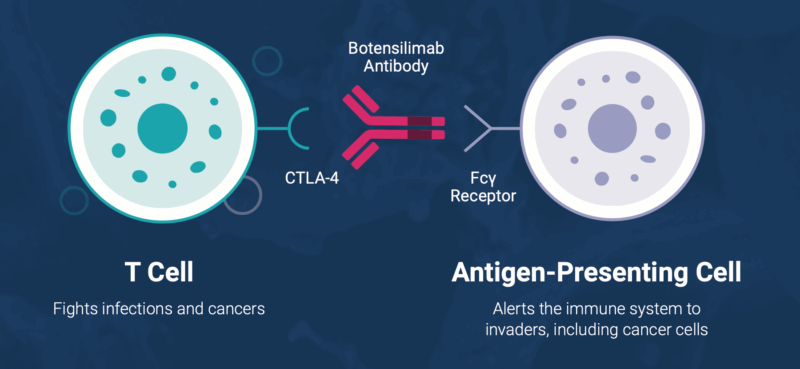
Botensilimab is a human multifunctional, Fc-enhanced anti-CTLA-4 antibody designed to boost both innate and adaptive antitumor immune responses. It primes and activates T cells, reduces intratumoral regulatory T cells, activates myeloid cells, and induces durable memory responses.
Balstilimab is a fully human immunoglobulin G4 (IgG4) monoclonal antibody designed to block PD-1 from interacting with its ligands, PD-L1 and PD-L2.
Approximately 1,300 patients have been treated with botensilimab and/or balstilimab in phase 1 and phase 2 clinical trials, while balstilimab has been evaluated in more than 900 patients.
Pathologic Responses in pMMR Disease
In a prespecified secondary analysis combining pMMR tumors from Cohorts A and B, 13 of 22 tumors achieved more than 50% pathologic tumor response, corresponding to a response rate of 59% (95% CI, 36%–79%).
Major pathologic response, defined as at least 90% tumor regression with no more than 10% residual viable tumor cells, occurred in nine of 22 pMMR tumors, for an MPR rate of 41% (95% CI, 21%–64%). Seven of 22 pMMR tumors achieved a pathologic complete response, corresponding to a pCR rate of 32% (95% CI, 14%–55%).
In Cohort A, two of seven pMMR tumors achieved MPR, for a rate of 29% (95% CI, 4%–71%). In Cohort B, seven of 15 pMMR tumors achieved MPR, corresponding to 47% (95% CI, 21%–73%).
The study was not designed to compare the two treatment schedules. The investigators therefore cautioned that it remains unclear whether the numerical difference in pathologic response between NEST-1 and NEST-2 was related to the additional balstilimab doses or the longer time before surgery.
Molecular annotation was available for all 22 pMMR tumors. The two tumors with KRAS G12D mutations and the single tumor with a BRAF V600R mutation showed no pathologic response. Among the remaining 19 tumors, three had no pathologic response, with a reported p value of 0.048. Given the very small numbers, the authors emphasized that these molecular observations require further evaluation and validation.
Responses in dMMR Tumors
All four dMMR tumors achieved a major pathologic response, corresponding to an MPR rate of 100% (95% CI, 40%–100%). Two tumors achieved pathologic complete responses. The other two demonstrated 99% and 98% treatment effect, respectively, with only small clusters of residual cancer cells identified within mucin pools.
Surgery and Safety
The investigators reported that neoadjuvant botensilimab plus balstilimab was feasible and did not delay planned surgery in any patient.
The median time from treatment initiation to surgery was 29 days, ranging from 21 to 37 days, in Cohort A and 55 days, ranging from 21 to 104 days, in Cohorts B and C. All patients underwent minimally invasive resection, either laparoscopically or robotically, with one conversion to open surgery. Across all cohorts, the median hospital stay was two days.
No grade 4 treatment-related adverse events, treatment-related deaths, or study discontinuations were observed. In Cohort A, one patient experienced grade 2 diarrhea/colitis that resolved with TNF-alpha inhibition. Two of 10 patients required high-dose steroids, and one required TNF-alpha inhibition.
In Cohorts B and C, five of 14 patients experienced immune-mediated toxicity. Diarrhea/colitis occurred in five patients, including two grade 2 and three grade 3 events. One patient also developed grade 2 myositis/myocarditis requiring high-dose steroids and TNF-alpha inhibitor therapy.
Nine of the 14 patients in Cohorts B and C received all planned treatment. Three received three doses of balstilimab because treatment was held for colitis, while two received two doses because treatment was held for colitis in one patient and myositis in the other. The authors noted that the greater number of immune-mediated adverse events observed with the longer NEST-2 schedule raises questions about how many immunotherapy doses are feasible in the neoadjuvant setting.

ctDNA Clearance and Early Disease Control
Circulating tumor DNA was evaluated in 15 patients using the tumor-informed Signatera assay. Nine patients had ctDNA collected at baseline before treatment, and all nine were ctDNA-positive. A presurgical sample collected within 30 days of surgery was available for eight of these patients, and seven, or 88%, had cleared their ctDNA before resection.
ctDNA remained undetectable following resection in all patients evaluated. At the March 31, 2026 data cutoff, no patients had experienced colorectal cancer recurrence. Median follow-up was 32.2 months for Cohort A and 23.5 months for Cohorts B and C. The authors cautioned that the sample size and duration of follow-up remain insufficient to establish the durability of efficacy.
Changes in the Tumor Immune Microenvironment
Exploratory analyses also examined how treatment affected the tumor immune microenvironment. In matched baseline and resection specimens, treatment was associated with a numerical reduction in regulatory T-cell density and an approximately 13-fold increase in CD8-positive T-cell density.
CD8-positive T cells increased from 5% of the immune infiltrate at baseline to 30% in resection specimens. The CD8/Treg ratio increased from 0.286 at baseline to 6.20 at resection, representing an approximately 21-fold increase.
Differences were also observed between responding and non-responding tumors at the time of resection. Overall immune-cell density was 3.1 immune cells/μm in responding tumors compared with 0.52 immune cells/μm in non-responding tumors (p=0.0048).
CD8-positive T-cell density was 19-fold higher in responding tumors than in non-responding tumors (p=0.022). B-cell density was numerically 59-fold higher in responding tumors, although this difference did not reach statistical significance (p=0.07).
While Treg density was higher in responding tumors, Tregs represented a smaller proportion of the total immune infiltrate in responders than in non-responders, at 15% versus 31%. The resulting CD8/Treg ratio was 5.27 in responding tumors compared with 0.52 in non-responding tumors.
Spatial analyses further showed differences in the organization of immune cells. Responding tumors were characterized by immune-enriched cellular communities and greater colocalization of immune populations, including CD8-positive T cells and B cells. In non-responding tumors, immune cells remained more isolated within stromal and epithelial compartments.
The investigators interpreted these findings as evidence of treatment-associated remodeling of the tumor immune microenvironment and activation of an organized antitumor immune response in tumors showing pathologic response.
Limitations and Next Steps
The study had several important limitations. The sample sizes of both NEST-1 and NEST-2 were small, and follow-up remained relatively short, meaning that the durability of efficacy with botensilimab plus balstilimab is not yet known.
The study was also underpowered to determine the optimal duration of neoadjuvant therapy or the optimal number of immunotherapy treatments before surgical resection.
In addition, the molecular observations, including the absence of pathologic response in the two tumors with KRAS G12D and the single tumor with BRAF V600R, were based on very small numbers and require further validation.
Despite these limitations, NEST provides preliminary evidence of the safety, feasibility, and activity of neoadjuvant botensilimab plus balstilimab in localized colorectal cancer.
Among pMMR tumors, 41% achieved a major pathologic response and 32% achieved a pathologic complete response. These findings, together with presurgical ctDNA clearance and treatment-associated remodeling of the tumor immune microenvironment, support further development of botensilimab plus balstilimab in the neoadjuvant treatment of pMMR colorectal cancer.
The full article is available in Clinical Cancer Research.
Find more videos on OncoDaily YouTube TV.