
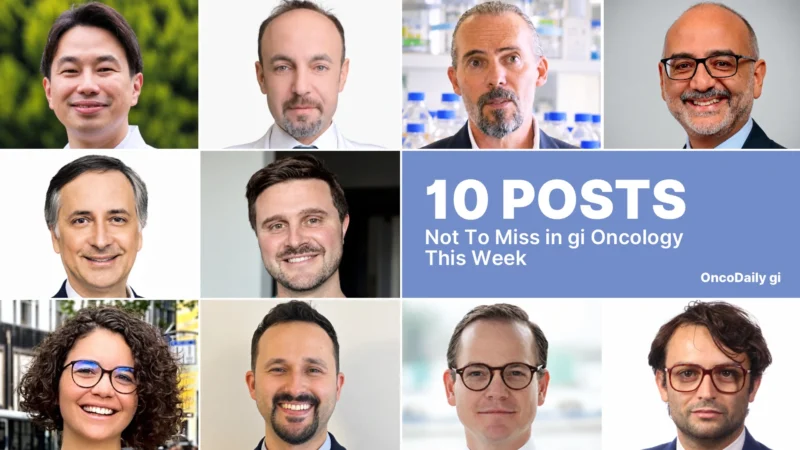
The third week of September brought together important updates across GI oncology, with expert posts covering gastric and gastroesophageal junction cancer, pancreatic cancer, colorectal cancer, colon cancer, hepatocellular carcinoma, and esophageal cancer.
This week’s selection includes updates on CLDN18.2 and PD-L1 biomarker-informed treatment selection in advanced gastric and gastroesophageal junction cancer, the POLAR–MDF–TIE research arc in HRD pancreatic cancer, ctDNA tumor fraction as a prognostic factor in colorectal cancer rechallenge, a comprehensive review of esophageal cancer, and ctDNA in colorectal cancer.
Other posts highlight the phase 2 PEGASUS trial of ctDNA-guided escalation or de-escalation of adjuvant therapy in high-risk stage II and stage III colon cancer, integrated treatment strategies and KRAS inhibitors in pancreatic cancer, indirect comparisons of first-line combination therapies in hepatocellular carcinoma, recent NCCN updates in GI oncology, and TROP2 expression in gastric and gastroesophageal junction cancer.
Together, these posts reflect the continued evolution of GI oncology across biomarker-driven treatment selection, ctDNA-guided strategies, immunotherapy, targeted therapy, molecular profiling, treatment sequencing, clinical guidelines, and multidisciplinary care.
Florian Lordick, MD, FESMO — Oncologist; Professor of Medicine at University of Leipzig; Head of Medical Oncology; Director of the Comprehensive Cancer Center Central Germany | Germany
“How should we choose first-line treatment when CLDN18.2 and PD-L1 coexist in advanced gastric cancer?
I am pleased to share our new publication in ESMO Open, led by Kohei Shitara and Sun Young Rha, addressing this increasingly relevant clinical question.
In this Bayesian network meta-analysis, we compared zolbetuximab plus chemotherapy with immune checkpoint inhibitor–based regimens across different PD-L1 CPS levels in HER2-negative advanced gastric and gastroesophageal junction adenocarcinoma.
An interesting picture emerges. At PD-L1 CPS 1–<10, zolbetuximab showed efficacy that was similar or numerically favorable compared with ICI-based approaches. At CPS ≥10, the balance shifted toward immune checkpoint inhibition in the primary analysis.
Importantly, CLDN18.2 and PD-L1 represent biologically distinct and potentially complementary therapeutic pathways. Of course, these are indirect comparisons, not head-to-head evidence, and the methodological limitations of a network meta-analysis need to be kept firmly in mind. Nevertheless, I believe the study adds an important piece to the evolving concept of biomarker-informed treatment selection in gastric cancer.
Rather than asking which biomarker ‘wins,’ the future may increasingly be about understanding how CLDN18.2, PD-L1, HER2, and MSI jointly define the optimal therapeutic strategy.
And perhaps the next step is already obvious: how can we best combine these approaches? Many thanks to Kohei Shitara, Sun Young Rha, Samuel Klempner, and all co-authors for this excellent collaboration.”
Kohei Shitara — Department of Gastrointestinal Oncology, National Cancer Center Hospital East | Japan
“Pleased to share our study of TROP2 expression in gastric and gastroesophageal junction cancer, now published.
TROP2 was widely expressed, including in tumors lacking established actionable biomarkers.
Results from phase 3 of sac-TMT are awaited.”
Ida Taglialatela — Medical Oncologist; PhD Candidate at Università del Piemonte Orientale | Italy
“Circulating tumor DNA-guided de-escalation or escalation of adjuvant therapy in high-risk stage II and stage III colon cancer: the phase 2 PEGASUS trial, published in Nature Cancer.”
Maen Abdelrahim — Professor of Medicine, Chief of GI Medical Oncology, Medical Director of CCAT Phase I Center, Houston Methodist | United States
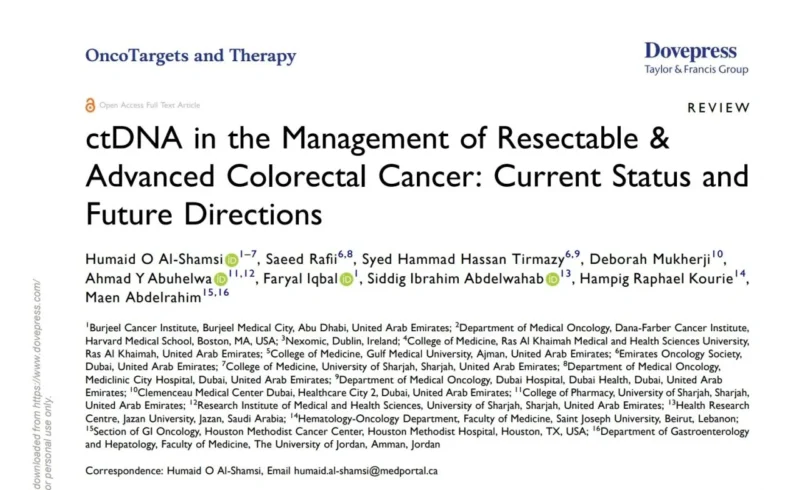
“It was a pleasure to be part of this comprehensive review on ctDNA and colorectal cancer.
Congratulations to Prof. Humaid Al-Shamsi and all colleagues.”
Nicholas Hornstein, MD, PhD — Gastrointestinal Medical Oncologist and Assistant Professor at Northwell Health Cancer Institute | United States
“GI Oncology saw some major changes in NCCN this week.
First, daraxonrasib is officially in the pancreatic cancer guidelines.
In RASolute-302 in previously treated metastatic pancreatic ductal adenocarcinoma, overall survival was 13.2 versus 6.6 months, with an HR of 0.40, and progression-free survival was 7.3 versus 3.5 months, with an HR of 0.45.
Daraxonrasib is listed as preferred, Category 1, for subsequent therapy.
Importantly, it also appears in the first-line setting as ‘useful in certain circumstances,’ although as Category 2B for fit patients.
So, we are not replacing FOLFIRINOX or NALIRIFOX yet, but a RAS inhibitor is now a standard treatment for pancreatic cancer.
Second, zanidatamab plus tislelizumab is now in NCCN for HER2-positive gastroesophageal adenocarcinoma.
Zanidatamab plus tislelizumab plus chemotherapy was compared with trastuzumab plus chemotherapy, with PFS of 12.4 versus 8.1 months, HR 0.63, and OS of 26.4 versus 19.2 months, HR 0.72.
NCCN now lists zanidatamab-based therapy as a preferred first-line treatment, Category 2A.
Category 2A still means uniform NCCN panel consensus that the treatment is appropriate, but it reflects lower-level evidence than Category 1.
Two possible reasons may explain the Category 2A designation: no U.S. patients were enrolled, and the control arm did not include PD-1 inhibition.
HERIZON compared against trastuzumab plus chemotherapy, while the current U.S. standard for PD-L1 CPS ≥1 is pembrolizumab plus trastuzumab plus chemotherapy.
In KEYNOTE-811, among patients with CPS ≥1, PFS was 10.9 months and OS was 20.1 months.
In HERIZON, PFS was 12.4 months and OS was 26.4 months.
HERIZON’s own trastuzumab plus chemotherapy control arm had an OS of 19.2 months.
These data show a real advance in HER2 therapy.
If using zanidatamab-based therapy, diarrhea should be monitored.
NCCN specifically recommends antidiarrheal prophylaxis with zanidatamab and avoiding bolus 5-FU.
Grade ≥3 diarrhea was 24.8% with the quadruplet, but it can be controlled and is mainly seen during the first few treatments.
Third, MATTERHORN, FLOT plus durvalumab, was upgraded from Category 2B to 2A for PD-L1 <1 and diffuse-type EGJ adenocarcinoma.
In the overall MATTERHORN population, 2-year EFS was 67.4% versus 58.5%, HR 0.71, with pCR of 19.2% versus 7.2%.
It is good to see forward progress in GI Oncology.”
Wungki Park, MD, MS — Gastrointestinal Medical Oncologist at Memorial Sloan Kettering Cancer Center | United States
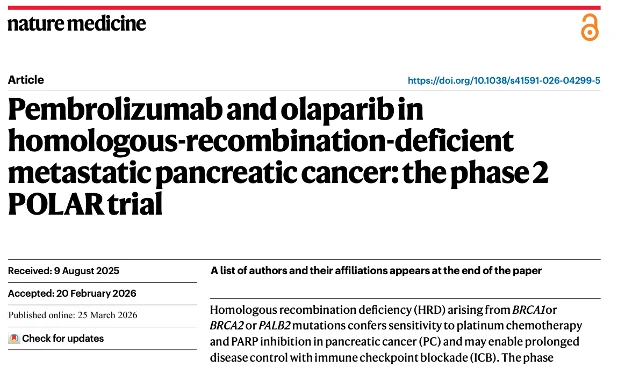
“The arc: POLAR – MDF – TIE.
Pancreatic cancer is profoundly resistant to immune checkpoint inhibitors.
Yet, the POLAR trial of pembrolizumab plus olaparib showed that a subset of patients, especially those with HRD tumors, including gBRCA2/1m or gPALB2m, can achieve remarkably durable control.
That led us to two questions:
What makes these tumors immunogenic?
What makes that immunity actually work?”
Davide Ciardiello — MD, PhD, Medical Oncologist at the Division of Gastrointestinal Medical Oncology and Neuroendocrine Tumours, European Institute of Oncology, IEO, IRCCS | Italy
“The identification of prognostic factors to stratify the risk of each patient and optimize treatment is one of the main areas of cancer research.
To date, clinical, laboratory, and score-based factors have constituted the main biomarkers, each with a distinct weight depending on the pathology and setting.
In our latest work, we evaluated another parameter: ctDNA burden, or tumor fraction, assessed by extended genomic profiling tests.
Interestingly, in pretreated, molecularly negative, hyperselected colorectal cancer patients who received cetuximab with or without avelumab rechallenge, tumor fraction was the most important prognostic factor.
In the multivariable analysis for PFS and OS, among the numerous factors explored, tumor fraction was the only variable that maintained statistical significance.
This is the first evidence in the context of a prospective interventional study, CAVE-2 GOIM, and should be confirmed in further studies.
In this scenario, the ROMANCE study, NCT07381764, will provide the answer on the role of tumor fraction.”
Jesper Lagergren — Professor of Surgery at Karolinska Institutet | Sweden
“Our review of esophageal cancer was published today in New England Journal of Medicine.
It covers epidemiologic characteristics, risk factors, prevention, and clinical management of this tumor.”
Giovanni Marchegiani — MD, PhD, Academic Pancreas Surgeon at the Hepato Pancreato Biliary (HPB) and Liver Transplant Surgery of the Padova University Hospital | Italy
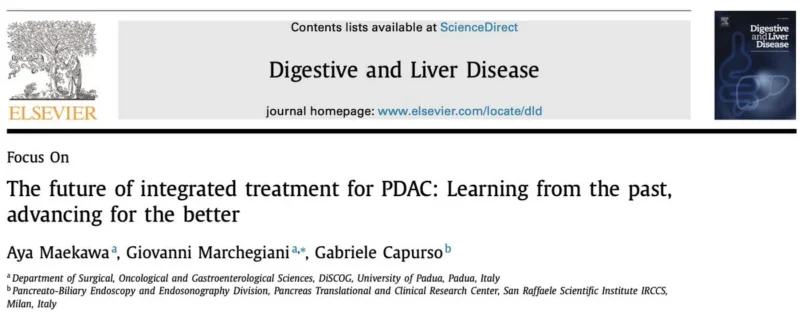
“The future of integrated treatment for pancreas cancer.
FOLFIRINOX and gemcitabine plus nab-paclitaxel have shaped modern systemic therapies.
Minimally invasive surgery and vascular resection expanded surgical options.
But the future will speak the language of KRAS inhibitors.”
Hong Jae Chon — Medical Oncologist at CHA Bundang Medical Center, CHA University; Director of Cancer Center, CHA Bundang Medical Center | South Korea
“No head-to-head trials compare first-line HCC combination therapies. Researchers reconstructed patient data from Kaplan-Meier curves using IPDfromKM to rank them indirectly.
A new analysis in World Journal of Gastrointestinal Pharmacology and Therapeutics included eight phase 3 randomized controlled trials. Compared with sorafenib, camrelizumab plus rivoceranib had the best HR, 0.61, while cabozantinib plus atezolizumab showed no benefit.
Compared with lenvatinib, nivolumab plus ipilimumab and pembrolizumab plus lenvatinib showed modest, similar gains. Comparator choice, sorafenib versus lenvatinib, shapes the results.
This is a descriptive, not causal, ranking.”
Find out 10 Must-Read Posts in GI Oncology from the second week of September on OncoDaily.