The last week of September brought together important updates across GI oncology, with expert posts covering pancreatic cancer, biliary tract cancer, colorectal liver metastases, colorectal cancer, esophageal cancer, and gastroesophageal cancer.
This week’s selection includes updates on practical management of daraxonrasib-related side effects, the impact of targeted therapies in advanced biliary tract cancer after chemoimmunotherapy failure, irreversible electroporation for colorectal liver metastases, recent advances in cholangiocarcinoma treatment, and the integration of genomics into colorectal cancer surgical decision-making.
Other posts highlight first-line trastuzumab plus nivolumab with gemcitabine and cisplatin in HER2-positive advanced biliary tract cancer, the PANXEON blood-based assay for pancreatic cancer detection and interception, splenic hilum nodal involvement in left-sided pancreatic cancer, endoscopic submucosal dissection for high-risk T1 adenocarcinoma arising from a cervical esophagus gastric inlet patch, and biomarker-defined benefit from FLOT plus nivolumab in metastatic gastroesophageal cancer.
Together, these posts reflect the continued evolution of GI oncology across targeted therapy, toxicity management, interventional oncology, surgical decision-making, liquid biopsy, early detection, biomarker-driven treatment, organ preservation, and multidisciplinary care.
Shubham Pant — Professor, Department of Gastrointestinal Medical Oncology and Investigational Cancer Therapeutics, Division of Cancer Medicine, The University of Texas MD Anderson Cancer Center | United States
“‘My patient is starting daraxonrasib/Rasonque. What should I watch for, and how do I manage the side effects?’
Over the past several months, I have heard some version of this repeatedly in emails, texts, and hallway questions from colleagues across the country and around the world.
It is a great question, and it shows how quickly RAS-targeted therapy is moving from trials into real-world practice.
My colleague Tanios Bekaii-Saab and I, along with Open Medicine, put together a simple, practical algorithm for managing daraxonrasib side effects: what to look for, when to intervene, and how to keep patients on therapy safely.
The goal is to make this information easy to find and easy to use, whether at a major cancer center, a community practice, or anywhere in the world.
This is a living document. As more data on side effects emerges, we will keep updating it.
This algorithm is meant as a practical guide, not a substitute for clinical judgment. Every patient is different, so management should be tailored to the individual patient.”
Arndt Vogel — Professor of Gastrointestinal Oncology, Department of Gastroenterology, Hepatology and Endocrinology, Hannover Medical School | Germany
“Off the press:
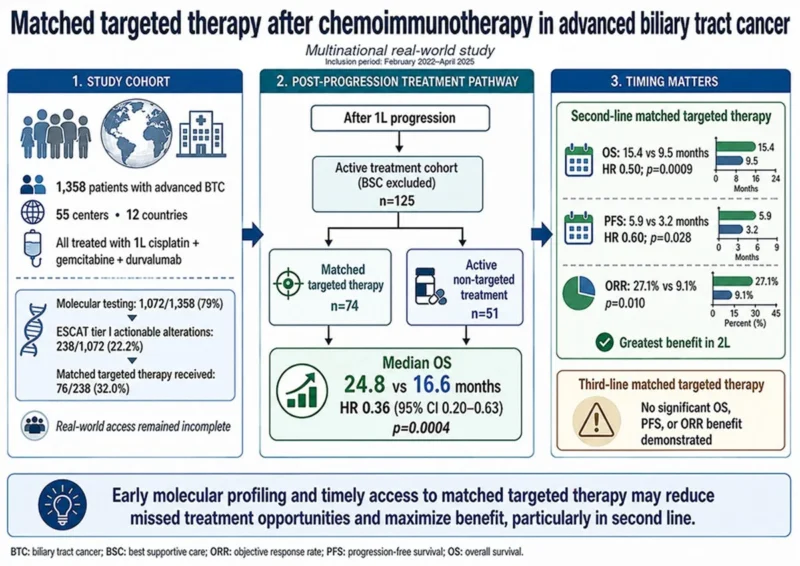
Overall and line-specific impact of targeted therapies in advanced BTC after chemoimmunotherapy failure, published in the Journal of Hepatology.
Continuous evidence for targeted therapies in BTC. We need to make sure that these therapies are accessible to all patients.”
Susan van der Lei — MD, PhD Candidate in Interventional Radiology and Oncology, Amsterdam UMC; Research Associate at Baptist Miami Cancer Institute; Co-founder of MedPeers | Netherlands
“Turning off the heat
That is the title of the final part of my PhD thesis and perfectly captures the idea behind this study.
When thermal ablation reaches its limits, irreversible electroporation may offer a way forward.
Our transatlantic multicenter study on IRE for colorectal liver metastases is now published in CardioVascular and Interventional Radiology.
Across three expert centres: Amsterdam UMC, King’s College London and Miami Cancer Institute, we evaluated long-term outcomes of 162 patients with 219 CRLM, specifically tumours considered unsuitable for resection or thermal ablation because of their challenging anatomical location.
A few findings that stand out:
• Tumour size matters: for CRLM ≤3 cm, local tumour progression-free survival was 77.5% at 1 year and 60.3% at 3 years.
• Repeat local treatment matters too: despite local recurrence, eventual local control reached 94.8% at 3 years.
• Outcomes were consistent across the three centres.
• Median hospital stay was only 1 day.
The value of IRE lies where heat or the knife cannot safely go; close to major vessels, bile ducts and other critical structures.
A great transatlantic collaboration, and important long-term evidence for expanding the local treatment toolbox for patients with CRLM.
Thanks to all co authors Madelon Dijkstra, Nuran Seneviratne, Elizabeth M Ruiz, Danielle Vos, Dr Praveen Peddu, Govindarajan Narayanan, and Martijn Meijerink.”
Fen Saj — Research Fellow, Medical Oncologist, MD Anderson Cancer Center | United States
“Happy to share our review, now published in JCO Journals, JCO Oncology Practice, with Camila Xavier, Lipika Goyal, Milind Javle, and Shubham Pant.
Cholangiocarcinoma is rising in incidence and remains highly challenging to treat. In this review, aimed at practicing clinicians, we focus on the latest advances, including newer targeted therapy options and locoregional treatment approaches.”
José Perea García — Colorectal Surgeon. Associate Professor. Researcher. Coordinator of GEOCODE and SECOC Consortia | Spain
“Pleased to share our new article in the European Journal of Surgical Oncology:
‘Molecular surgery in colorectal cancer: Integrating genomics into operative decision-making,’ co-authored with Prof. Antonino Spinelli.
Precision oncology has progressively transformed systemic treatment in colorectal cancer, but surgical decision-making is still largely based on anatomy, stage and resectability.
In this review, we propose the concept of Molecular Surgery: integrating tumour biology, germline information, immune response and liquid-biopsy biomarkers into four fundamental surgical decisions — whether to operate, when to operate, how much to resect, and how to tailor surveillance and reintervention.
From organ preservation and neoadjuvant immunotherapy to genotype-guided surgery in hereditary CRC and ctDNA-defined molecular residual disease, the aim is not to replace anatomy or surgical judgement, but to complement them with biological information.
Ultimately, the goal is to operate on the right patient, at the right time, with the right extent, and with the right postoperative strategy.
Moving ahead with the surgical management of Colorectal Cancer in the era of molecular and precision medicine.
Many thanks to Antonino Spinelli for sharing this work and this vision.”
Woochan Hwang — Resident Doctor at Mount Auburn Hospital | United States
“Happy to share that the HERBOT trial for HER2-positive Biliary Tract Cancer is now published in Nature Medicine! Many thanks to Prof. Choong-kun Lee and Chang Ho Ahn for providing the opportunity to participate in this study.
Biliary tract cancer carries a poor prognosis with first line chemo-IO, durvalumab or pembrolizumab plus gemcitabine/cisplatin, regimen reporting a median PFS of approximately 7 months and OS just exceeding 1 year. HER2 overexpression or amplification occurs in about 15% of BTCs and is an actionable target. However, HER2-directed therapy has so far been developed mainly in later lines.
HERBOT evaluated trastuzumab plus nivolumab plus gemcitabine/cisplatin as first-line therapy in HER2-positive advanced BTC, n = 40. The primary endpoint was met: ORR 55%, 1 CR and 21 PR, DCR 95%, median PFS 10.6 months and median DOR 12.6 months. Median OS was not reached at a median follow-up of 17.0 months.
During my time at Lunit Oncology, I contributed to the preplanned biomarker analysis using AI-based WSI analyzers, Figure 4, which provided continuous HER2 scoring and tumor immune phenotyping:
• HER2 3+ tumor cell proportion. 15 of 40 patients had ≥10% HER2 3+ tumor cells across the whole slide. Their ORR was 80%, compared with 40% for those below 10%, P = 0.0138. Median PFS was 17.4 vs 10.5 months, HR 0.57, 95% CI 0.23–1.34.
• Conventional IHC 3+ status was similarly frequent in patients with PFS <6 months and ≥12 months, 88.9% vs 81.8%. However, two-thirds of the short-PFS group had <10% HER2 3+ tumor cells on AI analysis.
• Immune phenotype. Median PFS was not reached for immune-inflamed tumors, 12.6 months for immune-excluded and 7.5 months for immune-desert. All inflamed tumors fell in the <10% HER2 3+ group, which means strong oncogenic HER2 signaling may not necessarily confer immunogenicity.
While we need further validation, the findings suggest that conventional categorical HER2 classification may not fully capture the patients who could benefit from this first-line regimen. The interaction between HER2 expression and immune phenotype is also of interest as it may have implications in combination regimens.
A similar pattern was recently described in NSCLC, where HER2-overexpressing tumors showed a less inflamed microenvironment, more so with higher HER2 3+ proportions, DOI: 10.1200/JCO.2026.44.16_suppl.8545.
Further comparison with other HER2-targeted approaches with data from DESTINY-BTC01, T-DXd, and HERIZON-BTC-302, zanidatamab, would be something to look out for.”
Ajay Goel — Professor and Founding Chair, Dept. of Molecular Diagnostics and Experimental Therapeutics; Associate Director of Basic Sciences, City of Hope Comprehensive Cancer Center; Director, Biotech Innovations | United States
“Very proud to share that our PANXEON study has now been published in Nature Medicine.
This was a tremendous international team effort, and I am especially proud of Dr. Caiming Xu and Dr. Alessandro Mannucci, who led the study with exceptional dedication, rigor, and persistence.
PANXEON combines cell-free microRNAs, exosome-associated microRNAs, and CA19-9 in a blood-based assay designed to detect pancreatic cancer in patients where early detection is most clinically relevant.
In the independent testing cohort, PANXEON detected approximately 87% of stage I and II pancreatic cancers. Even more exciting to us, it identified 64% of high-grade dysplasia, an advanced precancerous lesion.
For me, that is the key message: the future of pancreatic cancer detection should not be limited to finding cancer earlier. The real opportunity is to move toward cancer interception, identifying dangerous disease before invasive cancer develops.
Deeply grateful to Caiming, Alessandro, our entire international team, our collaborators, and especially the patients who made this work possible.
Please see the attached PDF for the full article.”
Caró Bruna — ANIOS Internal Medicine; PhD Candidate | Netherlands
“How often are lymph nodes in the splenic hilum involved in left-sided pancreatic cancer?
Happy to share our recent published meta-analysis in BJS Open.
In 22 studies including 2260 patients, the pooled prevalence of splenic hilum nodal involvement was 3.7%.
• 1.1% for pancreatic body tumors
• 9.7% for pancreatic tail tumors
These findings suggest that the relevance of routine splenectomy in left pancreatectomy for pancreatic cancer remains unclear.
Excited to see what the prospective SPLENDID study will tell us, in which we simulate spleen-preserving left pancreatectomy in the resection specimen of left pancreatectomy with splenectomy for PDAC, determining how many lymph node metastasis will remain in situ when preserving the spleen.
Many thanks to all authors and collaborators involved.”
Philippe Leclercq — Consultant GI Endoscopist at UZ Leuven | Belgium
“Very pleased to see this work recently published in Endoscopy Journal by my young colleague Dr. Augustin Carton, addressing a rare clinical situation managed at CHC Groupe Santé in Liège.
A high-risk T1 adenocarcinoma arising from a cervical esophagus gastric inlet patch and treated by ESD, raising the very timely question of organ preservation and watch-and-wait strategies after complete endoscopic resection, within shared decision-making with the patient.
Congratulations to Augustin, currently pursuing his ESD training in CHU de Limoges and soon back with us in Liège.
A great example of collaboration between CHC Groupe Santé, UZ Leuven and CHU de Limoges, with Jeremie Jacques, with one common goal: improving patient care in the Liège region.”
Erman Akkus, MD — Medical Oncologist at Ankara University | Turkey
“Biomarker-defined benefit from FLOT plus nivolumab in metastatic gastroesophageal cancer: extended follow-up and immune-inflammatory markers of the phase II IKF-AIO-Moonlight trial, published in the European Journal of Cancer.”
Find out 10 Must-Read Posts in GI Oncology from the third week of September on OncoDaily.