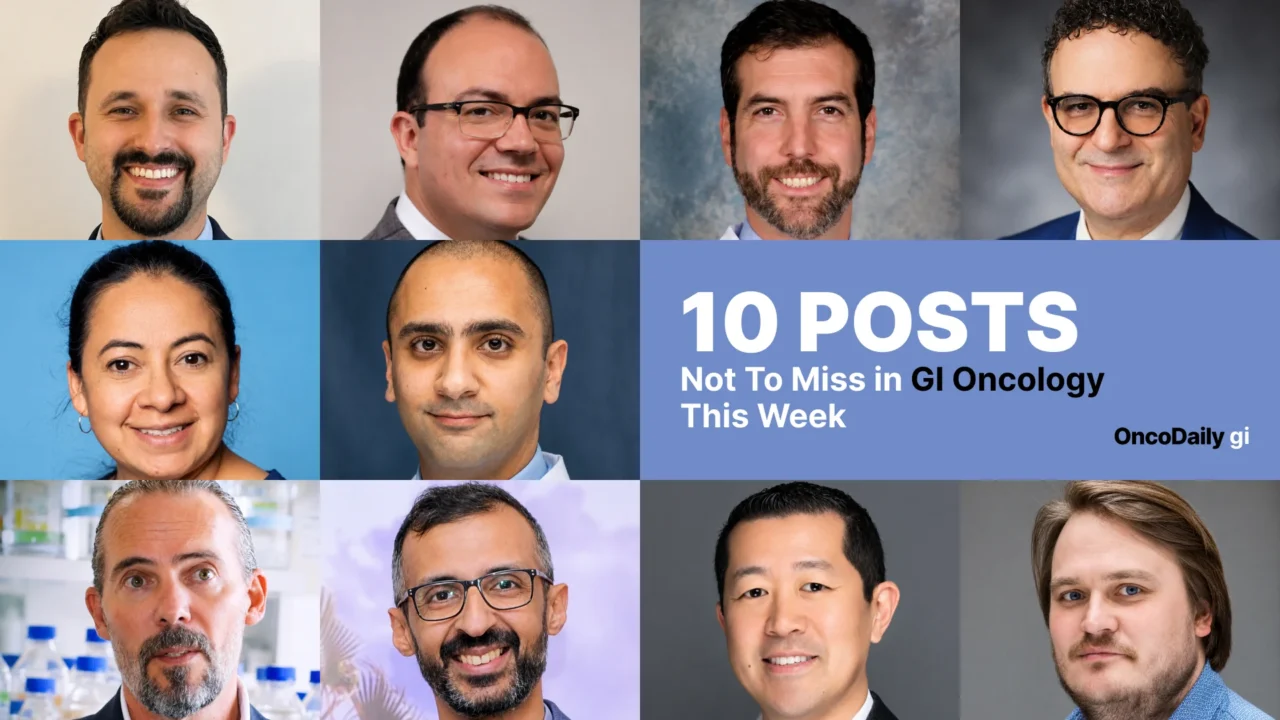
The second week of June brought together important updates across GI oncology, with expert posts highlighting new research, translational science, biomarker development, precision medicine, clinical trial data, and evolving treatment strategies across pancreatic, colorectal, gastric, liver, and biliary tract cancers.
This week’s selection includes updates on pancreatic duct biology and cancer subtypes, fostrox plus lenvatinib in advanced hepatocellular carcinoma, host–tumor biomarker strategies in gastric cancer immunotherapy, FDA Priority Review of atezolizumab in stage III dMMR/MSI-H colon cancer, ASTRO pancreatic cancer radiation therapy guidelines, circulating microbial DNA in colorectal cancer, TGFBR1*6A and colorectal cancer risk, pancreatic ductal adenocarcinoma biomarker detection, Child-Pugh B hepatocellular carcinoma, and circulating cell-free DNA methylation profiling in cholangiocarcinoma.
Together, these posts reflect the breadth of current GI oncology research and practice, from early detection and molecular profiling to treatment personalization, translational discovery, clinical trial interpretation, and multidisciplinary care.
Nelson Dusetti — INSERM Research Director at CRCM and Paoli-Calmettes Institute; Pancreatic Cancer Researcher; Co-founder of Predicting Med | France
“Happy to see this work published in Gut.
This study provides a new view of the cellular organisation of the human pancreatic duct and shows that luminal and basal cell populations are differentially represented across pancreatic cancer subtypes. Understanding how normal tissue architecture relates to tumour biology is essential if we want to better understand tumour heterogeneity and disease progression.
I am grateful to Ilse Rooman and her team for leading this work, and for the opportunity to contribute alongside many talented colleagues.
This study also highlights the value of collaborative translational research bringing together complementary expertise from basic science, pathology and clinical oncology. At Institut Paoli-Calmettes and CRCM – Centre de Recherche en Cancérologie de Marseille, we are fortunate to work within an environment where such interactions help bridge fundamental discoveries and clinical questions in pancreatic cancer.
Congratulations to all co-authors on this important contribution!”
Victor Moreno — Director of Clinical Research, Early Phase Clinical Trials at START Madrid-FJD | Spain
“Very pleased to share our new publication in Clinical Cancer Research:
A phase Ib/2a study of fostrox in combination with lenvatinib as second-line therapy in patients with advanced hepatocellular carcinoma.
This study explores a liver-targeted approach with fostrox plus lenvatinib in a setting of high unmet need, particularly after prior immunotherapy. The combination showed encouraging preliminary efficacy and tolerability, supporting further clinical development in advanced HCC.
Congratulations to all investigators, collaborators, and patients who made this work possible.”
Nabil ISMAILI — Director of Medical Oncology and Radiotherapy Department, PES, UM6SS, HUICK, HUIM6 and Mohammed VI University of Sciences and Health | Morocco
“Thrilled to share our latest review article published in Frontiers in Immunology!
Title: “Rethinking biomarker strategy in gastric cancer immunotherapy: from tumor to host”
In this work, we critically examine the shift from a purely tumor-centric view of predictive biomarkers (PD-L1, MSI, TMB, EBV) toward a more integrative, dynamic, host–tumor framework for gastric cancer immunotherapy.
Key messages:
· Autoantibodies (ANA/ENA) and systemic inflammation markers (NLR, PLR) are emerging as promising prognostic tools.
· The gut microbiome, microbial metabolites (succinate, butyrate), and even cancer-induced nerve injury from murine models offer novel translational insights.
· We propose a three-step conceptual framework (Figure 1) that integrates host-centric and tumor-centric markers to personalize patient selection.A very special thank you to Mr. Lachmi Nadel – his courage and generosity in supporting cancer research, even while facing his own battle, made this publication possible. This work is dedicated to his strength and to the hope for better outcomes for all patients.
What do you think is the most urgent next step: validating autoantibodies, exploring the gut microbiome, or integrating machine learning models?”
Michael Sapienza — Chief Executive Officer of the Colorectal Cancer Alliance | United States
“The future of colorectal cancer care is becoming increasingly personal.
For decades, many patients received similar treatments based primarily on the stage of their disease. Today, advances in our understanding of tumor biology are helping shift that paradigm toward more precise, individualized care.
The FDA’s Priority Review of Roche’s Tecentriq for certain patients with stage III dMMR/MSI-H colon cancer is an encouraging example of that progress. The ATOMIC trial demonstrated that adding immunotherapy to standard chemotherapy reduced the risk of recurrence or death by 50%, bringing us one step closer to changing the standard of care for this patient population.
This milestone reflects years of scientific collaboration and reinforces the importance of biomarker testing, clinical trials, and continued investment in research that matches the right treatment to the right patient at the right time.
At the Colorectal Cancer Alliance, we believe innovation has its greatest impact when every patient has the opportunity to benefit from it. That’s the goal of Project Cure CRC, ensuring patients are equipped with the information to access better, more personalized treatments, faster.
While there is still work ahead, today’s advances remind us that every step of progress is meaningful and worth celebrating.”
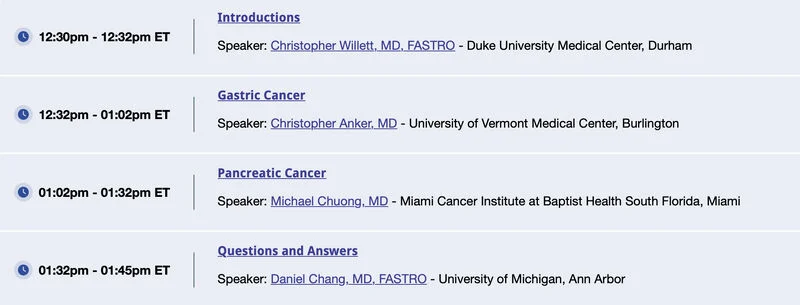
Michael Chuong, MD, FACRO — Vice Chair, Medical Director, and Lead GI Radiation Oncologist, Department of Radiation Oncology at Miami Cancer Institute | United States
“I’m excited to present the American Society for Radiation Oncology (ASTRO) pancreaticcancer guidelines at ASTRO26!
These guidelines reflect important changes in the indications for, and management of, radiation therapy for pancreatic cancer since the prior ASTRO guideline was published in 2019
Dan Chang and I are incredibly grateful to the entire task force and to the multidisciplinary reviewers who spent countless hours helping develop rigorous, evidence-based recommendations to guide the #radonc community
Hope to see you in Boston!”
Adriana Maria Sanabria — Researcher at Akershus University Hospital | Norway
“I am happy to share that our paper on circulating microbial DNA (cmDNA) in colorectal cancer has been published today.
This work represents several years of effort, from developing laboratory and bioinformatic workflows for low-biomass samples to exploring the potential of cmDNA as a liquid biopsy approach in colorectal cancer. It has been a challenging but rewarding journey, particularly given the technical complexities associated with contamination control, sequencing, and data interpretation.
I am grateful to everyone in the research team (Anne Hansen Ree, Sebastian Meltzer, Tonje Bjørnetrø, Christian Kersten, MD PhD, Anne Helene Køstner, Anniken Fuglestad, Torben Lüders) for their support, expertise, and collaboration throughout the project.
A special thank you to the patients who participated in the study, the METIMMOX trial, and made this research possible.”
Boris Pasche — President and CEO of Karmanos Cancer Institute | United States
“I am excited to share that our manuscript by Allan Johansen et al. reporting the role of TGFBR1*6A and the risk of colorectal cancer has been published. The journey began with the identification of TGFBR1*6A during my postdoc in Joan Massagué’s lab in the late 1990s. Functional assessments showed that TGFBR1*6A transduced TGF-beta signals less effectively than its wild type counterpart, TGFBR1.
Early studies suggested that TGFBR1*6A may act as a colorectal cancer susceptibility allele; however, subsequent research by other groups did not confirm this association. Together with my long-time collaborator, Antonio Di Cristofano, we developed a mouse model of TGFBR1*6A by replacing the murine Tgfbr1 exon 1 with the human TGFBR1*6A or TGFBR1 exon 1. This model revealed that mice carrying the TGFBR1*6A allele developed fewer polyps and adenocarcinomas compared to those with two copies of the TGFBR1 allele.
In collaboration with the Colon Cancer Family Registry, we assessed the association of TGFBR1*6A with colorectal cancer risk among patients and their unaffected siblings. The findings were strikingly similar in humans, establishing TGFBR1*6A as a colorectal cancer protective allele. These exciting results are the culmination of years of work and support from the NCI, AACR, and ACS.”
Erman Akkus — Medical Oncology Fellow at Ankara University, Faculty of Medicine | Turkey
“Biomarker Panel Designed to Detect Early-Stage Pancreatic Ductal Adenocarcinoma Also Reliably Detects Advanced Disease | JCO Oncology Advances”
Jean-Charles Nault — Professor and Hospital Practitioner at AP-HP, Assistance Publique – Hôpitaux de Paris | France
“New publication out in JHEP Reports!
With Anne Victoire Odent, Claudia Campani, the Paris Liver Cancer Group and our national and international collaborators, we investigated clinical predictors of response to atezolizumab–bevacizumab in Child-Pugh B patients with advanced hepatocellular carcinoma (HCC), a population systematically excluded from clinical trials yet frequently encountered in real-world practice.
Key findings:
• Multicenter retrospective study of 1,499 patients across 12 centers, including 246 (16%) with Child-Pugh B cirrhosis
• Child-Pugh B patients show shorter OS (8.1 months) vs Child-Pugh A (16.8 months), but atezolizumab–bevacizumab outperforms sorafenib even in this population
• A new ALBEX score (ALBI grade + metastatic status) stratifies Child-Pugh B patients into 3 distinct prognostic groups (OS: 10.3 vs 7.9 vs 4.2 months)
• ALBI grade 1/2 without extrahepatic metastasis identifies the subgroup most likely to derive meaningful benefit from first-line immunotherapy
• 31% of Child-Pugh B patients improved to Child-Pugh A, linked to treatment of the underlying liver disease etiology”
Salar Javanshir — PGY-1 General Surgery Resident at Henry Ford Providence | United States
“I am very happy to share that our latest research has recently been published.
In this paper, we explore the potential of circulating cell-free DNA and methylation profiling as tools for cancer diagnosis and disease monitoring, with a particular focus on cholangiocarcinoma.
This work was made possible through the exceptional mentorship and guidance of Ali Zarrinpar and Dr. Sergio Duarte, as well as the support and collaboration of my amazing colleagues at the University of Florida.
For anyone interested, the article is available free of charge through the link below.
I would be grateful to hear your thoughts, comments, and feedback.”
Find out 10 Must-Read Posts in GI Oncology from the first week of June on OncoDaily.