The last days of May and the first week of June brought together several important discussions in GI oncology, with expert posts highlighting new research, surgical innovation, precision oncology, screening, access to care, and emerging therapeutic strategies across colorectal, pancreatic, appendiceal, and liver cancers.
This week’s selection includes updates on single-port versus multiport robotic colectomy, Y90-radioembolization as downstaging to liver transplantation in hepatocellular carcinoma with tumoral portal vein thrombosis, travel-time burden in colorectal cancer care, early-onset appendiceal adenocarcinoma, immunotherapy outcomes in MSI metastatic colorectal cancer, targeted therapy in pMMR BRAF V600E-mutant colorectal cancer, next-generation KRAS-targeted approaches, KRAS and MTAP loss in pancreatic cancer, a RAS inhibitor trial in metastatic pancreatic cancer, and colorectal cancer screening non-participants in Germany.
As this period also coincided with major ASCO 2026 activity, we have covered ASCO-related GI oncology highlights separately. You can also read about 15 Posts Not To Miss From ASCO 2026: GI Edition on OncoDaily.
Together, these posts reflect the breadth of current GI oncology research and practice, from surgical learning curves and transplant downstaging strategies to biomarker-driven treatment, early-onset disease, health-system access, and prevention.
Fabio Carbone — Colorectal Surgeon at IRCCS National Cancer Institute G. Pascale Foundation, Naples | Italy
“The evolution of robotic colorectal surgery continues.
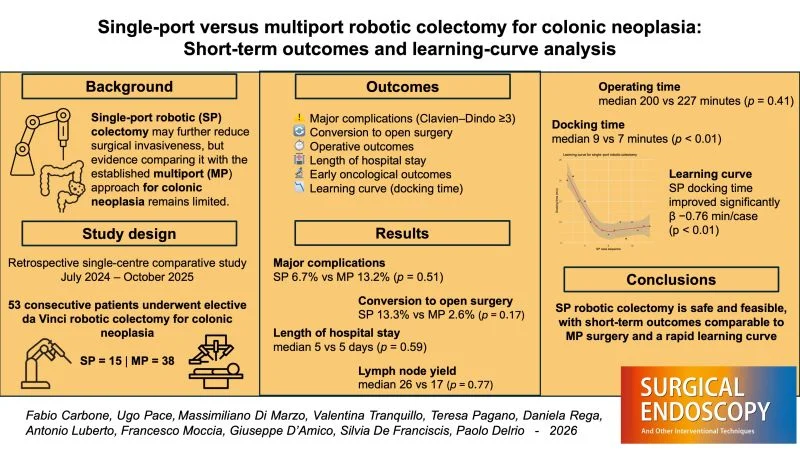
Our latest publication in Surgical Endoscopy explores the short-term outcomes and learning curve of single-port versus multiport robotic colectomy for colonic neoplasia.
In this real-world comparative study (53 consecutive robotic colectomies), single-port (SP) robotic surgery achieved short-term outcomes comparable to the established multiport (MP) approach.
Key findings:
• Major complications: 6.7% (SP) vs 13.2% (MP)
• Comparable lymph node yield and R0 resection rates
• Operative time: 200 vs 227 minutes
• No increase in perioperative riskSP docking time improved significantly during the initial experience (−0.76 min/case), suggesting a rapid learning curve.
These findings support the safe implementation of single-port robotic colectomy in experienced robotic colorectal centres, without compromising short-term clinical or oncological outcomes.”
Arndt Vogel — Head of the Center for Personalized Medicine, MHH at Medical University of Hanover | Germany
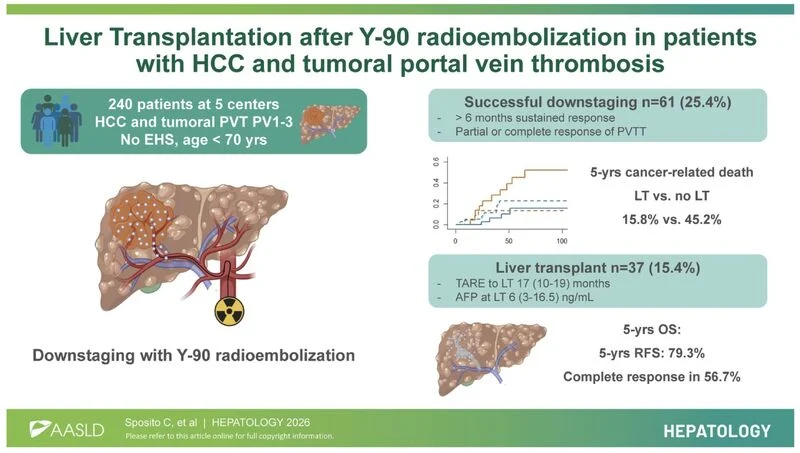
“Outcomes of Y90-radioembolization as downstaging to liver transplantation HCC and tumoral portal vein thrombosis
- 25% sustained downstaging after TARE
- 15% eventually LTx with good outcome
- Downstaging is feasible in MVI pts”
Bishal Gyawali — Medical Oncologist; Associate Professor in Medical Oncology and Public Health Sciences at Queen’s University | Canada
“New open-access paper published in Ecancer led by my ESMO virtual mentee from 2022 Dr. Saquib Banday. In this paper we assess travel time burden and its association with outcomes for patients with colorectal cancer in Kashmir, India.”
Ardaman Shergill — Assistant Professor of Medicine at the University of Chicago | United States
“Freshly in print: our ~10 year experience in taking care of patients with early-onset appendiceal adenocarcinomas (EOAA):
Annals of Surgical Oncology Appendix Cancer Pseudomyxoma Peritonei (ACPMP) Research Foundation
Appendicure Pseudomyxoma Survivor PMP Pals Peritoneal Surface Oncology Group International (PSOGI) European School of Peritoneal Surface Oncology (ESPSO)median age 42
while cure is possible if diagnosed early, the recurrence free survival is shorter for patients with early-onset disease
EOAA patients with metastatic/recurrent disease got more therapy but did not have improved survival
~60% of the young women had ovarian metastasis at presentationGreat work by our research fellow: Rushabh Gujarathi. While appendiceal cancers are rare, patients deserve more – especially our young patients. Please let us include appendiceal cancers in trials, let’s have trials for appendiceal cancers and give these patients, especially the EOAA patients, a chance to try new drugs to move the needle here. Let’s do more to support research efforts and for comprehensive care for ALL our early-onset GI cancers (EOGIC) patients.
Bravo team for getting this out!!”
Romain Cohen — Professor of Medical Oncology at Sorbonne Université; Medical Oncologist at AP-HP Saint-Antoine Hospital | France
“Very happy to see this work published, and congrats to Lea Jehanno, first author of the study, whose MD thesis was dedicated to this project.
Two key messages from our study in MSI metastatic colorectal cancer:
Patients achieving an objective response had similarly favorable long-term survival whether the response was obtained with anti-PD1 or with anti-PD1 + anti-CTLA4 combination. This suggests that the survival advantage of the combination is mainly driven by its ability to increase early response rates.
Our study suggests that some clinical factors—particularly female sex, absence of liver metastases, and left sided tumor location—may predict greater benefit from the addition of anti-CTLA4 agent.”
Davide Ciardiello — Medical Oncologist at the Division of Medical Oncology for Gastrointestinal and Neuroendocrine Tumors, IEO, European Institute of Oncology | Italy
“It is not a question of the chemotherapy backbone (FOLFOX/FOLFIRI) the combination with target therapy is the new standard of care for patients with pMMR BRAFV600E mutant colorectal cancer.”
Ray Wadlow — Division Chief of Hematology and Oncology at Inova Schar Cancer Institute | United States
“A wave of new KRAS-targeted strategies is reshaping what’s possible in solid-tumor oncology — and the momentum is only accelerating.
Proud to see this work highlighted, especially knowing that Faran S Polani, MD trained with us at Inova Health . His contributions reflect the kind of curiosity, rigor, and patient-centered thinking we value deeply.
As these next-generation KRAS inhibitors move from concept to clinic, one theme stands out: their true impact will depend on a functional precision medicine approach. To harness their potential for individual patients, we’ll need to understand therapeutic vulnerabilities, mechanisms of resistance, and toxicity profiles at a patient-specific level — not just a genomic one.
That means integrating dynamic assays, real-time phenotyping, and smarter toxicity-minimizing strategies so patients can not only respond, but achieve their goals with treatments they can tolerate.
How do others envision implementing these strategies across different disease contexts?”
Erman Akkus — Medical Oncology Fellow at Ankara University, Faculty of Medicine | Turkey
“Convergence of KRAS Mutations and MTAP Loss in Pancreatic Cancer: Genomic Landscape and Clinical Implications | Clinical Cancer Research | American Association for Cancer Research”
Keith Siau — Consultant Gastroenterologist at Royal Cornwall Hospitals NHS Trust | United Kingdom
“An INCREDIBLE advance in pancreatic cancer. Compared to conventional treatment, Daraxonrasib, a new RAS inhibitor, was shown to increase survival in metastatic pancreatic cancer in this landmark NEJM trial:
- Median survival doubled
- 12-month survival tripled (18% to 53%)
- Less discontinuation (1.2% vs 11.2%)
Pancreatic cancer carries one of the worst prognosis – most cases carry a KRAS mutation which is targeted by this new class of treatment, bringing much needed hope to patients with this cancer, and potentially affecting other sites”
Sarina Schwarz — Head of Unit Translational Cancer Epidemiology at Leibniz Institute for Prevention Research and Epidemiology – BIPS | Germany
“New publication
I am proud to announce that our new paper on colorectal cancer screening non-participants has been published in the European Journal of Cancer Prevention:
It is often hypothesized that persons not participating in cancer screening are difficult to reach through the healthcare system. Our study now shows the opposite:
80% of those not participating in colorectal cancer screening between age 50-59 had a physician contact already at age 50, i.e., right after they reached the staring age for screening in Germany
Within the first 10 years of colorectal cancer screening eligibility (i.e., until age 59), almost all had a physician contactMost of the colorectal cancer screening non-participants use other screening measures
However, counseling about CRC screening was only coded in about one third of the non-participants
Our results suggests that there is no need to establish new structures in Germany. Instead, it should be investigated how the existing structures could optimized.”
Find out 10 Must-Read Posts in GI Oncology from the third week of May on OncoDaily.