Cancer does not follow political calendars. Patients cannot postpone treatment until a new government takes office, wait for the next funding cycle, or depend on whether national priorities remain unchanged.
Yet across Europe, cancer care continues to face these uncertainties. Geopolitical tensions, economic pressures, inequalities in access to treatment, and changing political priorities are testing the ability of healthcare systems to provide consistent, high-quality care.
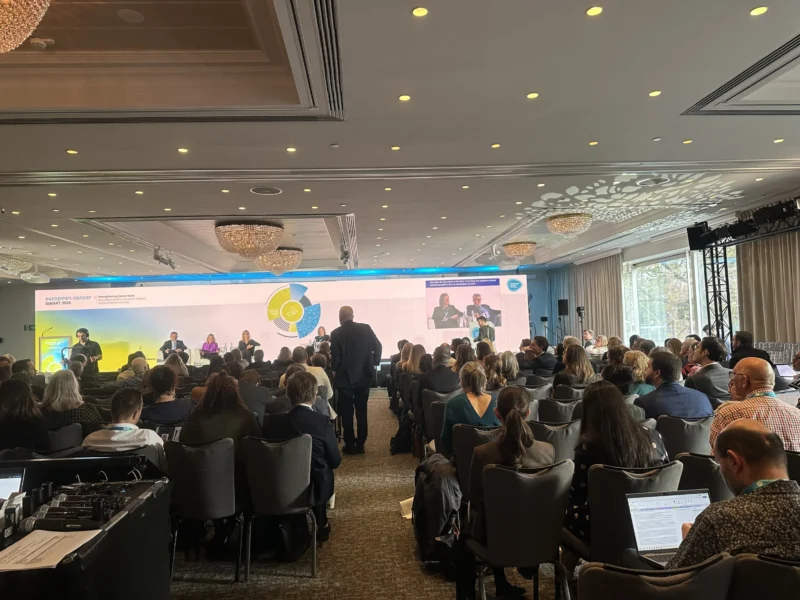
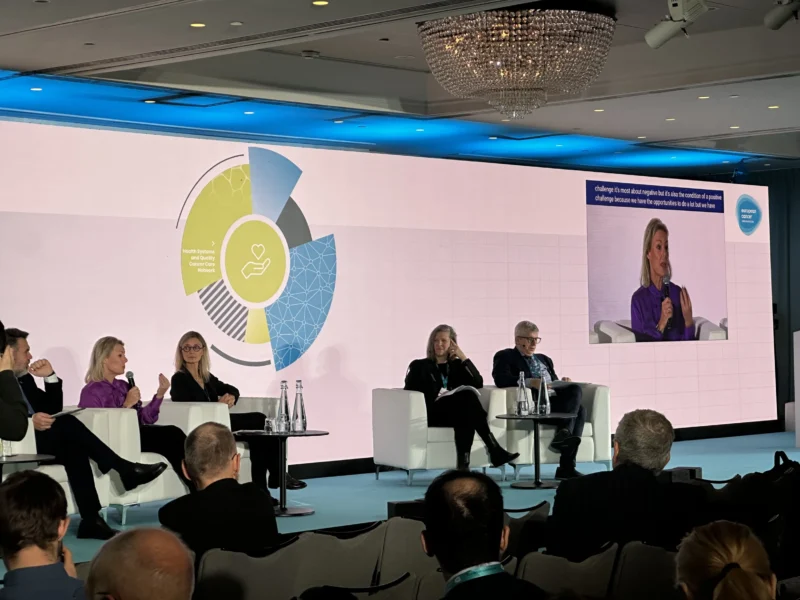
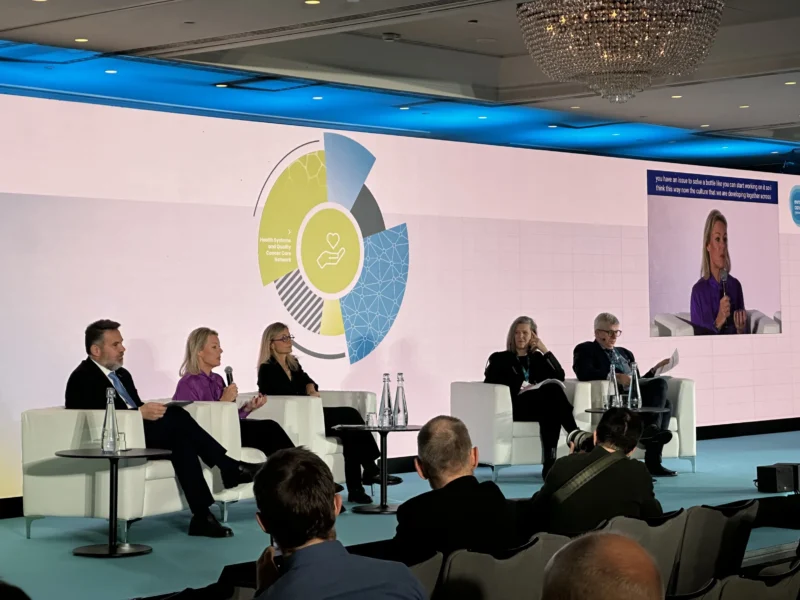
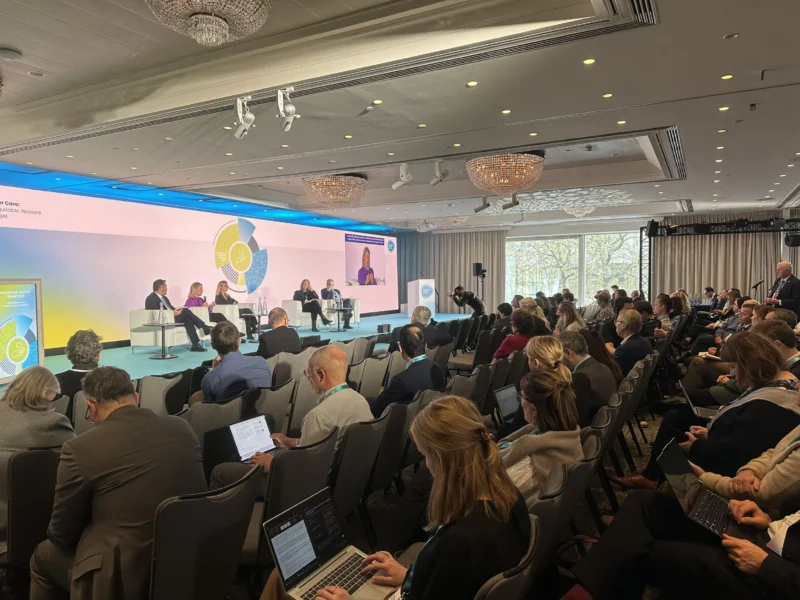
At the European Cancer Summit 2026, the policy session “Enhancing European Cancer Systems Resilience in an Era of Uncertainty” examined how European countries can strengthen their cancer control strategies, protect long-term investments, and ensure that progress in oncology continues beyond political cycles.
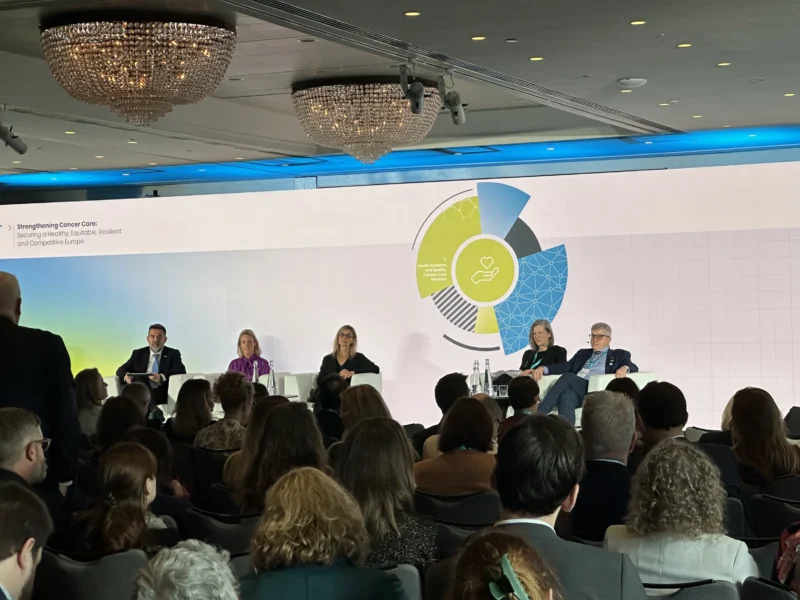
Co-chaired by Piotr Rutkowski and Yolande Lievens, the discussion brought together policymakers, healthcare leaders, patient advocates, and representatives of European cancer initiatives to share experiences from Poland, Greece, France, and Sweden, alongside perspectives on European funding and cross-border collaboration.
Throughout the session, one question remained central: How can Europe ensure that its cancer strategies deliver lasting improvements for patients, regardless of political or economic uncertainty?
Cancer Care Cannot Wait for Political Stability
Opening the session, Yolande Lievens emphasized that Europe is facing a period of considerable uncertainty, marked by geopolitical instability, economic pressures, and the continuing risk of conflict.
Against this background, addressing the cancer burden remains both a public health priority and an important part of Europe’s broader resilience, cohesion, and competitiveness.
Europe’s Beating Cancer Plan has provided a common framework for national cancer strategies. However, the challenge now is to translate these ambitions into practical measures that can withstand disruptions while maintaining continuity of care.
Piotr Rutkowski presented an overview of national cancer control planning across Europe, noting that all 27 European Union member states now have an active national cancer control plan or an equivalent strategy.
These plans generally address prevention, early detection, diagnosis, treatment, rehabilitation, and survivorship, with the shared objectives of reducing cancer incidence and mortality while improving patients’ quality of life.
However, the existence of a strategy does not guarantee its implementation.
Rutkowski highlighted that 52% of European national cancer control plans lack secured funding for implementation, illustrating a major obstacle to achieving their long-term objectives.
He also discussed Poland’s national cancer strategy, launched in 2020. The strategy includes prevention, healthcare workforce development, education, research, innovation, and improvements to the healthcare system.
According to Rutkowski, approximately 60% of the planned tasks have been achieved, although progress has not been equally distributed across the different areas.
Poland is also evaluating outcomes in five cancer types where healthcare policy and prevention initiatives can have a substantial impact: colorectal cancer, lung cancer, breast cancer, melanoma, and cervical cancer.
The Polish experience illustrated the importance of moving beyond the adoption of national strategies toward measurable implementation and long-term evaluation.
Greece: Cancer Does Not Follow Political Cycles
Providing the patient perspective, George Kapetanakis, President of the Hellenic Cancer Federation (ELLOK), delivered one of the session’s central messages:
“Cancer does not follow political cycles.”
For patients, the implications are immediate. A cancer diagnosis cannot wait for a new government, a future healthcare reform, or the next funding programme.
Kapetanakis acknowledged that Greece has been relatively late in developing a comprehensive national cancer plan. However, he emphasized that the country is not starting from zero.
Progress has already been made in screening, cancer registration, digital health, and precision medicine. The current challenge is to connect these developments into a coherent national system, address remaining gaps, and reduce inequalities.
A particularly important aspect of the Greek approach is the involvement of patients in cancer policy.
Following years of advocacy, the Hellenic Cancer Federation was formally recognized as an interlocutor of the Greek state on cancer policy and patients’ rights.
Patient representatives now participate directly in developing Greece’s national cancer plan, with Kapetanakis also serving as Deputy Chair of the Ministry of Health working group.
He argued that patient involvement should extend far beyond consultation on decisions that have already been made. Patients must participate in setting priorities, designing services, monitoring implementation, and evaluating outcomes.
Greece’s national cancer planning process is organized around eight interconnected thematic areas, with work underway to assess existing services, identify gaps, and establish realistic priorities.
Importantly, the implementation framework is being developed alongside the strategy itself.
Kapetanakis stressed that successful cancer planning requires clear governance, sustainable financing, measurable objectives, and accountability.
A €27 Million Example of Regional Investment
To illustrate how cancer policy can translate into practical improvements, Kapetanakis described work undertaken in Western Macedonia to assess regional cancer care needs and identify gaps in services.
Following this work, the Greek government announced a €27 million investment to develop comprehensive cancer services at Bodosakio Hospital.
Notably, the funding was allocated through regional development resources rather than the Ministry of Health budget.
The example demonstrated how regional development financing can support healthcare priorities and help reduce inequalities in access to cancer services.
Kapetanakis argued that health should have a clearly defined place in future national and regional partnership plans, supported by dedicated resources and measurable objectives.
For him, the ultimate measure of success is not the number of strategies published or projects launched, but the improvements patients actually experience.
France: From Cancer Plans to a Ten-Year Strategy
Suzette Delaloge, President of the French National Cancer Institute (INCa), presented France’s experience in developing a more centralized and long-term approach to cancer control.
France has moved from successive national cancer plans to a ten-year cancer control strategy, coordinated by INCa.
The institute is responsible for proposing and coordinating the national strategy, supporting cancer research, establishing quality standards, monitoring cancer control activities, and promoting equitable access to care.
Its responsibilities also include the development of cancer data infrastructure, professional guidance, public information, and scientific advice to national authorities.
Delaloge emphasized that cancer strategies must remain closely connected to research and innovation.
She also stressed the importance of ensuring that advances in cancer prevention, diagnosis, and treatment benefit the entire population rather than only selected regions or patient groups.
Long-Term Funding, Measurable Results
France’s ten-year cancer control strategy is supported by secured funding of approximately €1.7 billion over five years, with a further five-year funding allocation described during the presentation.
The first implementation roadmap included 237 actions, while the second roadmap has been streamlined to 107 actions.
The revised approach places greater emphasis on defined objectives, milestones, deliverables, annual monitoring, regional implementation, and stronger patient participation.
Delaloge explained that long-term planning provides stability for investment in research, prevention, and healthcare services. However, strategies must also remain flexible enough to respond to scientific developments and changing needs.
Oncology is continuously evolving, and a strategy designed for ten years cannot remain fixed throughout that period.
Prevention Before Diagnosis
Delaloge also highlighted France’s national interception programme, which aims to identify individuals at increased risk of developing cancer before the disease occurs.
The programme focuses on personalized risk assessment and the development of tailored prevention, screening, and follow-up pathways.
It combines hospital and community-based care with digital tools and ongoing research into biomarkers, screening methods, and future preventive interventions.
The approach reflects a broader ambition to move cancer prevention beyond general population recommendations toward more individualized strategies based on risk.
Looking ahead to 2026–2030, France’s priorities include prevention, screening, sustainable cancer services, research, and data.
Delaloge also emphasized the importance of European collaboration, particularly through the European network of comprehensive cancer centres, in strengthening cancer prevention, care, research, and long-term follow-up.
Sweden: Why Long-Term Strategies Need Strong Partnerships
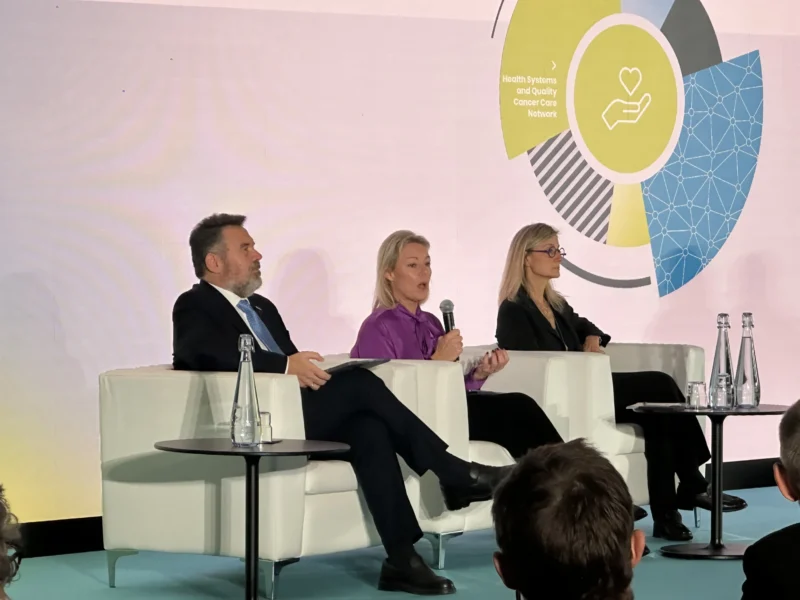
Ebba Hallersjö Hult, Programme Director of Testbed Sweden Precision Health Cancer, presented Sweden’s experience in maintaining continuity across successive governments while developing new approaches to cancer care.
Sweden adopted its first national cancer strategy in 2009, establishing the foundation for six regional cancer centres supporting coordination and quality improvement across the country’s 21 healthcare regions.
Seventeen years later, Sweden has adopted an updated strategy covering the next 10–15 years.
Alongside prevention, early detection, survival, and quality of life, the updated strategy places greater emphasis on research, innovation, collaboration with the life sciences sector, and the development of a national cancer mission hub.
The strategy identifies approximately 70 actions, with responsibilities distributed across several organizations.
This creates a complex challenge: how can transformation be coordinated when no single institution controls the entire healthcare system?
Vision Zero Cancer: A Model for Collective Action
Hallersjö Hult discussed the development of Vision Zero Cancer, which she co-founded seven years earlier with Sweden’s then National Cancer Coordinator.
Inspired by Sweden’s Vision Zero approach to road safety, the initiative began with lung cancer, recognizing the challenges of late diagnosis, stigma, inequalities, and the need to accelerate the adoption of innovation.
The partnership brought together healthcare organizations, academia, industry, patients, civil society, and public institutions.
It also connected three national strategies: cancer control, life sciences, and export and investment.
The objective was to create a shared framework in which organizations with different responsibilities could contribute expertise, resources, and networks toward improving cancer outcomes.
Hallersjö Hult explained that collaboration requires more than bringing organizations together. It depends on leadership, trust, transparent governance, and the ability to sustain collective action.
The experience contributed to subsequent initiatives in precision cancer care, including Testbed Sweden Precision Health Cancer and the development of a national precision oncology trial platform.
It has also informed Sweden’s Cancer Mission Hub, launched earlier in 2026 and coordinated by the National Board of Health and Welfare.
Three Priorities for the Future
Drawing on Sweden’s experience, Hallersjö Hult identified three priorities for sustainable cancer control.
The first is continuity and adaptability: stable institutions, financing, and accountability must be combined with the flexibility to incorporate new knowledge.
The second is implementation capability: healthcare systems need lasting expertise and structures to evaluate, adopt, and scale innovation rather than relying exclusively on individual projects.
The third is European and global collaboration: scientific advances and research infrastructure must become part of routine national, regional, and local healthcare delivery.
Her central argument was that long-term strategies alone cannot guarantee progress. Countries must build the institutions, partnerships, and capabilities needed to carry those strategies forward.
Ivars Ijabs: Cancer Funding Must Remain a European Priority
The discussion then turned to European policymaking and the financial future of cancer control.
Ivars Ijabs MEP, Member of the European Parliament’s Committee on Industry, Research and Energy (ITRE), addressed the risks facing cancer policy as the European Union negotiates its next Multiannual Financial Framework.
He warned that geopolitical tensions, economic pressures, and competing political priorities could threaten the continuity of cancer funding.
While defence, security, and competitiveness occupy increasingly prominent positions on the European agenda, Ijabs argued that health should not be treated as a competing priority.
Instead, strong healthcare systems are essential to Europe’s resilience and economic stability.
Inequalities Remain a European Challenge
Ijabs highlighted substantial differences in cancer outcomes across EU member states.
Using Latvia as an example, he described challenges including high cancer mortality, relatively low public investment in healthcare, long waiting times, out-of-pocket costs, insufficient screening participation, and unequal access to specialized services.
These inequalities mean that a patient’s opportunities for early diagnosis and effective treatment can still depend heavily on where they live.
He emphasized that Europe’s Beating Cancer Plan must continue to address these differences through sustained political commitment and predictable financing.
Protecting Cancer Research in the Next EU Budget
Ijabs also discussed the role of Horizon Europe, the EU’s research and innovation framework.
As ITRE contributes to shaping the next programme, he called for continued support for cancer research, cross-border collaboration, and the translation of scientific advances into accessible care.
He stressed that innovation must reach patients across all member states, not only those with the strongest healthcare resources.
The proposed national and regional partnership plans under the next EU financial framework were another major focus.
Ijabs described these plans as both an opportunity and a potential risk.
They could support investments in screening, diagnostics, workforce training, and healthcare infrastructure. However, without clearly defined health objectives, cancer priorities could lose visibility within broader funding arrangements.
His message was that cancer funding must remain dedicated, predictable, and connected to national cancer control plans.
JANE-2: Connecting European Expertise With National Cancer Care
Annalisa Trama, Deputy Coordinator of the JANE-2 Joint Action, presented the role of European Networks of Expertise in strengthening cancer care across member states.
JANE-2 builds on the earlier JANE Joint Action and operates within the framework of Europe’s Beating Cancer Plan.
While the first joint action developed the foundations and terms of reference for the networks, JANE-2 is supporting their establishment and operation.
Trama explained that seven Networks of Expertise are addressing complex, cross-cutting cancer care challenges.
These include poor-prognosis cancers, palliative care, survivorship, adolescents and young adults with cancer, and areas involving complex medical resources and technologies.
From Shared Knowledge to Practical Guidance
Trama distinguished the Networks of Expertise from European Reference Networks and comprehensive cancer centre networks.
While the latter are directly connected to patient care, the Networks of Expertise are designed to bring together specialist knowledge and support the organizations delivering services.
They function as collaborative platforms involving healthcare professionals, patient representatives, scientific societies, academic institutions, and other relevant stakeholders.
Their work includes developing models of care, best practices, guidelines, and practical tools that can be adapted and implemented at national level.
Trama provided examples from the network focused on adolescents and young adults, which is developing models to improve access to appropriate cancer care across member states.
She also discussed the survivorship network, which has developed a comprehensive survivorship care plan and is working on risk stratification approaches to support its implementation.
Another important objective is avoiding duplication between European initiatives.
To address this, JANE-2 has established a collaborative group involving 16 members from relevant joint actions and projects, with regular discussions on governance, sustainability, and opportunities for cooperation.
The goal is to ensure that European expertise contributes to lasting improvements rather than remaining confined to temporary projects.
The Implementation Problem: Europe’s Next Challenge
The audience discussion returned repeatedly to the difference between developing cancer strategies and ensuring their implementation.
One participant argued that Europe does not lack innovation as much as it lacks the capacity to implement it effectively.
Hallersjö Hult acknowledged the importance of this challenge, emphasizing the need for stronger implementation capabilities, appropriate financing, and investment in expertise.
The discussion also highlighted the importance of implementation science and training professionals who can support the translation of research into routine healthcare practice.
However, Delaloge cautioned against treating implementation and innovation as competing priorities.
She argued that Europe must continue to invest substantially in research and scientific innovation while improving its ability to apply new knowledge.
Both are necessary for future progress in cancer care.
Patient Participation, Cancer Registries, and Overlooked Needs
Several additional issues emerged during the audience discussion.
Patient Involvement Beyond the Planning Stage
Participants emphasized that patients should remain involved throughout implementation and evaluation, rather than participating only in the initial development of national strategies.
An example from Northern Ireland illustrated how patients had participated as co-leads in the development of a cancer strategy and its thematic areas.
Trama also highlighted the need for financial support for patient organizations, noting that meaningful participation in European networks and governance structures requires resources.
The Importance of Reliable Cancer Data
A question about Greece’s cancer registry prompted further discussion about the importance of data infrastructure.
Kapetanakis explained that Greece introduced a new cancer registry in February 2025 and is working to improve interoperability with other registries and information systems.
He acknowledged that the system is still developing but expressed optimism about its potential to provide more comprehensive cancer data.
The exchange highlighted the importance of reliable registries for evaluating cancer outcomes, identifying inequalities, and monitoring the impact of national policies.
Advanced Cancer Must Not Be Forgotten
Another participant raised concerns about the limited attention given to people living with advanced or metastatic cancer in national cancer strategies.
As treatments improve, more patients are living for extended periods with metastatic disease, creating needs that extend beyond traditional palliative care frameworks.
The discussion called for greater recognition of this population in cancer policy, including improved data collection and more comprehensive models of long-term care.
Delaloge agreed that national cancer strategies must address the specific needs of different patient populations, including children, young people, and vulnerable groups.
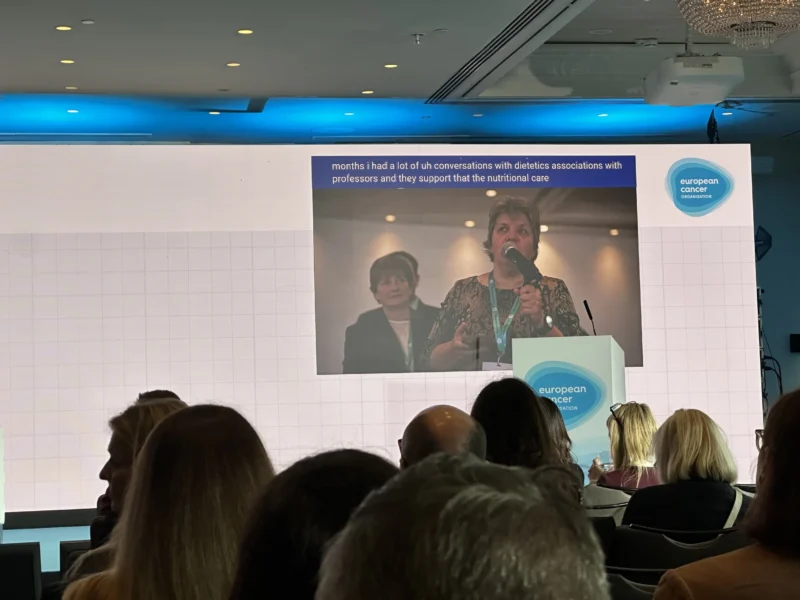
Nutrition as Part of Cancer Care
The role of nutrition in cancer policy was also discussed.
An audience participant called for greater integration of nutritional care into national cancer strategies, including during treatment.
Hallersjö Hult emphasized the value of exchanges between countries, collaboration with professional organizations, and engagement with civil society when developing and updating cancer policies.
From European Ambition to Lasting Cancer Care
As the session concluded, Rutkowski and Lievens reflected on the diversity of approaches presented across Europe.
Greece is developing a comprehensive national cancer plan with stronger patient participation. France has established centralized coordination and a ten-year strategy. Sweden has demonstrated the value of institutional continuity and cross-sector partnerships. Poland is assessing progress under its national strategy.
At European level, funding mechanisms, research programmes, and collaborative networks are intended to support these national efforts.
Despite their different structures, the examples revealed several shared challenges: securing sustainable financing, strengthening governance, reducing inequalities, involving patients, and ensuring that research and innovation reach clinical practice.
The discussion also demonstrated that cancer control strategies must evolve to address survivorship, advanced disease, vulnerable populations, and changing healthcare needs.
The central message of the session was clear: protecting cancer care from political uncertainty requires more than long-term plans. It requires institutions capable of delivering them, financing that extends beyond individual projects, and accountability for the outcomes patients experience.
Europe has established an extensive framework for cancer control through national strategies, research programmes, and collaborative initiatives. The next challenge is ensuring that these commitments translate into accessible, equitable, and sustainable care.
Because while governments, budgets, and political priorities may change, the need for cancer care does not.