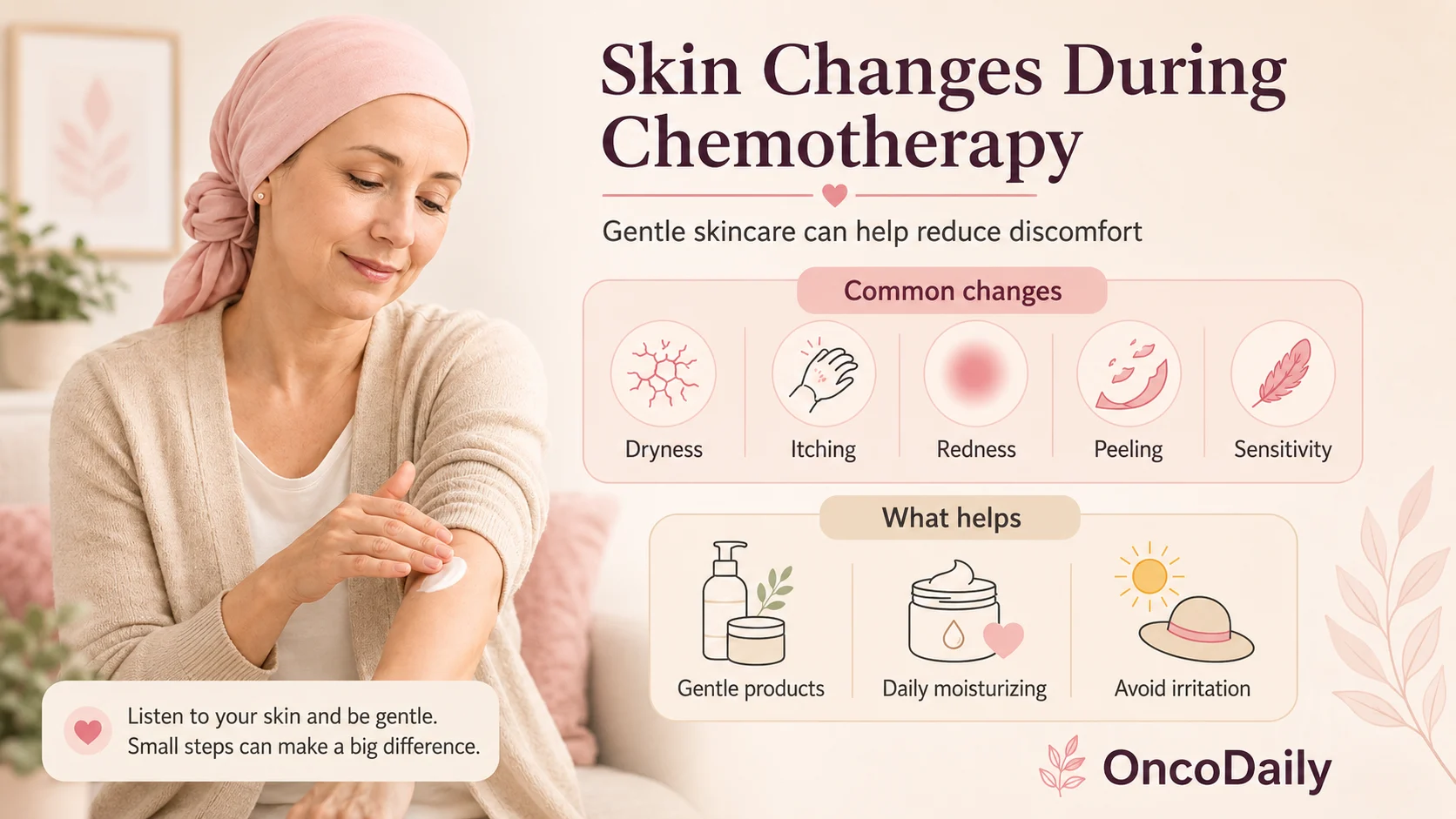
Chemotherapy is life-saving, but it can also affect healthy cells, including the skin. During treatment, the skin may become very dry, sensitive, itchy, or more easily irritated. Some patients also notice redness, peeling, or increased sensitivity that develops gradually over days or weeks.
While these changes are often temporary, everyday skincare habits can sometimes make them worse. Harsh products, not moisturizing enough, or exposing already sensitive skin to further irritation can increase discomfort and weaken the skin barrier. Knowing what to avoid and how to care for the skin gently can help reduce irritation, protect the skin, and make treatment a little more comfortable.
1. Using Harsh Soaps, Perfumed Products, and Alcohol-Based Skincare
During chemotherapy, the skin barrier can become more fragile and sensitive to everyday irritants. Fragrances, dyes, and alcohol-based ingredients may worsen dryness, itching, and irritation, especially when the skin is already sensitive.
To reduce discomfort, choose gentle, fragrance-free products made for sensitive skin. Ingredients such as ceramides, colloidal oatmeal, and petroleum jelly can help support the skin barrier and keep the skin hydrated. Use a mild, unscented cleanser, pat the skin dry instead of rubbing, and apply moisturizer while the skin is still slightly damp to help lock in moisture.
2. Skipping Sunscreen and Sun Protection, Even While Indoors
Chemotherapy can make the skin more sensitive to sunlight, which means it may burn more easily than usual. This can happen even with indirect sun exposure, so daily sun protection is especially important during treatment.
Use a broad-spectrum sunscreen with SPF 30 or higher and reapply it regularly when spending time outdoors. Mineral sunscreens containing zinc oxide or titanium dioxide are often gentler on sensitive skin. Wearing a wide-brimmed hat, long sleeves, and UPF clothing can provide extra protection, especially during peak sun hours between 10 a.m. and 4 p.m. An SPF lip balm can also help protect lips that may become dry or sensitive during chemotherapy.
3. Taking Hot Showers to Relieve Chills During Chemotherapy
Chills can happen during chemotherapy infusions, and while hot water may feel comforting, it can make dry or sensitive skin worse. Long, hot showers can strip the skin of its natural oils and increase dryness, itching, and cracking.
Use lukewarm water instead and keep showers short, ideally under 10 minutes. Choose a soft washcloth rather than a rough loofah, and gently pat the skin dry instead of rubbing. Applying a thick moisturizer within a few minutes of showering can help lock in moisture.
If chills occur during an infusion, warm blankets and extra layers are usually a better option than hot water. Patients should also let their infusion nurse know, especially if the chills are new, severe, or accompanied by other symptoms.
4. Scrubbing or Exfoliating Dry, Flaky Skin During Cancer Treatment
Seeing flaky skin, it can be tempting to scrub it off. However, this can be harmful during chemotherapy. The skin barrier is already more fragile, and scrubbing can create small tears that may increase the risk of irritation or infection.
Healthline and Cleveland Clinic advise avoiding physical scrubs, loofahs, and chemical exfoliants such as AHAs and BHAs during treatment. Instead, cleanse gently with your fingertips using a mild, non-abrasive cleanser. If dry patches persist, use soothing emollients such as petroleum jelly or thick ceramide creams.
For scalp care after hair loss, keep the scalp clean, moisturized, and protected with a soft cotton cap. Keep nails short and avoid aggressive manicures to help reduce the risk of cuts and infection.
5. Not Reporting Skin Changes Early to the Oncology Team
Delayed reporting of skin changes can be a serious mistake. Any blistering rash, severe itching, pink or red patches, or signs of infection such as swelling or pain should be reported to the care team promptly. Some skin reactions may signal an infection or a drug-related reaction that needs medical attention.
Dermatologists working with oncology teams can prescribe safe topical steroids or other treatments when needed. Early reporting can help prevent complications and improve comfort. Keeping a small diary of skin changes, with photos and dates, can also help the doctor assess how the skin is changing over time.
Home remedies or steroid creams should not be used without checking with the oncology team first.
Conclusion
Skin changes during chemotherapy are common and are usually manageable with consistent care. Mistakes such as using harsh products, skipping sun protection, taking long hot showers, scrubbing flaky skin, or delaying the reporting of symptoms can make discomfort worse.
A simple skincare routine that focuses on fragrance-free, hydrating products and daily broad-spectrum sun protection can help support the skin barrier. Early communication with the oncology care team is also important to prevent complications and make sure any skin reactions are treated appropriately.
Disclaimer: This article is for educational purposes only and is not a substitute for medical advice. Always consult your oncology care team.
Written by Kami Sheraz in Memory of His Mother.
FAQ
Is dry skin common during chemotherapy?
Yes. Chemotherapy can make the skin drier, more sensitive, and easier to irritate.
What moisturizer is best during chemotherapy?
Fragrance-free, gentle moisturizers with ingredients like ceramides or petroleum jelly are often well tolerated.
Should I use sunscreen during chemotherapy?
Yes. Some chemotherapy drugs can increase sun sensitivity, so broad-spectrum SPF 30 or higher is recommended.
Can I exfoliate my skin during chemotherapy?
It is usually best to avoid harsh scrubs, loofahs, and strong chemical exfoliants while the skin is sensitive.
When should I contact my doctor about skin changes?
Report severe itching, blistering, painful redness, swelling, or signs of infection to your oncology care team promptly.