Key takeaways
- Chemo brain can affect memory, focus, and mental speed.
- Chemotherapy is not the only cause.
- Fatigue, poor sleep, pain, stress, and medications can make symptoms worse.
- Symptoms often improve with time, but recovery varies.
- - Sudden or severe cognitive changes should be checked by a doctor.
Chemo brain is a common term for memory loss, brain fog, and concentration problems during or after cancer treatment. These cognitive changes can affect attention, word-finding, multitasking, and everyday activities, and they are not caused by chemotherapy alone. Radiation therapy, hormone therapy, immunotherapy, fatigue, poor sleep, pain, stress, and other treatment-related factors can also contribute.
For many people, symptoms improve gradually after treatment, but the duration and severity can vary. Understanding what chemo brain feels like, why it happens, how long it may last, and when to speak with a doctor can make these changes easier to recognize and manage.
What Is Chemo Brain?
Chemo brain, also called cancer-related cognitive impairment, is a term used to describe problems with memory, focus, attention, and mental processing that can happen before, during, or after cancer treatment.
Despite the name, chemotherapy is not the only possible cause. Cognitive changes can also be linked to the cancer itself, radiation therapy, hormone therapy, immunotherapy, surgery, medications, fatigue, poor sleep, pain, anemia, stress, or depression (National Cancer Institute; American Cancer Society).
People may notice things such as:
- trouble concentrating
- forgetting names, dates, or recent conversations
- difficulty finding the right word
- feeling mentally slower than usual
- difficulty multitasking or organizing tasks
The exact cause is still not fully understood. Inflammation, changes in brain function, hormonal effects, fatigue, and poor sleep may all contribute (Ahles and Root, 2018; Cancer Research UK).
For many people, symptoms improve with time, although some continue to notice changes for longer. New or worsening cognitive problems should be discussed with the oncology team so other possible causes can also be considered.
What Are the Symptoms of Chemo Brain?
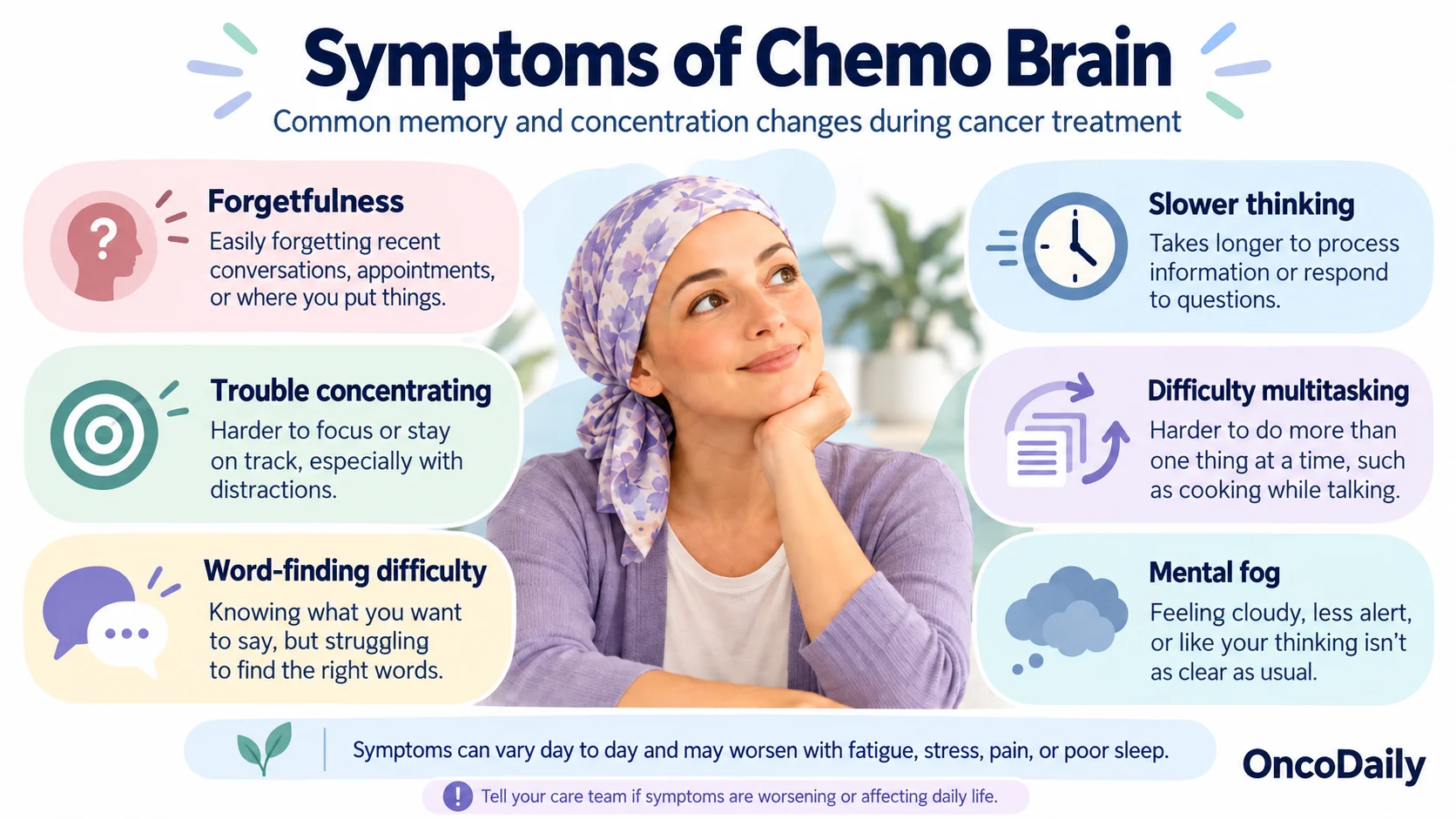
Chemo brain can feel different from person to person. Some people mainly notice problems with memory, while others find it harder to concentrate, process information quickly, or manage several things at once.
Common symptoms include:
- forgetting appointments or recent conversations
- losing track of what you were doing
- trouble concentrating for long periods
- difficulty finding words
- taking longer to complete familiar tasks
- difficulty planning or organizing
- feeling mentally foggy or easily overwhelmed
These symptoms can change from day to day. They may be more noticeable when someone is tired, stressed, in pain, sleeping poorly, or feeling anxious (Cancer Institute NSW; OncoLink).
For most patients, these changes are mild to moderate, but they can still affect work, conversations, reading, driving, or everyday responsibilities.
If symptoms suddenly become much worse, or if there is confusion, getting lost in familiar places, or a major change in daily functioning, it is important to speak with the medical team. Not every cognitive change during cancer treatment is caused by chemo brain.
Why Does Cancer Treatment Cause Memory and Concentration Problems?
There is usually no single reason why memory or concentration changes happen during cancer treatment.
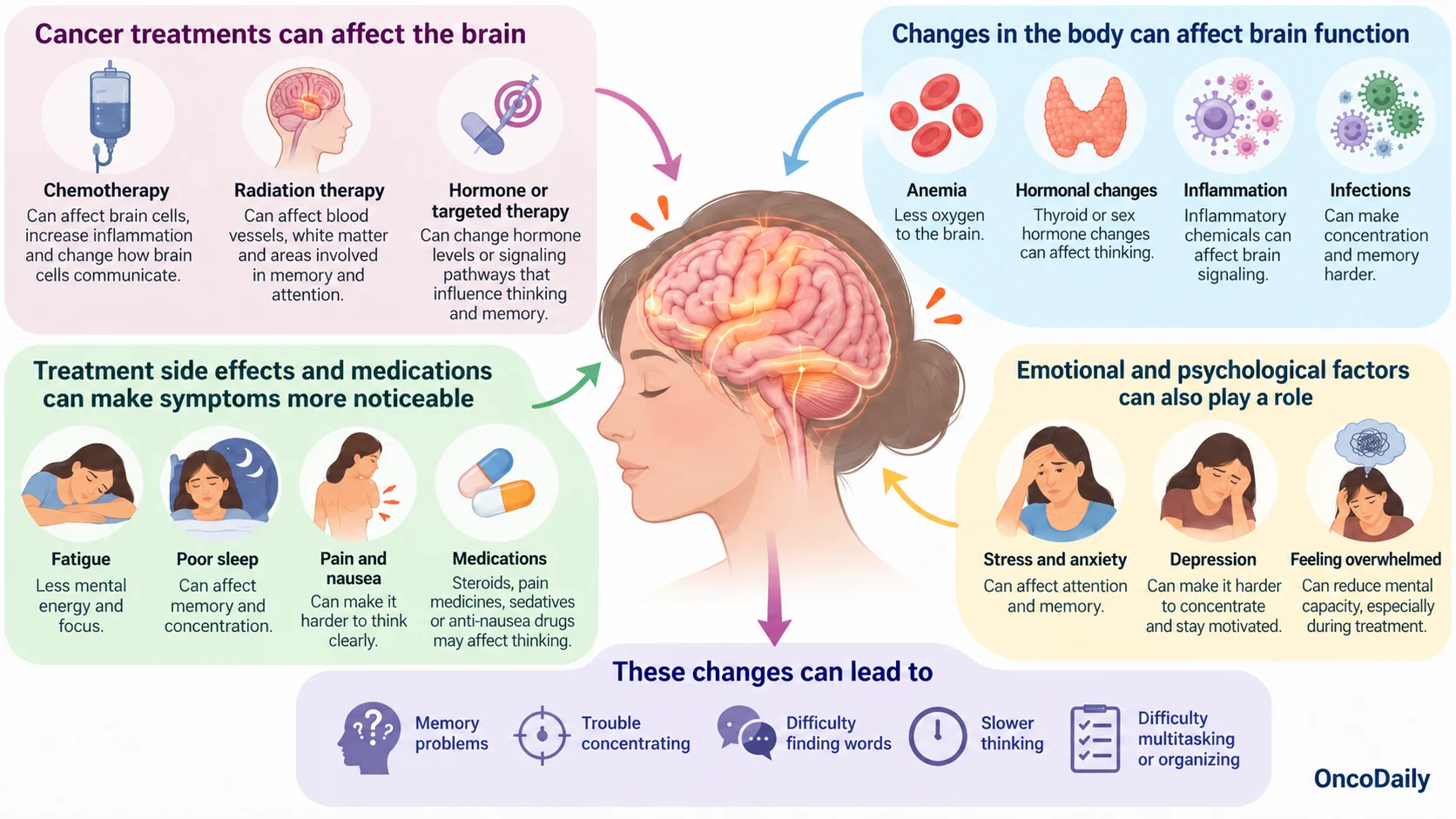
Some treatments can directly affect the brain. Chemotherapy has been linked to changes in areas involved in memory and attention, including the hippocampus and white matter. It may also affect inflammation, mitochondrial function, and communication between brain cells. Radiation therapy to the brain can have similar effects, particularly when larger areas or higher doses are involved.
Other changes happen indirectly. Cancer and its treatment can cause anemia, hormonal changes, infections, inflammation, or thyroid problems, all of which may affect how clearly someone thinks.
Everyday treatment side effects can also play a major role. Fatigue, poor sleep, pain, anxiety, depression, and medications such as steroids, pain medicines, sedatives, or anti-nausea drugs may make concentration and memory problems more noticeable.
In many patients, several of these factors are present at the same time. This is one reason why chemo brain can vary so much between people.
The risk also depends on the type and intensity of treatment, age, previous cognitive function, other health conditions, and whether the cancer itself affects the brain or central nervous system.
How Long Does Chemo Brain Last?
There is no single timeline for chemo brain.
Some people begin to feel clearer within weeks or months after treatment, while others continue to notice problems with concentration, memory, or mental speed for a year or longer.
For many patients, cognitive function improves gradually during the first 6–12 months after treatment. Improvement may continue over the following one to two years. Longer-lasting changes have also been reported, particularly after more intensive or prolonged treatment (BMJ, 2023).
How long symptoms last can depend on the treatment received, age, overall health, baseline cognitive function, and other issues such as fatigue, poor sleep, anxiety, depression, or pain.
If memory or concentration problems continue to interfere with everyday life after treatment, it is worth discussing them with the oncology team. Other treatable causes can be checked, and some patients may benefit from cognitive rehabilitation or neuropsychological assessment.
How Can You Improve Memory and Concentration During Cancer Treatment?
There is no single treatment for chemo brain, but a few practical changes can make daily life easier.
Using a notebook, calendar, phone reminders, or medication alarms can help with appointments and everyday tasks. It may also help to do one thing at a time, break larger tasks into smaller steps, and save more demanding activities for the part of the day when you feel most alert.
Before medical appointments, writing down questions or bringing someone with you can help make it easier to remember important information.
Sleep, hydration, regular meals, and gentle physical activity can also support concentration and energy. Managing pain, nausea, anxiety, depression, or sleep problems may improve cognitive symptoms as well (Cancer Research UK; Together by St. Jude).
Some people also benefit from cognitive rehabilitation, where they learn practical strategies for improving memory, attention, and organization.
When Should You Contact a Doctor?
Talk to your oncology team if memory or concentration problems are getting worse, affecting work or daily activities, or making it difficult to manage medications, appointments, or other important tasks.
More urgent assessment is needed if cognitive changes appear suddenly or are severe, especially if they are accompanied by:
- confusion or disorientation
- difficulty speaking or understanding speech
- weakness, numbness, or vision changes
- a severe headache or difficulty walking
- fever or signs of infection
- major changes in behavior or alertness
These symptoms are not typical of ordinary chemo brain and may need prompt medical evaluation.
FAQ
What is chemo brain?
Chemo brain is a term for memory, attention, and concentration problems that can happen during or after cancer treatment.
Can chemo brain happen without chemotherapy?
Yes. Radiation, hormone therapy, immunotherapy, medications, fatigue, stress, and the cancer itself can also contribute.
How long does chemo brain last?
For many people, symptoms improve within months, but some may last a year or longer.
Can chemo brain be treated?
There is no single treatment, but better sleep, exercise, reminders, stress management, and treating contributing problems can help.
When should I tell my doctor?
Talk to your oncology team if symptoms are worsening, affecting daily life, or if you develop sudden confusion, weakness, speech problems, or severe headache.