





Breast cancer is the most commonly diagnosed cancer among women worldwide.
But survival after a breast cancer diagnosis is not determined by biology alone. It is also shaped by whether a woman can recognize symptoms, reach a diagnostic service, receive pathology confirmation, start treatment on time, complete multimodality care, and remain protected from financial collapse.
That is the central breast cancer message from the World Health Organization’s Global status report on cancer 2026: The Future We Choose Together.
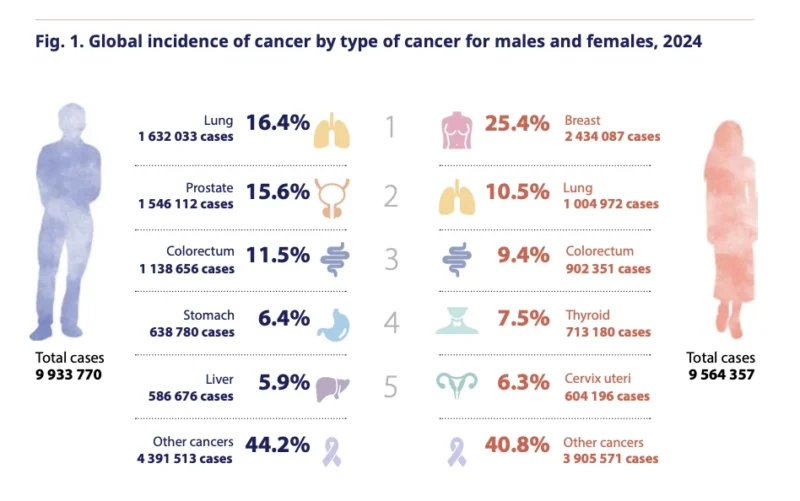
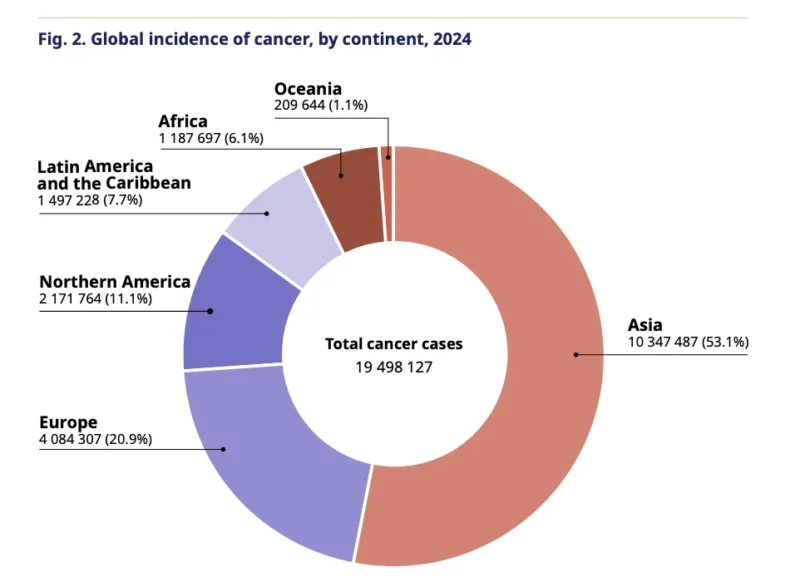
The report presents a global cancer burden that is growing, but also deeply unequal. In 2024, there were 20.6 million new cancer cases worldwide, including non-melanoma skin cancers. Among women, breast cancer accounted for the highest number of new diagnoses, with 2.4 million new cases.
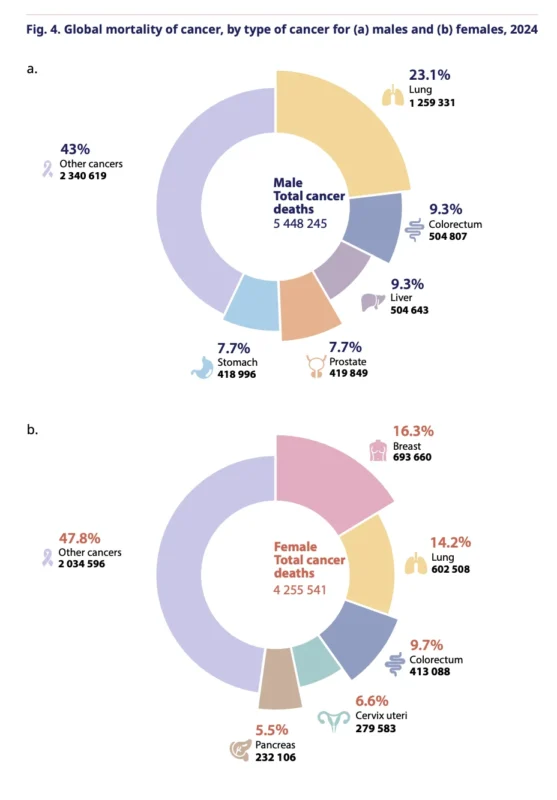
Breast cancer was also the leading cause of cancer-related death among women, responsible for approximately 693,660 deaths globally in 2024.
The numbers are large. But the deeper concern is the gap behind them: breast cancer survival now exceeds 85% in many high-income countries, while WHO estimates show survival can fall below 45% in low-income countries.
This is not only a clinical gap.
It is a health-system gap.
Breast Cancer Is a Global Disease, but Outcomes Are Not Globalized
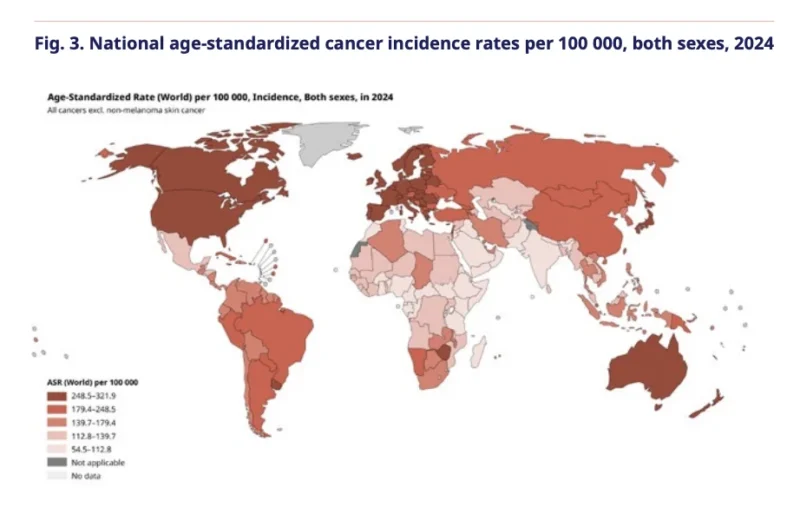
The WHO report makes clear that cancer is near-universal in its reach. Approximately one in five people will develop cancer during their lifetime. When the impact on close family members is included, WHO estimates that cancer will affect nearly all people globally at least once in their lives.
For breast cancer, the global picture is especially stark.
In high-income countries, decades of investment in early detection, diagnostic pathways, multidisciplinary treatment, radiotherapy, systemic therapy, surgery, and survivorship care have changed outcomes. Five-year breast cancer survival can now exceed 85%.
In many low- and middle-income countries, the same diagnosis still carries a much higher risk of death.
WHO’s new country-comparable breast cancer survival estimates show that 5-year net survival in breast cancer was four-fold higher in many high-income countries than in some sub-Saharan African countries. The median age-standardized 5-year net survival in sub-Saharan Africa during 2017–2021 was 39%, with more than half of countries not reaching 50%.
This difference is not explained by tumor biology alone.
It reflects delayed diagnosis, limited access to pathology, insufficient imaging, gaps in surgery and radiotherapy, restricted access to essential medicines, financial barriers, workforce shortages, and weak referral systems.
Early Diagnosis Remains One of the Most Important Dividing Lines
Breast cancer is highly treatable when diagnosed early and managed effectively.
The WHO report emphasizes that the proportion of breast cancers diagnosed at stage I or II strongly tracks with survival. Early-stage diagnosis makes curative treatment more effective, less toxic, and less costly.
But early diagnosis is not evenly distributed.
The report notes that 91% of high-income countries have more than 60% of breast cancer cases diagnosed at stage I or II. In contrast, only 28% of low- and middle-income countries with available data reach that level.
This is one of the clearest examples of the global breast cancer divide.
The problem is not simply that women present late. It is that many health systems do not have organized pathways that move a woman from symptom recognition to diagnosis and treatment without delay.
A breast lump should not begin a long journey through uncertainty.
It should trigger a clear, affordable, measurable pathway.
The WHO Global Breast Cancer Initiative Sets a Practical Target
The WHO Global Breast Cancer Initiative was launched in 2021 with the goal of reducing breast cancer mortality by 2.5% per year by 2040 and saving 2.5 million lives.
The initiative is built around three operational pillars.
The first pillar is early detection, with the goal that at least 60% of invasive breast cancers are diagnosed at stage I or II.
The second pillar is timely diagnosis. WHO defines this as completing evaluation, imaging, tissue sampling, and pathology within 60 days of first presentation to the health system.
The third pillar is comprehensive treatment. The goal is that at least 80% of patients complete full multimodality treatment.
These targets are not abstract.
They are a practical framework for what a functioning breast cancer system should deliver.
A woman should know when to seek care. A primary care worker should know when to refer. Imaging and biopsy should be accessible. Pathology should include receptor testing. Treatment should begin without catastrophic cost. Surgery, radiotherapy, systemic therapy, palliative care, rehabilitation, and survivorship care should be connected.
The report notes that these pillars are cost-effective and are among WHO’s NCD Best Buys. Yet only a few high-income countries have achieved the GBCI targets.
Breast Cancer Control Is More Than Screening
In well-resourced settings, WHO recommends screening women at average risk of breast cancer every two years between ages 50 and 69.
But the report also makes clear that screening alone is not enough.
A positive screen has little value if diagnostic confirmation is delayed. A biopsy has limited value if pathology is unavailable or incomplete. A diagnosis is not enough if surgery, radiotherapy, endocrine therapy, chemotherapy, anti-HER2 therapy, or palliative care cannot be accessed.
Breast cancer control depends on the whole pathway.
This is particularly important for countries where population-wide mammography screening may not yet be feasible. In those settings, health promotion, symptom awareness, clinical breast evaluation, timely referral, diagnostic capacity, and access to treatment may have the greatest immediate impact.
The key question is not only whether a country has a screening policy.
It is whether women can move through the system fast enough to benefit.
The Financial Burden Is Part of the Disease
The WHO report places strong emphasis on the lived experience of cancer.
Across cancers, WHO’s global survey found that a cancer diagnosis often brings emotional, social, and financial hardship. More than half of people affected by cancer reported mental health challenges, and approximately 45–60% of people diagnosed with cancer experience catastrophic health expenditure.
This matters deeply in breast cancer.
Treatment may involve surgery, systemic therapy, radiotherapy, years of endocrine therapy, follow-up imaging, management of side effects, fertility concerns, rehabilitation, and survivorship needs. Even when direct treatment is covered, indirect costs can be devastating: transport, childcare, time away from work, lost income, accommodation near treatment centers, and caregiver burden.
For women in low-resource settings, the financial burden may determine whether treatment is completed.
The report notes that only 28% of countries include a minimum cancer management package in their universal health coverage benefit packages. This means that many patients still lack access to basic cancer care without facing major out-of-pocket costs.
Breast cancer survival cannot improve at scale if treatment completion depends on a family’s ability to pay.
Prevention Also Belongs in Breast Cancer Policy
Breast cancer is not fully preventable. But prevention still matters.
The WHO report estimates that nearly 40% of new cancer cases globally are preventable through reduced exposure to modifiable risk factors.
For women, breast cancer is a major part of the cancer burden linked to population-level risk factors. The report highlights alcohol consumption, excess body weight, physical inactivity, tobacco exposure, unhealthy diet, and broader commercial determinants of health as important areas for cancer prevention policy.
Alcohol is particularly relevant. WHO notes that alcohol increases the risk of female breast cancer even at low levels of intake, and that breast cancer drove 57% of alcohol-attributable cancer cases among women.
This does not mean breast cancer prevention should be reduced to individual behavior.
The report argues for stronger policy-level action: health literacy, alcohol control, tobacco control, healthier food environments, physical activity promotion, vaccination where relevant, and protection from commercial practices that increase cancer risk.
Breast Cancer Is Also a Measure of Health-System Strength
The report frames cancer control as a test of health-system performance.
Breast cancer makes that point clearly.
A strong breast cancer system requires primary care, public awareness, imaging, pathology, surgery, radiotherapy, systemic therapy, medicines access, multidisciplinary coordination, palliative care, survivorship care, financing protection, and registry-based monitoring.
If any part of that chain fails, survival falls.
This is why the report’s breast cancer message is not only about new treatments. It is about implementation.
Modern oncology has produced major advances in targeted therapy, immunotherapy, antibody-drug conjugates, genomic testing, digital pathology, and artificial intelligence. These advances matter. But they do not replace the need for basic, timely, equitable breast cancer services.
A woman with early breast cancer does not only need innovation.
She needs access.
What Needs to Change?
The WHO report calls for three broad shifts in global cancer control: better capabilities, better protections, and better value.
For breast cancer, these shifts translate into practical priorities.
Countries need stronger diagnostic and treatment capacity, with breast cancer pathways that are funded, measured, and integrated into universal health coverage. They need social protection so that patients can complete treatment without catastrophic financial harm. They also need value-based implementation, where resources are directed toward interventions that improve survival, function, and quality of life.
For breast cancer specifically, the GBCI targets provide a measurable roadmap: diagnose at least 60% of invasive breast cancers at stage I or II, complete diagnostic evaluation within 60 days, and ensure that at least 80% of patients complete multimodality treatment.
These goals are ambitious.
They are also concrete.
The Bottom Line
The WHO Global status report on cancer 2026 shows that breast cancer is both a success story and a warning.
In countries with strong systems, breast cancer survival has improved dramatically. In countries where early diagnosis, pathology, treatment access, radiotherapy, essential medicines, and financial protection remain limited, the same disease still leads to avoidable death.
The future of breast cancer control will not be determined only by scientific discovery.
It will be determined by whether proven interventions are implemented equitably and at scale.
A breast cancer diagnosis should not carry a different chance of survival depending on a woman’s country, income, or ability to pay.
That is the future WHO is asking the world to choose together.
References
- World Health Organization. Global status report on cancer 2026: The Future We Choose Together. Geneva: World Health Organization; 2026.
- World Health Organization. Global Breast Cancer Initiative Implementation Framework: Assessing, Strengthening and Scaling Up Services for the Early Detection and Management of Breast Cancer. Geneva: World Health Organization; 2023.
- International Agency for Research on Cancer. GLOBOCAN 2024: Global Cancer Observatory. Lyon: IARC; 2024.
- World Health Organization. WHO Framework for Meaningful Engagement of People Living with Noncommunicable Diseases, and Mental Health and Neurological Conditions. Geneva: World Health Organization; 2023.
