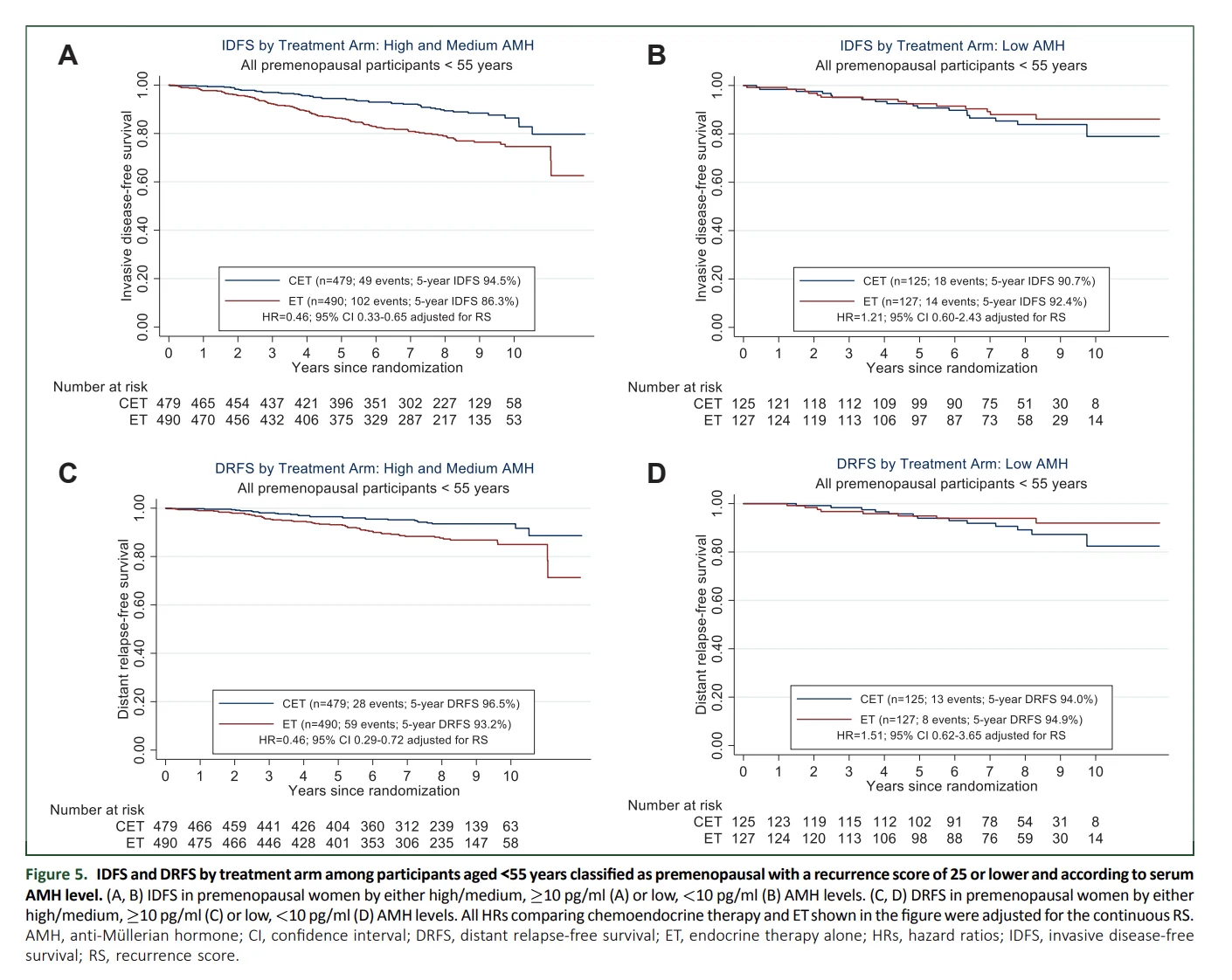
For younger women with hormone receptor-positive, HER2-negative, node-positive breast cancer, the decision to add chemotherapy remains one of the most closely examined questions in early breast cancer care.
The phase 3 RxPONDER trial established that postmenopausal women with one to three positive lymph nodes and a 21-gene recurrence score of 25 or lower could generally avoid chemotherapy without compromising invasive disease-free survival. Premenopausal women, however, experienced improved outcomes when chemotherapy was added to endocrine therapy.
That finding raised an important biological question: was the benefit produced by chemotherapy’s direct antitumor effect, or partly by chemotherapy-induced ovarian suppression?
A new analysis published in Annals of Oncology suggests that ovarian reserve, measured through pretreatment anti-Müllerian hormone, may identify which younger patients are more likely to benefit from chemotherapy.
Women with preserved ovarian reserve experienced a clear benefit from chemoendocrine therapy. Those with very low anti-Müllerian hormone levels did not. The findings suggest that ovarian biology may provide more clinically useful information than chronological age or conventional menopausal classification alone (Kalinsky et al., 2026).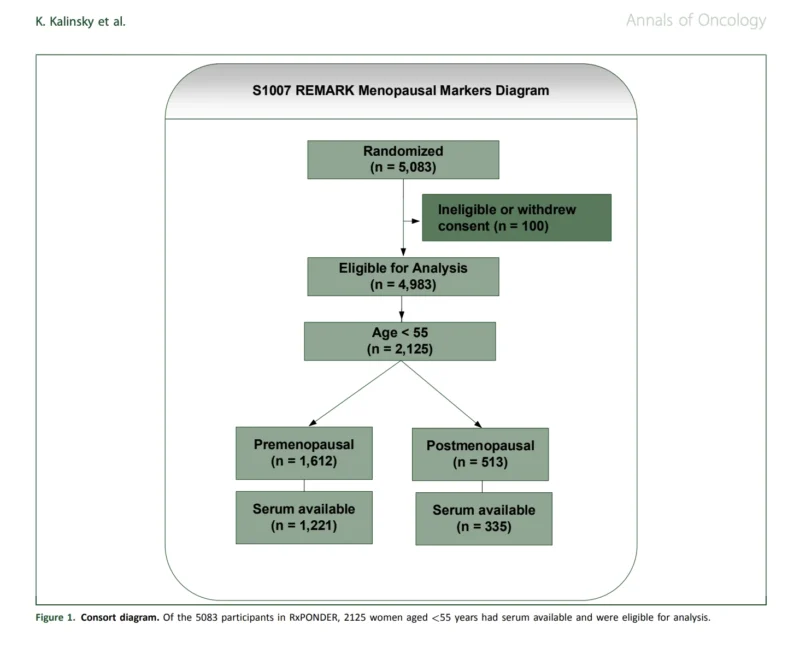
Why Menopausal Status May Not Tell the Whole Story
RxPONDER enrolled patients with hormone receptor-positive, HER2-negative breast cancer, one to three positive lymph nodes, and a recurrence score of 25 or lower.
The original trial showed no chemotherapy benefit among postmenopausal women. By contrast, premenopausal women experienced improvements in invasive disease-free survival and distant relapse-free survival when chemotherapy was added to endocrine therapy.
However, the use of ovarian function suppression was low in the original trial. Only 6% of premenopausal participants in the chemoendocrine arm and 19% in the endocrine therapy-alone arm received ovarian suppression.
This created uncertainty about the mechanism underlying the observed chemotherapy benefit. Chemotherapy may have acted partly by suppressing ovarian estrogen production rather than exclusively through direct cytotoxic activity against the tumor.
Menopausal status itself can also be difficult to classify. Age, menstrual history, previous hysterectomy, irregular cycles, and perimenopausal changes may not accurately reflect remaining ovarian function.
The investigators therefore examined whether direct measures of ovarian reserve could better predict chemotherapy benefit.
Measuring Ovarian Reserve Before Treatment
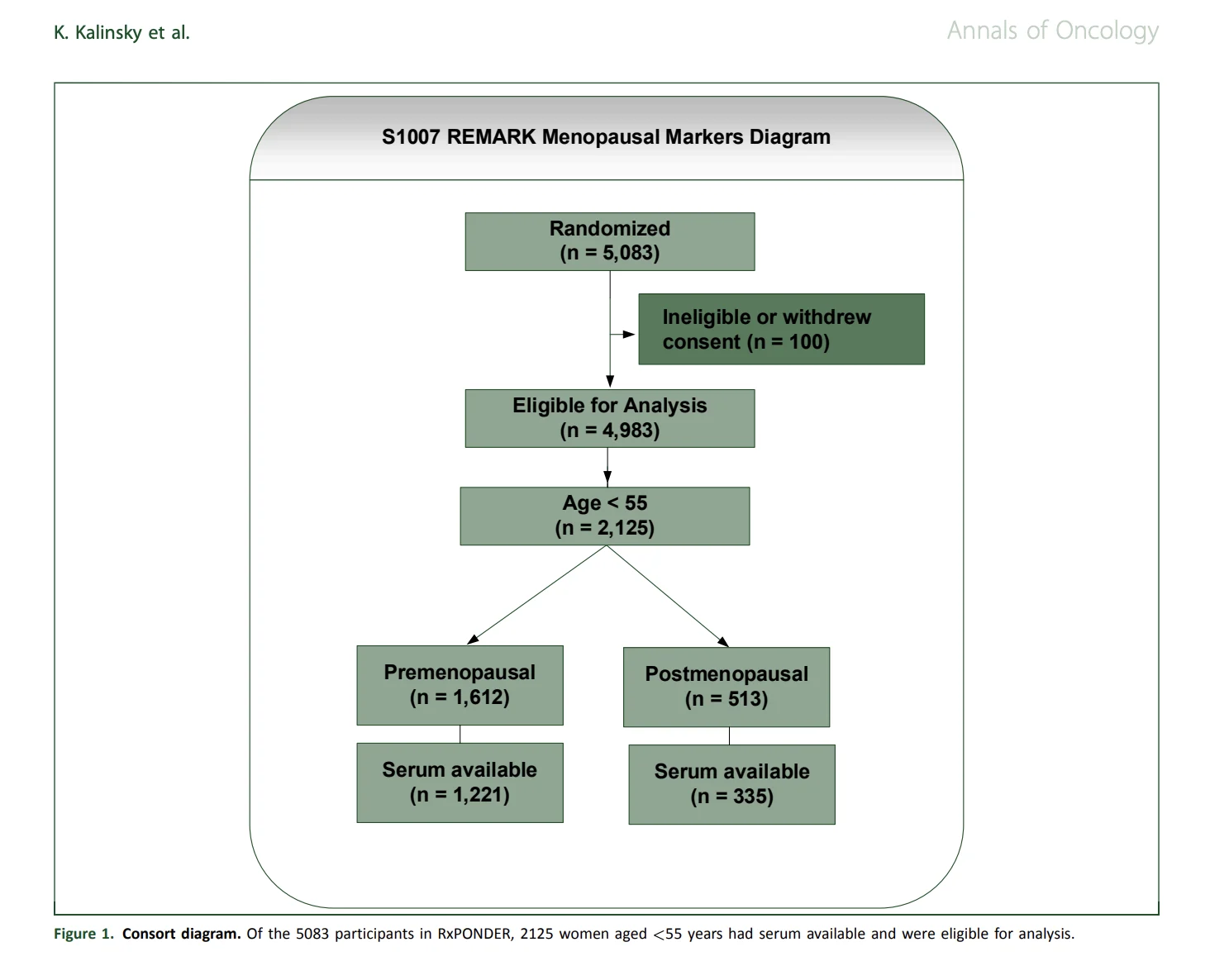
The analysis included 1,556 participants younger than 55 years from RxPONDER who had pretreatment serum available.
Among them:
- 1,221 were classified as premenopausal
- 335 were classified as postmenopausal
The investigators measured six pretreatment hormones:
- Anti-Müllerian hormone
- Inhibin B
- Estradiol
- Progesterone
- Follicle-stimulating hormone
- Luteinizing hormone
Anti-Müllerian hormone, commonly abbreviated as AMH, is produced by granulosa cells in ovarian follicles. Higher levels generally indicate greater ovarian reserve, while very low levels suggest that a woman is close to or beyond the final menstrual period.
Unlike several other reproductive hormones, AMH changes relatively little during the menstrual cycle. This makes it a potentially more stable marker when blood collection is not timed to a specific cycle phase.
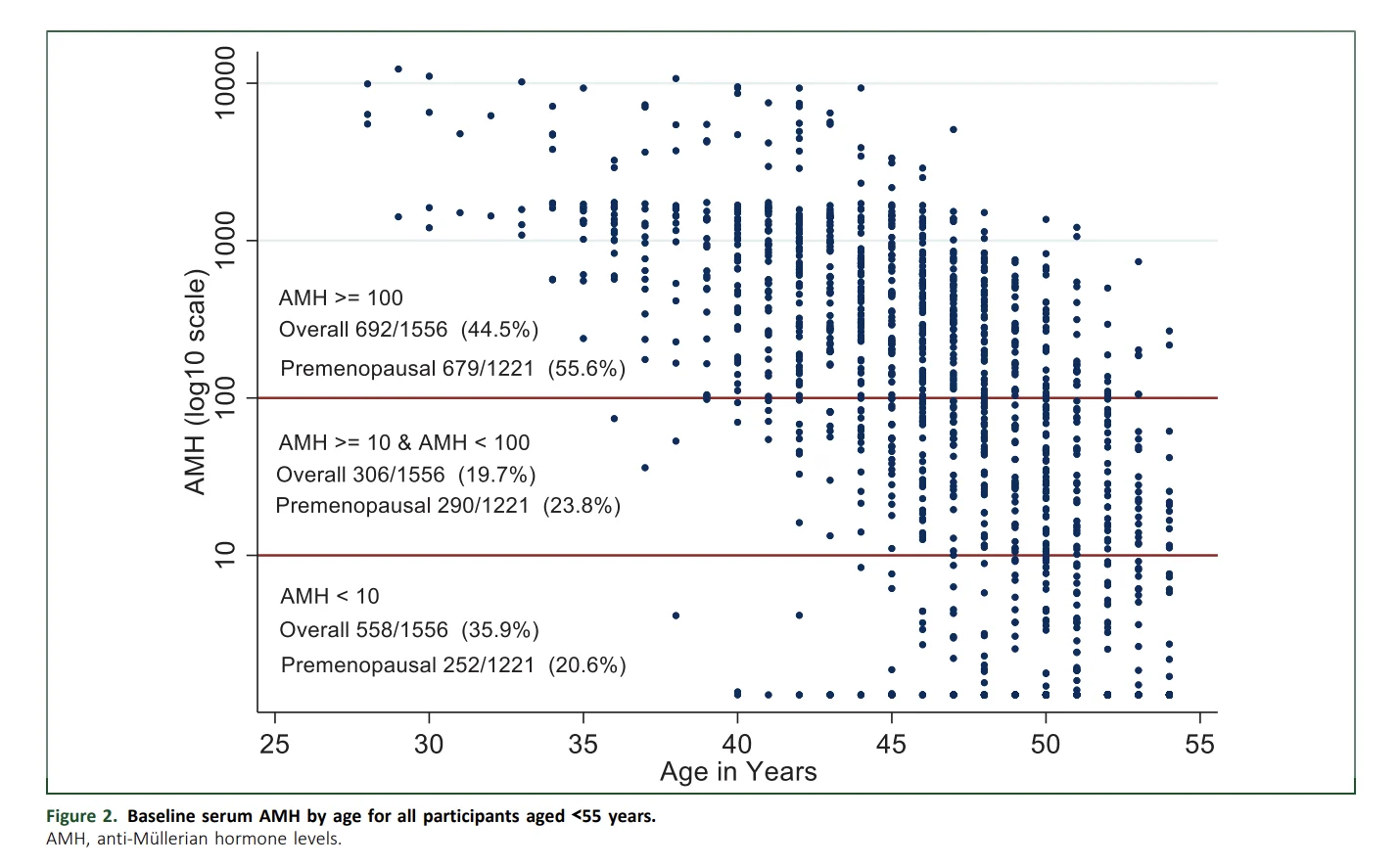
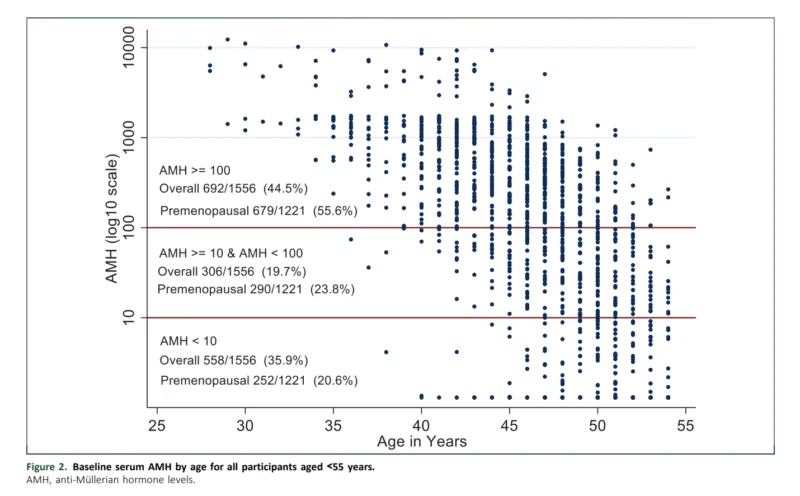
The investigators used an ultrasensitive assay capable of detecting AMH concentrations in the low picogram-per-milliliter range. Low ovarian reserve was defined as AMH below 10 pg/ml, a threshold associated with the final menstrual period or biochemical postmenopause.
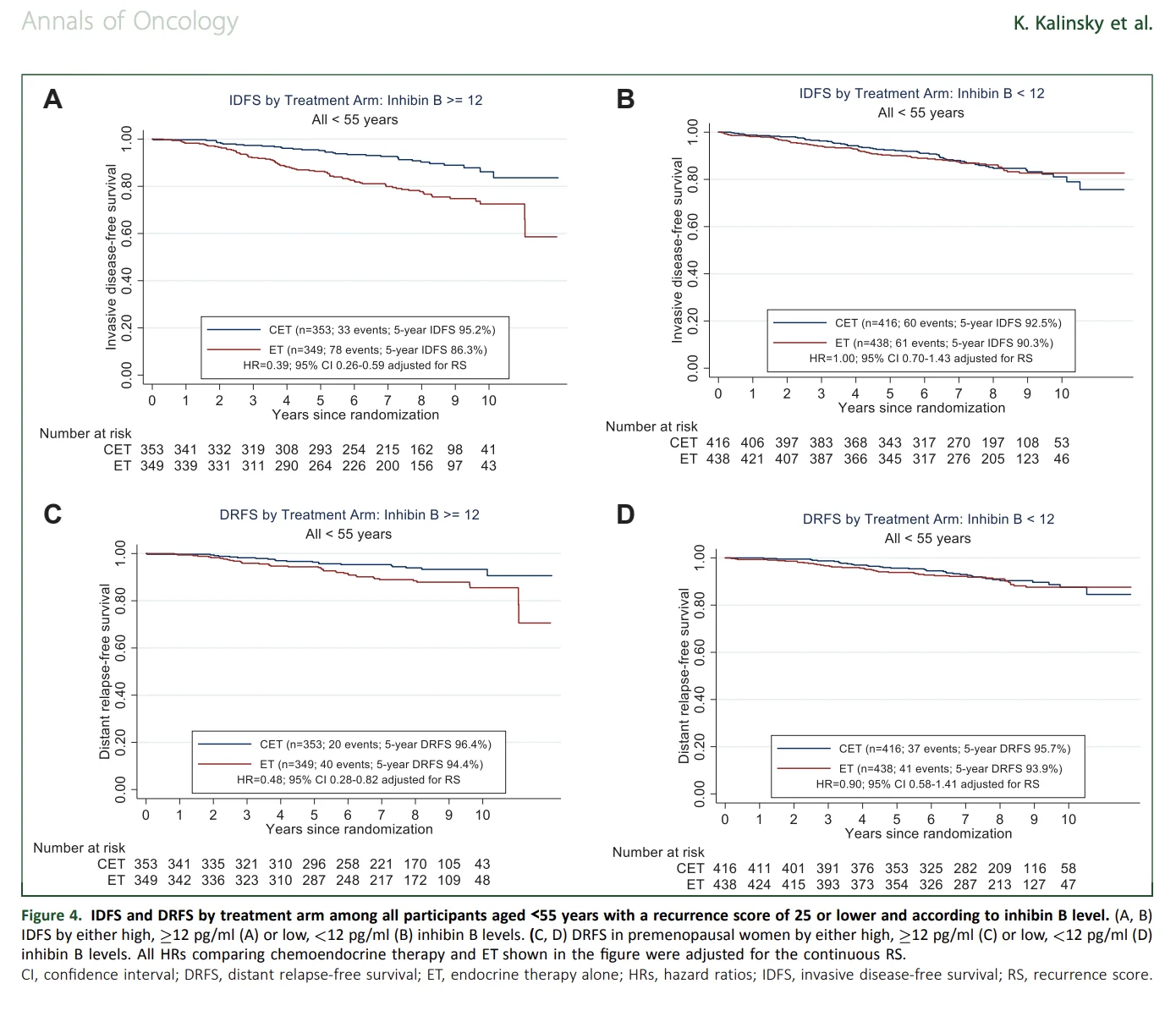
Inhibin B was also assessed using an ultrasensitive assay, with 12 pg/ml used as the predefined threshold.
AMH Outperformed Traditional Hormone Measures
After a median follow-up of 8 years, the analysis included 232 invasive disease-free survival events and 138 distant relapse-free survival events.
Estradiol and progesterone did not predict chemotherapy benefit. Follicle-stimulating hormone and luteinizing hormone were also less informative.
AMH and inhibin B showed the strongest associations with treatment benefit.
This distinction is important. Estradiol, progesterone, FSH, and LH can vary substantially during the menstrual cycle. Because the RxPONDER blood samples were not collected at standardized cycle phases, a single measurement may not have accurately represented ovarian reserve.
AMH was less affected by cycle timing and emerged as the strongest individual predictor of chemotherapy benefit.
Preserved Ovarian Reserve Identified Chemotherapy Benefit
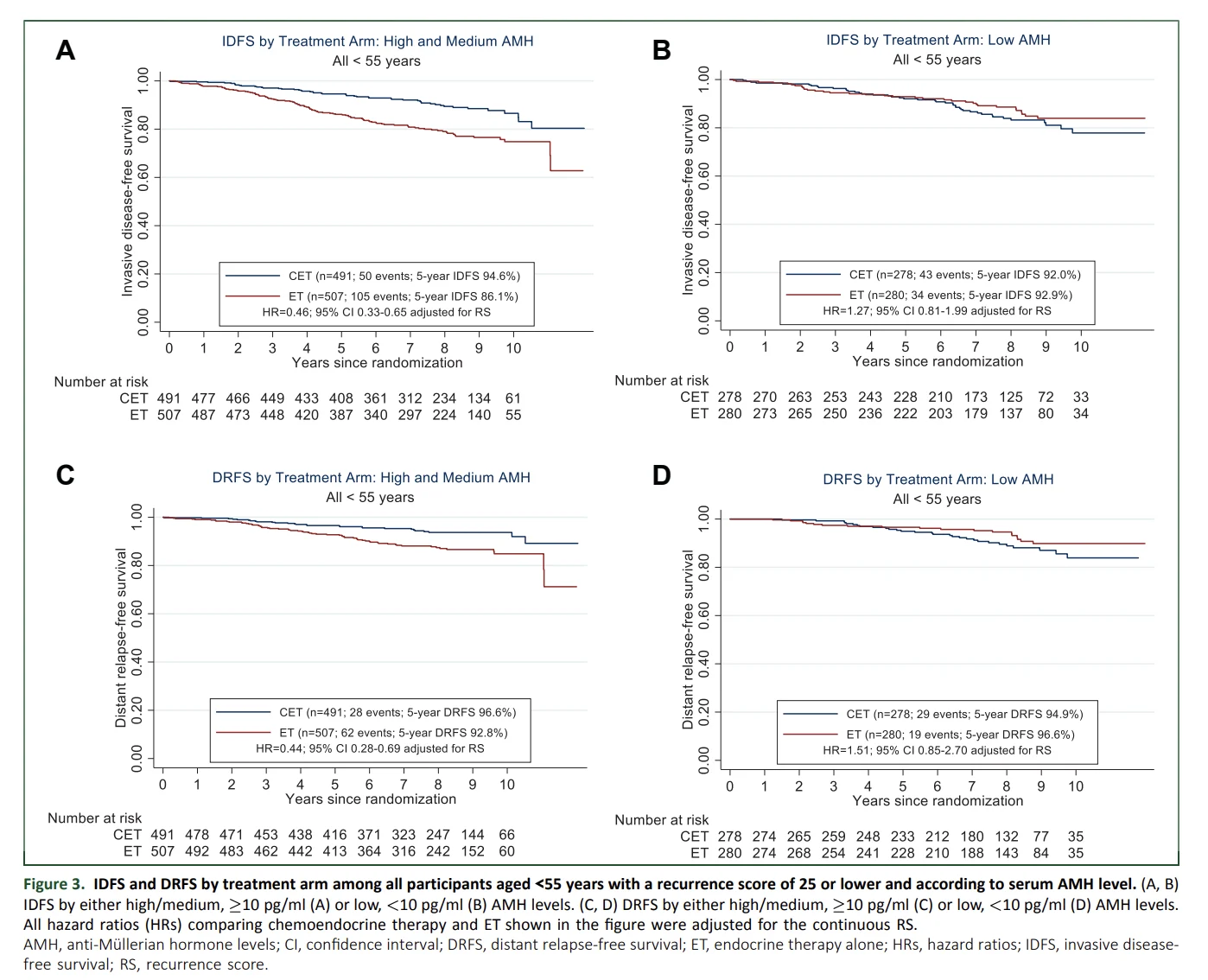
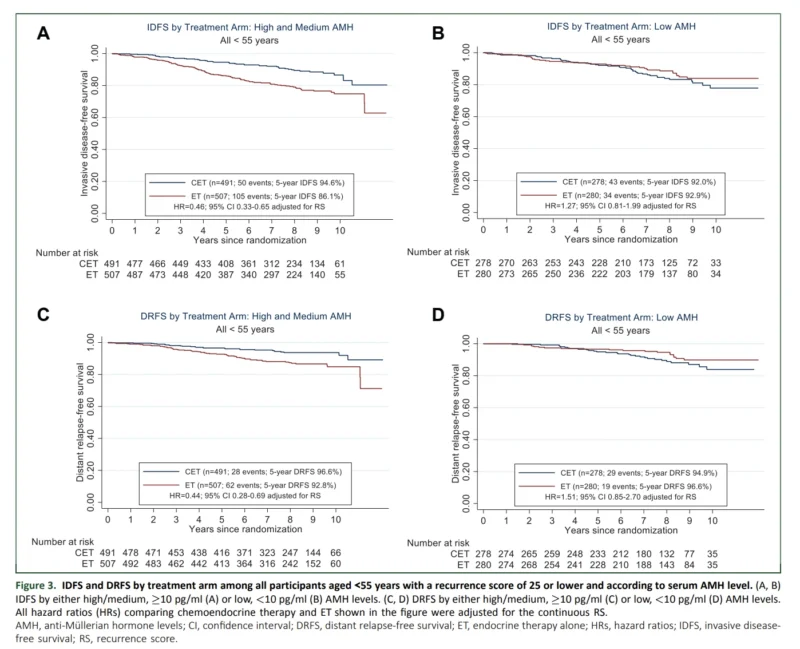
Among all participants younger than 55 years, 998 had AMH levels of at least 10 pg/ml, indicating preserved or measurable ovarian reserve.
In this group, adding chemotherapy to endocrine therapy significantly improved invasive disease-free survival.
The adjusted hazard ratio was 0.46, representing a 54% reduction in the risk of an invasive disease-free survival event compared with endocrine therapy alone.
At five years, invasive disease-free survival was:
- 94.6% with chemoendocrine therapy
- 86.1% with endocrine therapy alone
This represented an absolute difference of 8.5 percentage points.
Distant relapse-free survival showed a similar pattern. Among women with AMH of at least 10 pg/ml, the hazard ratio for chemotherapy plus endocrine therapy versus endocrine therapy alone was 0.44.
The five-year distant relapse-free survival difference was smaller, at 3.8 percentage points, but remained consistent with a clinically meaningful chemotherapy effect.
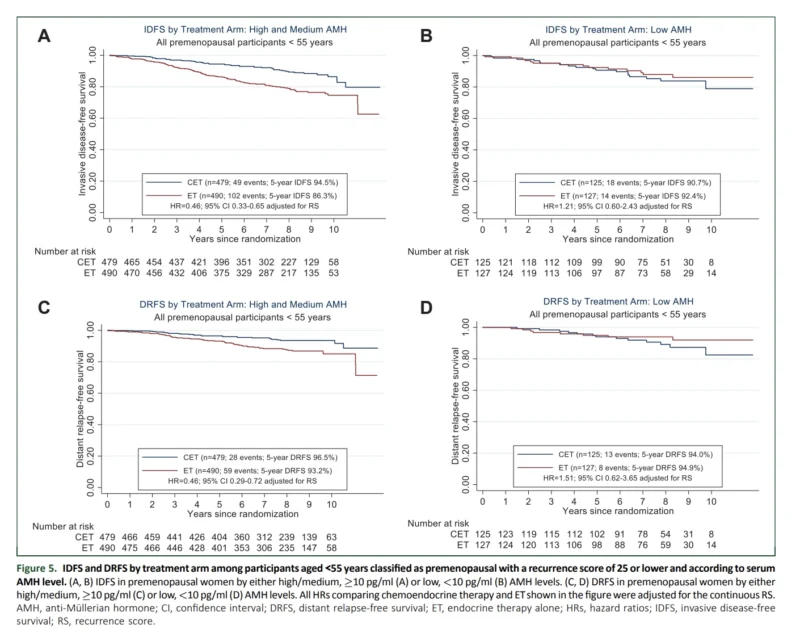
The survival curves presented on page 5 of the article clearly separate in patients with medium or high AMH, while they remain closely aligned in those with low AMH.
Low AMH Was Associated With No Chemotherapy Benefit
The most clinically important finding involved women with diminished ovarian reserve.
A total of 558 participants, or 35.9% of the cohort younger than 55 years, had AMH below 10 pg/ml.
In this group, chemotherapy did not improve invasive disease-free survival. The adjusted hazard ratio was 1.27, with a confidence interval crossing 1.
Five-year invasive disease-free survival was:
- 92.0% with chemoendocrine therapy
- 92.9% with endocrine therapy alone
Distant relapse-free survival also showed no evidence of chemotherapy benefit. The hazard ratio was 1.51, again with a wide confidence interval that did not support a treatment advantage.
These findings suggest that patients with very limited ovarian reserve may not derive the same benefit from chemotherapy as patients with active ovarian function, even when they are classified as premenopausal.
The Premenopausal Subgroup Confirmed the Pattern
Among the 1,221 women classified as premenopausal, 252 had AMH below 10 pg/ml.
This subgroup represented 20.6% of premenopausal participants younger than 55 years.
Among premenopausal women with AMH of at least 10 pg/ml, chemoendocrine therapy improved invasive disease-free survival, with a hazard ratio of 0.46.
Among those with AMH below 10 pg/ml, no chemotherapy benefit was observed. The hazard ratio was 1.21.
The same pattern was seen for distant relapse-free survival:
- AMH at least 10 pg/ml: HR 0.46
- AMH below 10 pg/ml: HR 1.51
This finding suggests that a premenopausal label does not necessarily mean that a patient has sufficient ovarian reserve to experience the ovarian-suppressive component of chemotherapy benefit.
Age Alone Was Less Precise
Age remained associated with chemotherapy benefit, but it did not classify patients as accurately as AMH.
Women younger than 50 years experienced an overall benefit from chemotherapy, while women aged 50 to 54 years did not.
However, ovarian reserve varied substantially within these age groups.
Low AMH was found in:
- 9.0% of premenopausal women younger than 50
- 51.5% of premenopausal women aged 50 to 54
The analysis also suggested that some women aged 50 to 54 with elevated AMH could still benefit from chemotherapy, while some younger women with low AMH might not.
The results therefore challenge the assumption that age or reported menstrual status can serve as complete substitutes for ovarian reserve.
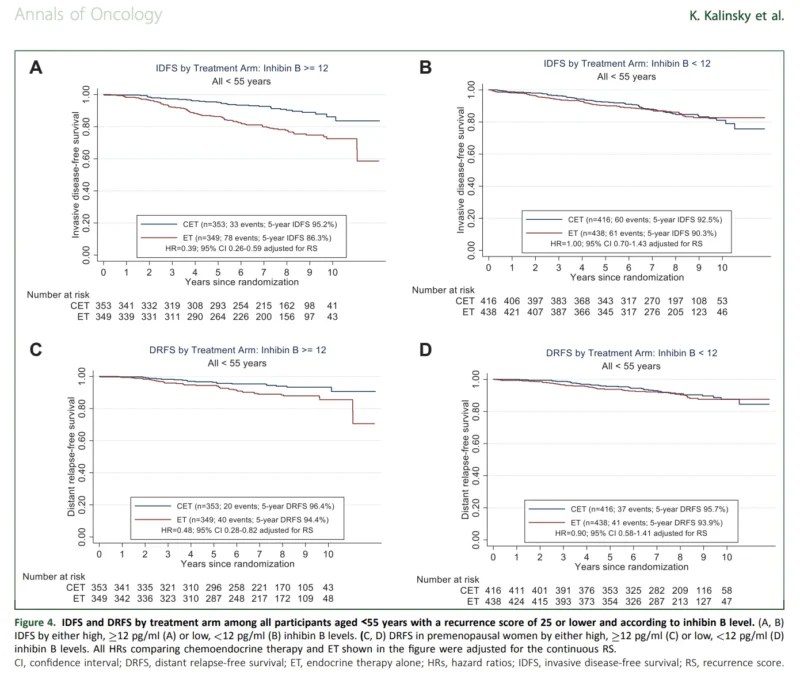
Inhibin B Supported the Same Biological Signal
Inhibin B also predicted chemotherapy benefit.
Patients with inhibin B levels of at least 12 pg/ml experienced improved invasive disease-free survival with chemoendocrine therapy, with a hazard ratio of 0.39.
Those with inhibin B below 12 pg/ml did not benefit, with a hazard ratio of 1.00.
AMH and inhibin B were strongly correlated, and combining them did not improve the predictive model. Of the two biomarkers, AMH provided the strongest and most clinically practical signal.
Does This Mean Chemotherapy Can Be Replaced by Ovarian Suppression?
The analysis does not answer that question.
RxPONDER was not designed to compare chemotherapy with ovarian function suppression plus endocrine therapy. Ovarian suppression was used infrequently, and treatment assignment did not isolate the ovarian-suppressive effect of chemotherapy from its direct cytotoxic effect.
The findings are consistent with the hypothesis that part of the chemotherapy benefit in premenopausal women may be mediated through ovarian suppression. However, they do not prove that chemotherapy can be safely replaced by ovarian suppression in all patients with preserved ovarian reserve.
That question is being addressed prospectively in trials such as NRG-BR009/OFSET, in which premenopausal patients receive ovarian suppression plus endocrine therapy and are randomized to chemotherapy or no chemotherapy.
Important Limits Before Clinical Adoption
The results are clinically provocative but require validation.
The analysis was retrospective within a prospective randomized trial. Serum samples were collected only before treatment, preventing evaluation of how ovarian reserve changed after chemotherapy or endocrine therapy.
The assays also matter. The clinically informative AMH threshold was below 10 pg/ml, but many routinely available AMH platforms are designed for fertility assessment and may not reliably quantify concentrations this low.
The investigators used an ultrasensitive MenoCheck picoAMH assay with a lower detection limit of 1.3 pg/ml. Standard commercial assays may not reproduce the same classification unless their performance is validated in the very low AMH range.
The youngest subgroup also requires caution. Among women younger than 40 years, nearly all had high AMH, but a clear chemotherapy benefit was not demonstrated. The number of events was small, making this exploratory result difficult to interpret.
What This Could Mean for Practice
The study suggests that ovarian reserve may eventually help refine chemotherapy decisions in younger patients with HR-positive, HER2-negative, node-positive breast cancer and a recurrence score of 25 or lower.
For patients with AMH below 10 pg/ml, the absence of measurable chemotherapy benefit raises the possibility that some could avoid treatment-related toxicity without compromising long-term outcomes.
For patients with preserved ovarian reserve, the strong invasive disease-free survival benefit supports the continued importance of systemic treatment intensification.
However, AMH testing should not yet be used in isolation to determine treatment. The findings need prospective validation, standardized ultrasensitive testing, and integration with tumor biology, lymph node burden, recurrence score, patient age, comorbidities, fertility priorities, and treatment preferences.
The Bottom Line
This RxPONDER biomarker analysis suggests that pretreatment ovarian reserve may predict adjuvant chemotherapy benefit more accurately than age or menopausal status in younger women with HR-positive, HER2-negative, node-positive breast cancer.
Women with AMH of at least 10 pg/ml experienced a substantial improvement in invasive disease-free survival with chemotherapy plus endocrine therapy, with a hazard ratio of 0.46 and an absolute five-year benefit of 8.5%.
Women with AMH below 10 pg/ml did not experience a measurable chemotherapy benefit.
The findings support a biologically important hypothesis: part of the chemotherapy benefit observed in premenopausal RxPONDER participants may be related to ovarian suppression.
For now, AMH remains a promising investigational biomarker rather than a standalone treatment decision tool. Further prospective validation could establish ovarian reserve testing as a new layer of precision in adjuvant breast cancer care.
References
- Kalinsky K, Barlow WE, Pathak HB, Puri RV, Mitra A, Home T, et al. Ovarian reserve as a measure of adjuvant chemotherapy benefit in hormone receptor-positive, HER2-negative, node-positive breast cancer in SWOG S1007 (RxPONDER). Annals of Oncology. 2026. doi:10.1016/j.annonc.2026.05.697.
- Kalinsky K, Barlow WE, Gralow JR, et al. 21-gene assay to inform chemotherapy benefit in node-positive breast cancer. New England Journal of Medicine. 2021;385:2336-2347.