
Premenopausal women with hormone receptor–positive, HER2-negative early breast cancer occupy a particularly complex space in contemporary breast oncology. The disease is biologically heterogeneous, the risk of recurrence may extend for decades, and treatment decisions can affect fertility, sexual health, bone and cardiovascular health, cognitive function, quality of life, and adherence at a stage of life when these consequences may persist for many years.
A new review accepted in Annals of Oncology addresses these challenges directly. Licata and colleagues, with Luca Pusztai and Giampaolo Bianchini as co-last authors, examine the major evidence gaps surrounding adjuvant treatment in premenopausal HR+/HER2− breast cancer and propose a pragmatic framework for individualized decision-making. The manuscript focuses on four areas in which evidence remains particularly difficult to translate into routine practice: tailoring chemotherapy with genomic assays, selecting the type and duration of endocrine therapy, improving endocrine-therapy adherence and safety, and integrating fertility and reproductive goals into treatment planning.
The central message is not that evidence is lacking across the entire field. Several treatment strategies are supported by mature randomized data. The problem is that the absolute benefit of treatment can vary substantially between patients, while many pivotal trials were not designed specifically for young premenopausal women. The challenge is therefore increasingly to determine how much treatment an individual patient actually needs, which part of the observed benefit comes from endocrine versus cytotoxic mechanisms, and how to preserve long-term health while maintaining oncologic efficacy.
Premenopausal HR+/HER2− Breast Cancer Is a Distinct Clinical Population
Although most breast cancers occur after menopause, premenopausal disease represents a substantial burden globally, particularly in low- and middle-income countries. Younger patients are more likely to present with larger tumors, nodal involvement, higher-grade disease, and biologically aggressive features. Within HR-positive tumors specifically, younger age has been associated with enrichment for luminal B biology and distinct genomic characteristics.
These differences matter because treatment evidence is frequently extrapolated from trials dominated by postmenopausal women. At the same time, the consequences of treatment are different. Inducing menopause in a woman in her 30s or early 40s is not equivalent to suppressing ovarian function shortly before natural menopause. The duration of exposure to estrogen deprivation may be much longer, and the implications for bone density, cardiovascular health, sexual function, cognition, fertility, and overall quality of life are correspondingly greater.
This makes absolute benefit particularly important.
A small relative improvement may represent a meaningful clinical gain for a patient with high baseline recurrence risk, while the same relative effect may translate into only a very small absolute benefit for someone whose baseline risk is already low.
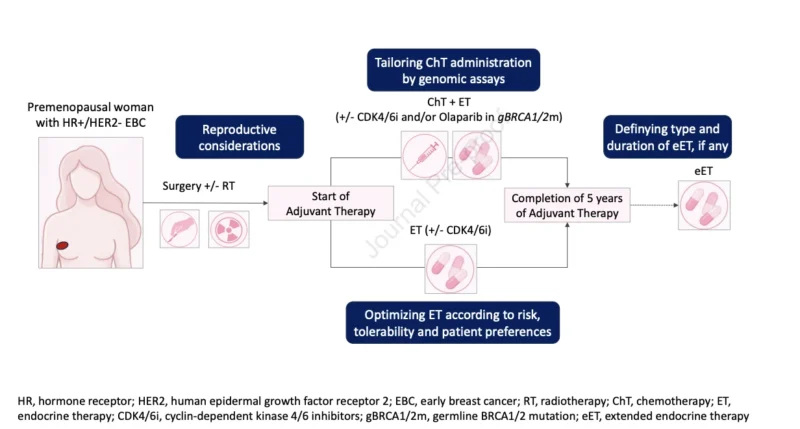
Ovarian Function Suppression Should Be Risk Adapted
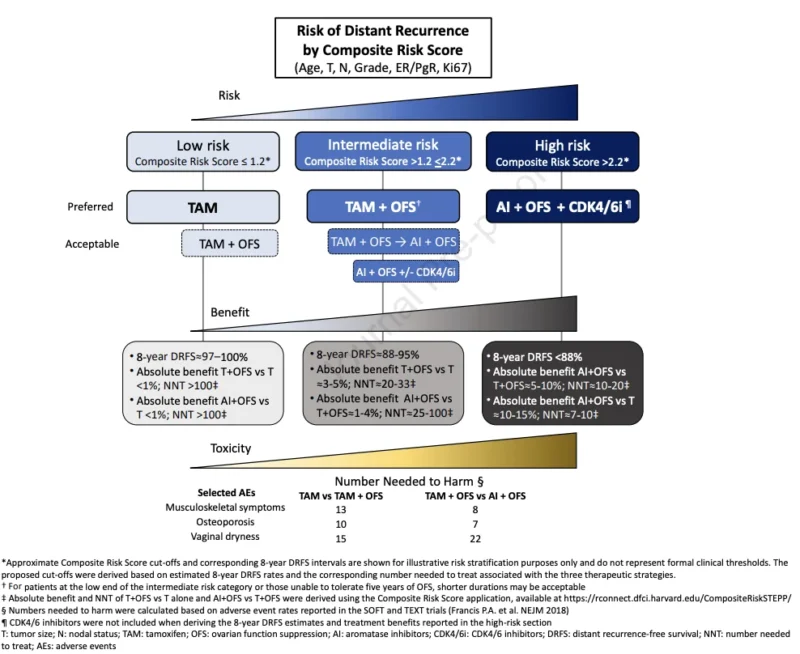
Endocrine therapy remains the cornerstone of treatment, but the review argues strongly against universal escalation to ovarian function suppression for every premenopausal patient.
Long-term data from SOFT and TEXT established the efficacy of ovarian suppression. In SOFT, adding OFS to tamoxifen reduced breast cancer events relative to tamoxifen alone, while exemestane plus OFS produced still greater disease control. In the combined SOFT/TEXT analysis, 15-year DFS was 74.9% with exemestane plus OFS versus 71.3% with tamoxifen plus OFS, although overall survival was similar at 87.8% and 87.0%. The greatest absolute gains were observed among women with higher-risk disease, including very young patients and those who had received chemotherapy.
That distinction between relative and absolute benefit is central to the authors’ interpretation. For lower-risk patients, the additional toxicity and long-term consequences of OFS may outweigh a very small absolute reduction in recurrence. For higher-risk patients, the same treatment burden may be justified by a considerably larger anticipated benefit.
The review therefore proposes a practical continuum rather than a universal regimen. Tamoxifen alone remains reasonable for selected low-risk patients. Tamoxifen plus OFS can be appropriate for intermediate-risk disease or when aromatase inhibitors are poorly tolerated. An aromatase inhibitor plus OFS is preferred for patients at highest recurrence risk, with adjuvant CDK4/6 inhibition incorporated when otherwise indicated.
Does Ovarian Suppression Always Need to Last Five Years?
Duration introduces another uncertainty. The ASTRRA trial provides evidence that meaningful benefit can be obtained with a shorter period of ovarian suppression. Among women who recovered ovarian function after chemotherapy, two years of OFS added to tamoxifen improved 10-year DFS to 83.7% compared with 75.9% with tamoxifen alone, with an HR of 0.68.
These findings do not establish two years as equivalent to five years for every patient. Rather, they support flexibility when prolonged OFS is poorly tolerated and emphasize that treatment duration should be considered within the patient’s absolute recurrence risk and toxicity burden.
Another unresolved practical issue is whether ovarian suppression is complete. Inadequate suppression may occur with LHRH agonists, particularly when combined with aromatase inhibitors. Although three-monthly formulations appear comparable with monthly administration, standardized estradiol monitoring strategies and validated therapeutic thresholds remain lacking. Unexpectedly elevated estradiol or discordant menopausal symptoms should prompt reassessment of adherence, injection timing, and dosing.
Genomic Assays Are Prognostic, but Their Predictive Role Is More Complicated in Young Women
One of the most important sections of the review addresses a persistent controversy in premenopausal HR+/HER2− disease: does chemotherapy benefit in premenopausal women with intermediate genomic risk reflect direct cytotoxicity, chemotherapy-induced ovarian suppression, or both?
Genomic assays clearly provide prognostic information in younger patients. Oncotype DX has the largest body of prospective evidence for informing chemotherapy decisions. However, the interpretation of chemotherapy benefit in premenopausal women is complicated by the design of TAILORx and RxPONDER. Only about 13% of premenopausal patients in the endocrine-therapy control groups of those studies received ovarian suppression. By contrast, chemotherapy frequently induced ovarian dysfunction and was often followed by more intensive endocrine treatment.
The observed advantage of chemotherapy could therefore represent a combination of direct cytotoxic activity and what the authors describe as a “chemo-endocrine effect.” This distinction has major implications.
If much of the chemotherapy benefit seen in genomically lower-risk premenopausal women comes from ovarian suppression, then adequately optimized endocrine therapy might allow some patients to avoid chemotherapy without compromising outcomes. But the authors appropriately emphasize that this hypothesis has not been definitively proven.
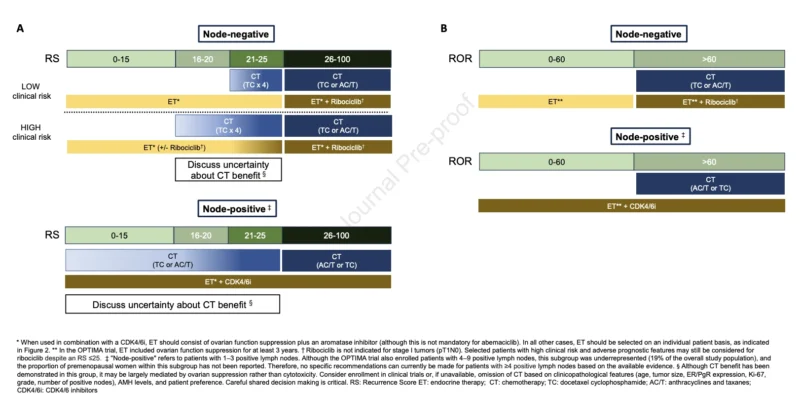
TAILORx and RxPONDER Should Not Be Oversimplified
Several observations support the ovarian-suppression hypothesis. In TAILORx, chemotherapy benefit among women aged ≤50 years with recurrence scores of 16–25 was concentrated largely among women aged 40–50 and was absent in those younger than 40. Women aged 46–50 derived benefit only when they remained premenopausal.
Similarly, a post hoc RxPONDER analysis suggested that chemotherapy benefit differed according to ovarian reserve. Women with higher anti-Müllerian hormone levels appeared to derive greater benefit, while those with low ovarian reserve did not. These observations are consistent with chemotherapy advancing menopause in women who otherwise would have maintained substantial ovarian function.
But a purely endocrine explanation cannot be assumed. Breast cancers occurring in younger women can have biologically distinct features and may in some circumstances be intrinsically more chemotherapy sensitive. The appropriate conclusion is therefore one of uncertainty rather than therapeutic simplification.
OPTIMA Provides a New Piece of the Puzzle
The recently reported OPTIMA trial adds an important perspective. OPTIMA randomized 4,429 patients older than 40 years to standard chemotherapy followed by endocrine therapy or a Prosigna-guided strategy. Patients with low ROR scores in the biomarker-guided group received endocrine therapy alone.
Among patients with low ROR, 5-year invasive breast cancer–free survival was 94.8% with standard chemoendocrine therapy and 93.6% with biomarker-directed endocrine therapy alone, meeting the trial’s noninferiority criterion. Premenopausal women represented 37% of the population, and OFS for at least three years was mandatory in premenopausal patients receiving endocrine therapy alone.
This is an important difference from TAILORx and RxPONDER because ovarian suppression was actively incorporated rather than infrequently used.
However, the review emphasizes several limitations: women younger than 40 were excluded, patients with extensive nodal involvement were underrepresented, follow-up remains relatively short, and the trial was not powered to demonstrate noninferiority specifically within the premenopausal subgroup.
OPTIMA therefore strengthens the argument that optimized endocrine therapy may substitute for chemotherapy in some genomically low-risk premenopausal patients, but it does not resolve the issue completely. The ongoing OFSET and OPTIMA-YOUNG studies are expected to provide more definitive prospective evidence.
A Low Genomic Score Should Not Automatically Mean the Same Thing as No Treatment Benefit
An important conceptual distinction runs throughout the manuscript: prognosis and treatment sensitivity are different questions. A genomic assay may identify a patient with relatively low baseline recurrence risk. That does not necessarily prove that a particular therapy has no biological effect. Instead, low baseline risk limits how large the absolute benefit can be.
Conversely, the lack of definitive evidence supporting genomic testing to omit chemotherapy in certain premenopausal node-positive populations should not be interpreted as evidence that every such patient must receive chemotherapy.
The authors summarize this principle particularly well: absence of definitive evidence defining a subgroup is not equivalent to evidence that treatment omission is unsafe. Individual clinical risk, genomic risk, ovarian reserve, endocrine-treatment intensity, CDK4/6 inhibitor eligibility, toxicity, and patient preference all need to be integrated.
What Happens After Five Years of Endocrine Therapy Remains Uncertain
Premenopausal HR-positive breast cancer carries a prolonged risk of recurrence, with a substantial proportion of distant events occurring beyond the first five years. Extended endocrine therapy therefore appears attractive, particularly for younger women who may remain at risk for decades. Yet this is another area in which evidence is less robust than clinicians may assume.
The strongest randomized evidence for extended therapy in premenopausal patients comes largely from trials evaluating 10 versus five years of tamoxifen. ATLAS demonstrated reductions in recurrence and breast cancer mortality with longer tamoxifen exposure, including a directionally consistent effect in its relatively small premenopausal subgroup.
In contrast, no randomized trial has established the optimal endocrine strategy beyond five years for women who have already completed five years of OFS plus tamoxifen or an aromatase inhibitor.
That gap is becoming increasingly important because today’s higher-risk patients may also receive adjuvant CDK4/6 inhibitors during the initial treatment period.
Oral SERDs May Eventually Reshape Extended Therapy
Several ongoing trials may change this landscape. EMBER-4, CAMBRIA-1, and ELEGANT are evaluating switches to oral SERDs after an initial course of standard endocrine therapy, with OFS used for premenopausal participants where required. The possibility of eventually providing effective endocrine therapy while reducing dependence on prolonged ovarian suppression is especially attractive in younger women.
However, the authors caution that OFS-sparing approaches remain investigational. Preliminary evidence with oral SERDs without ovarian suppression is intriguing, but recent data suggest that their antiproliferative effect may be weaker without OFS.
The goal is therefore not simply to remove ovarian suppression. It is to determine whether endocrine efficacy can be preserved while reducing the long-term biological and quality-of-life consequences of premature menopause.
Adherence Is Not a Secondary Issue, it Is Part of Treatment Efficacy
One of the most clinically relevant themes of the review is adherence. Endocrine therapy only works when patients can remain on it. In SOFT and TEXT, approximately 20% of women younger than 35 years discontinued assigned therapy prematurely. Real-world studies have repeatedly associated endocrine-therapy discontinuation with poorer outcomes. In a Danish cohort of 4,503 premenopausal women, recurrence risk was approximately 1.7-fold higher among women who discontinued endocrine therapy than among those who completed treatment.
Importantly, the authors reject the simplistic interpretation that nonadherence reflects insufficient motivation. For young patients, treatment may cause abrupt menopause accompanied by hot flashes, insomnia, arthralgia, vaginal dryness, sexual dysfunction, fatigue, weight change, depression, bone loss, and concerns about fertility and identity. These effects occur alongside employment, relationships, childcare, and other life responsibilities.
The manuscript therefore reframes adherence as a clinical outcome influenced by toxicity management, psychosocial support, and treatment design.
Supportive Care Should Be Built Into Endocrine Therapy From the Beginning
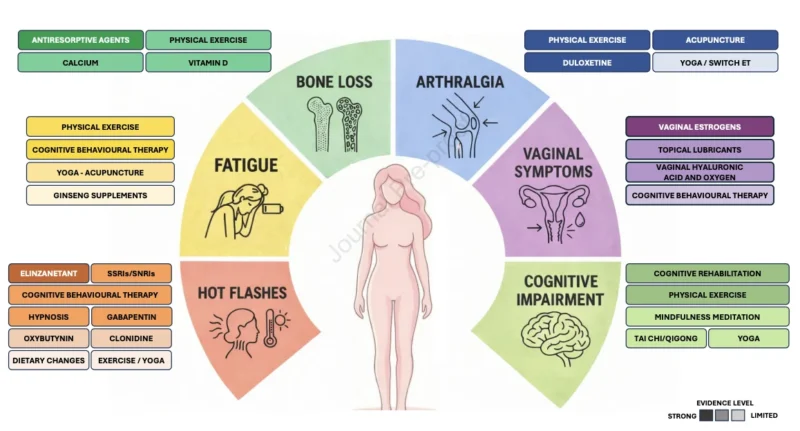
The review provides practical approaches for managing endocrine-related toxicity.
Exercise and acupuncture have evidence for musculoskeletal symptoms, while duloxetine remains one of the better-supported pharmacological options. For vasomotor symptoms, elinzanetant has demonstrated efficacy, while venlafaxine, desvenlafaxine, escitalopram, and gabapentin remain options. Paroxetine requires caution with tamoxifen because of CYP2D6 inhibition.
Exercise and cognitive behavioral therapy are among the more evidence-based strategies for fatigue. Cognitive rehabilitation and physical activity may help patients experiencing cognitive symptoms. Bone protection requires attention to exercise, calcium and vitamin D intake, and antiresorptive therapy when clinically indicated.
Genitourinary symptoms require similarly proactive management. Nonhormonal moisturizers and lubricants remain first-line measures. Vaginal estrogen may be considered for carefully selected patients with persistent symptoms after discussion of uncertain risk, particularly because observational evidence is not entirely consistent in patients receiving aromatase inhibitors.
These interventions are not peripheral to adjuvant therapy. They can determine whether a patient is able to remain on treatment for years.
Digital Health May Help Sustain Long-Term Therapy
The authors also identify digital symptom monitoring as a potentially scalable strategy.
Electronic patient-reported outcome systems can improve communication, identify toxicities earlier, and facilitate timely supportive interventions. Studies in breast cancer have reported improvements in symptom burden and quality of life, although results are not uniformly positive and implementation must avoid widening disparities based on digital access or literacy.
For endocrine therapy that may continue for five to ten years, such tools could become particularly useful because adherence problems often develop outside the traditional window of intensive oncology follow-up.
Fertility Cannot Be Separated From Adjuvant Treatment Planning
For many premenopausal women, reproductive goals directly influence decisions about endocrine therapy. Five or more years of treatment can consume a substantial proportion of remaining reproductive time. Fertility concerns are therefore among the reasons some young women discontinue endocrine therapy early.
The POSITIVE trial provides important prospective evidence in this setting. The study enrolled 516 women aged ≤42 years who had completed 18–30 months of adjuvant endocrine therapy and temporarily interrupted treatment for up to two years to attempt conception, deliver, and breastfeed before resuming therapy.
At five years, breast cancer events occurred in 12.3%, comparable with an external control population meeting similar eligibility criteria. Among women with reproductive follow-up, 76% achieved pregnancy and 69% had a live birth. These findings support temporary treatment interruption in carefully selected patients, although longer follow-up is needed and the POSITIVE population contained predominantly lower-risk disease.
The practical message is that fertility discussions should occur before treatment starts, not after a patient has already spent several years on endocrine therapy.
Oncofertility Counseling Should Be Standard Early Care
Oocyte, embryo, and ovarian-tissue cryopreservation are established fertility-preservation strategies. GnRH agonists during chemotherapy can also reduce the risk of premature ovarian insufficiency. Prospective evidence further supports the oncologic safety of controlled ovarian stimulation for fertility preservation, including in HR-positive disease.
Treatment planning should therefore incorporate fertility alongside recurrence risk from the outset. This is particularly important because adjuvant decisions increasingly involve chemotherapy, OFS, prolonged endocrine therapy, CDK4/6 inhibition, and potentially extended treatment with future oral SERDs. A plan that is oncologically appropriate but incompatible with a patient’s reproductive priorities may ultimately compromise adherence or lead to unplanned treatment interruption.
The Central Clinical Principle Is Absolute Benefit
The review ultimately returns to a fundamental issue: adjuvant therapy is given to patients who may already be cured by surgery. The benefit of treatment therefore needs to be evaluated against the probability of recurrence without that intervention.
In higher-risk disease, relatively intensive therapy may prevent metastatic recurrence in a clinically meaningful proportion of patients. In lower-risk disease, the same treatment may expose many women to years of toxicity so that relatively few obtain an absolute survival benefit.
The consequences of overtreatment and undertreatment are also asymmetrical. Overtreatment can generate years of adverse effects and psychosocial burden; undertreatment may miss an opportunity to prevent incurable metastatic recurrence. No genomic score, age threshold, or pathological variable can completely resolve that trade-off. That is why shared decision-making is not simply a patient-preference add-on in this setting, it is an essential component of evidence-based care.
The Bottom Line
The review by Licata and colleagues provides a useful framework for one of the most nuanced populations in early breast cancer.
For premenopausal HR+/HER2− disease, the evidence supports several broad principles: ovarian suppression should be individualized according to absolute recurrence risk; genomic assays are prognostic but their ability to predict chemotherapy benefit remains less certain than in postmenopausal disease; chemotherapy-induced ovarian suppression may explain part of the benefit observed in genomically lower-risk young women; the optimal endocrine strategy beyond five years remains unresolved; and adherence, toxicity, fertility, and reproductive goals must be incorporated into treatment decisions from the beginning.
The future is likely to move away from a simple escalation model in which younger age automatically results in more therapy. Instead, the emerging strategy is to integrate clinical risk, genomic risk, ovarian biology, endocrine sensitivity, modern targeted therapies, toxicity, and patient priorities to determine the absolute value of each component of treatment.
For premenopausal HR+/HER2− early breast cancer, precision oncology increasingly means not only identifying who needs more treatment, but also identifying who can safely receive less.
Reference
- Licata L, Mariani M, Chiavassa A, Partridge AH, Zanibelli C, Jhaveri K, Kalinsky K, Patanè F, Criscitiello C, Lambertini M, Rugo HS, Naldini MM, Notini G, Viale G, Pusztai L, Bianchini G. Navigating uncertainties and evidence gaps in adjuvant therapy for premenopausal women with HR+/HER2− breast cancer. Annals of Oncology. 2026. doi:10.1016/j.annonc.2026.09.005. The paper was accepted September 8, 2026 and is currently available as a journal pre-proof.