
A new safety analysis of the phase III INAVO120 trial, published in ESMO Open, provides a detailed look at adverse event management with inavolisib plus palbociclib and fulvestrant in patients with PIK3CA-mutated, hormone receptor-positive, HER2-negative, endocrine-resistant advanced breast cancer.
INAVO120 previously demonstrated significant progression-free survival and overall survival benefits with the inavolisib-based regimen compared with placebo plus palbociclib and fulvestrant. This new analysis focuses on the safety profile of the triplet regimen, particularly selected adverse events that are clinically relevant for PI3K pathway inhibition.
The key message is that the safety profile of inavolisib plus palbociclib–fulvestrant was generally manageable and tolerable. Most selected adverse events were low grade, occurred early in treatment, and were controlled with supportive medications and dose modifications.
Why This Analysis Matters
PIK3CA mutations are common in hormone receptor-positive, HER2-negative advanced breast cancer and are associated with activation of the PI3K pathway. Targeting this pathway has become an important therapeutic strategy, but PI3K inhibition is also linked with characteristic adverse events.
These toxicities can include hyperglycaemia, stomatitis, rash, and diarrhoea. In clinical practice, the benefit of a PI3K-targeted regimen depends not only on efficacy but also on how well these adverse events can be anticipated, monitored, and managed.
INAVO120 is especially important because it evaluated inavolisib together with full-dose palbociclib and fulvestrant in the first-line setting for endocrine-resistant advanced breast cancer. The regimen combines PI3K inhibition, CDK4/6 inhibition, and endocrine therapy.
This safety analysis helps define how clinicians may manage treatment-emergent toxicities while maintaining treatment exposure.
Study Design
INAVO120 was a randomized, double-blind, placebo-controlled phase III trial.
Patients had PIK3CA-mutated, hormone receptor-positive, HER2-negative, endocrine-resistant advanced breast cancer. Inavolisib was given at 9 mg orally once daily on days 1 through 28 of each 28-day cycle. Palbociclib was given at 125 mg orally once daily on days 1 through 21. Fulvestrant was administered at 500 mg intramuscularly on days 1 and 15 of cycle 1, and then approximately every 28 days.
Patients were randomized to receive either inavolisib plus palbociclib–fulvestrant or placebo plus palbociclib–fulvestrant.
The current safety analysis had a clinical cut-off of September 29, 2023. Median follow-up was 21.3 months in the inavolisib arm and 21.5 months in the placebo arm.
The safety analysis set included 162 patients in each treatment arm.
The selected adverse events analyzed in detail were hyperglycaemia, rash, stomatitis or mucosal inflammation, and diarrhoea.
Efficacy Context From INAVO120
The safety analysis should be interpreted in the context of the efficacy previously reported for INAVO120.
At the primary analysis, inavolisib plus palbociclib–fulvestrant significantly improved progression-free survival compared with placebo plus palbociclib–fulvestrant. Median PFS was 15.0 months versus 7.3 months, with a hazard ratio of 0.43.
At the final analysis, the updated median PFS was 17.2 months versus 7.3 months, with a hazard ratio of 0.42. Overall survival was also significantly improved, with median OS of 34.0 months in the inavolisib arm versus 27.0 months in the placebo arm.
These results established the clinical benefit of adding inavolisib to palbociclib and fulvestrant in this endocrine-resistant, PIK3CA-mutated population.
Overall Safety Profile
Almost all patients experienced at least one adverse event.
In the inavolisib arm, adverse events occurred in 98.8% of patients. In the placebo arm, adverse events occurred in all patients.
The most common adverse events in the inavolisib arm were neutropenia, hyperglycaemia, diarrhoea, decreased neutrophil count, anaemia, and stomatitis.
Grade 3 or 4 adverse events occurred in 88.3% of patients receiving inavolisib plus palbociclib–fulvestrant and 82.1% receiving placebo plus palbociclib–fulvestrant. The most common grade 3 or 4 events were largely hematologic, including neutropenia and decreased neutrophil count, consistent with the known safety profile of palbociclib.
Serious adverse events occurred in 24.1% of patients in the inavolisib arm and 10.5% in the placebo arm. Grade 5 adverse events occurred in 3.7% and 1.2%, respectively, but none were reported by investigators as related to any study drug.
Importantly, discontinuation rates due to adverse events were generally low. In the inavolisib arm, 6.2% of patients discontinued inavolisib due to adverse events.
Hyperglycaemia: Early, On-Target, and Manageable
Hyperglycaemia is a known on-target toxicity of PI3K pathway inhibition.
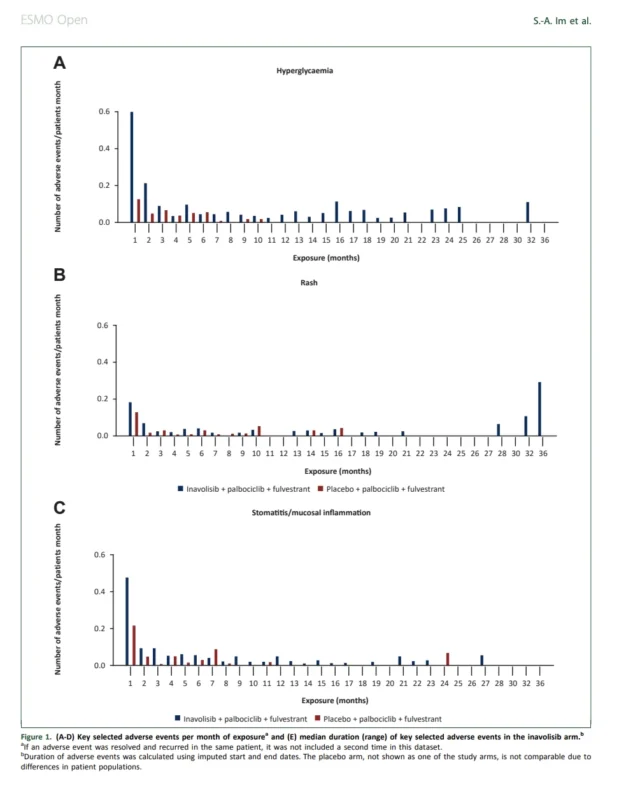
In the inavolisib arm, hyperglycaemia was reported in 58.6% of patients using grouped terms. Most events were grade 1 or 2. Grade 3 hyperglycaemia occurred in 5.6% of patients. No grade 4 or grade 5 hyperglycaemia events were reported, and no cases of diabetic ketoacidosis occurred.
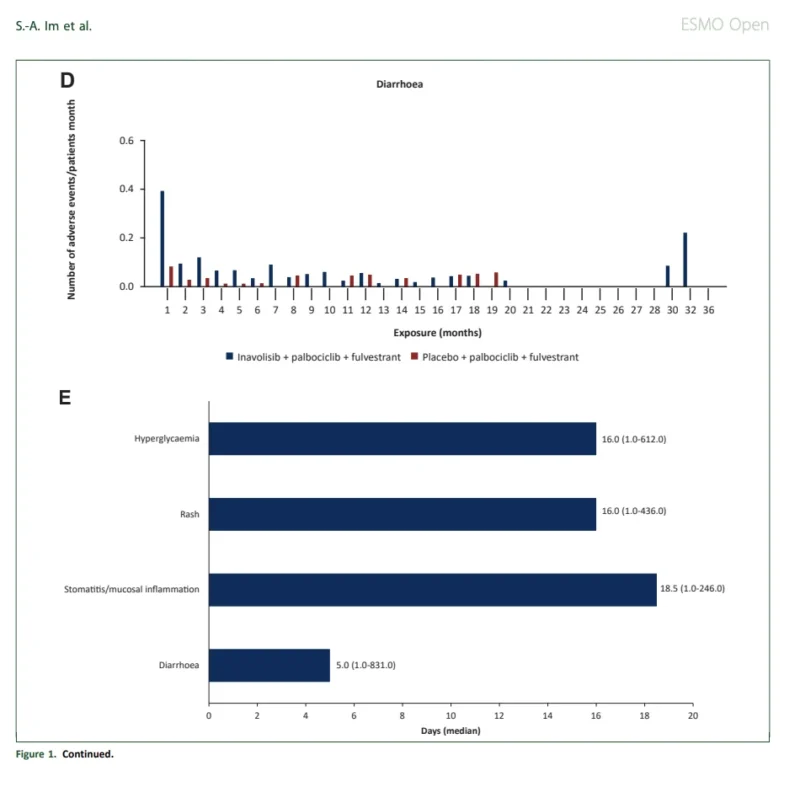
The median time to first onset was 7 days, showing that hyperglycaemia often emerged early during treatment. Median time to resolution was 16 days.
Inavolisib dose interruptions due to hyperglycaemia occurred in 27.2% of patients. Dose reductions occurred in 2.5%, and discontinuation occurred in 0.6%.
Metformin was the most commonly used antihyperglycaemic medication. Among patients who received medication for hyperglycaemia management, metformin was used in 93.9%, either alone or with other agents.
Notably, among patients with baseline prediabetes in the inavolisib arm, no patients discontinued inavolisib due to hyperglycaemia.
This finding is clinically relevant because it suggests that early monitoring and prompt management can help maintain treatment in patients at risk.
Rash: Mostly Low Grade
Rash was reported in 25.3% of patients treated with inavolisib plus palbociclib–fulvestrant.
All rash events were grade 1 or 2. No grade 3 to 5 rash events were reported. No severe cutaneous adverse reactions, including Stevens-Johnson syndrome, toxic epidermal necrolysis, erythema multiforme, or DRESS, were reported.
The median time to first onset of rash was 29 days. Median time to resolution was 16 days.
Dose interruptions, reductions, and discontinuations due to rash were uncommon. Inavolisib interruption due to rash occurred in 1.2% of patients, dose reduction in 0.6%, and discontinuation in none.
Topical corticosteroids, including hydrocortisone and triamcinolone acetonide, were the most commonly used medications.
Stomatitis and Mucosal Inflammation
Stomatitis or mucosal inflammation was reported in 51.2% of patients in the inavolisib arm.
Most events were grade 1 or 2. Grade 3 events occurred in 5.6% of patients, and no grade 4 or 5 events were reported.
The median time to first onset was 13 days. Median time to resolution was 20 days.
Dose interruptions due to stomatitis or mucosal inflammation occurred in 9.9% of patients. Dose reductions occurred in 3.7%, and discontinuation occurred in 0.6%.
Dexamethasone mouthwash was the most commonly used medication. Nearly one fifth of patients in the inavolisib arm received prophylactic dexamethasone or triamcinolone mouthwash or topical formulations.
This supports an important practical message: early oral care and mouthwash-based prevention or management may reduce the burden of stomatitis during PI3K inhibitor-based treatment.
Diarrhoea: Common But Usually Short-Lived
Diarrhoea occurred in 48.1% of patients in the inavolisib arm.
Most cases were grade 1 or 2. Grade 3 diarrhoea occurred in 3.7% of patients. No grade 4 or 5 diarrhoea events and no colitis events were reported.
The median time to first onset was 15 days. Median time to resolution was 5 days, suggesting that diarrhoea was often short-lived.
Inavolisib dose interruptions due to diarrhoea occurred in 6.8% of patients. Dose reductions occurred in 1.2%, and no patients discontinued inavolisib due to diarrhoea.
Loperamide was the most commonly used antidiarrhoeal medication. No escalation treatment with steroids or opioids was required.
Other Safety Findings
Ocular toxicities were reported in 22.2% of patients in the inavolisib arm. All were grade 1 or 2 and nonserious. The most common events were dry eye, blurred vision, and increased lacrimation. These events did not lead to interruption, reduction, or withdrawal of any study drug.
Pneumonitis was reported in 1.9% of patients in the inavolisib arm. All cases were grade 1 or 2 and nonserious.
No treatment-emergent colitis was reported.
Safety Across Regions and Age Groups
The safety profile was generally consistent across regions and age groups.
The analysis included patients from Asia, North America or Western Europe, and other regions. Overall adverse events, dose modifications, and treatment withdrawals were broadly comparable across regions.
Some numerical differences were observed. Grade 3 or 4 adverse events were numerically higher in Asia. Hyperglycaemia and stomatitis or mucosal inflammation were also numerically higher in Asia compared with other regions. Diarrhoea was reported more frequently in North America or Western Europe.
Across age groups, adverse events leading to inavolisib dose interruption or modification and events leading to treatment withdrawal were largely comparable. Serious adverse events and dose modifications were numerically higher in patients aged 65 to 74 years than in those younger than 65 years, which may reflect higher comorbidity burden and reduced physiologic reserve in older patients.
The authors noted that subgroup sizes were small, so these findings should be interpreted cautiously.
Long-Term Safety
The long-term safety analysis included patients who received inavolisib for at least one year.
At the February 2, 2024 clinical cut-off, 69 patients in the inavolisib arm had received treatment for at least one year.
No adverse events leading to withdrawal of study treatment occurred in this long-term safety population.
The overall long-term safety profile was consistent with previous reports, suggesting that no new safety signal emerged with extended treatment exposure.
Clinical Meaning
This analysis strengthens the practical understanding of inavolisib-based therapy.
The efficacy of INAVO120 has already shown that adding inavolisib to palbociclib and fulvestrant improves outcomes in PIK3CA-mutated, hormone receptor-positive, HER2-negative, endocrine-resistant advanced breast cancer.
The current analysis shows that the main adverse events associated with the regimen can often be managed with early monitoring, supportive medications, and dose modifications.
The first treatment cycle appears especially important. Hyperglycaemia, stomatitis, rash, and diarrhoea frequently occurred early, meaning clinicians should monitor closely from the start of therapy.
For hyperglycaemia, baseline risk assessment and fasting glucose monitoring are essential. For stomatitis, prophylactic or early dexamethasone mouthwash can be useful. For diarrhoea, early loperamide use may help control symptoms. For rash, topical corticosteroids were commonly used.
The low discontinuation rate suggests that many patients can remain on therapy when adverse events are recognized and managed early.
Limitations
The authors noted several limitations.
Some subgroup analyses were small, particularly by age and region. The “Other” regional subgroup included multiple regions with limited patient numbers, making interpretation difficult.
Differences in adverse event rates may also reflect differences in management guideline adherence, reporting practices, or patient characteristics.
The analysis was descriptive and focused on safety. It should not be interpreted as a new efficacy analysis beyond the previously reported INAVO120 outcomes.
Key Takeaway
The INAVO120 safety analysis shows that inavolisib plus palbociclib and fulvestrant has a generally manageable and tolerable safety profile in patients with PIK3CA-mutated, hormone receptor-positive, HER2-negative, endocrine-resistant advanced breast cancer.
Key selected adverse events, including hyperglycaemia, rash, stomatitis or mucosal inflammation, and diarrhoea, were generally reversible, mostly low grade, and manageable with supportive care and dose modifications.
No new or unexpected safety signals were observed.
The findings provide practical guidance for clinicians using this regimen and reinforce the importance of early monitoring during the first treatment cycles.