A new JAMA Network Open study suggests that germline multigene panel testing may help identify a clinically important subgroup of women with invasive lobular carcinoma who face a higher risk of early breast cancer relapse.
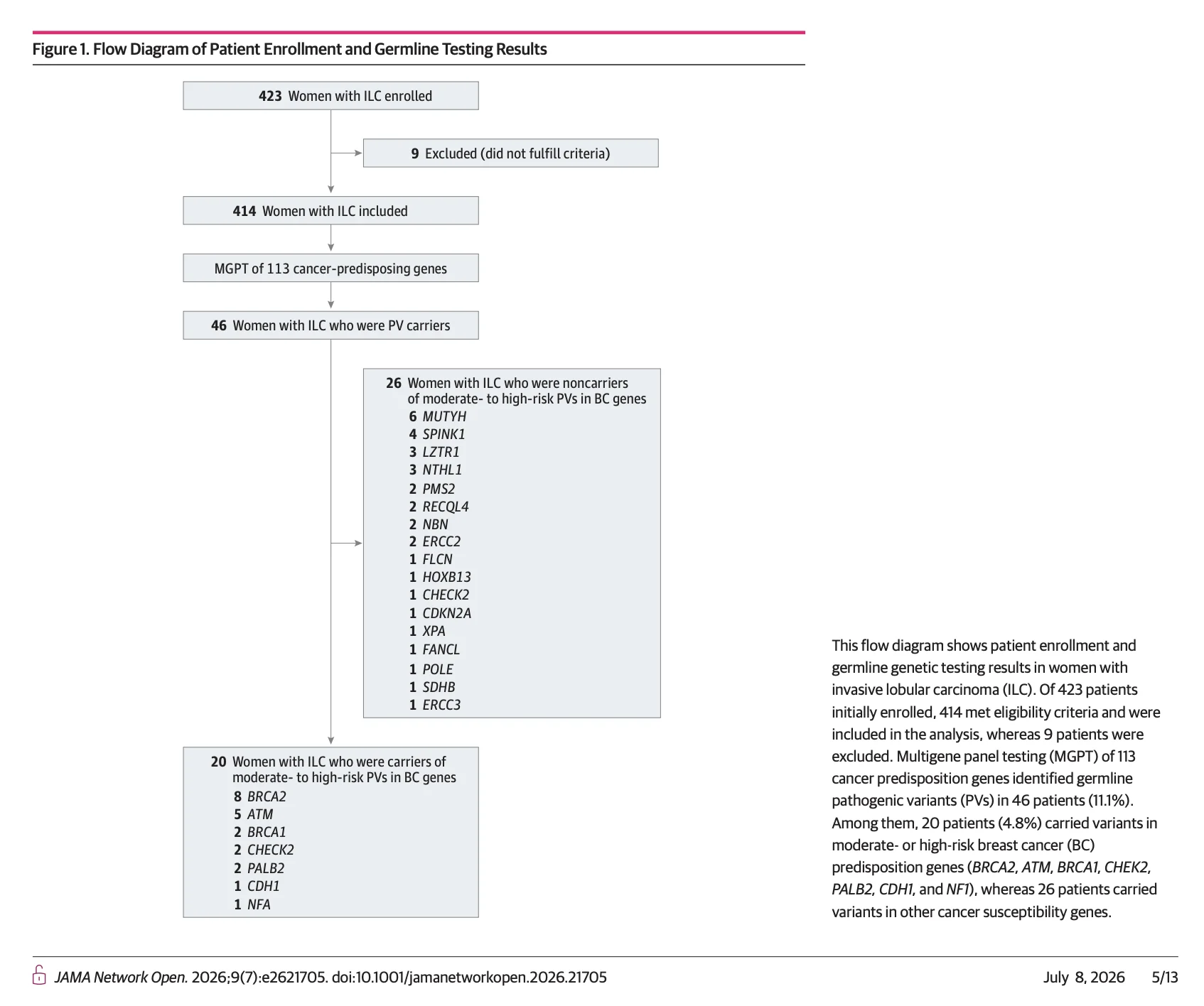
The prospective longitudinal cohort study included 414 women with primary invasive lobular carcinoma treated at the European Institute of Oncology in Milan, Italy. All patients underwent multigene panel testing using a 113-gene next-generation sequencing panel.
The investigators found that 11.1% of patients carried germline pathogenic or likely pathogenic variants. Among them, 4.8% carried variants in moderate- to high-risk breast cancer predisposition genes.
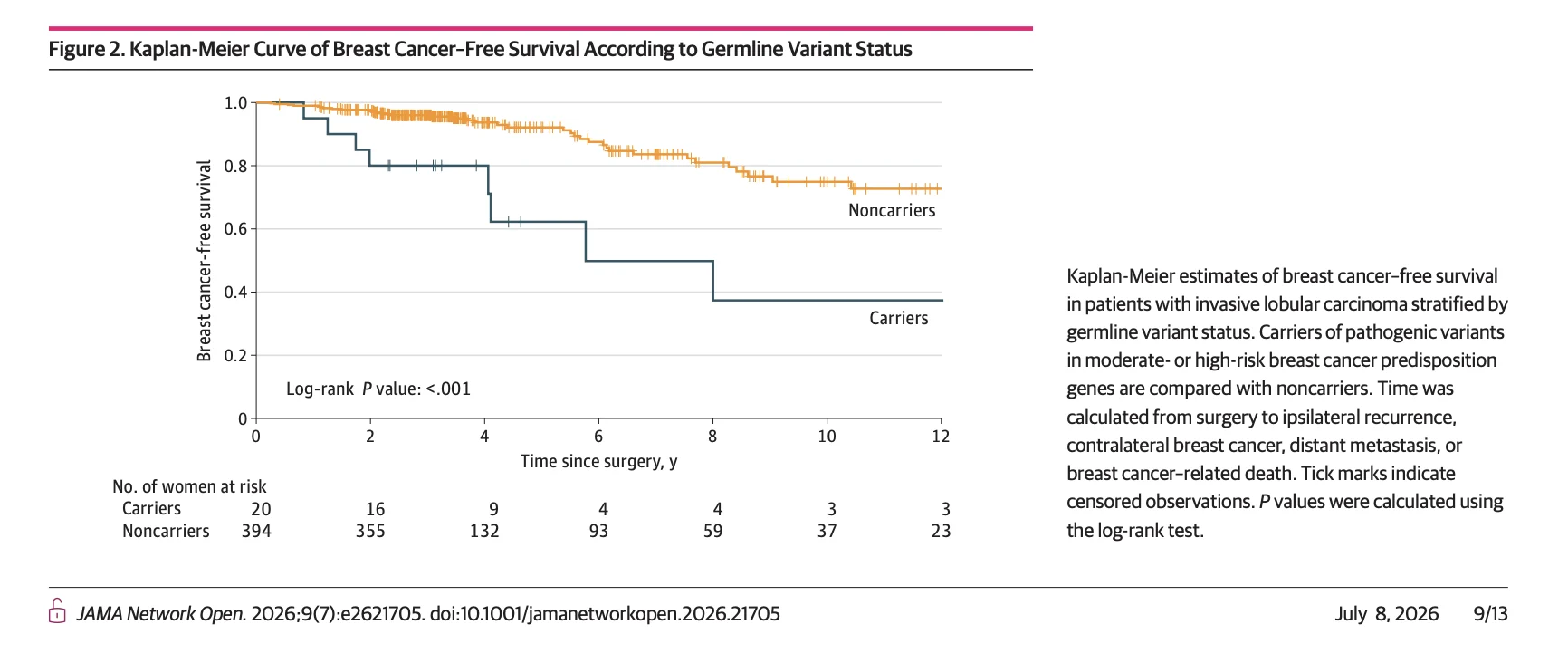
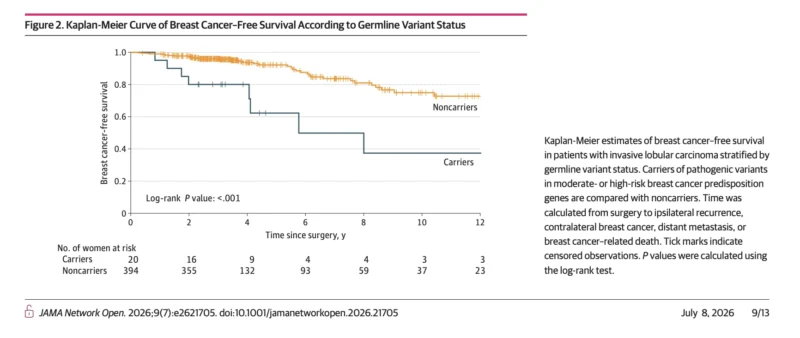
These variants were associated with significantly worse breast cancer–free survival. At 5 years, breast cancer–free survival was 62.2% among carriers of moderate- to high-risk germline variants, compared with 92.1% among noncarriers.
Why ILC Needs Its Own Genetic Lens
Invasive lobular carcinoma is the second most common histologic subtype of breast cancer, accounting for approximately 10% to 15% of cases.
ILC has a distinct clinical and biological profile. It is often hormone receptor positive, frequently ERBB2-negative, and usually has a lower proliferative index. Its diffuse growth pattern and reduced cell cohesion can also make early detection more difficult with standard imaging.
Although genetic predisposition has been widely studied in breast cancer, ILC has historically received less attention than invasive ductal carcinoma. This study focused specifically on whether germline pathogenic variants and polygenic risk scores could improve prognostic understanding in women with primary ILC.
What the Study Found
Among the 414 women included, the mean age was 53.7 years, and 51.0% were postmenopausal.
Pathogenic or likely pathogenic variants were identified in 46 patients, representing 11.1% of the cohort. Variants in moderate- to high-risk breast cancer genes were found in 20 patients, or 4.8%.
The most frequently affected moderate- to high-risk genes were BRCA2, found in 8 patients, and ATM, found in 5 patients. Variants were also identified in BRCA1, CHEK2, PALB2, CDH1, and NF1. One patient carried pathogenic variants in both ATM and CHEK2.
No significant associations were observed between germline variant subgroups and baseline clinicopathologic features, family history, surgical procedures, or adjuvant therapies.
Germline Variants Were Linked to Early Relapse
The most clinically important finding was the difference in breast cancer–free survival.
During a median follow-up of 3.39 years, 55.0% of women carrying moderate- to high-risk germline variants experienced a breast cancer–free survival event, compared with 11.9% of noncarriers.
The 5-year breast cancer–free survival rate was 62.2% for carriers and 92.1% for noncarriers. The 10-year estimate was 37.3% for carriers and 74.9% for noncarriers.
The hazard ratio for breast cancer relapse or related events was 3.91 for carriers compared with noncarriers.
These results suggest that women with ILC and moderate- to high-risk germline variants may represent a biologically and clinically higher-risk subgroup.
Polygenic Risk Scores Did Not Add Prognostic Value
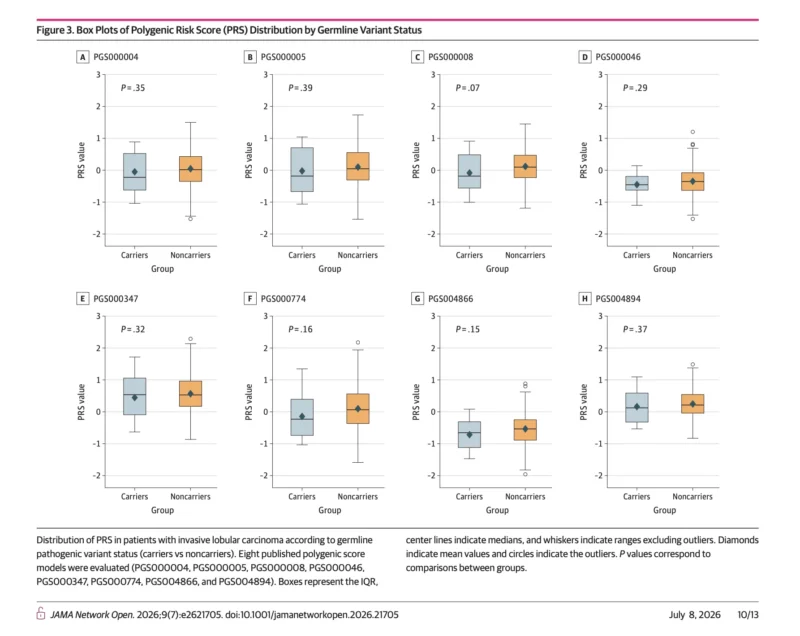
The study also evaluated polygenic risk scores as potential prognostic tools.
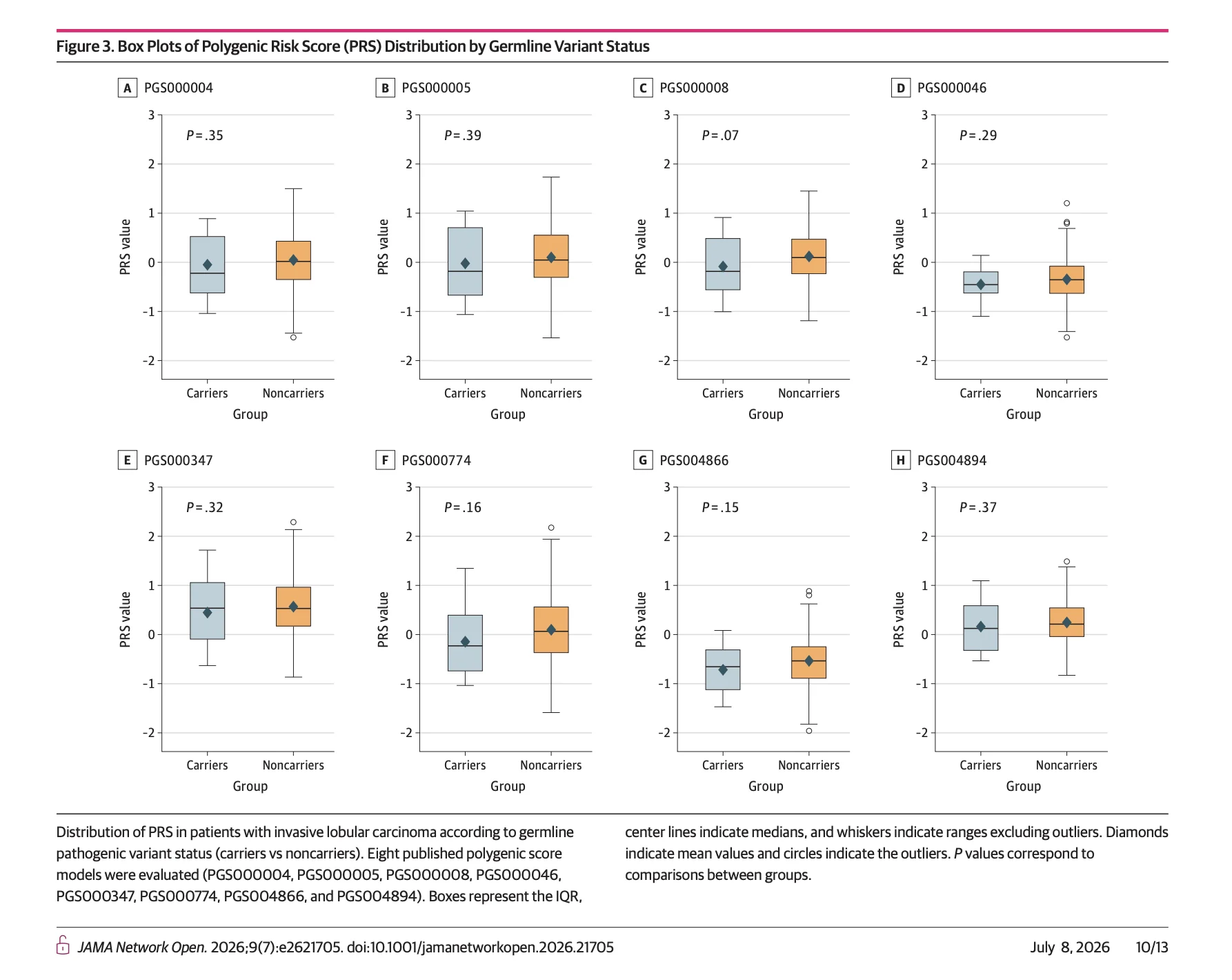
Eight published polygenic risk score models were assessed. None showed a statistically significant association with breast cancer–free survival. The investigators also found no significant relationship between polygenic risk score quartiles and germline variant status.
This suggests that currently available polygenic risk scores may not be useful for predicting prognosis in women with ILC.
What This Could Mean for Clinical Care
The findings support a broader role for multigene panel testing in selected patients with invasive lobular carcinoma.
Genetic testing may help identify women who need more individualized counseling, closer surveillance, and consideration of risk-adapted strategies. This is especially relevant for variants in genes such as BRCA1, BRCA2, PALB2, ATM, CHEK2, and CDH1, which may influence hereditary risk assessment, family counseling, prevention planning, and, in some settings, treatment options.
However, the study does not establish a new treatment standard. It identifies a subgroup that may need closer clinical attention and further validation in larger cohorts.
Important Limitations
The study was conducted at a single institution, which may limit generalizability. All participants were White women, so the findings may not apply to more diverse populations.
Only 20 patients carried moderate- to high-risk breast cancer variants, limiting the power of subgroup analyses. Follow-up was also relatively short for invasive lobular carcinoma, a subtype known for late recurrences.
The authors noted that longer follow-up and larger external cohorts are needed to confirm the prognostic role of these germline findings.
The Bottom Line
This JAMA Network Open cohort study found that 4.8% of women with primary invasive lobular carcinoma carried germline pathogenic variants in moderate- to high-risk breast cancer predisposition genes.
These variants were associated with a substantially higher risk of early breast cancer relapse. The 5-year breast cancer–free survival rate was 62.2% in carriers compared with 92.1% in noncarriers.
Polygenic risk scores did not show prognostic value in this cohort.
The findings suggest that multigene panel testing may help refine risk stratification in invasive lobular carcinoma and support more personalized counseling, surveillance, and future therapeutic strategies.
References
- Corso G, Marino E, Fava F, et al. Germline multigene panel testing in women with invasive lobular cancer. JAMA Network Open. 2026;9(7). doi:10.1001/jamanetworkopen.2026.21705.
- McCart Reed AE, Kutasovic JR, Lakhani SR, Simpson PT. Invasive lobular carcinoma of the breast: morphology, biomarkers and ’omics. Breast Cancer Research. 2015;17:12. doi:10.1186/s13058-015-0519-x.
- Van Baelen K, Geukens T, Maetens M, et al. Current and future diagnostic and treatment strategies for patients with invasive lobular breast cancer. Annals of Oncology. 2022;33(8):769-785. doi:10.1016/j.annonc.2022.05.006.
- Petridis C, Arora I, Shah V, et al. Frequency of pathogenic germline variants in CDH1, BRCA2, CHEK2, PALB2, BRCA1, and TP53 in sporadic lobular breast cancer. Cancer Epidemiology, Biomarkers & Prevention. 2019;28(7):1162-1168. doi:10.1158/1055-9965.EPI-18-1102.
- Yadav S, Hu C, Nathanson KL, et al. Germline pathogenic variants in cancer predisposition genes among women with invasive lobular carcinoma of the breast. Journal of Clinical Oncology. 2021;39(35):3918-3926. doi:10.1200/JCO.21.00640.
- Huntley C, Torr B, Sud A, et al. Utility of polygenic risk scores in UK cancer screening: a modelling analysis. The Lancet Oncology. 2023;24(6):658-668. doi:10.1016/S1470-2045(23)00156-0.