Breast oncology had another active week across LinkedIn, with conversations spanning new clinical evidence, patient advocacy, policy, survivorship, regional collaboration, and emerging research directions.
This week’s selection highlights important updates in breast cancer care, from long-term outcomes in invasive lobular carcinoma and CDK4/6 inhibitor strategies to ovarian function suppression, bone health, ctDNA, HER2-positive disease, and antibody-drug conjugate biomarkers.
It also brings forward powerful discussions on metastatic breast cancer visibility, young women with breast cancer, male breast cancer awareness, obesity-related cancer research, and the need for stronger patient-centered policies.
Together, these posts reflect the full landscape of modern breast oncology: science, access, advocacy, quality of life, and the people working to move the field forward.
“I’m deeply honored and grateful to receive the Art of Advocacy Award from the Breast Cancer Resource Center (BCRC) . This recognition means so much — advocacy is a team sport, and I share it with the incredible community that supports patients and families every day.
Art Bra Austin — the Center’s annual fundraiser — was nothing short of inspiring. Watching fierce, beautiful breast cancer survivors model artistically designed art bras was a powerful reminder of resilience, creativity, and the healing power of community. Events like this celebrate survivors, uplift caregivers, and ensure the vital programs that guide patients and families through diagnosis, treatment, and beyond continue to thrive.
Thank you to the Breast Cancer Resource Center for all you do, to the artists and survivors who made Art Bra Austin unforgettable, and to everyone who supports this mission. I’m proud to stand with you in advocacy and care.”

“My take from last week’s breast cancer publications, June 8–14, 2026:
Long-term outcomes in invasive lobular carcinoma
Published in ESMO Open.
Key message: Invasive lobular carcinoma is not simply a lower-grade ductal cancer. Its late mortality pattern and poor neoadjuvant response require histology-specific management.
PADMA: CDK4/6 inhibitor versus chemotherapy in high-risk HR-positive/HER2-negative metastatic breast cancer
Published in ESMO Open.
Key message: Palbociclib plus endocrine therapy outperformed chemotherapy even in patients considered candidates for chemotherapy. CDK4/6 inhibition remains the preferred first-line approach unless there is true visceral crisis.
INAVO120 safety: inavolisib triplet toxicities
Published in ESMO Open.
Key message: The inavolisib triplet appears manageable, but glucose monitoring from day one and early metformin use are essential.
Three-monthly GnRH agonist for ovarian function suppression: meta-analysis
Published in Breast Cancer Research and Treatment.
Key message: Three-monthly dosing is a valid alternative to monthly treatment, but ovarian escape remains a real concern. Ultrasensitive estradiol monitoring should be considered when used with an aromatase inhibitor.
Scalp cooling with trastuzumab deruxtecan
Published in ESMO Open.
Key message: Scalp cooling did not prevent clinically meaningful alopecia with trastuzumab deruxtecan. Patients should be counselled before starting treatment.
Apocrine morphology and estrogen receptor status
Published in npj Breast Cancer.
Key message: Apocrine morphology is associated with better prognosis in estrogen receptor-negative disease and worse prognosis in estrogen receptor-positive disease. It should not be considered a single biological entity.
Trop2 pan-cancer multi-omic atlas
Published in npj Precision Oncology.
Key message: Trop2 expression alone will not be enough to select patients for Trop2-directed antibody-drug conjugates. The biomarker question is far more complex.
ctDNA and CDK4/6 inhibitor resistance evolution
Published in npj Breast Cancer.
Key message: ESR1 mutations doubled after CDK4/6 inhibitor exposure. ctDNA can track resistance evolution, but the resistance signature remains exploratory.
HER2DX in early HER2-positive breast cancer
Published in International Journal of Molecular Sciences.
Key message: HER2DX changed management in more than half of patients, but prospective validation is needed before routine use.
Emotional distress and reproductive decisions in BRCA1/2 carriers
Published in The Breast.
Key message: Transmission guilt may be more distressing than the diagnosis itself. BRCA counselling should include psycho-oncology and fertility support.
Bone health management in breast cancer survivors
Published in JCO Oncology Practice.
Key message: Bone health is part of cancer treatment, not a survivorship afterthought. Baseline DXA assessment and antiresorptive therapy remain underused.”
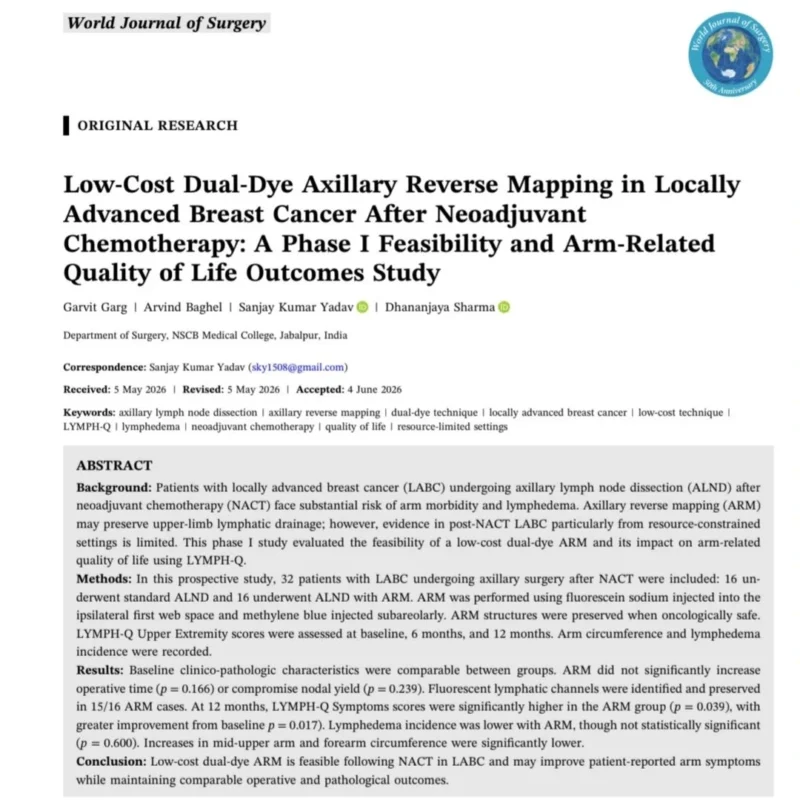
“Happy to share that our feasibility study has been published in the World Journal of Surgery.
The study evaluated low-cost dual-dye axillary reverse mapping after neoadjuvant chemotherapy in locally advanced breast cancer.
The findings show that preserving arm lymphatics during axillary lymph node dissection is feasible, affordable, and may help improve arm-related quality of life.
Read more: https://lnkd.in/gCSUx7H4”
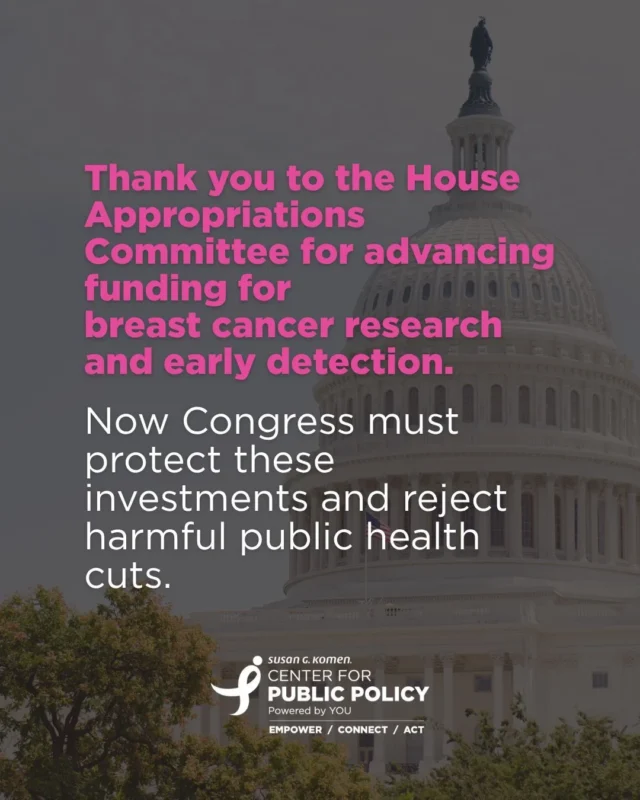
“Yesterday, the House Committee on Appropriations cleared an important hurdle in advancing funding for programs within the Department of Health and Human Services for fiscal year 2027.
However, the bill also contains cuts that could have a devastating impact on public health in the United States and slow critical research.
The good news is that the bill includes key investments in breast cancer programs, including $203.9 million for the National Breast and Cervical Cancer Early Detection Program, representing a $2 million increase from FY26; $7.5 billion for the National Cancer Institute, a $110 million increase from FY26; and language directing the Department of Health and Human Services to explore patient costs and other access barriers for diagnostic and supplemental breast imaging.
The Senate Appropriations Committee has not yet released its bill for federal health programs, but is expected to do so this summer. Congress needs to act before the funding deadline of September 30.
Susan G. Komen will continue to advocate for federal investment in programs important to the breast cancer community and provide updates on the FY27 appropriations process as they develop.
Thank you to our volunteer advocates who continue to join us in driving policies that protect breast cancer patients.
Learn more: https://lnkd.in/ggd3M3sX”
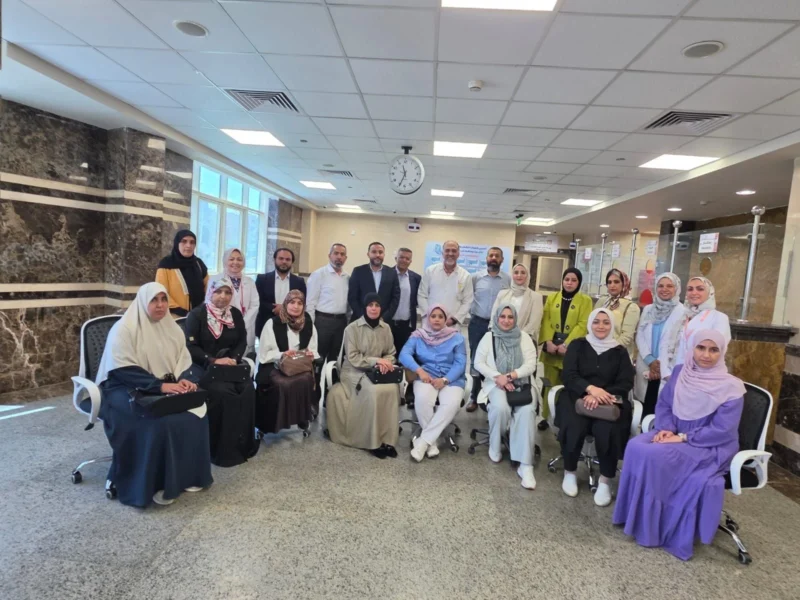
“It was a great pleasure to host our Libyan oncology colleagues at the Breast Cancer Comprehensive Center, National Cancer Institute, Cairo University, in collaboration with AstraZeneca.
The visit was a valuable opportunity to foster regional collaboration, exchange clinical insights, and share perspectives on advancing breast cancer care across our region.
During the meeting, we discussed our value-based model in cancer care delivery, focusing on how integrated multidisciplinary care, patient navigation, timely access, education, and continuous quality improvement can improve outcomes and patient experience.
We are proud to contribute to building stronger bridges between oncology teams in Egypt and Libya, and we look forward to further collaboration that ultimately serves our patients better.”
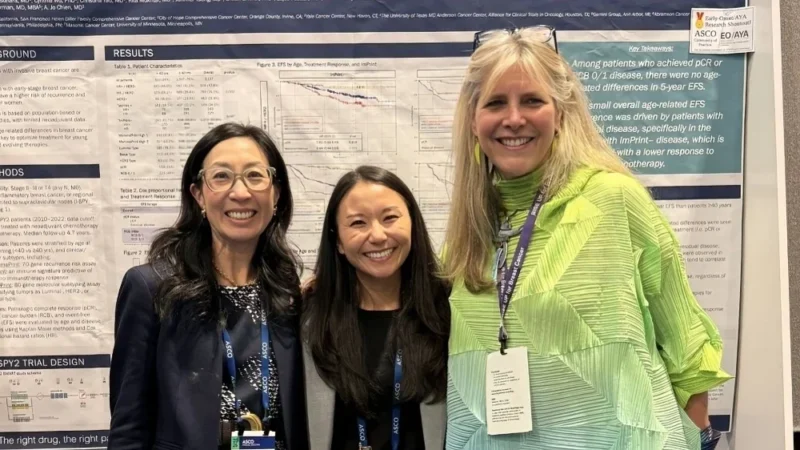
“Great poster by Kelsey Natsuhara about young women and the I-SPY trial.
Even among patients with very aggressive cancers, those who had a strong response to treatment did very well.
The worst outcomes were seen in young women with immune-negative tumors, highlighting the urgent need to focus our efforts on finding better treatment strategies for this group.
That is the power of the I-SPY neoadjuvant model. We can learn when treatments are working and determine how to make them less toxic or more tolerable.
We can also identify where current treatments are not successful and use the power of science and personalized trials to find better solutions.”
“The Breast Cancer Research Foundation was one of the first organizations to support research investigating the links between obesity and cancer.
I am honored to be a BCRF Investigator for over a decade. Thanks to this ongoing investment, we are now poised to dramatically reduce the global burden of obesity-related cancers.
Prospective clinical trials are needed to safely and optimally deploy powerful new metabo-oncology approaches, such as GLP-1 receptor agonists.
While these incretin mimetics could likely be a transformative strategy for many, they may also induce unwanted outcomes for some.
These are exciting times, and there is much work to be done.”
“I am honored to join the Young Women’s Breast Cancer Research Institute Advisory Board as an International Distinguished Faculty Scientist.
Breast cancer in young women is an increasingly relevant problem that requires specific solutions.
There is still a great deal of work to be done in this field.”
“This week, I took part in a discussion at the European Parliament during the launch of the new Transforming Breast Cancer Together policy report, Breast Cancer in Europe: From Policy to Progress.
As a member of the Board of EUROPA DONNA – The European Breast Cancer Coalition, I brought the patient perspective into a conversation about what progress in breast cancer care should actually mean for people living with the disease.
One of the topics I spoke about was metastatic breast cancer, a reality that still remains too often invisible in policies, registries, and healthcare systems.
Too often, our conversations focus on early diagnosis and survivorship, while those living with metastatic disease remain in the background. Yet they are not a small subgroup. They are mothers, daughters, partners, professionals, carers, and community members living with cancer every single day.
I spoke about the need for dedicated commitments to metastatic breast cancer within national cancer plans, timely access to specialist multidisciplinary care, innovative treatments, psycho-oncology services, symptom management, and support focused on quality of life.
I also highlighted the experiences patients bring that do not always appear in policy documents: uncertainty, financial stress, family responsibilities, returning to work, and the emotional burden of living with an incurable disease. These experiences deserve a place at the decision-making table.
When asked what one concrete action I would prioritize in the next year, my answer was simple: we need better data collection on metastatic breast cancer across Europe.
If we do not count patients, we cannot understand their needs. And if we do not understand their needs, we cannot design the right services.
Visibility is the first step toward action.
I joined this discussion alongside policymakers, experts, and fellow advocates, including MEPs Romana Jerković, Adam Jarubas, Aurelijus Veryga, Tilly Metz, Stine Bosse, and Tomislav Sokol, as well as leading breast cancer experts such as Prof. Fatima Cardoso and Dr. Yvonne Niepelt.
Bringing together policymakers, clinicians, and patient advocates is exactly what we need if we want to translate commitments into meaningful change for patients.
A personal thank you to Rute Marques for guiding the discussion with warmth, insight, and professionalism.
The true test of every breast cancer policy is not whether it looks good on paper. It is whether a person diagnosed with breast cancer can actually feel the difference in everyday life.
What gets measured gets prioritized. If we want better outcomes for people living with metastatic breast cancer, we must first make sure they are seen.”
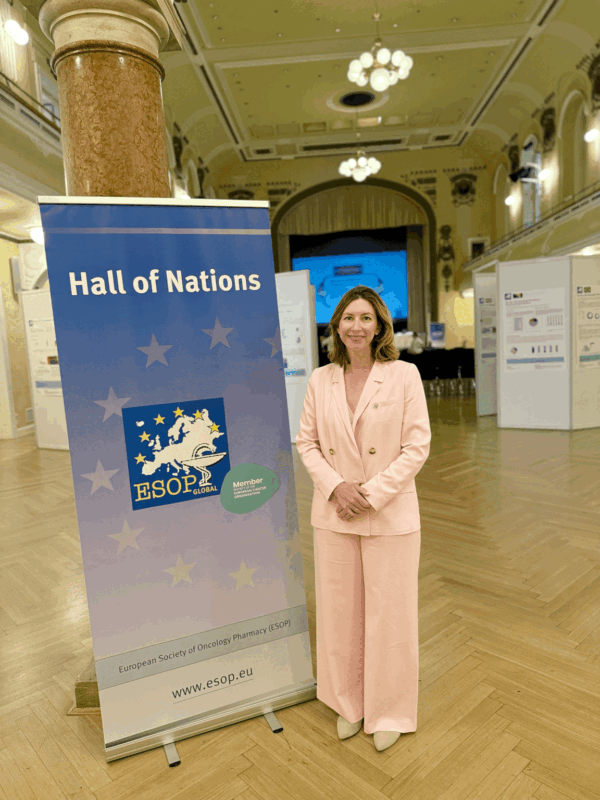
“Shedding some light on breast cancer diagnosed in men, together with colleagues Dr. Rodrigo Sánchez-Bayona, SEOM, and Isabel Calvo from MD Anderson Cancer Center Spain.
The discussion, published in Hola, was prompted by the case of actor Tyler Mane and highlights a tumor that remains little studied and should not be forgotten.
“I’m excited to share our article in press in Nature Communications! This project encompasses the bulk of my dissertation research, investigating the role of FGFR1 in ER+ breast cancer brain metastasis.
https://nature.com/articles/s41467-026-73726-5 ”
Written by Nare Hovhannisyan, MD
Stay informed with more articles like this on OncoDaily