
The past week brought a broad set of breast cancer publications across prevention, survivorship, surgery, systemic therapy, imaging, tumor biology, and metastatic disease. The studies published between May 29 and June 5, 2026, reflect how rapidly breast oncology is expanding beyond treatment efficacy alone, with growing attention to cardiovascular risk, quality of life, biomarker-driven therapy, surgical de-escalation, health disparities, and translational biology.
Together, these papers show a field moving in several directions at once: improving long-term outcomes for early breast cancer, refining treatment for metastatic disease, identifying high-risk biological features, and addressing the patient experience during and after therapy.
Cardiovascular Prevention In Breast Cancer Survivors
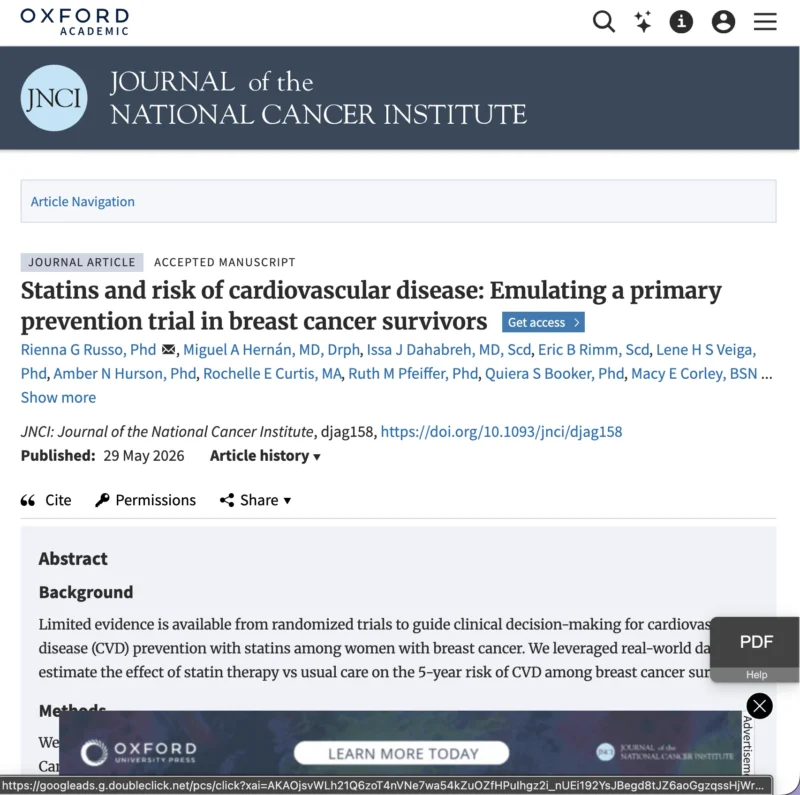
One of the important survivorship-focused publications evaluated statins and cardiovascular disease risk in breast cancer survivors. Cardiovascular disease remains a major long-term health issue for patients after breast cancer treatment, particularly as survival improves and more patients live for decades after diagnosis.
The study by Russo and colleagues used an emulation of a primary prevention trial to examine whether statins may reduce cardiovascular disease risk in breast cancer survivors. This type of research is clinically relevant because survivorship care increasingly requires attention not only to cancer recurrence, but also to competing long-term risks such as heart disease (Russo et al., 2026).
Copper And Breast Cancer Metabolism
A multi-omics mediation analysis by Wang and colleagues examined how copper may promote breast cancer through immunometabolic reprogramming. This work adds to a growing body of research exploring metal metabolism, inflammation, and cancer biology.
The study is especially interesting because breast cancer progression is not driven only by genomic alterations. Tumor metabolism, immune signaling, and micronutrient-related pathways may also shape disease behavior. While the clinical implications require further validation, the paper highlights copper biology as a potential area of translational interest in breast cancer research (Wang et al., 2026).
Sentinel Lymph Node Biopsy: Past, Present, And Future
Surgical management continues to evolve toward less invasive approaches when oncologically safe. Stanczyk and colleagues reviewed the past, present, and future of sentinel lymph node biopsy in breast cancer, reflecting how axillary surgery has changed over time.
Sentinel lymph node biopsy transformed breast cancer surgery by reducing the need for routine axillary lymph node dissection in many patients. Current questions now focus on when axillary surgery can be further minimized, how to manage limited nodal disease, and how systemic therapy and radiation influence local-regional decision-making (Stanczyk et al., 2026).
Real-World Palbociclib In HR+/HER2− Metastatic Breast Cancer
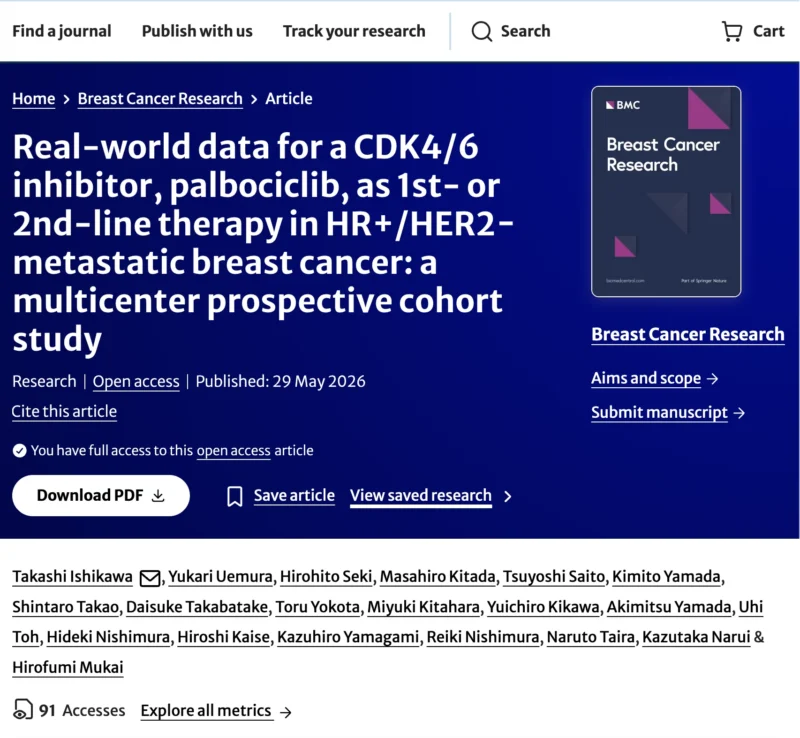
Real-world evidence remains important for understanding how trial-proven therapies perform in broader patient populations. Ishikawa and colleagues reported prospective multicenter cohort data on palbociclib as first- or second-line therapy in HR-positive/HER2-negative metastatic breast cancer.
CDK4/6 inhibitors remain foundational in HR+/HER2− advanced disease, but real-world studies help clarify outcomes across patients who may differ from clinical trial populations in age, comorbidities, prior treatment, and disease burden. Such data are useful for clinicians making treatment decisions outside tightly controlled trial settings (Ishikawa et al., 2026).
Onapristone-XR In PgR+/HER2− Early Breast Cancer
Bellet and colleagues reported results from the SOLTI-1802 ONAWA trial, evaluating preoperative onapristone-XR in postmenopausal women with progesterone receptor-positive, HER2-negative early breast cancer.
The study points to continued interest in targeting hormone receptor biology beyond estrogen receptor signaling alone. Progesterone receptor-positive disease may represent a biologically informative subgroup, and preoperative studies can help assess pharmacodynamic effects before larger trials are designed (Bellet et al., 2026).
Platinum-Based Neoadjuvant Therapy In TNBC
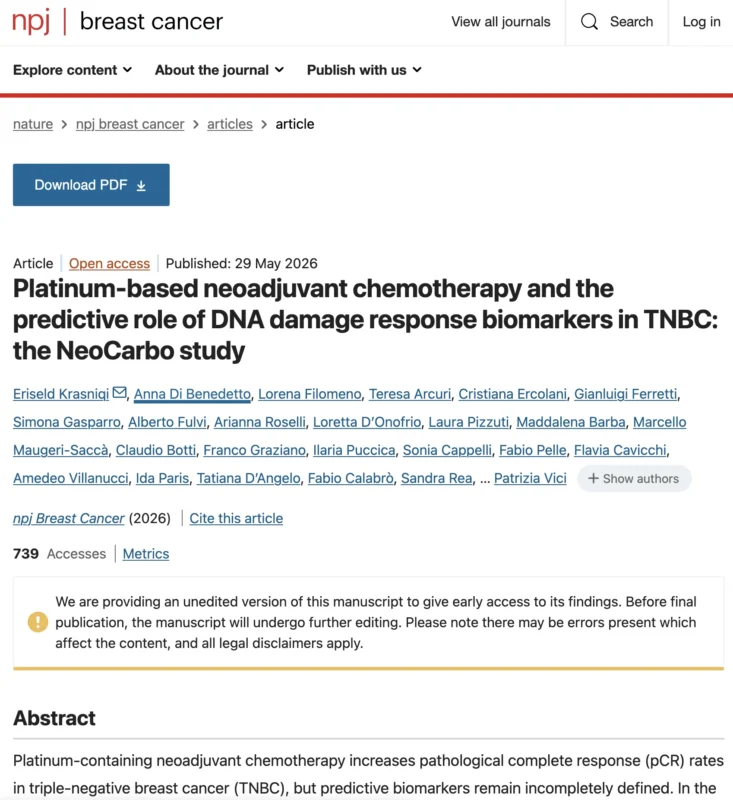
Triple-negative breast cancer continues to be an area of intense investigation, especially around neoadjuvant treatment optimization. Krasniqi and colleagues reported findings from the NeoCarbo study, focusing on platinum-based neoadjuvant chemotherapy and DNA damage response biomarkers in TNBC.
The predictive role of DNA damage response biomarkers is clinically important because platinum sensitivity may vary across TNBC subgroups. Better biomarker selection could help identify patients most likely to benefit from platinum-based regimens while avoiding unnecessary toxicity in those less likely to respond (Krasniqi et al., 2026).
Multi-Ancestry Genetics And Breast Cancer Biology
Ping and colleagues published a multi-ancestry transcriptome-wide association study exploring breast cancer genetics and biology. Multi-ancestry research is essential because much of cancer genomics has historically been dominated by European-ancestry datasets.
Broader ancestry representation can improve the discovery of risk-associated genes, strengthen biological interpretation, and support more equitable precision prevention and risk prediction models. This work contributes to the effort to make breast cancer genetics more inclusive and clinically meaningful across populations (Ping et al., 2026).
Robot-Assisted Versus Conventional Nipple-Sparing Mastectomy
Lee and colleagues reported early oncologic outcomes comparing robot-assisted versus conventional nipple-sparing mastectomy using propensity score matching.
As breast surgery becomes more technologically advanced, the key question is not only cosmetic or technical feasibility, but oncologic safety. Early outcome data help define where robotic approaches may fit in breast surgery and where longer follow-up is still needed before broader adoption (Lee et al., 2026).
Anthracycline-Taxane Versus Taxane-Carboplatin In TNBC
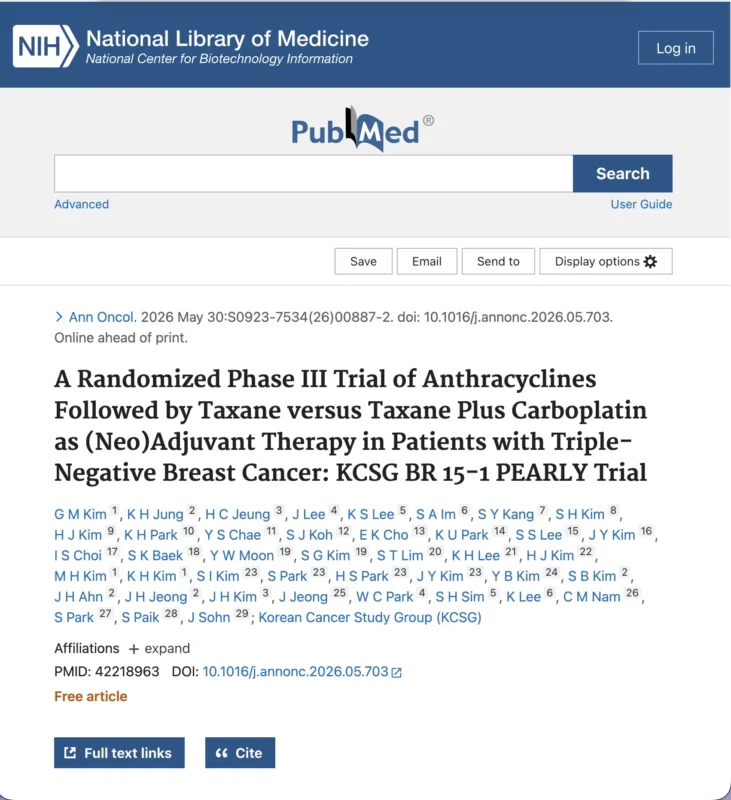
Kim and colleagues reported results from the KCSG BR 15-1 PEARLY trial, a randomized phase III study comparing anthracyclines followed by taxane versus taxane plus carboplatin as neoadjuvant or adjuvant therapy in patients with triple-negative breast cancer.
This publication is relevant to ongoing debates about optimal chemotherapy backbones in TNBC. Anthracycline use remains effective but is associated with known long-term risks, while platinum-containing regimens have shown activity in TNBC. Comparative phase III data are important for refining treatment intensity and balancing efficacy with toxicity (Kim et al., 2026).
Low-Dose Tamoxifen In Noninvasive Breast Neoplasia
Gandini and colleagues reported long-term results from an individual-participant data pooled analysis of low-dose tamoxifen in noninvasive breast neoplasia.
Low-dose endocrine prevention strategies are important because standard-dose tamoxifen can be limited by side effects and adherence challenges. If lower-dose approaches maintain meaningful benefit with improved tolerability, they may expand prevention and risk-reduction options for selected patients with noninvasive breast disease (Gandini et al., 2026).
Tumor-Infiltrating Lymphocyte Subtypes In Young Women With HR-Positive Breast Cancer
Tesch and colleagues examined the association between tumor-infiltrating lymphocyte subtypes, clinical characteristics, and prognosis in young women with hormone receptor-positive breast cancer.
Immune biology is often emphasized in TNBC, but HR-positive disease also has immune heterogeneity. Understanding TIL subtypes in young patients may help clarify prognosis and identify biological features that are not captured by receptor status alone (Tesch et al., 2026).
Final Outcomes Of SOFT And TEXT
Francis and colleagues reported final outcomes from the SOFT and TEXT phase III trials in premenopausal hormone receptor-positive early breast cancer.
SOFT and TEXT have played a major role in defining endocrine therapy strategies for premenopausal patients, particularly the use of ovarian function suppression and aromatase inhibitors in higher-risk disease. Final outcomes provide long-term evidence for treatment decisions that affect recurrence risk, toxicity, menopausal symptoms, fertility considerations, and quality of life (Francis et al., 2026).
Antibody-Drug Conjugates Continue To Reshape Breast Cancer
Sakach and colleagues published a review on antibody-drug conjugates in breast cancer, reflecting one of the most active areas in modern breast oncology.
ADCs have changed treatment across HER2-positive, HER2-low, hormone receptor-positive, and triple-negative disease. The field is now moving toward questions of sequencing, resistance, toxicity management, biomarker selection, and how ADCs can be integrated earlier in treatment pathways (Sakach et al., 2026).
Sexual Quality Of Life In Metastatic Breast Cancer
Rojas highlighted an often under-addressed area: sexual quality of life for couples facing metastatic breast cancer.
This topic is clinically important because metastatic breast cancer affects relationships, intimacy, body image, treatment side effects, emotional health, and identity. The publication underscores that high-quality metastatic care must include more than systemic therapy selection. It must also address the personal and relational dimensions of living with cancer (Rojas, 2026).
Taxane-Induced Neuropathy And Quality Of Life In Black Women
Ballinger and colleagues analyzed patient-reported taxane-induced peripheral neuropathy, dose reductions, and quality of life in Black women with breast cancer from ECOG-ACRIN EAZ171.
Peripheral neuropathy is a common and sometimes long-lasting toxicity of taxane therapy. Studying patient-reported outcomes in Black women is especially important because toxicity burden, dose modification, symptom reporting, and supportive care access can vary across populations. This work contributes to a more equity-focused understanding of breast cancer treatment tolerability (Ballinger et al., 2026).
Fovinaciclib In First-Line Advanced Breast Cancer
Yuan and colleagues reported a randomized clinical trial of fovinaciclib for first-line therapy of advanced breast cancer.
Although more details are needed to interpret the full clinical implications, the publication reflects continued development of cell-cycle-targeted strategies in advanced breast cancer. As CDK4/6 inhibition has become a major standard in HR-positive disease, newer agents and combinations continue to be explored for broader or more resistant settings (Yuan et al., 2026).
FAPI PET/CT For Neoadjuvant Response Assessment
Zhu and colleagues compared the diagnostic performance of 68Ga-FAPI PET/CT versus 18F-FDG PET/CT in evaluating pathological response to neoadjuvant therapy in breast cancer.
Imaging biomarkers are gaining attention as tools to assess treatment response earlier and more accurately. FAPI PET/CT may offer a different biological readout than FDG PET/CT by targeting fibroblast activation protein, which is linked to the tumor stroma. Further validation could help determine whether this approach improves response assessment in neoadjuvant treatment (Zhu et al., 2026).
Machine Learning After Pathologic Complete Response In TNBC
Kwakkenbos and colleagues investigated machine learning-based identification of high-risk TNBC patients despite pathological complete response after neoadjuvant chemotherapy.
Pathologic complete response is an important prognostic marker in TNBC, but it does not guarantee cure for every patient. Tools that identify residual risk even after pCR could help refine surveillance, escalation strategies, or clinical trial design. This is a strong example of how machine learning may be used not to replace established endpoints, but to add more granularity to risk assessment (Kwakkenbos et al., 2026).
Pembrolizumab Plus Chemotherapy In Germline BRCA-Mutated Early TNBC
Tavares and colleagues reported a multicenter real-world cohort evaluating neoadjuvant pembrolizumab plus chemotherapy in germline BRCA-mutated early TNBC.
This is an important clinical question because germline BRCA-mutated TNBC is biologically distinct and often sensitive to DNA-damaging therapies. Real-world data on immunotherapy-containing neoadjuvant regimens in this subgroup can help inform how trial findings translate into practice, especially as clinicians consider chemotherapy backbone, immunotherapy benefit, and future integration with PARP inhibitors (Tavares et al., 2026).
Cancer-Associated Adipomes And TNBC Metastatic Potential
Thangavel and colleagues explored how cancer-associated adipomes promote invadopodia formation and enhance metastatic potential in triple-negative breast cancer.
This translational study highlights the interaction between tumor cells and adipose-associated biology. In TNBC, where metastatic risk remains a major clinical challenge, understanding how the tumor microenvironment supports invasion and dissemination may reveal new therapeutic vulnerabilities (Thangavel et al., 2026).
What These Publications Tell Us About The Field
Across these studies, several themes stand out. Breast cancer research is becoming increasingly multidisciplinary, moving across genomics, metabolism, immunology, imaging, surgery, survivorship, and real-world evidence. The week’s publications also show that progress is not limited to new drugs. It includes better toxicity management, more inclusive genetics, less invasive surgery, smarter imaging, and greater attention to quality of life.
For clinicians and researchers, the key message is clear: breast cancer care is becoming more precise, but also more holistic. The future of the field will depend not only on improving survival, but also on understanding biology more deeply and supporting patients more fully across the entire cancer journey.