A phase I trial published in Clinical Cancer Research evaluated a new triplet strategy for patients with HR-positive/HER2-negative metastatic breast cancer whose disease had progressed after prior CDK4/6 inhibitor therapy.
The regimen combined avutometinib, a dual RAF/MEK inhibitor, with abemaciclib and fulvestrant. The study was small and single-arm, but it addresses an important clinical question: how to treat endocrine-resistant disease after CDK4/6 inhibition, especially when resistance may be driven by activation of the MAPK pathway.
Targeting MAPK-Driven Resistance
CDK4/6 inhibitors have transformed HR+/HER2− metastatic breast cancer, but resistance eventually develops in most patients.
The authors note that MAPK pathway activation may contribute to acquired CDK4/6 inhibitor resistance in up to 30–50% of cases. This can occur through alterations involving genes such as KRAS, NRAS, FGFR1, NF1, and others.
Avutometinib, formerly known as VS-6766, is designed to inhibit MAPK signaling by blocking both MEK kinase activity and RAF-mediated MEK phosphorylation. The rationale for this trial was that MAPK inhibition could help restore sensitivity to endocrine therapy and CDK4/6 inhibition.
Study Design
This was a single-arm phase I trial conducted at Dana-Farber Cancer Institute.
Eligible patients had stage IV HR+/HER2− breast cancer with prior progression on a CDK4/6 inhibitor. Prior fulvestrant and prior oral SERDs were allowed.
A total of 16 patients initiated treatment. The median age was 61 years, and 88% had visceral disease. Most patients had received prior CDK4/6 inhibition in the metastatic setting, and 63% had received a prior SERD.
The study tested escalating dose combinations of abemaciclib and avutometinib with standard fulvestrant.
Recommended Phase II Dose
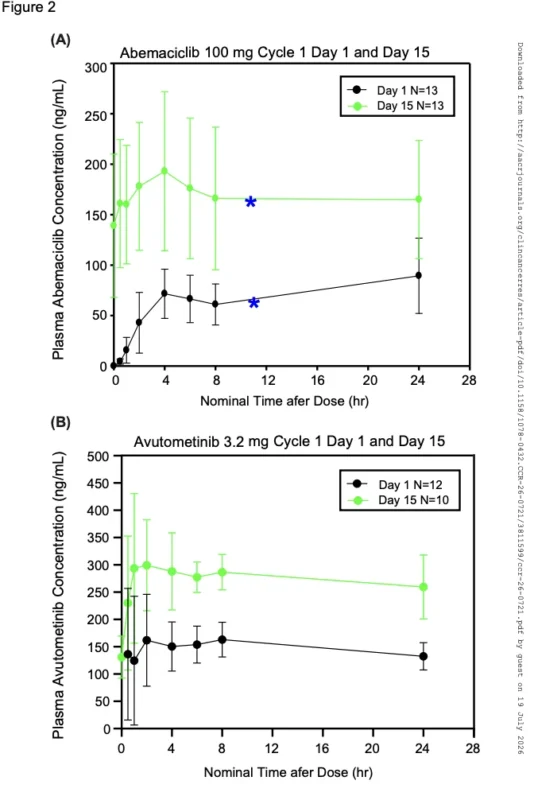
The maximum tolerated dose and recommended phase II dose were established as:
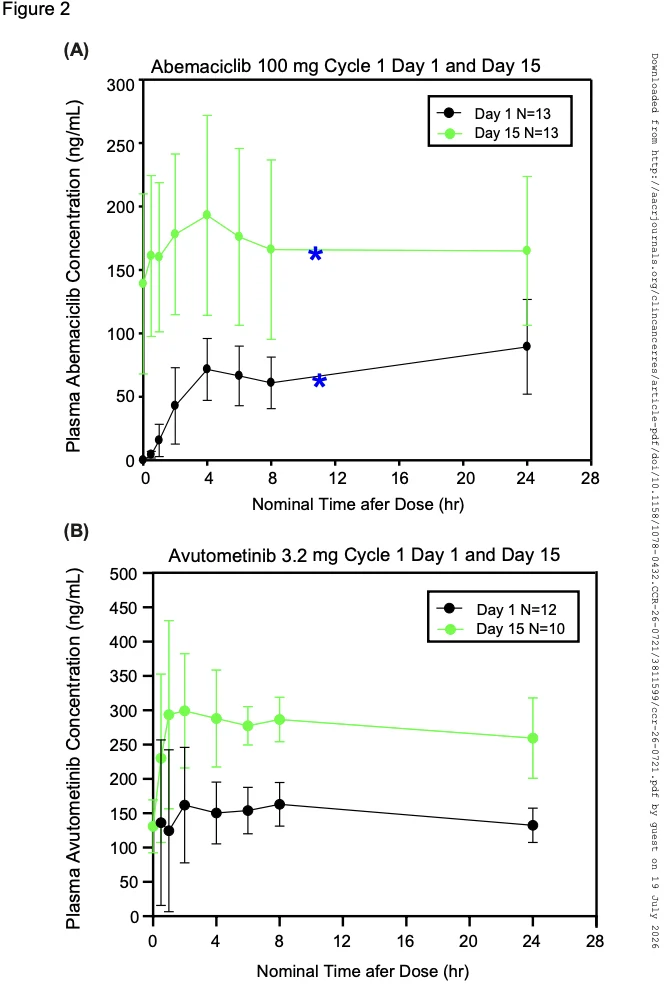
- Abemaciclib: 100 mg orally twice daily
- Avutometinib: 3.2 mg orally twice weekly, 3 weeks on and 1 week off
- Fulvestrant: 500 mg intramuscularly every 28 days
At the starting dose of abemaciclib 150 mg twice daily plus avutometinib 3.2 mg twice weekly, both treated patients experienced dose-limiting toxicities. At the selected dose level, no DLTs were observed among evaluable patients.
Safety: No New Signals, But Dose Management Matters
All patients experienced at least one grade 2 or higher treatment-related adverse event. Grade 3 treatment-related adverse events occurred in 63% of patients, but there were no grade 4 or grade 5 treatment-related events.
The most common treatment-related adverse events were:
- CPK elevation: 50%
- Neutropenia: 50%
- Diarrhea: 44%
- Skin rash: 44%
- Fatigue: 44%
- Anemia: 25%
- Oral mucositis: 25%
At the recommended phase II dose, grade 3 events were slightly less frequent, occurring in 50% of patients. Dose interruptions and reductions were common, particularly for avutometinib, but the authors considered the regimen feasible and tolerable at the selected dose.
Preliminary Activity
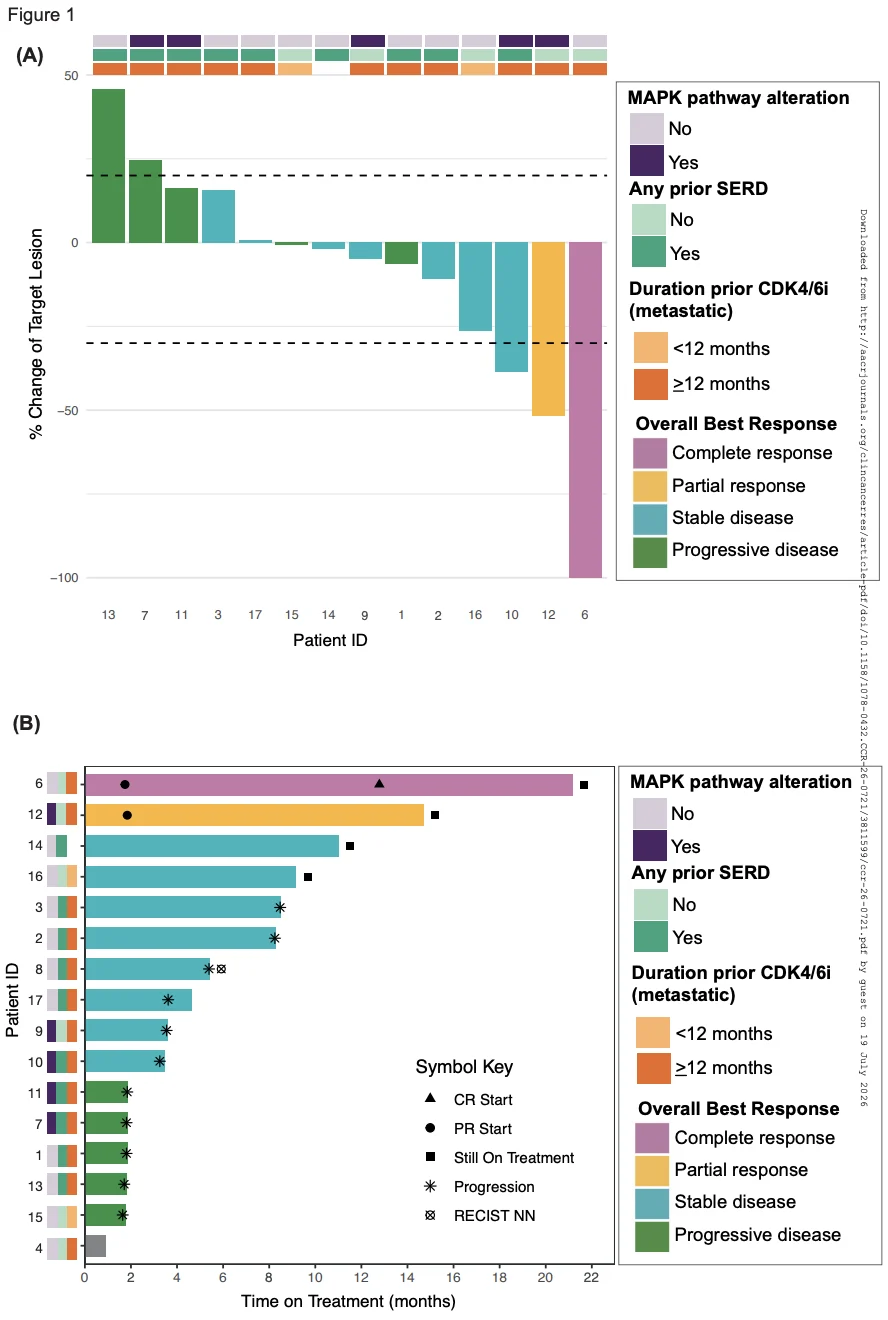
Among 15 patients with measurable disease, the objective response rate was 13.3%, including one complete response and one partial response.
The 24-week clinical benefit rate was 40%, and the median duration of response was 14.7 months.
Median progression-free survival was 3.6 months, while median overall survival was 21.6 months at a median follow-up of 13.9 months.
The waterfall and swimmer plots in Figure 1 show that a subset of patients had meaningful tumor shrinkage and prolonged treatment duration, but responses were limited overall.
A Biomarker Signal With Thymidine Kinase Activity
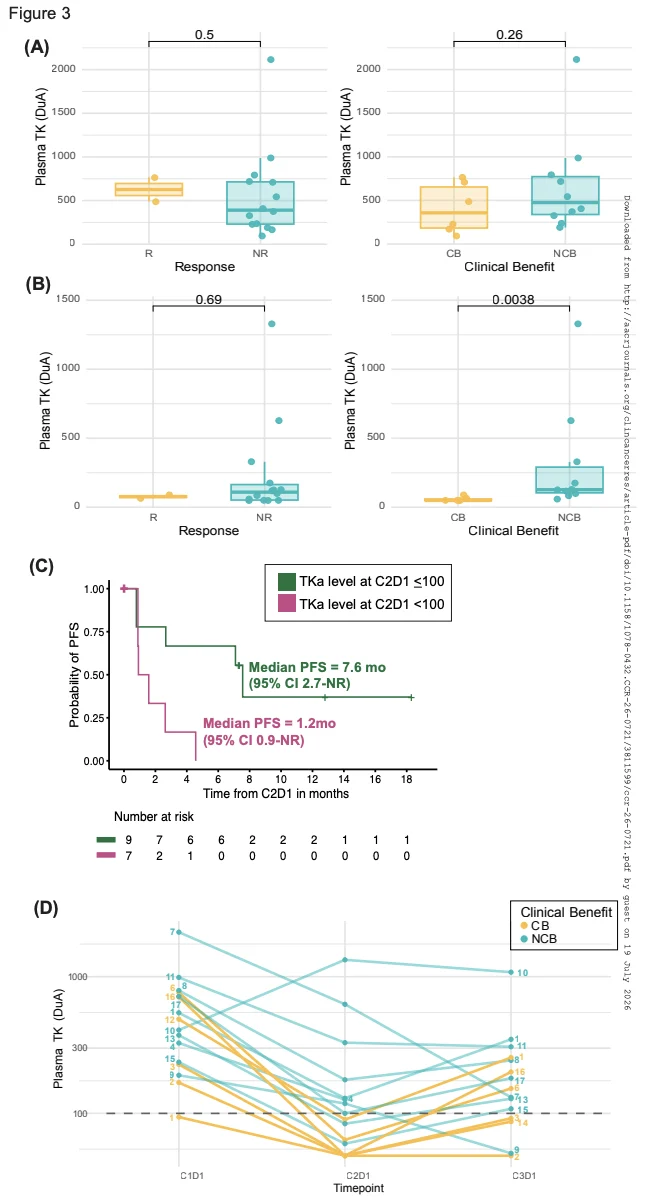
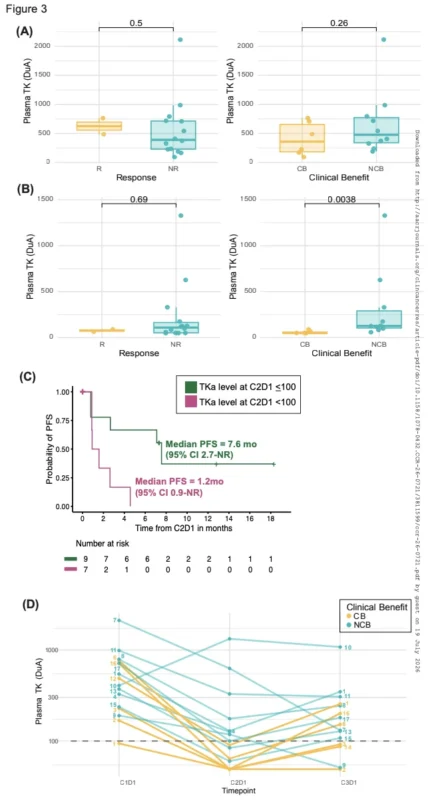
The study also explored serum thymidine kinase activity, or TKa, as a pharmacodynamic biomarker of tumor proliferation.
By cycle 2 day 1, TKa levels declined in 15 of 16 patients, with a median reduction of 75%. Exploratory analyses showed that all six patients with clinical benefit had TKa levels below 100 DuA at cycle 2 day 1.
Patients with cycle 2 day 1 TKa ≤100 DuA had longer PFS than those with higher levels: 7.6 months vs 1.2 months.
The Figure 3 biomarker analysis suggests that early on-treatment TKa may help identify patients more likely to benefit, although this requires validation in larger studies.
Why the Findings Are Cautious
The study is hypothesis-generating rather than practice-changing.
Only 16 patients were treated, and the trial had no control arm. The population was heterogeneous, including patients with prior fulvestrant, prior oral SERDs, and different prior CDK4/6 inhibitors.
The authors also note that abemaciclib may retain activity after prior palbociclib in some patients, and fulvestrant alone can still provide benefit in a small minority of cases. Therefore, it is difficult to know how much of the observed activity came from avutometinib versus the other components of the regimen.
The study also lacked racial and ethnic diversity, with all treated patients reported as White and non-Hispanic, limiting generalizability.
The Bottom Line
The phase I trial shows that avutometinib plus abemaciclib and fulvestrant is feasible after CDK4/6 inhibitor progression in HR+/HER2− metastatic breast cancer.
The regimen produced preliminary activity, with an ORR of 13.3%, 24-week clinical benefit rate of 40%, and median PFS of 3.6 months.
The main value of the study may be biological: it supports further investigation of MAPK pathway inhibition as a strategy to overcome CDK4/6 inhibitor resistance.
An ongoing phase II trial will be important to define whether this approach can deliver meaningful benefit, whether MAPK alterations enrich for response, and whether early TKa monitoring can help guide treatment selection.
References
- Waks AG, Segui E, Li T, Lipsyc-Sharf M, Kallfelz E, DiLullo M, et al. Avutometinib, abemaciclib, and fulvestrant in patients with HR+/HER2− metastatic breast cancer previously treated with CDK4/6 inhibitor: a single-arm phase I trial. Clinical Cancer Research. 2026. doi:10.1158/1078-0432.CCR-26-0721.
- Kalinsky K, Bianchini G, Hamilton E, et al. Abemaciclib plus fulvestrant in advanced breast cancer after progression on CDK4/6 inhibition: results from the phase III postMONARCH trial. Journal of Clinical Oncology. 2025;43:1101-1112.
- Turner NC, Oliveira M, Howell SJ, et al. Capivasertib in hormone receptor-positive advanced breast cancer. New England Journal of Medicine. 2023;388:2058-2070.
- Bidard FC, Kaklamani VG, Neven P, et al. Elacestrant versus standard endocrine therapy for ER-positive/HER2-negative advanced breast cancer: EMERALD trial. Journal of Clinical Oncology. 2022;40:3246-3256.