Key takeaways
- Alcohol is not automatically safe during chemotherapy. Whether you can drink depends on your specific treatment, other medicines, liver function, and side effects.
- Alcohol can worsen some treatment-related symptoms, including nausea, vomiting, dizziness, fatigue, dehydration, and mouth or throat irritation.
- Some chemotherapy drugs can interact directly with alcohol. Procarbazine is an important example and generally requires alcohol avoidance.
- Alcohol may also interact with supportive medicines, such as opioid pain medicines, sedatives, sleeping tablets, and some anti-nausea drugs.
- Always check with your cancer care team before drinking alcohol during chemotherapy. They can give advice based on your exact treatment and health.
Alcohol during chemotherapy is not always completely off-limits, but it is not automatically safe either. Its effects can vary depending on the chemotherapy drugs being used, other medications, liver function, and treatment-related side effects.
For some patients, an occasional drink may be acceptable, while for others, alcohol can increase discomfort or interact with treatment. Knowing when alcohol may pose a risk can help patients make informed decisions and discuss their individual situation with the cancer care team.
Can You Drink Alcohol During Chemotherapy?
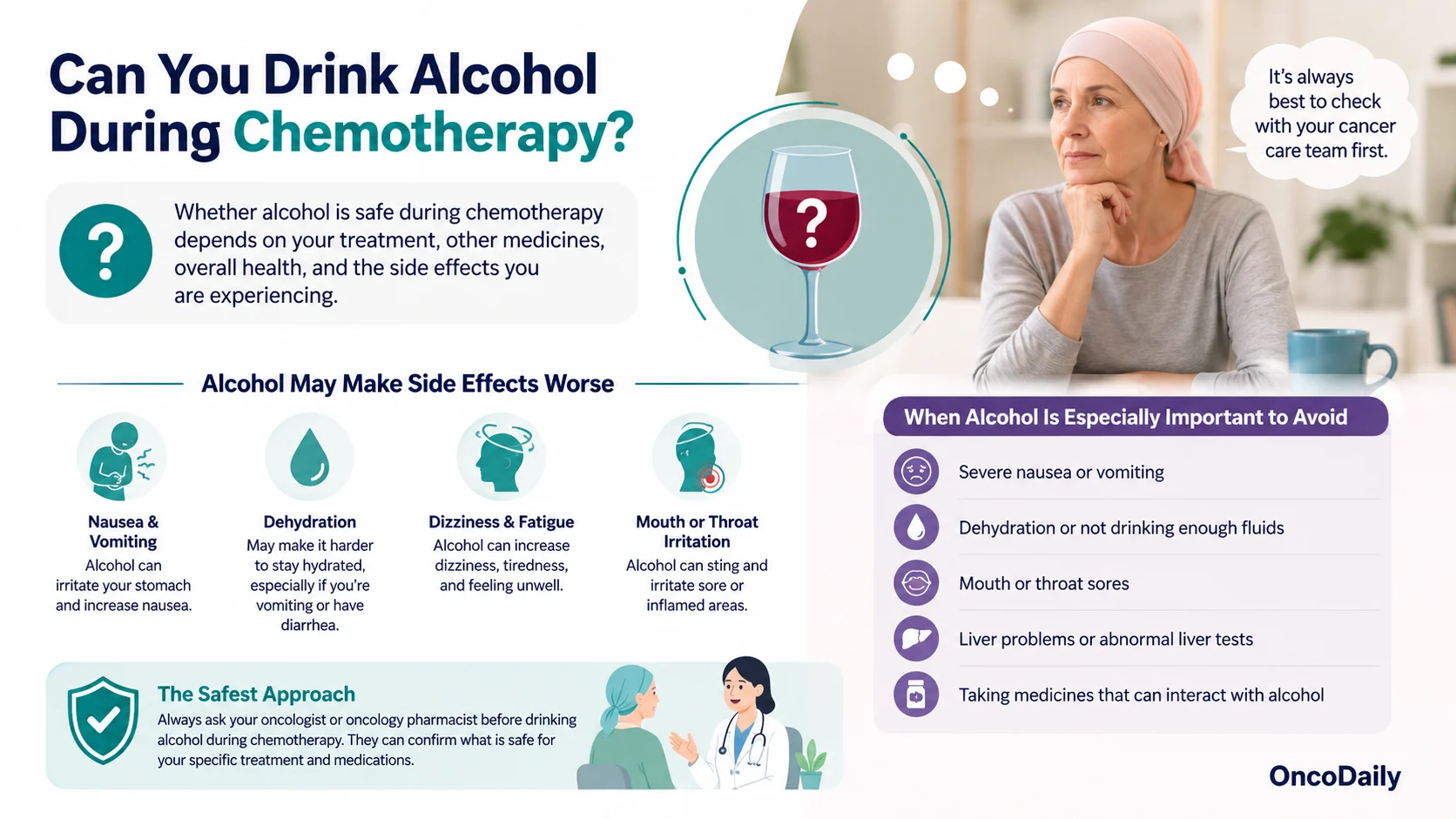
Whether you can drink alcohol during chemotherapy depends on the type of chemotherapy you are receiving, other medicines you take, your overall health, and the side effects you are experiencing.
For some people, a small amount of alcohol may be acceptable during treatment. However, certain chemotherapy drugs can interact with alcohol, so it is always best to check with your cancer care team first (Cancer Research UK, 2026).
Alcohol may also make some chemotherapy side effects worse. It can increase nausea, dizziness, fatigue, and mouth or throat irritation. If you are already vomiting, having diarrhea, or struggling to drink enough fluids, alcohol may also make it harder to stay well hydrated.
Alcohol may be especially important to avoid if you have significant nausea or vomiting, dehydration, mouth sores, liver problems, or if you are taking medicines that can interact with alcohol.
The safest approach is to ask your oncologist or oncology pharmacist before drinking alcohol during chemotherapy. They can tell you whether an occasional drink is safe with your specific treatment and medications (Cancer Research UK, 2026).
How Can Alcohol Interact With Chemotherapy Drugs?
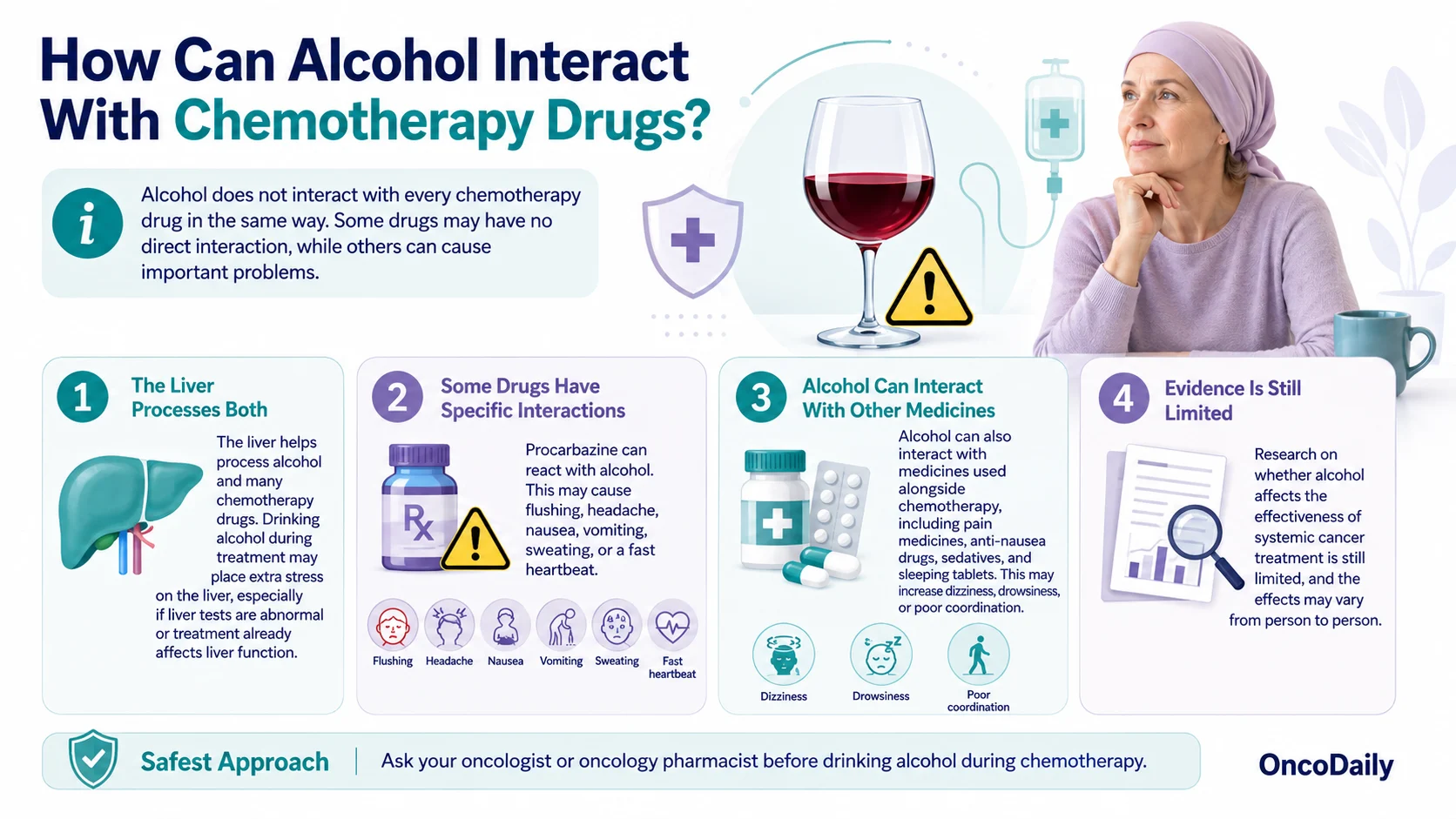
Alcohol does not interact with every chemotherapy drug in the same way. Some chemotherapy medicines may have no direct interaction with alcohol, while others can cause important problems.
The liver processes alcohol as well as many chemotherapy drugs. Drinking alcohol during treatment may therefore place additional stress on the liver, particularly if liver tests are already abnormal or the chemotherapy itself can affect liver function. The exact effect depends on the drug and the individual patient (National Cancer Institute, 2021).
Certain chemotherapy drugs can have more specific interactions. Procarbazine, which is used in some lymphoma and brain tumor treatment regimens, can cause an unpleasant reaction when combined with alcohol. Symptoms may include flushing, headache, nausea, vomiting, sweating, or a fast heartbeat. Patients taking procarbazine are advised to avoid alcohol during treatment (Cancer Research UK, 2026).
Alcohol can also interact with medicines used alongside chemotherapy, including some opioid pain medicines, anti-nausea medicines, sedatives, and sleeping tablets. These combinations may increase dizziness, drowsiness, poor coordination, or other side effects.
Evidence on whether alcohol affects the effectiveness of systemic cancer treatments remains limited. The effects may vary according to the treatment, cancer type, amount of alcohol consumed, and pattern of alcohol use (Fountoukidis et al., 2025).
Can Alcohol Make Chemotherapy Side Effects Worse?
Alcohol can make some chemotherapy side effects worse, although the risk depends on the treatment, the amount consumed, other medicines being taken, and your overall health.
Alcohol may worsen nausea and vomiting by irritating the stomach. This can make it harder to eat, drink enough fluids, or keep oral medicines down. Cancer Research UK notes that alcohol may make chemotherapy-related sickness worse for some patients (Cancer Research UK, 2026).
If chemotherapy is already causing vomiting, diarrhea, fever, or poor fluid intake, alcohol may make it more difficult to maintain good hydration. Dehydration can contribute to dizziness, headache, weakness, reduced urination, and worsening fatigue.
If chemotherapy causes mouth or throat sores, alcohol may sting and further irritate these sensitive tissues. Alcohol-containing mouthwashes may also cause irritation and are often best avoided when mouth sores are present (American Cancer Society, 2025).
Chemotherapy can also cause fatigue, dizziness, and weakness. Alcohol may increase sleepiness and reduce coordination, particularly when combined with medicines that also cause drowsiness.
Alcohol may place additional stress on the liver if treatment is already affecting liver function (National Cancer Institute, 2021).
Not every patient will experience these effects, and research has not shown that alcohol consistently worsens every chemotherapy-related side effect (Fountoukidis et al., 2025).
You can also read Chemotherapy and Side Effects: What to Expect and How to Manage Them on OncoDaily.
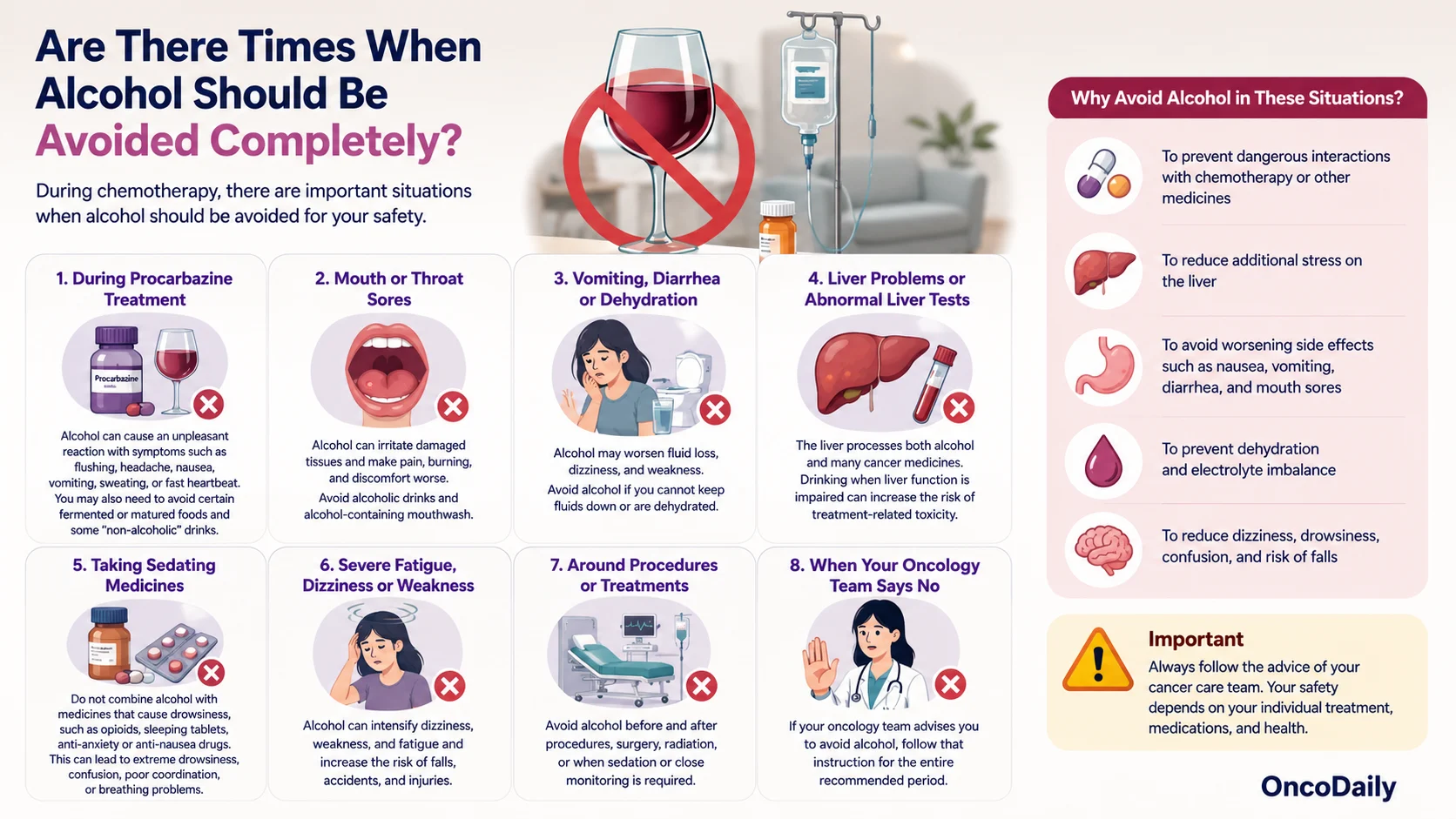
Are There Times When Alcohol Should Be Avoided Completely?
There are situations during chemotherapy when alcohol should be avoided completely, especially when it could interact with treatment, worsen side effects, or increase the risk of complications.
One important example is procarbazine, a chemotherapy drug used in some lymphoma and brain tumor regimens. Alcohol can cause an unpleasant reaction during procarbazine treatment, with symptoms such as flushing, headache, sweating, nausea, vomiting, or a fast heartbeat. Patients may also be advised to avoid certain fermented or matured foods and some “non-alcoholic” drinks (Cancer Research UK, 2026; Macmillan Cancer Support, 2026).
Alcohol should also be avoided if chemotherapy has caused mouth or throat sores, because it can irritate damaged tissues and make pain or burning worse.
If you have vomiting, diarrhea, dehydration, dizziness, or difficulty keeping fluids down, avoiding alcohol can help prevent these problems from becoming worse.
It is also best to avoid alcohol if you have abnormal liver tests or liver disease, because the liver processes both alcohol and many cancer medicines. Drinking when liver function is already affected may increase the risk of treatment-related toxicity (National Cancer Institute, 2021).
Alcohol should not be combined with medicines that cause significant drowsiness, including some opioid pain medicines, sleeping tablets, anti-anxiety medicines, and anti-nausea drugs, because the combination can increase sleepiness, confusion, poor coordination, and breathing problems.
Most importantly, if your oncology team has specifically told you to avoid alcohol, follow that advice throughout the recommended period.
When Should You Talk to Your Cancer Care Team About Alcohol?
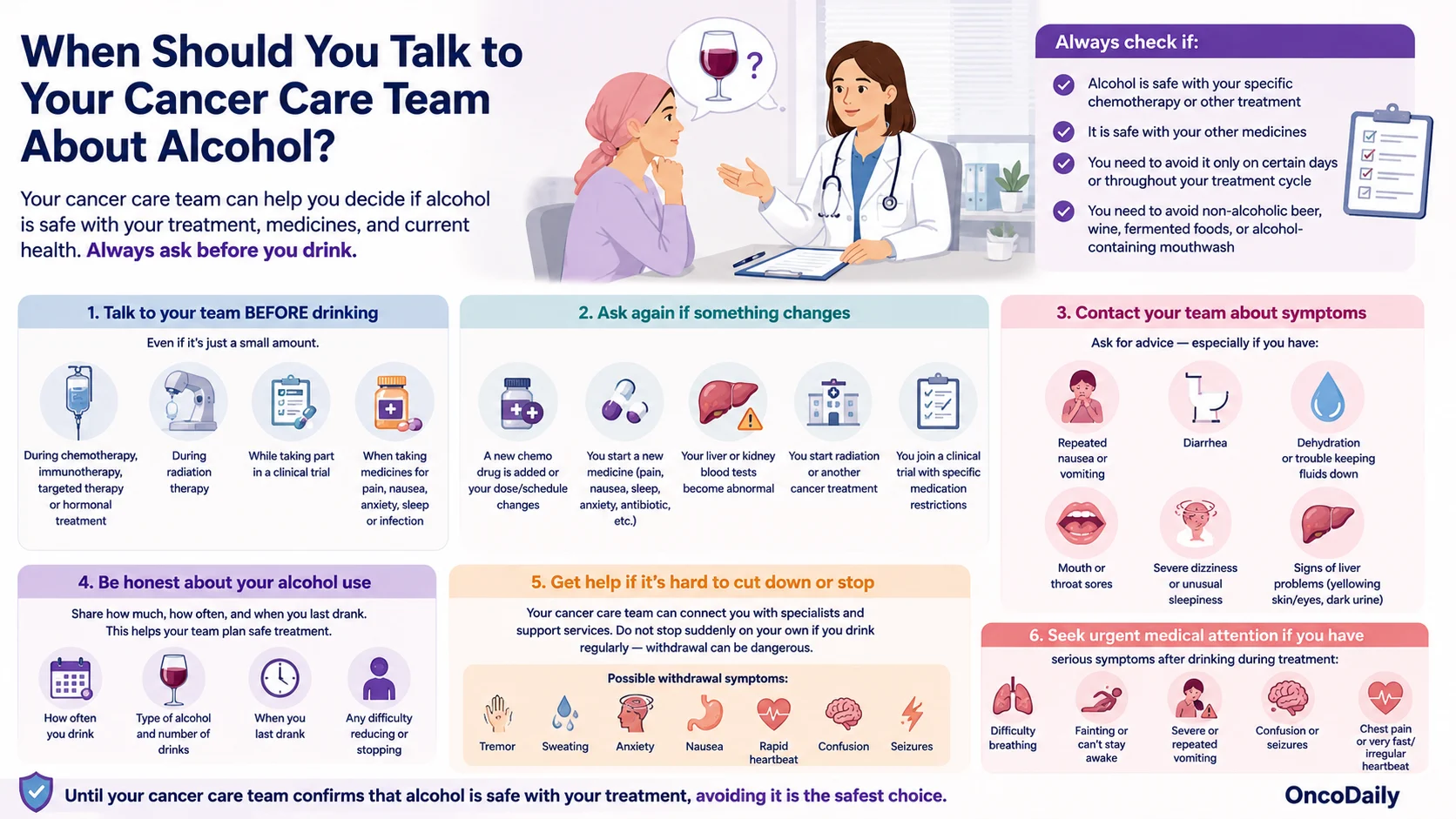
You should talk to your cancer care team before drinking alcohol during chemotherapy, even if you are only planning to have a small amount. Your oncologist or oncology pharmacist can check whether alcohol is safe with your specific chemotherapy drugs, other medicines, and current health (National Cancer Institute, 2025).
It is especially important to ask again if your treatment changes, a new medicine is added, or you begin taking medicines for pain, nausea, anxiety, sleep, or infection. A previous recommendation may no longer apply after changes to your treatment plan (Cancer Research UK, 2026).
You should also contact your cancer care team if you develop repeated nausea or vomiting, diarrhea, dehydration, mouth or throat sores, severe dizziness, unusual sleepiness, or signs of liver problems such as yellowing of the skin or eyes.
Tell your healthcare team honestly about how much and how often you drink. If you drink alcohol regularly or find it difficult to reduce or stop, your team can help you do so safely and arrange additional support if needed (The Christie NHS Foundation Trust, 2026).
Seek urgent medical attention if drinking alcohol during treatment is followed by difficulty breathing, fainting, severe vomiting, confusion, seizures, chest pain, or a very fast or irregular heartbeat.
Until your cancer care team confirms that alcohol is safe with your treatment, avoiding it is the safest option.
Written by Marine Marachlian, MD
FAQ
Can I drink alcohol while receiving chemotherapy?
Possibly, but it depends on your chemotherapy regimen, other medications, overall health, and side effects. Ask your cancer care team before drinking.
Is one glass of wine safe during chemotherapy?
A small amount may be acceptable with some treatments, but there is no rule that applies to everyone. Your oncologist or oncology pharmacist can tell you what is safe for your specific regimen.
Can alcohol make chemotherapy side effects worse?
Yes. Alcohol may worsen nausea, vomiting, dizziness, fatigue, dehydration, and mouth or throat irritation.
Can alcohol interfere with chemotherapy drugs?
Some chemotherapy medicines can interact with alcohol, while others may not have a known direct interaction. The risk depends on the specific drug.
Why can alcohol be a concern for the liver during chemotherapy?
The liver processes alcohol and many cancer medicines. If chemotherapy is already affecting liver function, alcohol may place additional stress on the liver.
Which chemotherapy drug should not be mixed with alcohol?
Procarbazine is an important example. Drinking alcohol during procarbazine treatment can cause an unpleasant reaction, including flushing, headache, nausea, vomiting, sweating, or a fast heartbeat.
Should I avoid alcohol if I have mouth sores?
Yes. Alcohol can irritate chemotherapy-related mouth or throat sores and may make pain or burning worse.
Can I drink alcohol if I am taking pain or anti-nausea medicines?
It depends on the medicine. Alcohol can increase sleepiness, dizziness, poor coordination, and other side effects from some pain medicines, sedatives, sleeping tablets, and anti-nausea drugs.
Should I avoid alcohol if I am vomiting or dehydrated?
Yes. Alcohol may make it more difficult to maintain good hydration and can worsen dizziness, weakness, or other symptoms.
When should I contact my cancer care team about alcohol?
Talk to your cancer care team before drinking, whenever your treatment or medicines change, or if you develop significant side effects. Seek urgent medical care if drinking is followed by symptoms such as difficulty breathing, fainting, severe vomiting, confusion, seizures, or a very fast or irregular heartbeat.