OncoDaily and ZS brought together leaders in biotechnology, drug development and healthcare strategy on September 30 for The State of Oncology in 2026 With ZS, a virtual discussion examining where cancer innovation is heading and what it will take to translate scientific progress into patient benefit.
The webinar continued the organizations’ collaboration following OncoDaily Grand Rounds: AI in Oncology Edition at ASCO 2026, where ZS served as the exclusive partner. Drawing on ZS’s State of Oncology in 2026 report, the discussion connected unmet medical need and earlier-stage treatment with portfolio strategy, commercialization, and the realities of oncology practice.
The panel featured Tom Neyarapally, CEO and Co-Founder of Archetype Therapeutics, and Richa Poddar, Senior Vice President and Product Development & Commercialization Lead for cemsidomide at C4 Therapeutics. Co-hosts Pavan Anne, Principal at ZS and leader of its Global Oncology and Precision Medicine Practice, and Matt Furlow, PhD, Associate Partner at ZS and leader of its Radiopharmaceutical Center of Excellence, guided the conversation.
More than 53,000 online viewers joined OncoDaily and ZS’s webinar, The State of Oncology in 2026 With ZS, to follow the discussion on the future of cancer care.
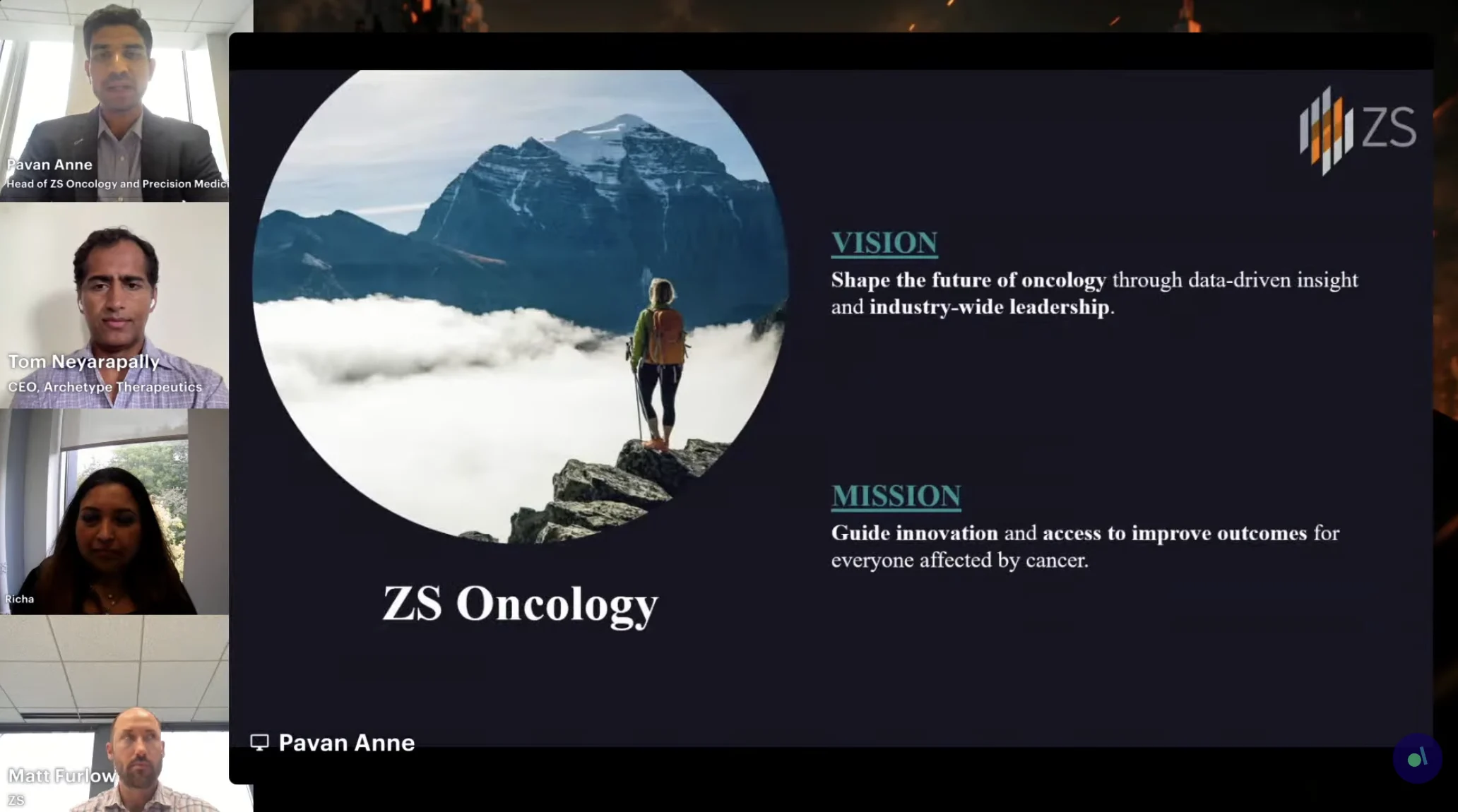
Opening the webinar, Anne described the ZS oncology practice’s ambition:
“Our vision as part of our ZS oncology practice is to shape the future of oncology through data driven insight and industry wide leadership to be able to guide innovation and access to improve outcomes for everyone affected by cancer.”
Looking Beyond Broad Cancer Categories
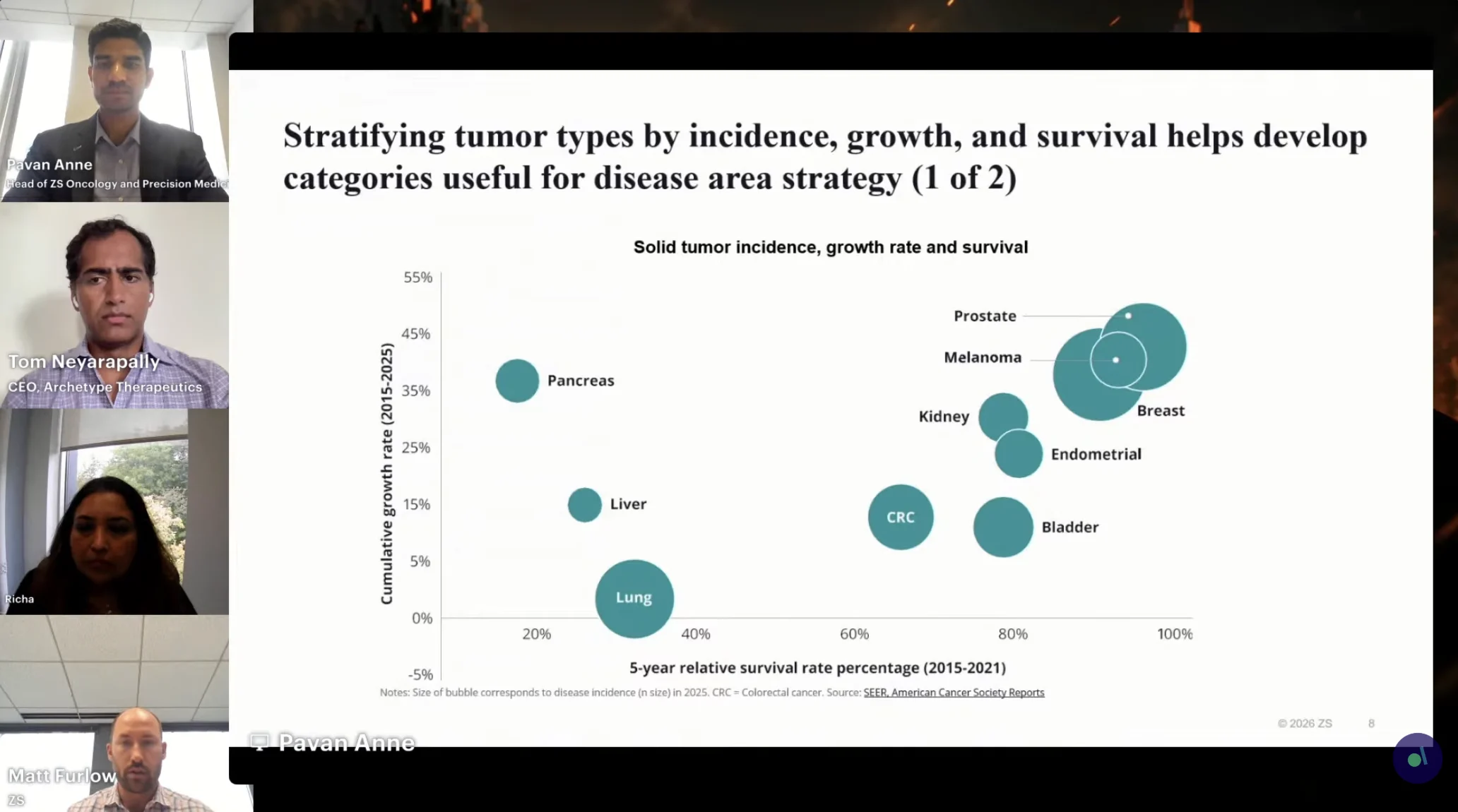
Furlow began by examining how cancer incidence, changes in incidence, and survival can inform disease-area strategy. His presentation distinguished between common cancers with relatively favorable overall outcomes, common cancers with poorer survival, and less common cancers where rising incidence and poor outcomes could create a growing burden.
He emphasized that aggregate outcomes can conceal substantial unmet need. Breast cancer, prostate cancer and chronic lymphocytic leukemia may have favorable outcomes in some settings, while particular subtypes, resistant disease and later treatment lines remain difficult to address.
The implication for development was to look more closely at the patients within a disease category. Furlow pointed to the evolving understanding of molecular alterations in hormone receptor-positive breast cancer as an example of how more precise subtyping can reveal opportunities beyond an established treatment framework.
The discussion also considered whether oncology development is moving upstream quickly enough. According to the analysis Furlow presented, development had not broadly shifted toward earlier-stage disease across the 2015–2024 period, despite prominent examples of established therapies moving into curative-intent settings. He described differences between established and emerging pharmaceutical companies, with larger companies more able to extend medicines already studied in advanced disease into earlier stages.
A Patient-First Approach to Drug Discovery
Neyarapally described how Archetype Therapeutics had chosen early-stage lung adenocarcinoma as its first program, combining an AI-based discovery platform with academic expertise in the disease.
“So our whole premise is that clinical trial failure rates are high in part because the wrong patient population is targeted and, thus, the wrong biology is targeted.”
Rather than screening small molecules only against a predefined target, he said the company’s platform evaluates candidates against biological patterns, including genomic patterns associated with better or worse patient outcomes.
Neyarapally explained that collaboration with researchers at Mount Sinai had helped connect the discovery process to those patterns in early-stage lung cancer. The aim, he said, was to identify molecules capable of shifting disease biology toward patterns associated with better outcomes. He described this work as preclinical discovery and early development.
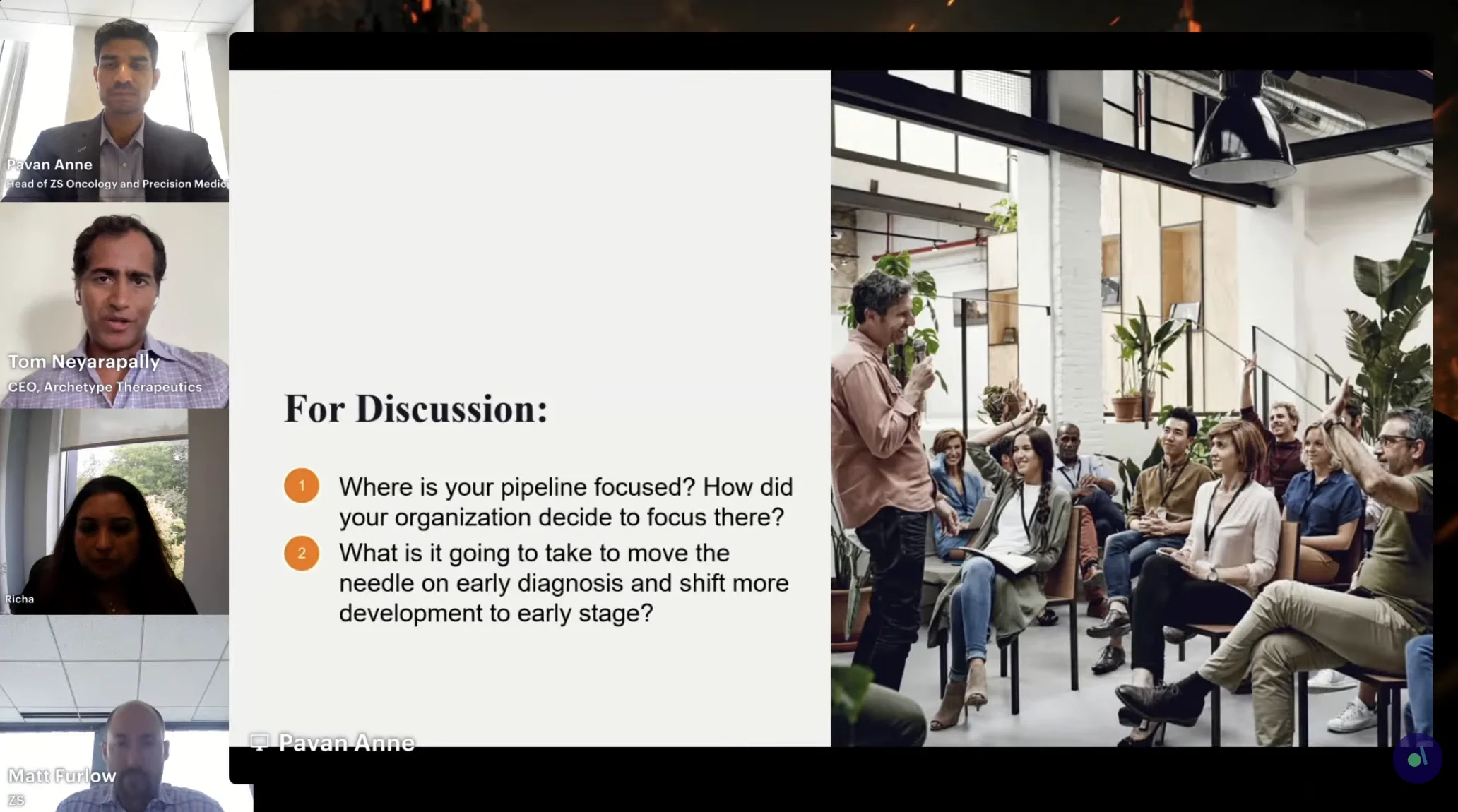
Poddar offered a complementary perspective from C4 Therapeutics, explaining how its expertise in targeted protein degradation and its founding links to multiple myeloma research had informed its development priorities.
Across both examples, scientific capabilities, disease expertise and the needs of a defined patient population shaped the choice of where to invest.
Building Portfolios Around Meaningful Differentiation
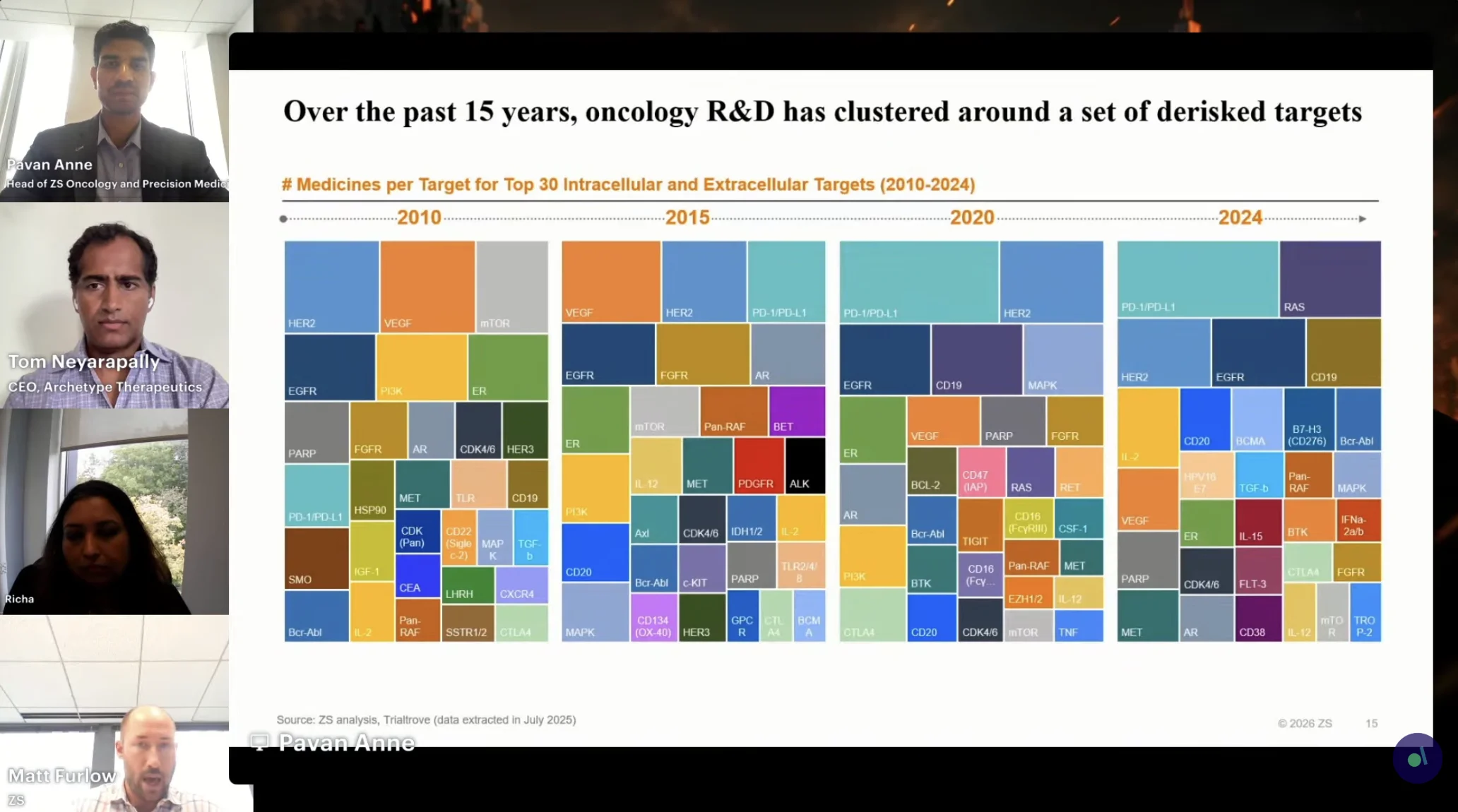
Furlow then turned to competition around established biological targets. In the analysis he presented, the average number of assets per individual target had doubled over the 2010–2024 period.
“But commercially, this signals crowding and diminishing differentiation.”
He described evaluating targets and therapeutic modalities together as one way to identify less crowded opportunities. Targets extensively explored through antibody–drug conjugates, for example, may be less developed through other approaches. He also discussed the potential to broaden radioligand therapy development, while noting that much of that expansion remained in preclinical or early clinical stages.
Neyarapally argued that a previous failure should also prompt questions about the patient population studied. A biologically relevant target might warrant reconsideration in another disease setting or a more precisely selected population.
Poddar emphasized that portfolio decisions should return to the clinical problem:
“What is the unmet need and what are you hoping to address with what you’re bringing to the table?”
She noted that an established target can still support meaningful innovation when a new medicine addresses a limitation of existing treatment. Using ALK-positive lung cancer as an example, she discussed how addressing brain metastases could provide important differentiation even within a relatively small, competitive disease segment.
Partnerships, Platform Validation and the Funding Gap
The conversation also explored how companies source external innovation. Furlow described a shift among the leading oncology companies analyzed toward earlier-stage deals and platform licensing, reflecting efforts to build future portfolios.
Poddar said partnership decisions depend on a company’s ambitions, capabilities and ability to develop an asset effectively. Companies need to understand what they can deliver themselves and where a partner could extend the reach of a medicine.
“You also have to be very honest about what your core capabilities are and what you are really exceptionally good at.”
For early-stage platform companies, Neyarapally described the need to validate both individual drug candidates and the technology used to discover them. Academic collaborations can contribute to that evidence, but the transition into clinical development remains financially challenging.
He described a funding gap between promising preclinical science and the clinical evidence investors want to see:
“And, of course, the chicken or egg thing there is, well, you need the money for that, but then that’s what the investors wanna see.”
Bringing Launch Planning Into Development Earlier
Anne introduced a framework for allocating launch resources according to unmet need and clinical differentiation. He cautioned that organizations often describe their assets as transformational, while effective planning requires a realistic assessment of the benefit a therapy offers relative to existing care.
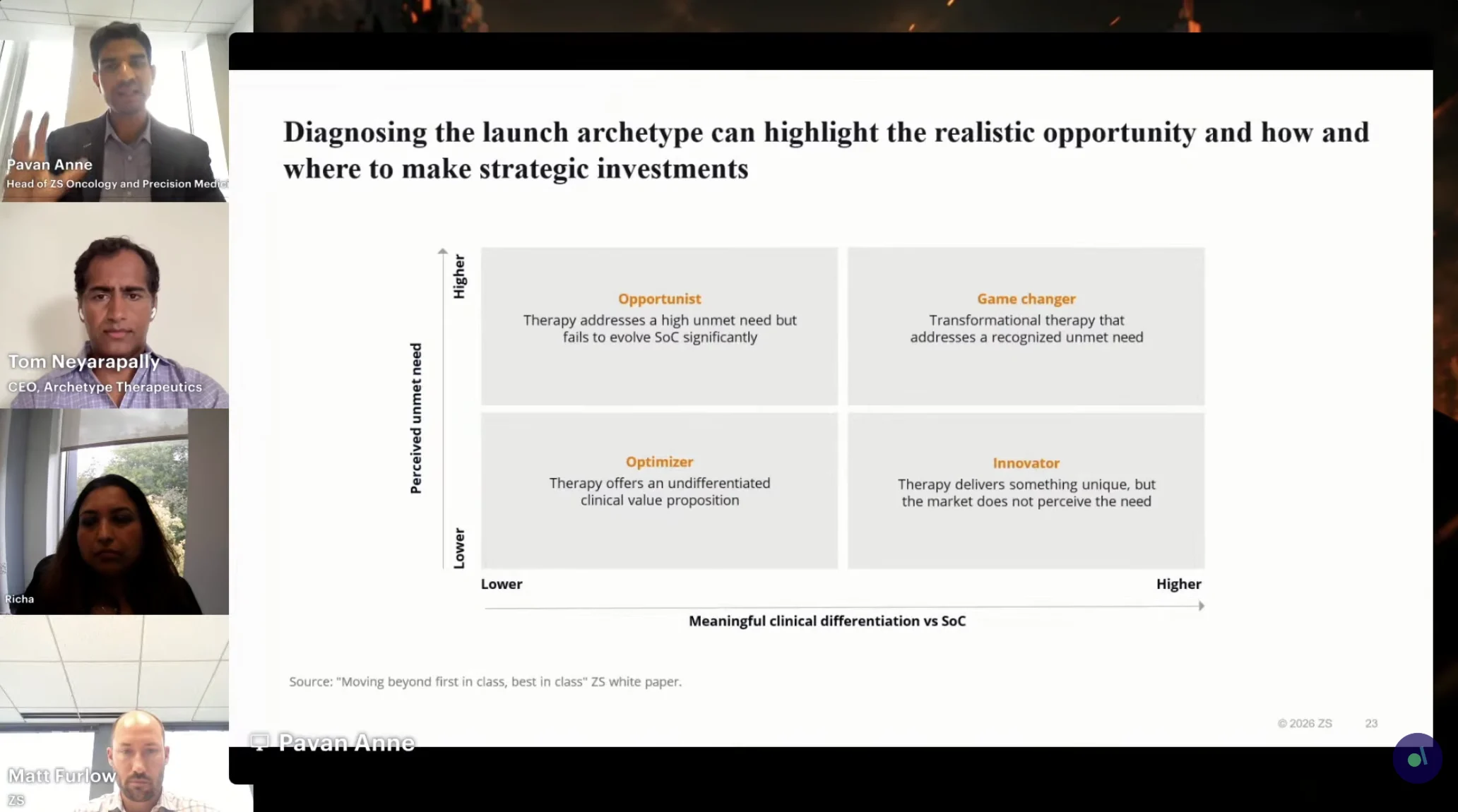
Poddar argued that commercial expertise should contribute much earlier in development, including during target selection and the assessment of disease opportunities. That input, she said, can help teams understand patient needs and the conditions a medicine will face in practice.
“It’s not just to commercialize a drug. It’s to commercialize a drug that will actually impact patient lives in a meaningful way.”
She also highlighted the importance of disease education and market development when launching the first treatment in a new setting. Resource allocation must account for whether a company is entering an established competitive market or helping define a new treatment opportunity.
Supporting an Increasingly Complex Oncology Workforce
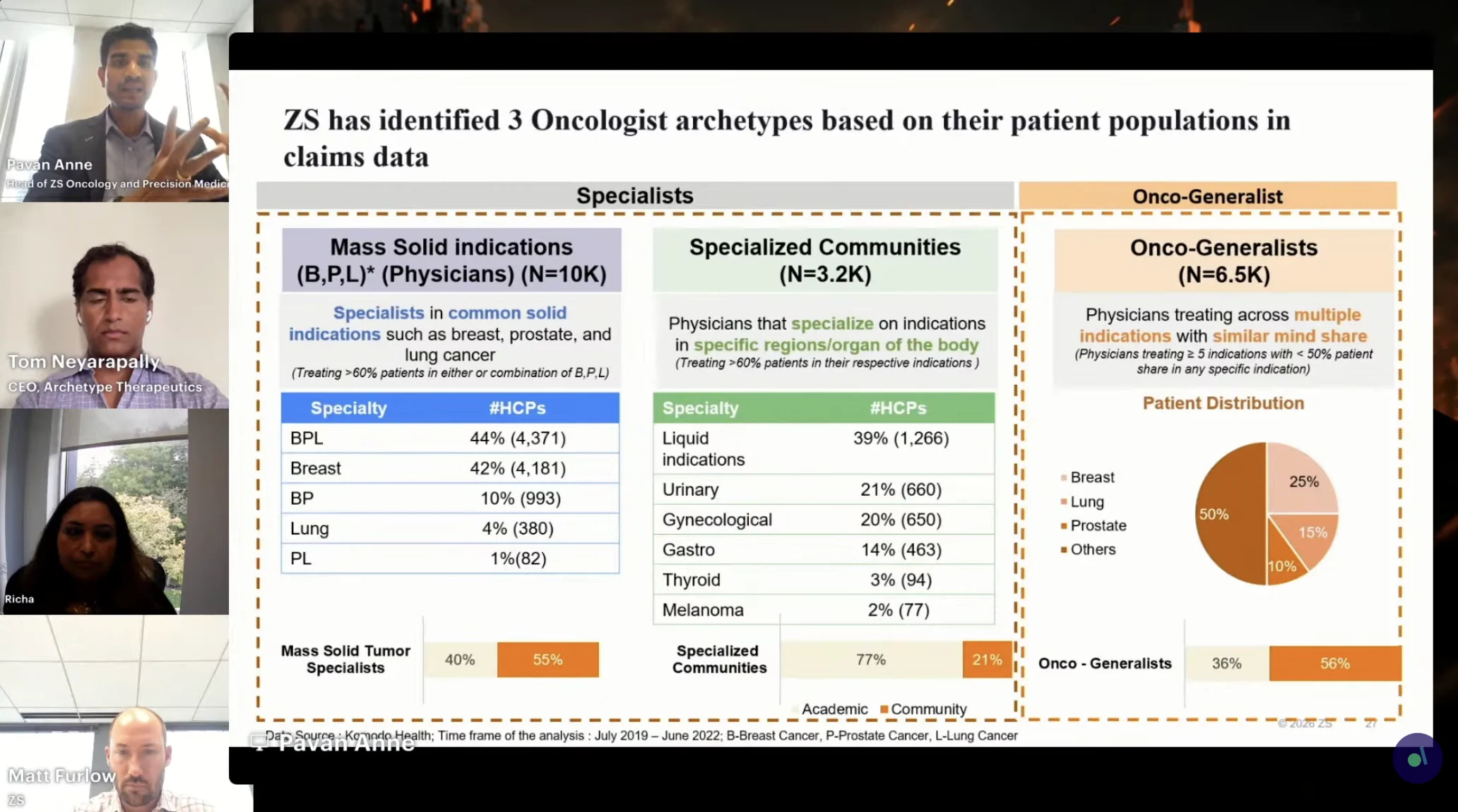
The final major topic examined differences between oncologists treating many cancer types and those with narrower areas of specialization.
Anne presented ZS findings suggesting that generalist oncologists considered fewer treatment options for a given indication and used chemotherapy more frequently than specialists. He discussed these patterns as considerations for education and commercialization, including the challenge of maintaining familiarity with rapidly changing treatment options across multiple diseases.
Poddar described multiple myeloma as an example of the complexity involved in treatment selection and sequencing, even for specialists. She emphasized understanding professional networks, using real-world data to inform engagement, and including patients in decisions.
“And I don’t think we can also forget the patient.”
Neyarapally pointed to oncology-specific electronic medical records, AI-supported decision tools with appropriate guardrails, and assistance with genomic test interpretation as potential ways to support community practice.
Anne noted that integrating these tools into routine care would also require answers to practical questions about payment and workflow.
Earlier Detection Must Be Matched by Earlier Intervention
In the closing audience discussion, Neyarapally expressed optimism about the potential for advances in early detection to identify patients before cancer becomes more difficult to treat. He also raised the question of how quickly therapeutic development could respond to those patients’ needs.
Poddar called for coordinated efforts from industry, policymakers and regulators, particularly around how treatment benefit is evaluated. Without better approaches to demonstrating benefit, she warned, earlier intervention could require lengthy trials that delay evidence generation.
“In order for us to truly make a difference in oncology, we have to go earlier.”
Her closing remarks connected the opportunities discussed throughout the webinar: detecting cancer sooner, developing treatments for those earlier settings, and building the evidence and delivery systems needed to bring them into practice.
Watch the full webinar on OncoDaily TV.