What if the next major breakthrough in cancer treatment is still sitting inside a university laboratory, waiting for the funding needed to move forward?
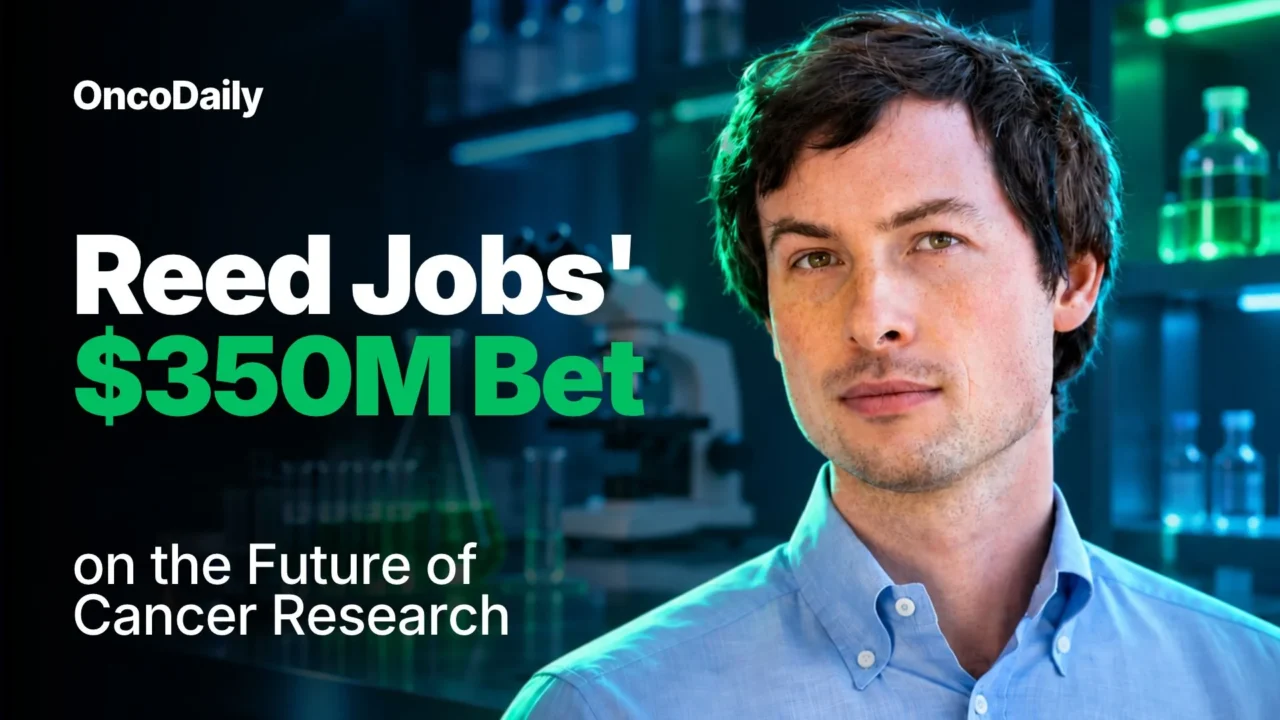
For Reed Jobs, the son of Apple co-founder Steve Jobs, the future of cancer care may depend on finding those discoveries early, supporting scientists willing to pursue unconventional ideas, and turning promising research into treatments that can reach patients.
Now, his cancer-focused venture capital firm, Yosemite, has closed its second fund at $350 million, marking a major step in its mission to make cancer a non-lethal disease within our lifetime.
The fundraising milestone was reported by Fortune on November 4, 2026, following an interview with Jobs in which he described the fund as oversubscribed, exceeding its original fundraising target.
The new capital brings together major pharmaceutical companies, research institutions, and technology investors around a model that combines traditional biotech venture capital with philanthropic funding for early-stage science.
Among Yosemite’s investors are Amgen, AbbVie, the Massachusetts Institute of Technology (MIT), Memorial Sloan Kettering Cancer Center, and venture capitalist John Doerr.
But the ambition behind the fund goes beyond investing in the next successful cancer drug. Yosemite wants to change how promising scientific discoveries are identified, financed, and ultimately translated into cancer treatments.
From a Personal Loss to a Mission Against Cancer
Reed Jobs’ interest in oncology began long before he entered venture capital.
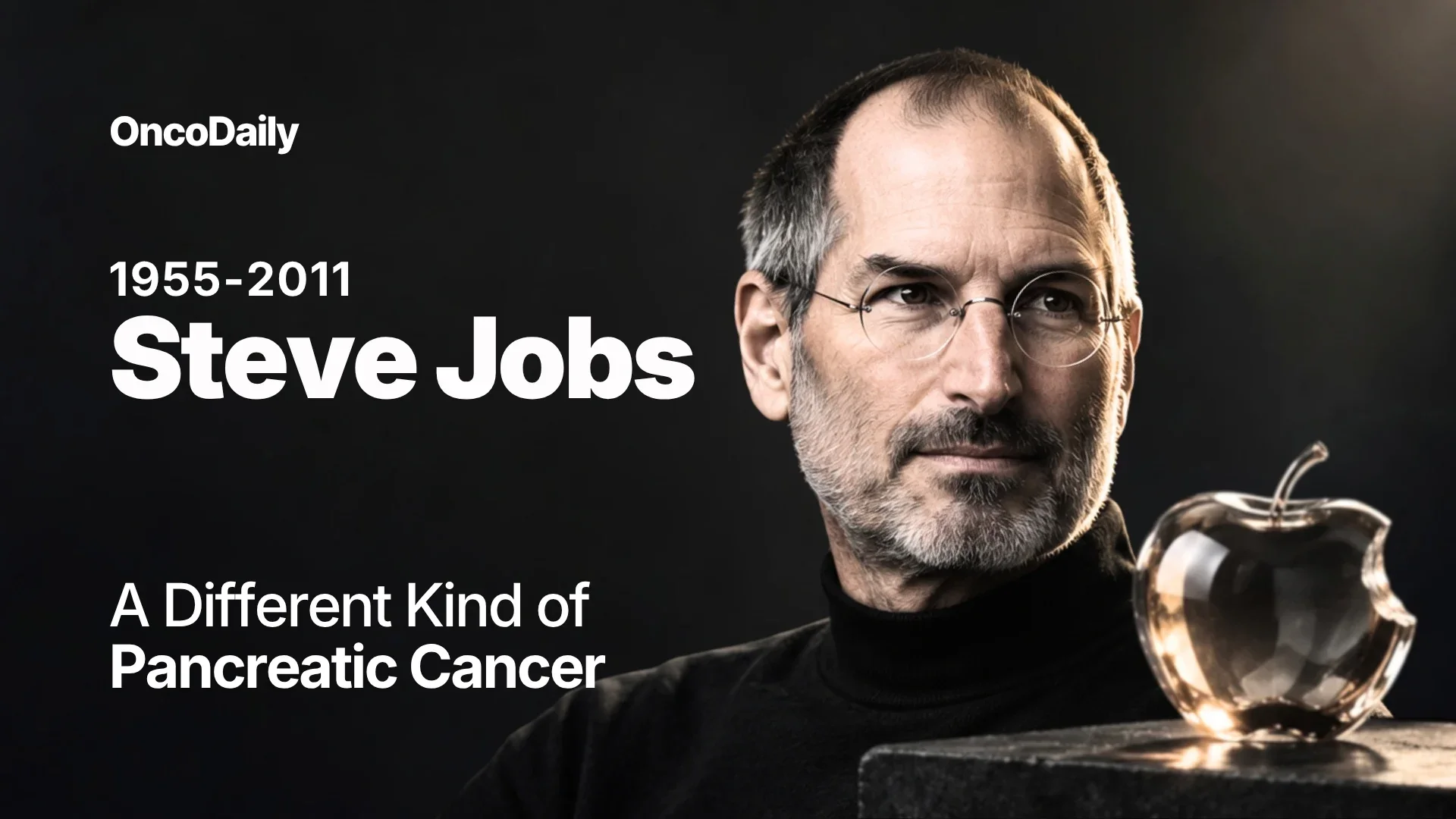
His father, Steve Jobs, was diagnosed with a rare pancreatic neuroendocrine tumor and died in 2011. During his father’s illness, Reed began working in cancer research laboratories, an experience that helped shape his professional ambitions.
Rather than pursuing a career in technology, he focused on an equally complex challenge: reducing cancer mortality.
In 2023, Jobs founded Yosemite as an independent investment firm after spinning it out of Emerson Collective, the organization established by his mother, Laurene Powell Jobs.
Its central objective is deliberately different from the often-repeated ambition to cure cancer.
Jobs believes the more realistic long-term goal is to transform cancer from a frequently fatal disease into one that can increasingly be detected early, treated effectively, and managed over time.
Speaking during an October 28 episode of Fortune’s Term Sheet podcast, he summarized his motivation:
“The victory over death. That is what I want for cancer patients.”
Jobs has pointed to the transformation of HIV treatment as an example of how advances in medicine can dramatically reduce mortality from a once frequently fatal condition.
The analogy does not mean that all cancers can follow the same therapeutic pathway. Cancer encompasses hundreds of biologically distinct diseases, each presenting different challenges in detection, treatment, resistance, and recurrence.
Nevertheless, the goal highlights a growing emphasis in oncology on extending survival, preventing cancer-related deaths, and improving patients’ quality of life.
A $350 Million Fund With an Unusual Investment Strategy
Yosemite’s second fund represents a substantial expansion of its investment capacity.
The firm closed its first fund in 2024 with approximately $263 million. In January 2026, Yosemite had secured an initial $200 million toward its second fund’s $350 million target.
By November, the firm had completed the fundraising, creating additional capacity to support emerging oncology companies and research-driven technologies.
What makes Yosemite’s approach distinctive is its combination of two funding mechanisms.
The first is traditional venture capital. Yosemite invests in biotechnology companies with the potential to develop commercially viable diagnostics, therapeutics, and other technologies that improve cancer care.
The second is philanthropic research funding. Through a donor-advised charitable vehicle, the firm supports scientific ideas that may be too preliminary or uncertain to attract conventional investors.
In a July 2026 interview with TechCrunch, Jobs explained that approximately one-third of Yosemite’s venture investments are directed toward companies it helps create, including businesses developed in collaboration with academic researchers.
The remaining venture capital supports companies established by other founders.
He also described a funding arrangement under which 2.5% of the firm’s fund assets under management is directed toward its donor-advised charitable vehicle, alongside $1 million annually from management fees.
The philanthropic and commercial components have different objectives, but they are designed to complement one another: early grants can help establish whether a scientific concept is promising before substantially larger investments are required.
For cancer researchers, that approach could create an additional pathway between basic laboratory discoveries and the development of new treatments.
More Than $18 Million Already Deployed in Research Grants
Yosemite’s philanthropic strategy is already operating alongside its venture investments.
According to an official announcement published on February 12, 2026, the firm had deployed more than $18 million in research and healthcare grants through its donor-advised charitable vehicle since launching in 2023.
The funding supports early scientific investigations, translational research, and projects aimed at improving cancer care.
In the announcement, Jobs emphasized the importance of supporting discoveries before they are commercially viable:
“Academic seed funding is essential to the evolution of cancer care.”
A central component of this work is Yosemite’s partnership with the American Cancer Society, which helps identify and support promising cancer research. Grant-funded areas have included artificial intelligence in oncology, the tumor microenvironment, cancer vaccines, and targeted drug-delivery technologies.
Recipients in the 2025 American Cancer Society–Yosemite grant cycle included prominent scientists such as Jennifer Doudna, Carolyn Bertozzi, William Kaelin, Stephen Elledge, and Kai Wucherpfennig.
These grants are intended to provide researchers with the flexibility to explore ambitious scientific questions that may not yet have a clear commercial application.
From Laboratory Research to Potential Cancer Treatments
One example of Yosemite’s research strategy is its support for work led by Craig Crews at Yale University.
Early preclinical research contributed to the scientific foundations of Quarry Thera, a biotechnology company developing small-molecule approaches that modulate protein interactions for potential applications in cancer and autoimmune diseases.
Another example comes from research led by Jeremiah Johnson at MIT. Supported through the American Cancer Society–Yosemite partnership, his team investigated an antibody-based drug-delivery strategy capable of carrying larger drug payloads than conventional antibody-drug conjugate designs.
According to Yosemite’s February announcement, the experimental approach demonstrated stronger antitumor activity in preclinical models of breast and ovarian cancer.
Although such findings require further development and clinical validation, they illustrate how early research grants can support technologies with potential therapeutic applications.
Where Yosemite Is Investing: AI, Diagnostics, and Cancer Therapies
Yosemite’s existing portfolio reflects its interest in multiple stages of cancer care, rather than a single therapeutic approach.
Companies supported through its first fund include:
- Chai Discovery, which applies artificial intelligence to molecular design and drug discovery.
- Teal Health, which develops approaches to make cervical cancer screening more accessible.
- Tune Therapeutics, which works on epigenetic technologies with potential therapeutic applications.
- Sage Care, which focuses on improving care navigation and healthcare coordination.
The diversity of these investments reflects Yosemite’s broader view that reducing cancer mortality will require progress across prevention, diagnosis, drug development, treatment delivery, and patient access.
Artificial intelligence is another important component of this strategy.
Jobs has expressed particular interest in AI’s potential to accelerate drug discovery and improve the efficiency of clinical trials, two areas where development costs and timelines continue to present major challenges. However, AI-enabled discoveries must still demonstrate safety and effectiveness through rigorous preclinical and clinical testing before they can benefit patients.
Why Amgen and AbbVie’s Participation Matters
The involvement of major pharmaceutical companies in Yosemite’s second fund could strengthen connections between emerging biotechnology ventures and organizations with established drug-development capabilities.
In his October interview, Jobs explained that pharmaceutical companies can become important partners when early-stage technologies reach clinical development or require the resources needed for commercialization.
For biotechnology startups, such relationships may provide access to development expertise, clinical trial infrastructure, and potential licensing or acquisition opportunities. For established pharmaceutical companies, investing in specialized venture funds creates opportunities to identify emerging therapeutic technologies before they reach later development stages.
Importantly, participation as a fund investor does not guarantee that a particular discovery will receive pharmaceutical backing or ultimately become an approved treatment. Nevertheless, the relationships may help connect promising oncology research with the organizations capable of financing and conducting larger clinical development programs.
Can Venture Capital Help Make Cancer Non-Lethal?
The completion of Yosemite’s second fund comes at a time when oncology research is increasingly shaped by the convergence of molecular biology, immunotherapy, precision medicine, and artificial intelligence.
Yet important barriers remain.
Promising laboratory findings frequently fail to translate into effective human treatments. Clinical trials can require substantial financial resources, and many experimental cancer therapies never achieve regulatory approval. Even successful innovation does not automatically translate into improved outcomes for all patients, particularly when access, affordability, and healthcare infrastructure remain obstacles.
Yosemite’s hybrid investment model attempts to address one part of this challenge: the financial gap between early scientific discovery and the development of commercially viable therapies. Its experience also provides an opportunity to examine whether combining philanthropic research grants with venture investment can accelerate the translation of promising discoveries.
The ultimate measure of success, however, will not be the amount of money raised or the number of companies created. It will be whether those investments contribute to validated advances in cancer prevention, diagnosis, treatment, and survival.
For Reed Jobs, whose interest in oncology began with his father’s illness, the ambition remains a long-term one. With $350 million secured for Yosemite’s second fund, the firm has expanded its capacity to pursue that mission.
The next challenge is translating investment into scientific progress—and scientific progress into meaningful improvements in the lives of people with cancer.
For the latest cancer research grants and funding opportunities, follow OncoGrants by OncoDaily and stay informed about opportunities to advance oncology research and innovation.