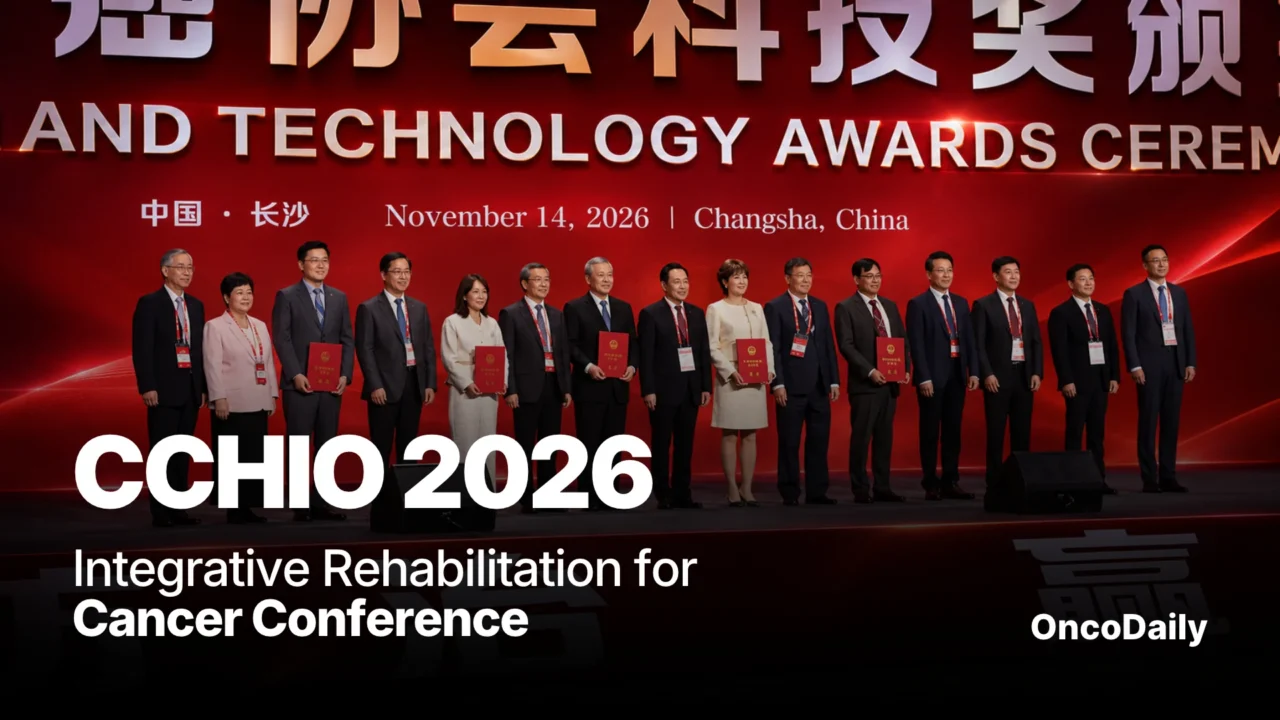
The 2026 Chinese Congress on Holistic Integrative Oncology (CCHIO 2026) concluded on November 15 in Changsha, Hunan Province, China, following four days of scientific discussions, international meetings, and multidisciplinary collaboration.
Held from November 12 to 15 under the theme “Cancer Control, Winning in Integration,” the congress brought together oncology specialists, researchers, surgeons, and healthcare professionals from China and around the world to discuss advances in cancer prevention, diagnosis, treatment, and rehabilitation.
The scientific program featured more than 100 international sessions, covering developments in precision medicine, integrative oncology, cancer surgery, radiotherapy, and prevention research.
Among the notable activities were the World Cancer Research Fund (WCRF) International symposium on early-life factors and cancer risk, the CACA–World Radiotherapy Awareness Day (WRAD) Summit, and the 11th International NOSES Academic Conference, which brought international perspectives to discussions on colorectal surgery.
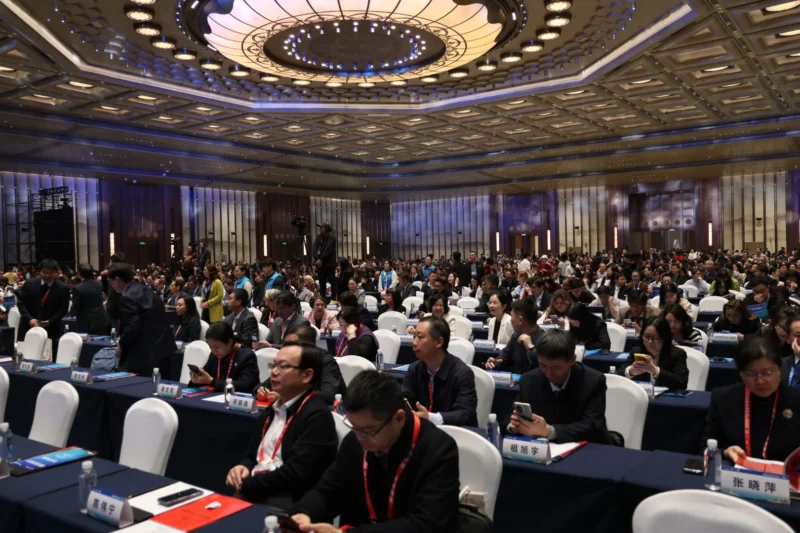
Bringing the Global Oncology Community to Changsha
CCHIO 2026 was hosted by the China Anti-Cancer Association (CACA), co-hosted by the International Association for Holistic Integrative Medicine (IAHIM), the World Association for Integrative Oncology (WAIO), and the Hunan Anti-Cancer Association, and organized by Hunan Cancer Hospital.
The congress was led by Professor Daiming Fan, a member of the Chinese Academy of Engineering and Congress President, alongside Professor Hua Xiang, Executive President.
Throughout the four-day program, participants explored approaches to cancer care that connect scientific research, clinical practice, and rehabilitation. The congress emphasized the integration of traditional Chinese and Western medicine, together with evidence-based medicine and precision oncology.
Sessions addressed cancer prevention and screening, early diagnosis, individualized treatment, rehabilitation management, and the application of scientific discoveries in clinical practice.
Alongside the main scientific program, several international organizations and specialist groups contributed dedicated sessions addressing specific challenges in cancer prevention and treatment.
WCRF International Examines Early-Life Factors and Cancer Risk
On November 13, World Cancer Research Fund (WCRF) International, in collaboration with the Hong Kong Anti-Cancer Society (HKACS) and CACA, organized a symposium dedicated to “Early Life Factors and Cancer Risk.”
The symposium took place from 8:30 AM to 11:40 AM China Standard Time and examined the relationship between early-life exposures and cancer risk later in adulthood.
The session was chaired by Professor Anne Lee, WCRF International’s Hong Kong Ambassador, and featured two internationally recognized researchers:
- Professor Terrence Dwyer, affiliated with the Murdoch Children’s Research Institute and the University of Oxford.
- Professor Elio Riboli, affiliated with Imperial College London and serving as a medical and scientific advisor to WCRF International.
The symposium focused on an important area of cancer prevention research: how exposures and experiences during the earliest stages of life may influence long-term cancer risk.
Understanding these associations may contribute to the development of prevention strategies that consider cancer risk across the life course.
A Collaboration Established at the World Cancer Congress
The symposium followed discussions held earlier in 2026 during the Union for International Cancer Control (UICC) World Cancer Congress in Hong Kong.
Representatives from WCRF International, HKACS, and CACA met during the congress to explore opportunities for scientific cooperation.
Among those involved were Professor Anne Lee, Ms Pat Chu, Ms Cheryl Fung, and Dr Wilson Lee from HKACS, alongside Ms Zhuojin Li and Ms Lijun Zhang from CACA.
Ahead of the Changsha symposium, Panagiota Mitrou, Executive Director of Research and Policy at WCRF International, shared details of the collaboration on LinkedIn, acknowledging the discussions in Hong Kong and expressing interest in future joint activities.
The symposium at CCHIO 2026 represented a further step in this cooperation, bringing together researchers and organizations working to advance scientific understanding of cancer prevention.
Radiotherapy Access Takes Center Stage at the CACA–WRAD Summit
Radiotherapy awareness and access were also addressed during CCHIO 2026 through a dedicated CACA–World Radiotherapy Awareness Day (WRAD) Summit, held on the opening day of the congress.
The session brought attention to the importance of improving access to radiotherapy and strengthening international advocacy for this essential component of cancer treatment.
Sandra Turner and Dr Katie Wakeham, Co-Chairs of WRAD, participated in the summit, discussing the importance of raising awareness about radiotherapy and building a global community committed to improving access to treatment.
Their contributions addressed the role of international cooperation in supporting radiotherapy advocacy and increasing public and professional awareness.
In a LinkedIn post from Changsha, Kristian Luliak, a project manager working in programme operations and stakeholder coordination, described the opening-day activities and the engagement surrounding the CACA–WRAD Summit.
He also reported strong interest from healthcare professionals and members of the public visiting the WRAD exhibition booth, where the initiative’s mascot, WRADdy, attracted attention.
The summit provided an opportunity to discuss persistent inequalities in radiotherapy access and the importance of advocacy, professional engagement, and international partnerships in addressing these challenges.
International NOSES Conference Highlights Advances in Colorectal Surgery
Surgical innovation was another component of CCHIO 2026, with the 11th International NOSES Academic Conference bringing together specialists to discuss developments in natural orifice specimen extraction surgery.
NOSES is a minimally invasive surgical approach in which a resected specimen is extracted through a natural orifice rather than through an additional abdominal incision.
The conference included international perspectives on the adoption and clinical experience of these techniques.
Among the speakers was Dr Facundo Sarsur, a specialist in coloproctology and general surgery from Argentina, who delivered a presentation titled “Adopting NOSES in Argentina: Current Landscape and Early Experience.”
His presentation examined the current use of NOSES in Argentina and early local experience with the technique.
Dr Sarsur also discussed the potential of the transanal eversion approach, which he considers particularly promising for clinical practice in his region.
Following the conference, he shared reflections on LinkedIn, acknowledging Professor Kefeng Ding and his team at SAHZU in Hangzhou, who hosted him in November 2025, as well as Dr Yang Tang, the CACA Committee, and the International NOSES Alliance.
He expressed hope that participation in the conference would mark the beginning of continued scientific cooperation between the Argentine and Chinese surgical communities.
The session reflected the congress’s broader emphasis on international exchange of clinical experience and discussion of emerging surgical approaches.
Integrative Oncology Across Prevention, Treatment, and Rehabilitation
Beyond these dedicated international sessions, CCHIO 2026 addressed the wider role of multidisciplinary cooperation in cancer care.
The congress’s scientific agenda encompassed the entire cancer continuum, including prevention, screening, diagnosis, treatment, and rehabilitation.
Discussions also examined the integration of traditional Chinese and Western medicine, the application of precision medicine, and the relationship between laboratory research and clinical practice.
The inclusion of sessions addressing early-life cancer risk, radiotherapy access, and minimally invasive surgery demonstrated the range of subjects represented at the congress.
While these sessions focused on different areas of oncology, each contributed to discussions about how scientific knowledge, clinical experience, and international cooperation can inform cancer care.
Continuing Scientific Partnerships Beyond CCHIO 2026
The conclusion of CCHIO 2026 marked the end of four days of international scientific exchange in Changsha.
The congress provided opportunities for researchers, clinicians, professional organizations, and healthcare representatives to share experiences and discuss future cooperation.
The WCRF International symposium built on discussions initiated at the UICC World Cancer Congress in Hong Kong, while the CACA–WRAD Summit brought radiotherapy advocacy into the congress’s international program.
The 11th International NOSES Academic Conference also provided a platform for sharing surgical experience across countries, including perspectives from Argentina and China.
Together, these activities illustrated the range of international partnerships represented at CCHIO 2026, extending from cancer prevention research and radiotherapy advocacy to surgical education and clinical practice.
As participating organizations consider further opportunities for cooperation, the discussions held in Changsha offer a basis for continued scientific exchange in cancer research, prevention, and treatment.
For more coverage of international oncology congresses, scientific developments, and cancer research, visit OncoDaily.