What if a blood test could detect signs of cancer returning before they become visible on conventional imaging? This possibility is increasingly shaping research into molecular residual disease (MRD), where circulating tumor DNA (ctDNA) offers a way to monitor cancer at the molecular level.
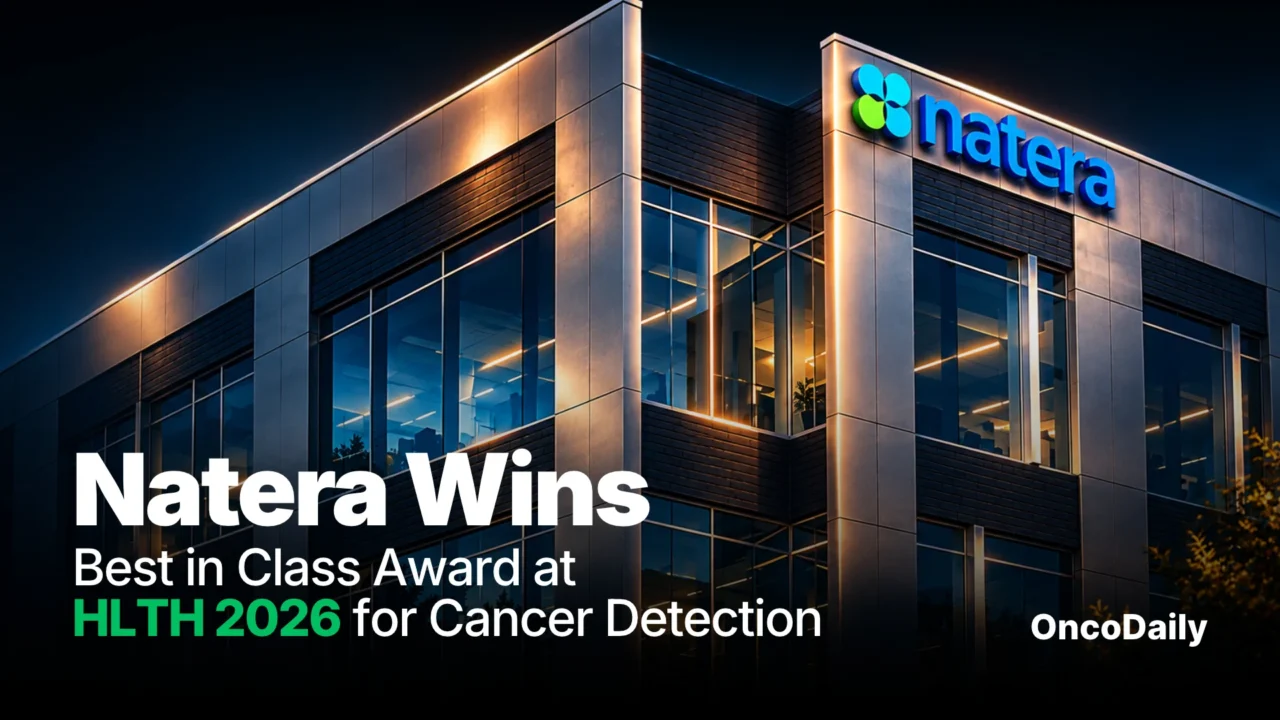
At HLTH 2026 in Las Vegas, Natera received the Best in Class award in the Cancer, Screening & Early Detection category at the Digital Health Hub Foundation’s Digital Health & AI Awards. Announced by the company on November 17, 2026, the recognition highlights its Signatera molecular residual disease test, a personalized blood-based assay designed to identify traces of tumor DNA in patients previously diagnosed with cancer.
The award comes as liquid biopsy technologies attract growing attention for their potential to detect molecular recurrence, assess treatment response, and provide additional information for personalized oncology care.
Natera Recognized Among More Than 1,300 Global Submissions
The 2026 Digital Health & AI Awards attracted more than 1,300 submissions from companies worldwide, recognizing technologies and healthcare innovations across multiple categories.
Natera was selected as the Best in Class winner in the newly introduced Cancer, Screening & Early Detection category, which made its debut at this year’s awards. The category reflects expanding interest in technologies that could improve cancer detection and monitoring throughout the patient journey.
Organized by the Digital Health Hub Foundation, the awards recognize companies working to address healthcare challenges through technology, diagnostics, and new models of care.
The 2026 program included 11 Best in Class winners and 27 Rising Star winners across 11 categories, with selections following multiple rounds of evaluation by experts from healthcare, clinical medicine, technology, and investment.
For Natera, the recognition draws attention to the growing role of molecular diagnostics in oncology, particularly as researchers investigate how earlier detection of residual disease might inform future treatment strategies.
Signatera and the Growing Role of ctDNA in Cancer Monitoring
At the center of Natera’s recognition is Signatera, a personalized molecular residual disease test that analyzes circulating tumor DNA in a patient’s bloodstream.
Unlike conventional screening tests intended to detect previously undiagnosed cancer, Signatera is designed for patients who already have a cancer diagnosis. The test uses the unique genomic characteristics of an individual’s tumor to identify and measure tumor-derived DNA fragments in blood samples.
By detecting molecular evidence of disease, Signatera may help identify residual cancer or recurrence before it becomes apparent through conventional clinical assessments.
The technology is being studied and used across several cancer types, with applications that include monitoring for recurrence, evaluating treatment response, and assessing the likelihood of disease returning after treatment.
Natera describes Signatera as one of the most extensively validated and widely adopted MRD tests, reporting that it is used by a majority of oncologists in the United States.

Can Molecular Monitoring Change Cancer Treatment Decisions?
One of the central questions in modern oncology is not simply whether cancer can be detected earlier, but whether that information can improve decisions about treatment.
After surgery or other potentially curative treatments, some patients may have microscopic residual disease that cannot be identified using standard imaging. Others may remain disease-free and potentially avoid additional treatment.
Blood-based MRD testing offers a way to investigate these differences at the molecular level. A positive ctDNA result may indicate an increased risk of recurrence, while a negative result can provide additional prognostic information, although it cannot definitively exclude residual disease.
Such information could eventually support more individualized approaches to adjuvant treatment, surveillance, and clinical trial enrollment.
However, detecting recurrence earlier does not automatically establish that acting on an MRD result improves survival. Clinical utility depends on cancer type, treatment setting, available interventions, and evidence from prospective studies.
This distinction remains important as ctDNA testing moves from research into broader clinical use.
Natera Leadership Comments on HLTH 2026 Recognition
Solomon Moshkevich, Chief Executive Officer of Natera, highlighted the company’s vision for incorporating molecular monitoring into clinical care. Moshkevich stated
“Signatera is transforming the practice of medicine by enabling earlier, more targeted interventions for those patients who need them.”
He also acknowledged the contributions of patients, clinicians, researchers, and partners supporting the development and clinical evaluation of the technology.
The company’s broader activities span cell-free DNA testing and precision medicine across oncology, women’s health, and organ health.
What the HLTH 2026 Award Means for Precision Oncology
Natera’s recognition at HLTH 2026 comes at a time when cancer diagnostics are expanding beyond traditional tissue biopsies and imaging-based assessment.
Molecular monitoring is increasingly becoming part of discussions about how clinicians might identify patients at greater risk of recurrence, evaluate whether treatments are working, and design more personalized follow-up strategies.
For patients, the long-term goal is a more precise understanding of their disease, potentially allowing treatment intensity and surveillance to better reflect individual risk.
For oncologists, the key challenge remains translating molecular information into interventions that demonstrably improve outcomes.
The HLTH 2026 award recognizes Natera’s contribution to this evolving field, but it is not itself a measure of clinical effectiveness or a new regulatory approval.
As additional prospective clinical evidence emerges, the role of ctDNA-based MRD testing in routine oncology practice will continue to develop. The central question is whether detecting cancer at the molecular level can consistently translate into better treatment decisions and improved patient outcomes.
Read further on OncoDaily: Solomon Moshkevich Named CEO of Natera