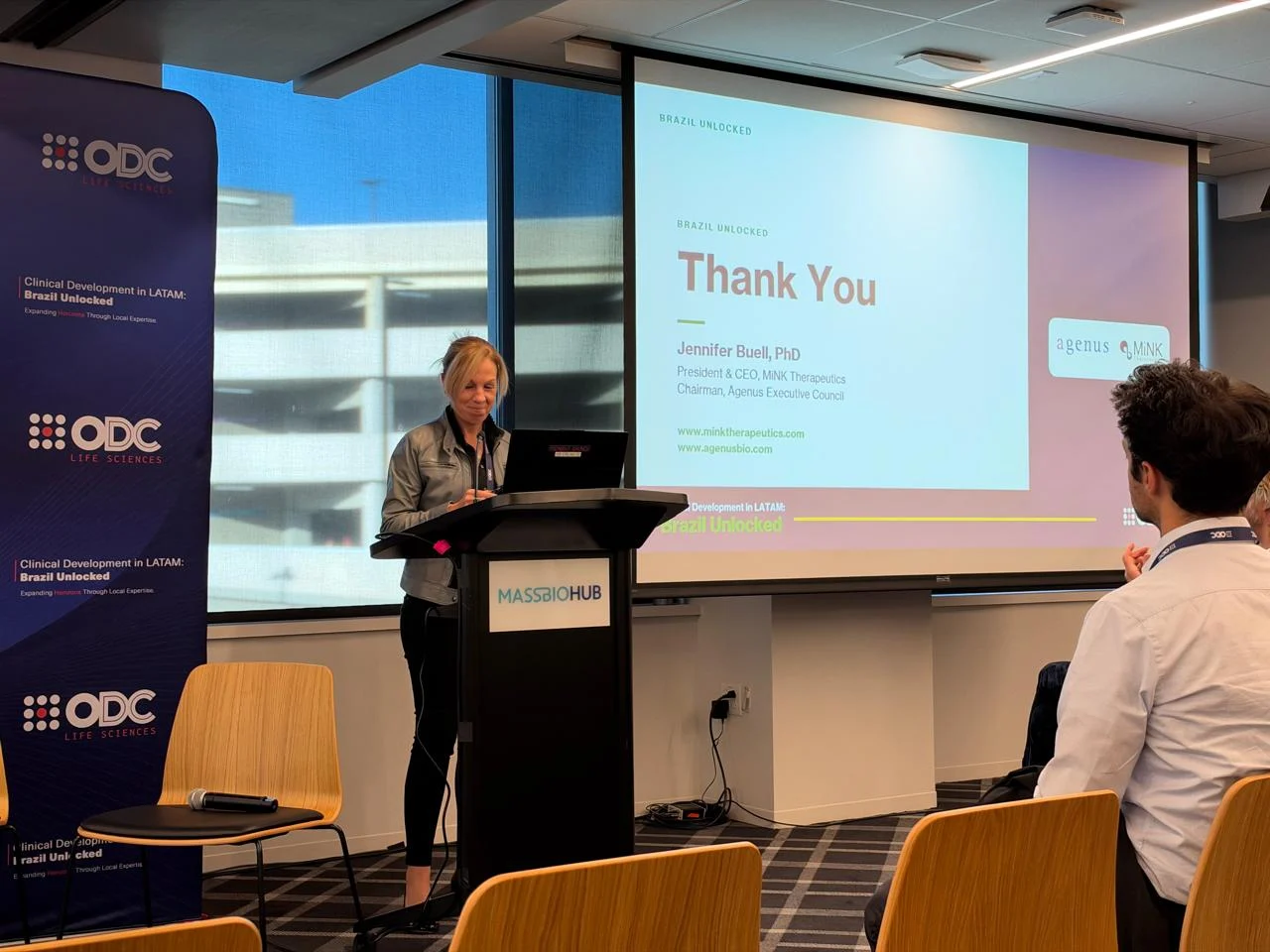
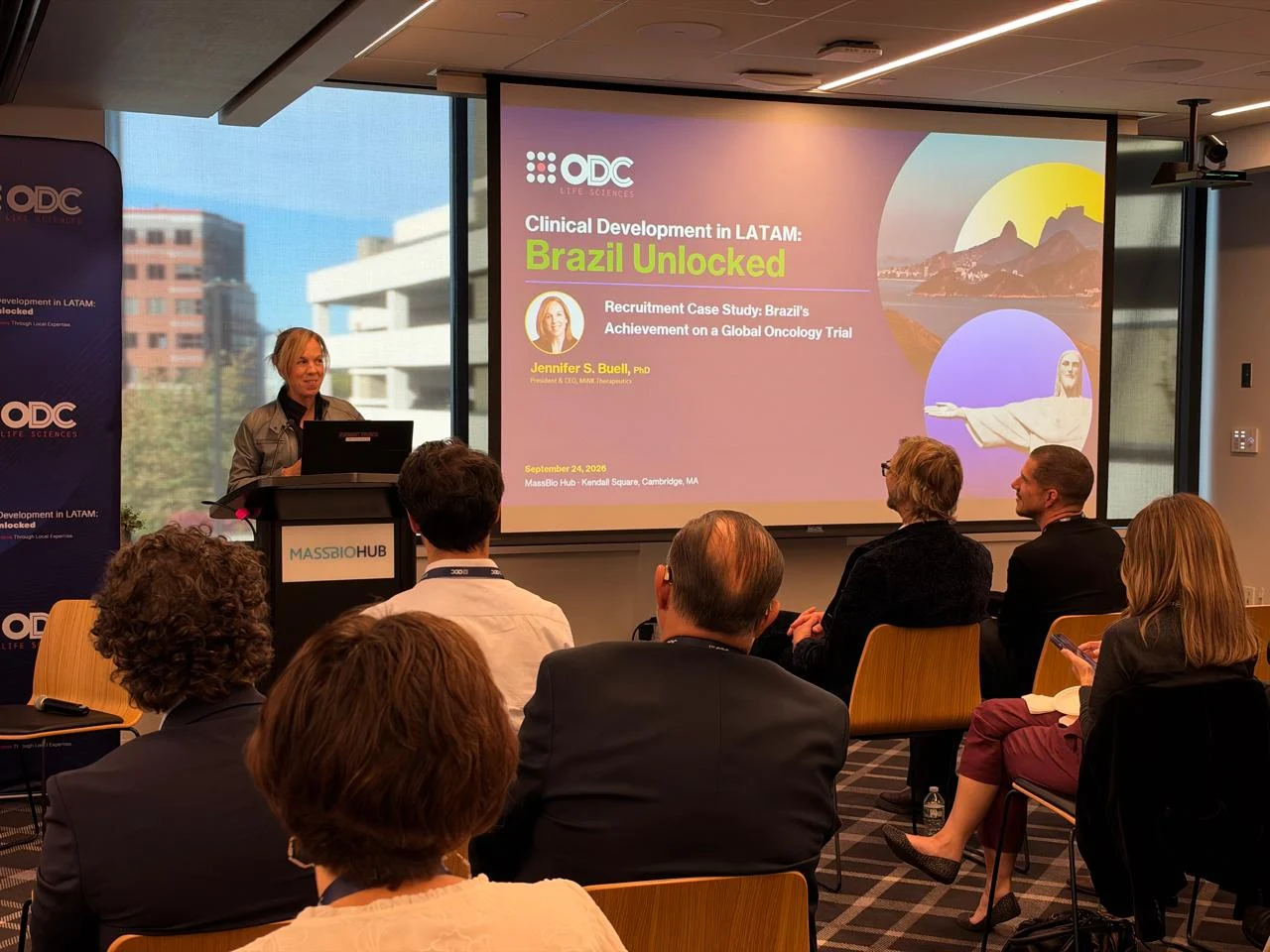
For small biotechnology companies, the ability to start studies efficiently, recruit patients, and generate reliable data can determine how quickly a development program advances. At Clinical Development in LATAM: Brazil Unlocked, Jennifer S. Buell, President and CEO of MiNK Therapeutics and Chair of the Executive Council at Agenus, described why Brazil has become an early consideration for both Agenus and MiNK Therapeutics.
OncoDaily covered the September 24, 2026 event, organized by ODC Life Sciences with MassBio at MassBio Hub in Cambridge, Massachusetts, and online.
Her presentation connected the companies’ development experience with investigator expertise, local partnerships, patient access, and the logistics of delivering investigational therapies.
Why Execution Matters for Small Biotechs
Buell emphasized that Agenus and MiNK are independent companies advancing different therapeutic approaches.
Agenus’ programs include checkpoint-modulating antibodies, while MiNK is developing allogeneic invariant natural killer T-cell therapies.
For organizations with relatively small teams, access to experienced investigators and timely clinical evidence is particularly important. Buell described Brazil’s contribution in terms of the ability to conduct sophisticated research, rather than population size alone.
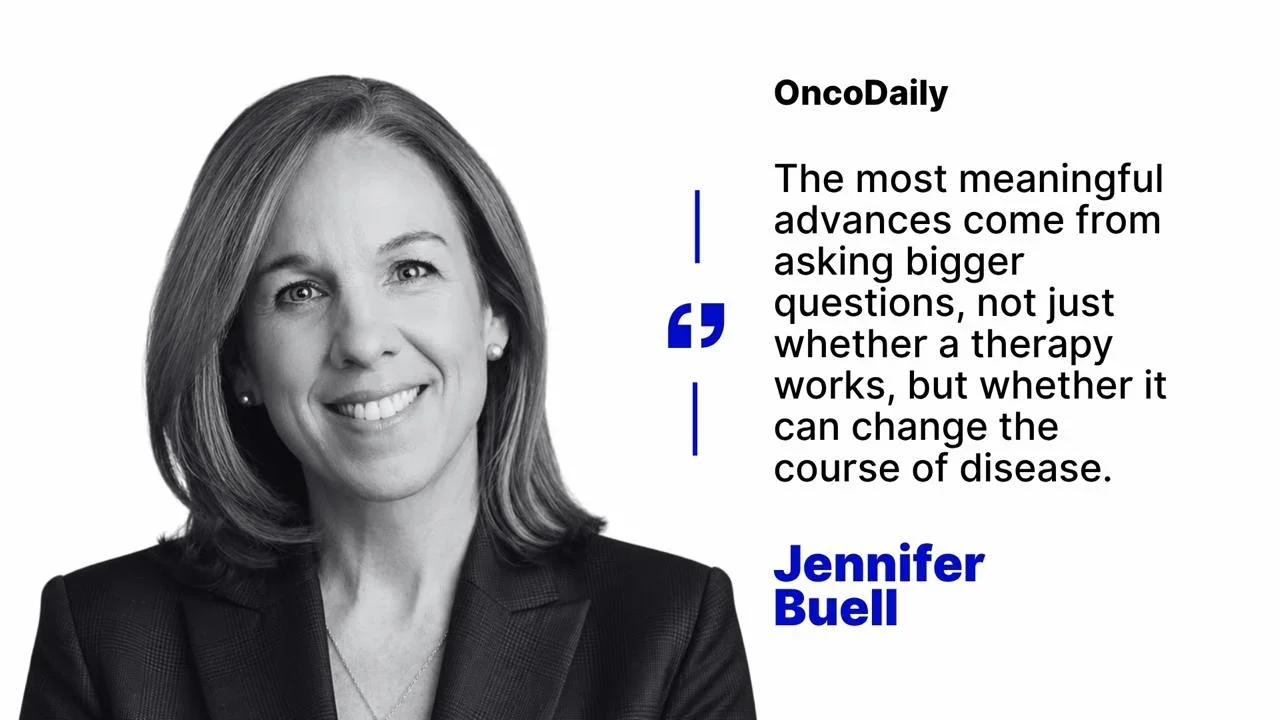
Jennifer S. Buell said:
“We’re always going to Brazil, and we’re often going there first.”
Enrollment Experience with ODC Life Sciences
Buell described how the companies’ partnership with ODC helped them navigate documentation, regulatory processes, site selection, and recruitment.
In one clinical program, she reported that 113 of 200 enrolled patients came from the region, including 73 in Brazil. She also cited 15 participating centers and an approximately three-month approval experience.
She presented these results as an operational example from the companies’ own development work, highlighting site engagement, candidate tracking, and rapid escalation when problems arose.
Her account also acknowledged the questions that accompanied the companies’ initial decision to work in Brazil, including scrutiny of investigator payments, compliance, and the suitability of the resulting evidence.
Buell said experience and oversight had increased the teams’ confidence in working in the country.
Brazil’s Planned Role in the ROBBIN Trial
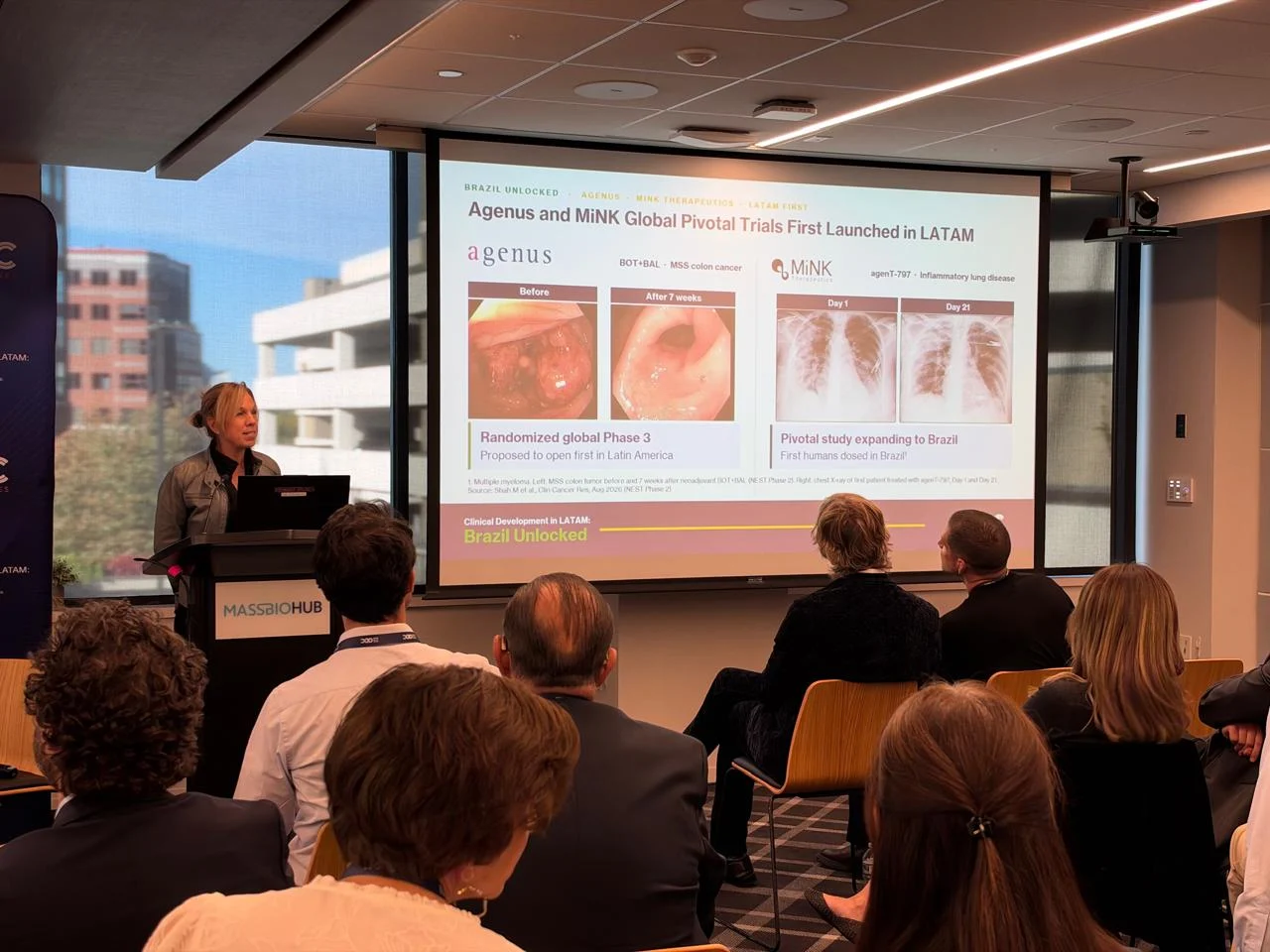
A major focus was Agenus’ planned Phase 3 ROBBIN trial of botensilimab plus balstilimab as neoadjuvant treatment for high-risk, resectable microsatellite-stable colon cancer.
Agenus’ published trial description specifies approximately 850 patients, randomized between a BOT+BAL-before-surgery strategy and a surgery-first strategy, with subsequent chemotherapy or observation determined by pathological findings and clinical guidelines. The primary endpoint is event-free survival. The company lists the study as planned and not yet enrolling.
At the event, Buell said Brazil was expected to be the first enrolling territory. She described December 2026 as a target, with the first quarter of 2027 as the latest anticipated timing at that point.
These were development expectations presented at the meeting, subject to the necessary approvals and study activation.
Buell also explained why neoadjuvant immunotherapy research requires coordination across oncology, surgery, and pathology. Investigators must identify and characterize eligible patients, manage treatment before surgery, and evaluate outcomes carefully.
Delivering Investigational Cell Therapy Across Borders
Buell discussed MiNK’s experience bringing its living cell therapy into Brazil, including treatment in a multiple myeloma study and the associated translational research.
She emphasized that an off-the-shelf product still requires sophisticated international logistics. Customs processes, cold-chain management, and readiness at the receiving clinical center remain essential.
She also outlined plans to include Brazil in MiNK’s randomized Phase 2 acute lung injury program, describing it as the second territory expected to join after Ukraine.
MiNK’s published description identifies this study as C-1300-02, evaluating investigational agenT-797 plus standard of care against placebo plus standard of care in adults with acute lung injury and critical illness who meet the specified ARDS criteria.
The Patients Behind Enrollment Figures
Buell also shared the experience of a Brazilian patient with advanced cervical cancer who traveled to a US study center while local research infrastructure was being established.
According to her account, ODC coordinated travel, accommodation, medical transport, and support for an accompanying family member. The patient subsequently continued care in Brazil after the trial opened there.
Buell described a prolonged period without disease in that individual. The account illustrated a patient’s experience with investigational treatment; it does not establish the outcome that other patients should expect.
Jennifer S. Buell said:
“Though our intent is not to bring patients out of their home to be treated, it’s to bring therapies to where they are.”
Building Brazil into Future Development
Buell identified several elements behind the companies’ experience: engaged investigators, appropriate clinical infrastructure, referral activity, clear reporting, and local partners able to resolve problems quickly.
Her presentation positioned Brazil as an active contributor to the development plans of Agenus and MiNK Therapeutics. The upcoming programs will test how that operational experience translates into study delivery and the clinical evidence needed to evaluate the therapies.