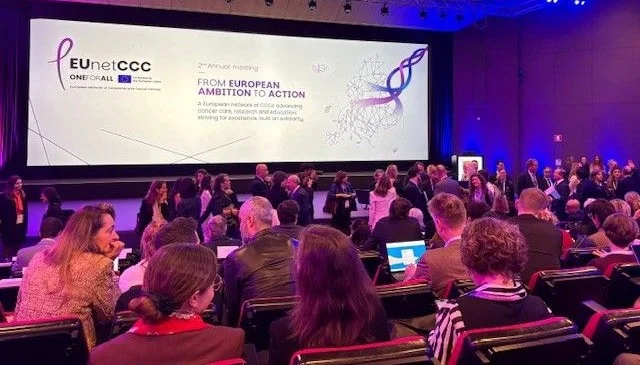
The 2nd Annual Meeting of the European Network of Comprehensive Cancer Centres (EUnetCCC) took place in Lisbon on November 26–27, bringing together more than 1,000 registered participants under the theme “From European Ambition to Action.”
Coordinated by the French National Cancer Institute (INCa) under Europe’s Beating Cancer Plan, the network now includes 109 EU-designated Comprehensive Cancer Centres and consortia across 31 countries. The meeting marked a shift from planning to implementation, with sessions covering prevention and early detection, AI and data, certification, equity, childhood cancer, and patient partnership.
This post brings together key takeaways from the meeting, shared by oncologists, researchers, and cancer centres from across Europe.
EUnetCCC – European Network of Comprehensive Cancer Centres:
“That’s a wrap on the EUnetCCC Annual Meeting 2026
For two days in Lisbon, more than 1,000 registered participants from across the European network of Comprehensive Cancer Centres came together around one goal: turning European ambition into action for everyone affected by cancer.
- Day 1 opened with the President of the Republic of Portugal, the EU Commissioner for Health and Animal Welfare, the Minister of Health of Portugal and the President of the French National Cancer Institute, followed by a keynote with Elisabete Weiderpass (IARC) and Frederico Guanais (OECD) on the future of cancer care, research and education in Europe.
- Across two days of plenary and parallel sessions we talked about prevention and early detection, AI and data, certification and quality standards, clinical guidelines and equity, clinical trials and innovation, paediatric and AYA cancer care, survivorship, CAR-T therapies, rare cancers, and the role of patients as partners.
- Day 2 looked ahead, from turning EU cancer investments into impact to EUnetCCC’s policy recommendations. We also saw INT Pascale and BOCOC sign a Memorandum of Understanding. The meeting closed with a vision for cancer care in Europe over the next 20 to 30 years, with Marta Temido, Member of the European Parliament, the European Commission, the Ministry of Health of the Republic of Moldova and the French National Cancer Institute.
Thank you:
- to every participant who joined us in Lisbon
- to our speakers and moderators, for sharing their knowledge and experience
- to the policymakers and EU institutions, for showing that cancer is a shared European priority
- to the patients, survivors and patient advocates, whose voices keep us focused on what really matters
- to the cancer centres, partner organisations and colleagues in every Work Package who made this meeting possible
- to the European Union and HaDEA, for supporting this Joint Action
The conversations that started in Lisbon now continue across the network, as we work towards 100 Comprehensive Cancer Centres by 2028.
“Proud of our Sygehus Lillebælt WP6 team at the EUnetCCC Annual Meeting in Lisbon!
A few wonderful and productive days in Lisbon, where we had the opportunity to introduce our newest team members to the project in real life, connect with our European colleagues and showcase some of the work we have been developing over the past year.
One of the highlights was our session on Patient Centredness, one of the thematic activities within WP6, developed in close collaboration with Madita Schädlich and Emily Hickmann from Technische Universität Dresden and Manal Iraki from our team.
It is incredibly rewarding to see how our work is taking shape and how we, as a team, contribute to a shared European ambition of strengthening cancer care.
Thank you to my wonderful colleagues at Sygehus Lillebælt for your dedication, professionalism, enthusiasm and all the good moments we share along the way. Proud to be part of this team!
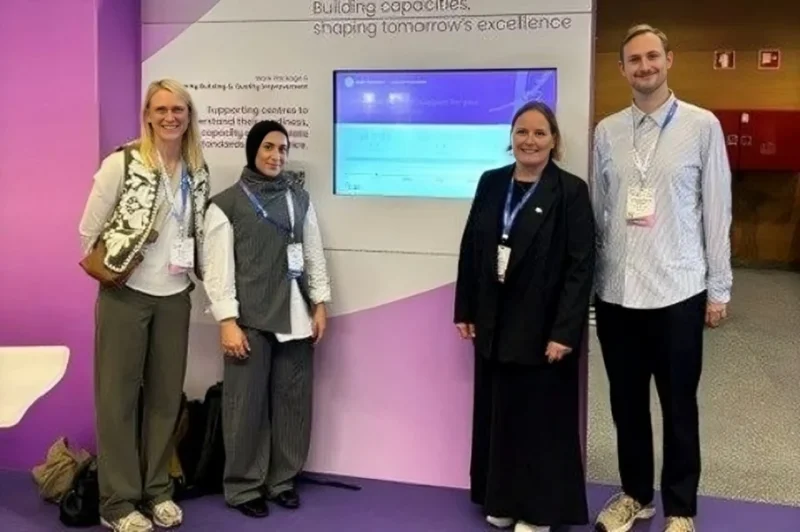
From development to implementation – an important milestone for EUnetCCC WP6.
The Annual Meeting in Lisbon marked an important milestone for our WP6 Capacity Building journey as we move from developing our Capacity Building System towards putting it into practice.
Over the past few days, we had numerous opportunities to present our work, facilitate sessions, contribute to panel discussions and engage with colleagues from across Europe – while also taking on various moderator roles throughout the meeting.
It was particularly rewarding to see the different elements of our work come together and to discuss how we can translate our shared ambitions into practical support for Aspiring Comprehensive Cancer Centres across Europe.
A huge thank you to the entire WP6 Core Team for your incredible dedication, hard work, collaborative spirit and, not least, your consistently fantastic sense of humour.
Building something together across countries, organisations and professional backgrounds is not always easy, but working with this team makes the journey genuinely enjoyable. Thank you for some wonderful and fruitful days in Lisbon. I look forward to our next chapter together!”
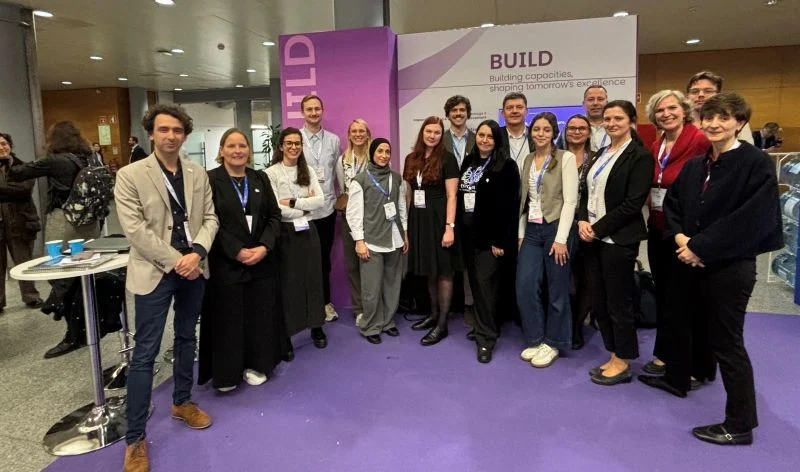
“Particularly enriching exchange this evening with Dr. Elisabete Weiderpass, Director of the IARC (International Agency for Research on Cancer), around a pivotal issue for the future of the fight against cancer in Europe: the EUnetCCC (European Network of Comprehensive Cancer Centres) certification and its concrete integration within European centers.
Throughout our discussion, several key points emerged:
- Bringing together research, prevention, and care as close to patients as possible, building on European standards of excellence.
- Structuring strong, interoperable networks between Comprehensive Cancer Centres to accelerate the sharing of expertise, data, and best practices.
- Aligning scientific ambition with hospital governance so that certification is not merely a formal recognition, but a genuine lever for organizational and clinical transformation.
At the Cancer Institute of the Hospices Civils de Lyon (Institut de Cancérologie des Hospices Civils de Lyon), this European accreditation and structuring work is at the heart of our strategic priorities. Combining these perspectives with the insights of a leading figure in global cancer epidemiology and research provides valuable momentum moving forward.
Thank you to Dr. Elisabete Weiderpass for taking the time to speak and for the clarity of her vision.”
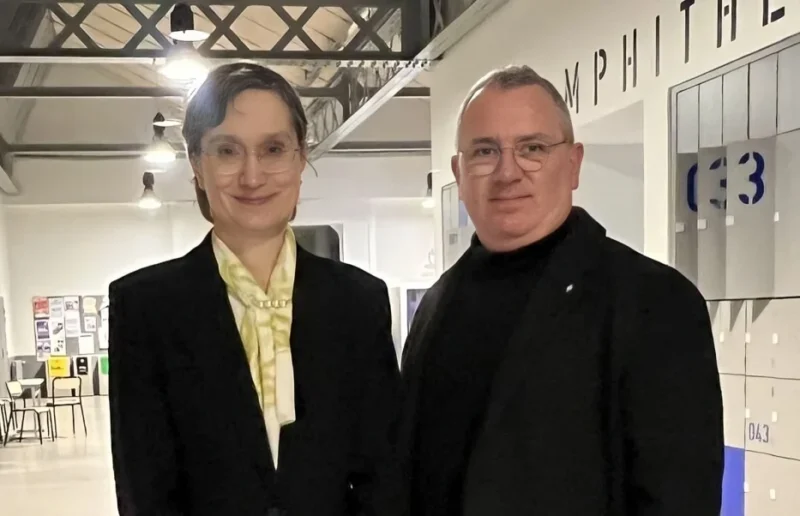
“1rst day EUNETCCC General Assembly – Lisbon
The Luxembourg Institute of Health is represented in Lisbon at the EUnetCCC – European Network of Comprehensive Cancer Centres General Assembly. The President of the Republic of Portugal, along with the Minister of Health, opened the meeting.
A great opportunity to bring together EUNETCCC members, exchange ideas, share experiences and strengthen our European network. A valuable moment for collaboration, inspiring discussions and shaping our common goals for the future. Looking forward to continued cooperation and new perspectives!”
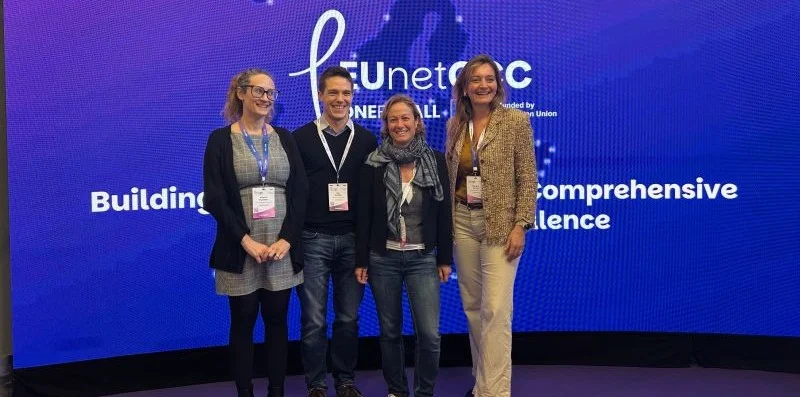
“I am very proud to be part of the EUnetCCC – European Network of Comprehensive Cancer Centres annual meeting in Lisbon, under the coordination of the French National Cancer Institute. The biggest Joint Action of the EU beating cancer plan.
We have seen so much positive energy and high-level sessions throughout these two day of congress. Special thanks to Seamus Kearney and Ingrid Stenstadvold Ross for mastering the ceremony and moderate the roundtables. I want to deeply congratulate our Portuguese hosts, under the auspices of the President of Portugal António José Seguro who opened the congress in person.
Today, the mapping of EU Comprehensive Cancer Centrers has been clearly achieved, with 109 designated centres in 31 countries. In France, 16 centres are so far designated via hospitals centres and consortia.
Many thanks to the European Commission which strongly supports the Joint Action Antonio Parenti, Sandra Gallina, DG SANTE, European Health and Digital Executive Agency (HaDEA), Matthias Schuppe. We are building a long-standing infrastructure to reduce inequality and push for excellence in cancer care, research and education.
‘I was born in 1989, a few months before the Berlin Wall fell. My generation grew up in a Europe without any wall […] Four decades after, we need to break down new walls. The walls still remaining between patients and access to prevention and care, the walls between those who live near a great centre and those who do not, the walls that impede trans-national clinical trials or cross-data sharing’ “
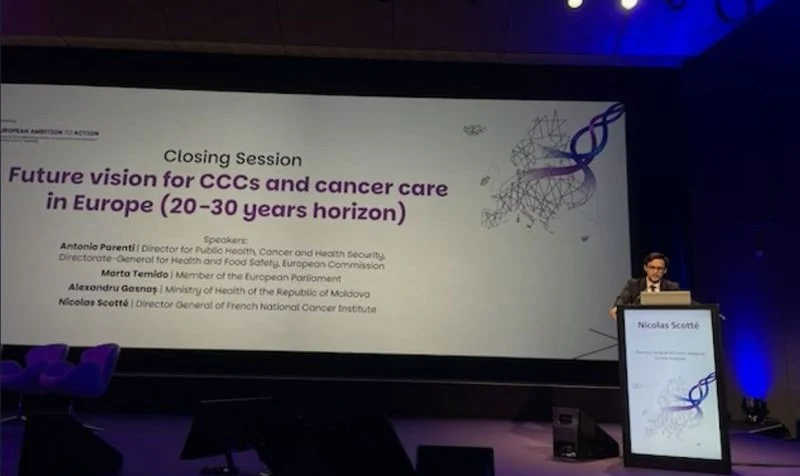
“What does excellence in cancer care really mean?
This was one of the key questions that stayed with me during the EUNetCCC meeting in Lisbon. Beyond accreditation frameworks and organizational models, the discussions repeatedly returned to a simple but powerful idea: people are at the heart of transformation.
Some of the messages that resonated most:
- Certification should not exist for certification’s sake. It must create value for patients.
- Supporting healthcare professionals is essential to building trust.
- We need a common language that everyone can understand.
- Research careers must be recognized and fostered.
- Education should empower both professionals and patients.
- Strong healthcare organizations thrive on efficiency, diversity, and continuous evolution.
As Comprehensive Cancer Centres across Europe work more closely together, the real challenge is not only to standardize processes, but also to create environments where professionals can grow, collaborate, innovate, and deliver better outcomes for patients. Excellence is not a destination. It is a continuous journey of learning, collaboration, and improvement.”
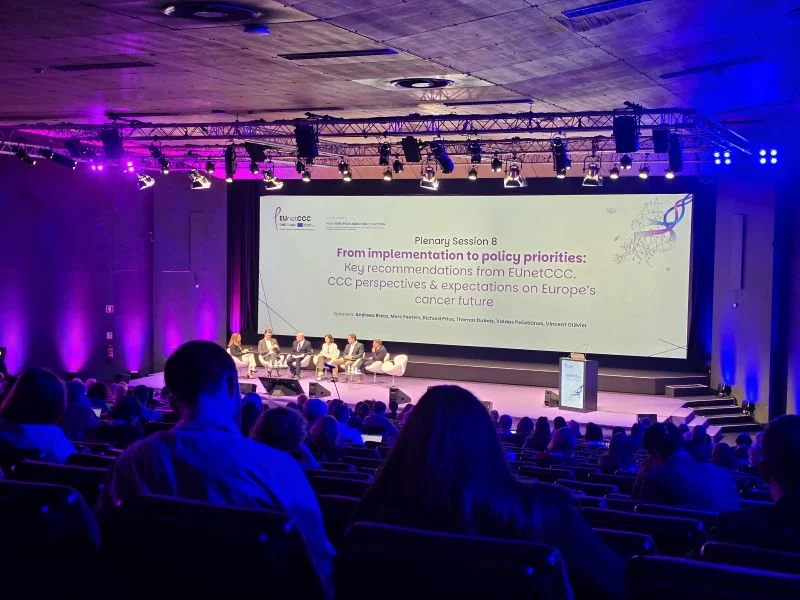
“I’m returning from the 2nd EUnetCCC Annual Meeting in Lisbon with important news: DCOPiH was officially announced as one of the centres aspiring to certification as a Comprehensive Cancer Centre (CCC).
At the same time, we are working on CCCN recertification in colorectal cancer and CCCN certification in prostate cancer. These efforts go hand in hand: developing the centre as a whole while improving care pathways for specific cancers.
The meeting’s theme, From European Ambition to Action, captures where we are today. Discussions focused on quality standards, collaboration between centres, data, research and the involvement of patients in shaping care.
For the urology community, the prostate cancer certification process is particularly important. It gives us a shared framework for assessing the entire patient journey: from diagnosis and multidisciplinary decision-making through treatment, support and follow-up. It also helps us identify where that journey needs to improve.
I was pleased to attend alongside Michał Matuszewski and colleagues from other Polish centres. My thanks go to the entire multidisciplinary team at DCOPiH. This step reflects the work they do every day.”
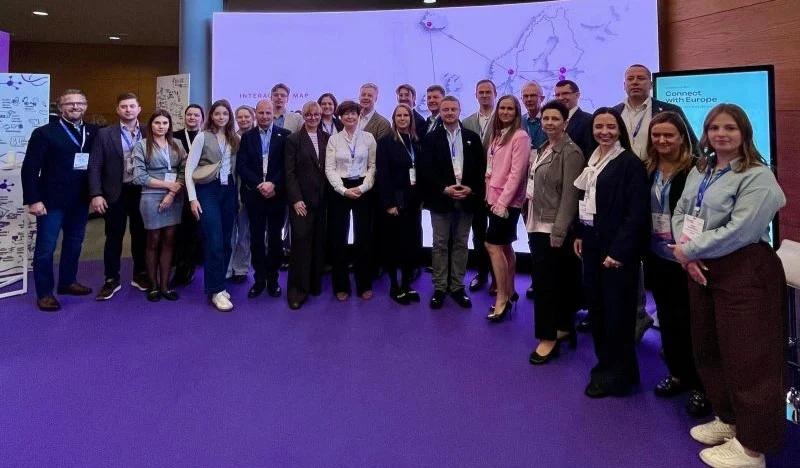
“Back from Lisbon after three great, intensive and inspiring days with the EUnetCCC!
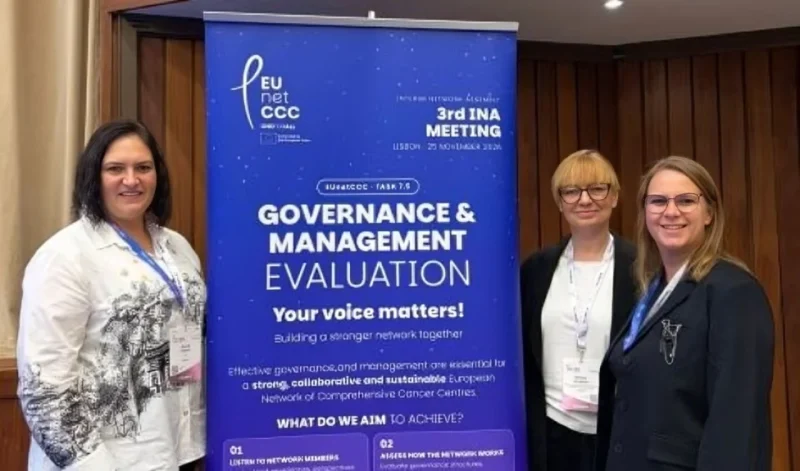
During the 3rd Interim Network Assembly (INA3) on 25 November – the first in-person Network Assembly – I had the pleasure of presenting the approach to Governance and Management Evaluation of the Network as a result of the collaborative work of the entire Task 7.5 team within WP7.
I am already looking forward to the coming months, when we will put our work into practice, actively engage Network members in the evaluation process and use their feedback to improve the way the Network is governed.
The 2nd Annual Meeting of the EUnetCCC – European Network of Comprehensive Cancer Centres, held on 26-27 November, was a fantastic opportunity to exchange ideas, reconnect with colleagues, reflect on our progress and discuss the next steps.
I was also truly impressed by the outstanding organisation, professionalism and attention to detail throughout the event. A huge thank you to everyone who made it such a success! I’m so proud to be part of the WP7 team and the wider EUnetCCC community, working alongside so many dedicated and inspiring people who share a common goal – improving cancer care across Europe.
Looking forward to what comes next!”
Association of European Cancer Leagues:
” Equity remains Europe’s unfinished agenda.
For ECL, that line from IARC Director Dr Elisabete Weiderpass summed up day one of the 2nd EUnetCCC annual meeting in Lisbon, where Europe’s network of Comprehensive Cancer Centres is moving from ambition to action.
These are our highlights:
1. The pressure is growing
4.73 million new cancer cases in the WHO European Region in 2024, heading for about 6 million a year by 2050 (IARC GLOBOCAN estimates).
OECD’s Frederico Guanais: cancer among women aged 15–49 rose 16% between 2000 and 2022.
2. Gaps persist within countries
INCa President Suzette Delaloge: in France, cancer death rates range from 154 per 100,000 in Corsica to over 200 in Grand Est.
About 1 in 3 cancer deaths in men and 1 in 6 in women in Europe are associated with educational inequalities – Weiderpass. More than 1 in 4 of 31 European countries had no commercial CAR-T treatment in 2024 – Delaloge → ECL’s recommendations for the Biotech Act set out how to close access gaps https://lnkd.in/evVZsVfE
3. What the CCC network can fix
EU Commissioner Olivér Várhelyi announced that more than 100 centres have applied for EU certification.
Guanais showed why it matters: across the EU, 47% of breast cancer patients are not treated within 30 days of diagnosis. Delaloge was clear that no single doctor or institution can master modern oncology alone. Expertise must flow from specialised centres to local hospitals and care close to home.
4. Prevention is the biggest lever
1.6 million cancers a year could be prevented in the European Region if the best-performing countries’ policies were applied everywhere. The challenge now is implementation, scale and political commitment. – Weiderpass.
5. Where cancer leagues can come in
- Prevention: one session title said it all: ‘comprehensiveness starts with prevention’.
- Patient voice: patient involvement in the EU CCC scheme is high on the agenda, collaboration between cancer leagues and national CCC could be a much needed factor.
- Survivorship: Guanais noted that 8.3 million Europeans live with a cancer diagnosed in the past five years. People-centred survivorship care is where leagues already deliver.
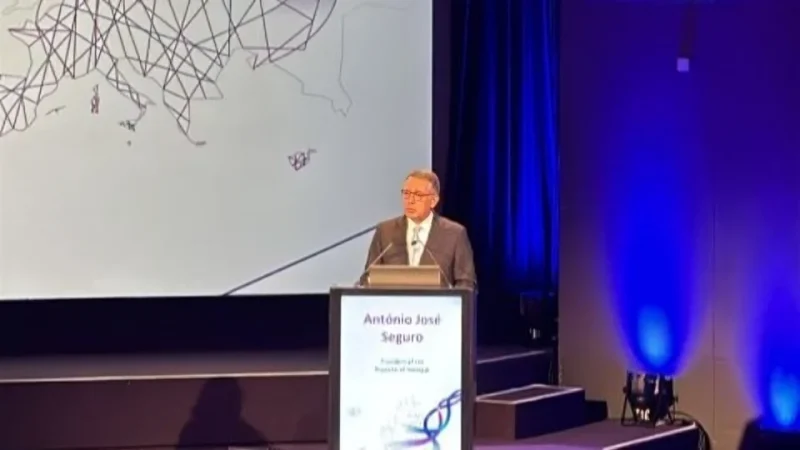
- A seat at the table: Portugal’s President António José Seguro announced a Strategic Pact for Health that should involve civil society. A model worth pushing for elsewhere.
- Right to be Forgotten: Várhelyi said EU guidance for financial institutions is coming soon, national implementation will be key.
ECL is one of three stakeholder organisations of the EUnetCCC – European Network of Comprehensive Cancer Centres Annual Meeting 2026 in Lisbon. We thank the team for their hard work organising this excellent convening.”
“The last two days I spent at the second annual meeting of EUnetCCC – European Network of Comprehensive Cancer Centres in Lisbon and it was great!
The lovely weather was a bonus, but what made these two days so special were the people. It’s always wonderful to finally meet in person, reconnect and put faces to names, especially when you’ve only known each other as little boxes on Zoom or Teams.
I’m very happy to be part of such an important project and such a great network. A big thank you to everyone who made these two days possible! And as if that wasn’t enough, even the Cristo Rei was illuminated in the colours of EUnetCCC.
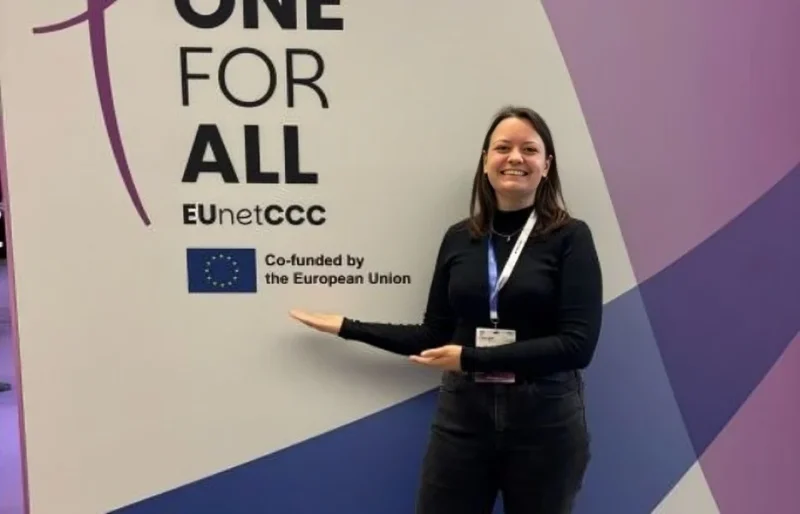
Tomorrow I’m heading back home with new connections, great memories and fresh knowledge. As the only one from my site, I took ‘one for all’ quite literally.”
“What an inspiring couple of days in Lisbon at the EUnetCCC 2026 Annual Meeting — filled with excellent discussions, shared ambitions and a strong commitment to improving cancer care across Europe.
A special highlight was m half-day visit to the Champalimaud Foundation Clinical Centre. Portugal’s history has been shaped by great navigators and explorers who had the courage to sail beyond known horizons. In that spirit, the Centre for the Unknown — feels like a modern tribute to discovery: a place designed to explore what we do not yet understand and to transform new knowledge into better care for patients.
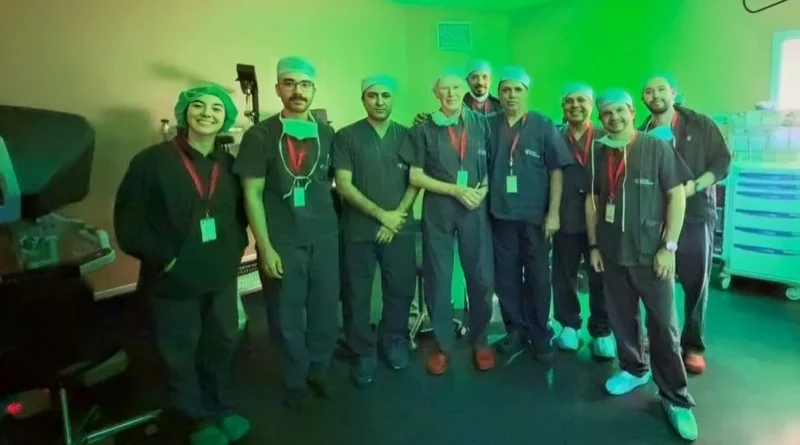
It was a true privilege to meet Professor Bill Heald, a pioneer and genuine legend of rectal cancer surgery (TME), Professor Amjad Parvaiz, an outstanding surgeon and inspiring teacher; and my very good friend and brother Miguel Cunha
Wonderful people, meaningful conversations and a truly memorable experience. We may no longer explore unknown seas, but in cancer research and treatment, there are still many new horizons waiting to be discovered.”
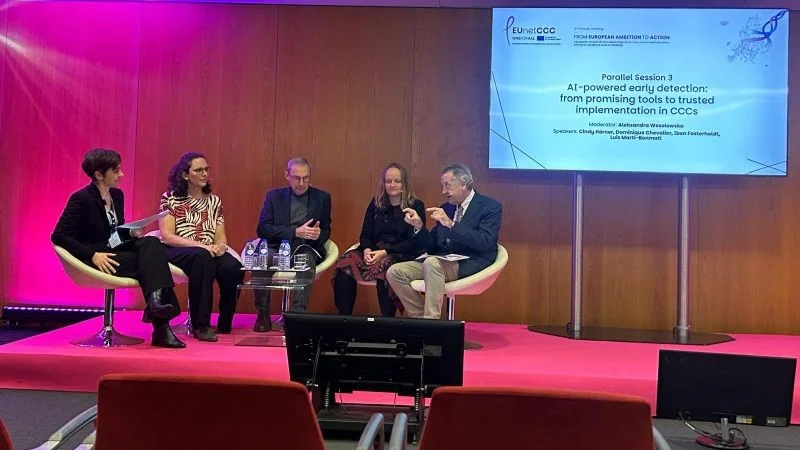
“Many great discussions at EUnetCCC annual event over the past 2 days! The resolve and commitment of so many to improving cancer care through European collaboration, building up the data infrastructure and AI innovation was clear!
Thank you to the panelists in yesterday’s panel Luis Marti-Bonmati, Iben Fasterholdt, Dominique Chevalier and Cindy Körner and for many coffee break discussions on both days!
EUnetCCC is about lasting European collaboration, synergies, and building on respective strengths for the benefit of patients!
Under the European Cancer Imaging Initiative, through EUCAIM, EUnetCCC centres can help scale up the high-quality, interoperable cancer imaging data needed to drive responsible AI innovation – turning Europe’s ambition for trustworthy AI in health into better outcomes for patients.
Under the Apply AI strategy, the European Network of AI-Powered Advanced Screening Centres connects healthcare providers, including cancer centres, across Europe to share real-world lessons on deploying AI safely and effectively in clinical practice.
Let’s continue the joint efforts and make the best of data and AI for the benefit of cancer patients!”
Grupo de Investigación Biomédica en Imagen:
“From AI innovation to clinical implementation: advancing early cancer detection in Europe
Luis Marti-Bonmati participated as a speaker at the 2nd EUnetCCC Annual Meeting, held in Lisbon on 26–27 November 2026, bringing together leading European experts in cancer care, research and innovation.
He took part in the panel discussion ‘AI-powered early detection: from promising tools to trusted implementation in CCCs’, alongside Dominique Chevalier, Iben Fasterholdt and Aleksandra Wesolowska.
The session explored key challenges and opportunities for:
- AI-powered cancer screening and early detection.
- Risk stratification and medical image interpretation.
- Validation of AI tools in real-world clinical settings.
- Access to high-quality data to support clinical implementation.
- Trustworthy and equitable adoption of AI across European
Comprehensive Cancer Centres.
A valuable opportunity to strengthen European collaboration and advance the integration of artificial intelligence into clinical practice, ultimately improving cancer diagnosis and patient care.”
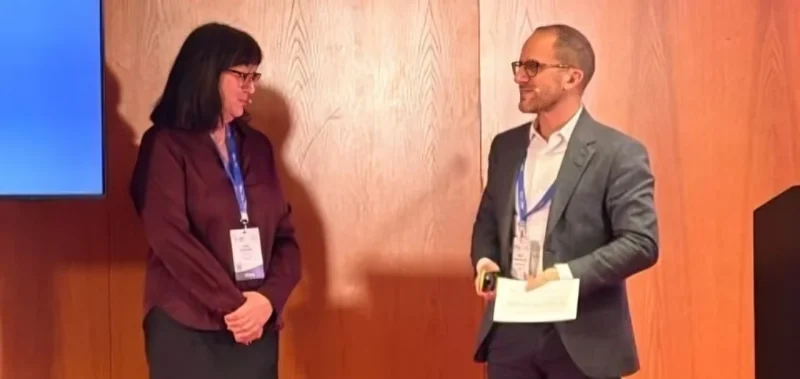
“A very special moment at the EUnetCCC Annual Meeting was the Childhood Cancer Equity session, highlighting the importance of ensuring that every child and young person with cancer has access to the best possible care, research and innovation across Europe.
I am proud of the entire Karolinska CCC team for their commitment, expertise and contribution to strengthening European collaboration in cancer care and research.”
Aarhus Comprehensive Cancer Centre:
“From European Ambition to Action
How do we ensure that every patient has access to the best possible cancer care, regardless of where they live?
This was one of the key questions when Aarhus CCC participated in the EUnetCCC – European Network of Comprehensive Cancer Centres Annual Meeting in Lisbon over the past two days.
The President of Portugal, António José Seguro, set the scene with an important message: Access to healthcare must not depend on your postcode. Reducing health inequalities and strengthening cancer care requires closer collaboration across countries and cancer centres.
Three key messages stood out at the conference:
- Reducing inequalities in access to cancer care.
- Moving from patient involvement to genuine patient partnerships.
- Establishing common standards while allowing room for local adaptation.
Aarhus CCC also contributed to the scientific programme. Claus Lindbjerg Andersen, Professor and Vice-Chair of the CCC Research Council, delivered a presentation and participated in a panel discussion on the implementation of liquid biopsy. Claus highlighted that successful implementation requires technical, clinical and organisational readiness.
Representing Aarhus CCC were Claus Lindbjerg Andersen, Thomas Aagaard, Karoline Særkjær.”
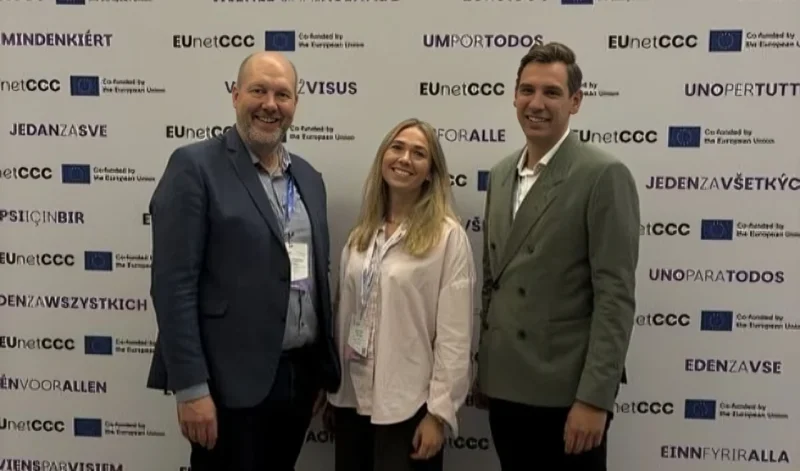
“What a pleasure it has been for me to be part of the 2nd Annual Meeting of the Joint Action EUnetCCC in Lisbon. Thanks to the great hospitality and thanks to all the committed partners all over Europe! I am grateful for the opportunity to be part of this project and to represent the BIÖG in its efforts toward better cancer prevention and care.”
“It was a privilege to be part of the 2nd EUnetCCC Annual Meeting, bringing together European partners around a shared vision: advancing cancer care, research and education through excellence and solidarity.
The meeting was honoured by the presence of the Portuguese Minister of Health, Ana Paula Martins, and His Excellency the President of the Portuguese Republic, António José Seguro, reinforcing Portugal’s commitment to this European vision.
A particularly proud moment was the announcement by the Minister of Health that the European Commission had approved the application led by Unidade Local de Saúde de Santa Maria for an Aspiring Comprehensive Cancer Centre in Southern Portugal, in consortium with nine Portuguese ULSs.
An important step towards ensuring equitable access to excellent cancer care across the country, regardless of where patients live. Because where a patient lives should never determine the quality of care they receive.”
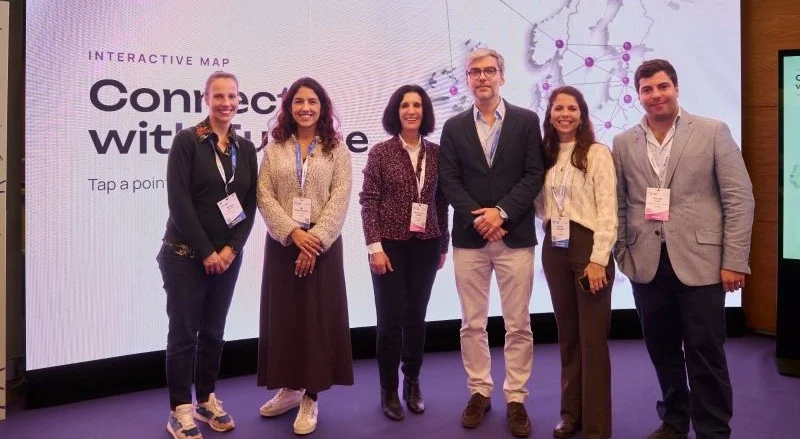
“Just imagine the possibilities!
Two cutting-edge cancer programmes exploring synergies, sharing lessons, and identifying opportunities for future collaboration.
The INTERACTEUROPE 100 project is bringing its experience in inter-speciality cancer training to discussions on the future European Network of Comprehensive Cancer Centres.
It’s all happening today at the EUnetCCC Annual Meeting in Lisbon. We want to see inter-speciality cancer training integrated into comprehensive cancer centres across Europe.
Read the recommendations from INTERACT-EUROPE 100.”
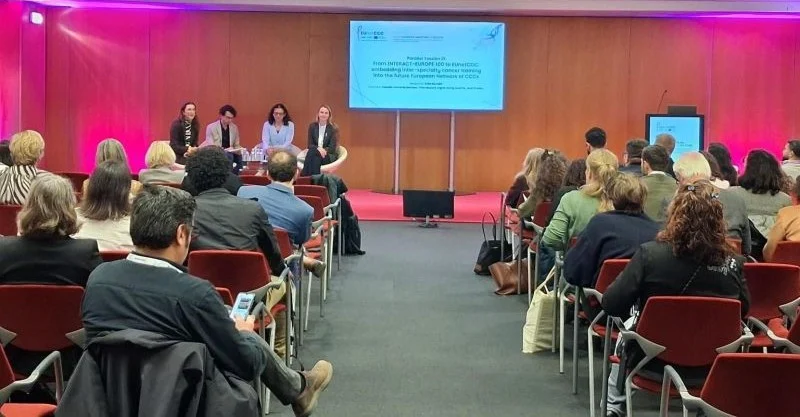
“IPO Porto participated in the Annual Meeting of EUnetCCC – European Network of Comprehensive Cancer Centres, which took place in Lisbon on November 25 and 26, at a particularly relevant moment for the Institute, recently designated an EU-Designated Comprehensive Cancer Centre by this European network.
This designation reinforces IPO Porto’s European recognition. Through Porto.CCC, developed in partnership with i3S, the Institute has held accreditation from the Organisation of European Cancer Institutes (OECI) since 2011. It is the only accredited Comprehensive Cancer Centre in Portugal.
In the North region, two Comprehensive Cancer Care Networks are being developed as EUnetCCC pilot projects: one for lung cancer and another for colorectal cancer. These networks strengthen coordination between different levels of care and facilitate patient access to high-quality care.
Manuel Freitas, Quality Director at IPO Porto, moderated the panel for Session 26, ‘Supporting the Certification of Consortia CCC: The Challenge of Organizing the Care Domain.’ The panel addressed the challenges of organizing the care domain in the certification of Comprehensive Cancer Centre consortia.
Three members of the Patient Advisory Council (CCUte) were present: Cristina Filipe Nogueira, Miguel C. Reis, and Isabel Gaspar Pereira. Two of them were speakers:
- Cristina Filipe Nogueira, in ‘Implementation of Liquid Biopsy Through Shared Decision-Making: Evidence, Readiness and the Role of CCCs’
- Isabel Gaspar Pereira, in ‘From Lived Experience to Recognised Expertise: Patient Partnership in Comprehensive Cancer Centres’
These were two interventions that gave voice to the patients’ experience and demonstrated the importance of their participation in defining oncology care. This presence reaffirms IPO Porto’s commitment to international cooperation, quality and continuous improvement, and increasingly participatory, people-centered care.”
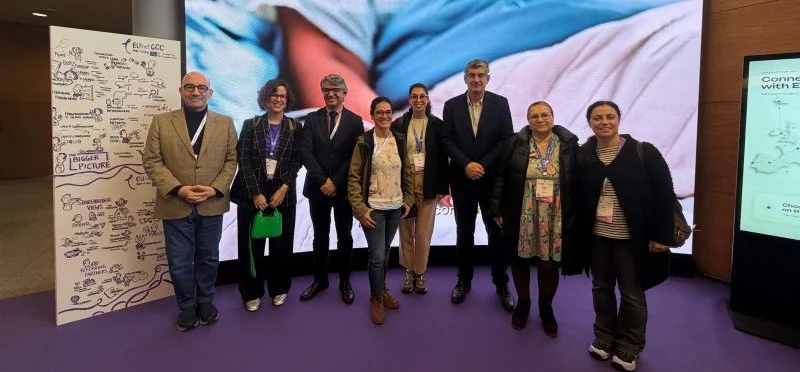
“Leaving Lisbon inspired by the EUnetCCC 2nd Annual Meeting ready to advance the Galician Comprehensive Cancer Center!”
French National Cancer Institute:
“16 French centers and consortia designated within the European network EUnetCCC
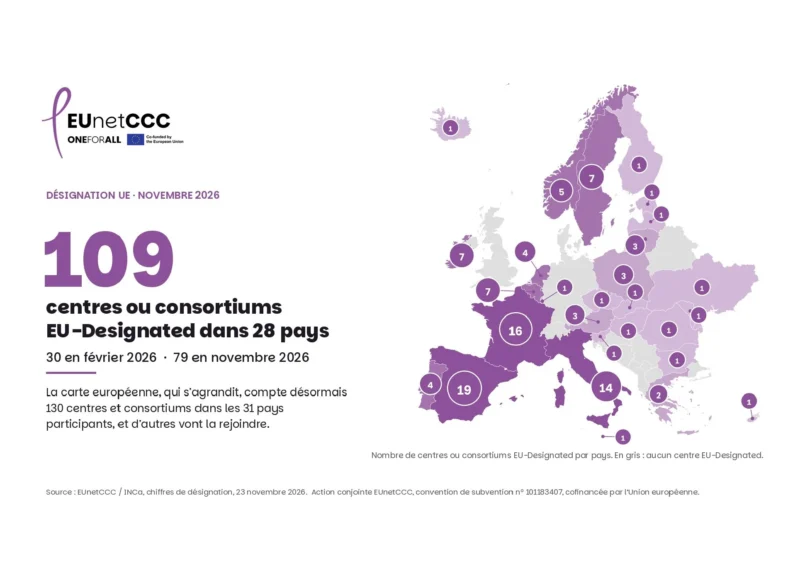
France is strengthening its participation in the European network EUnetCCC – European Network of Comprehensive Cancer Centres: 12 new French applications were selected during the second wave of designation, following four initial designations in February 2026. At the European level, the network now includes 109 designated centers and consortia across the 31 participating countries.
Launched in 2024 and coordinated by the French National Cancer Institute (Institut national du cancer), under the aegis of the European Commission, the EUnetCCC initiative aims to bring European centers closer together to develop cooperation in care, research, education, and training.
On the occasion of the network’s second annual meeting, held on November 26 and 27 in Lisbon, Dr. Suzette Delaloge, President of the French National Cancer Institute, and Nicolas Scotté, Chief Executive Officer, recalled the purpose of this initiative:
‘The EUnetCCC Joint Action is at a key moment in its development today. From an ambition shared by all participants, the time has now come to enter an action phase. Our sole objective is to guarantee everyone, regardless of their territory, access to quality care. This European project represents a tremendous opportunity to pursue the fight against cancer on a European scale.’
Indeed, EUnetCCC contributes to the European goal of enabling 90% of eligible cancer patients to access an integrated center or its care network by 2030. INCa, as the competent national authority, supports French institutions in their integration into the network and presented the applications selected during this second wave. This mobilization aligns with the guidelines of the Ten-Year Cancer Control Strategy 2021-2030, led by INCa. It contributes to its Axis 4 “Ensuring that progress benefits everyone” and aims to strengthen France’s position as a major player on the European and international stage.
To find out more, read the press release. Find the map of designated centers and consortia.”
You can also read:
Event Advocacy Opportunity: 2nd EUnetCCC Annual Meeting 2026 (Lisbon)