EHA 2026 brought the global hematology community together in Stockholm, Sweden, from June 11–14, 2026, for the 31st Congress of the European Hematology Association. Held at Stockholmsmässan in a hybrid format, the congress highlighted the latest advances across malignant and non-malignant hematology, bringing together clinicians, researchers, scientists, industry leaders, and patient advocates for four days of scientific exchange.
From new clinical data and translational research updates to discussions on precision medicine, cellular therapy, blood cancers, rare hematologic disorders, and supportive care, EHA 2026 offered a broad look at where hematology is heading. Below is a selection of key highlights, updates, and perspectives shared during the congress.
Below are some of the key highlights, scientific updates, and expert perspectives shared by global cancer research leaders during EHA 2026.
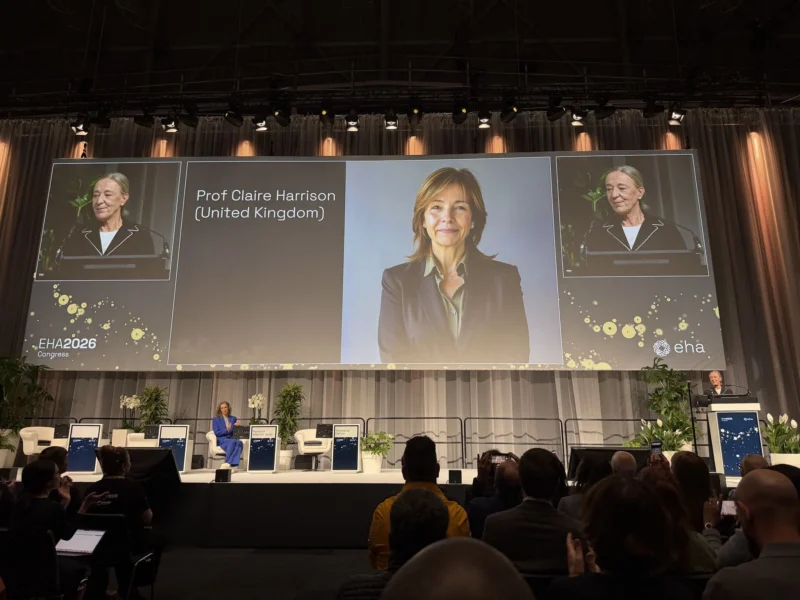
“Incredibly well deserved European Hematology Association (EHA) Lifetime Achievement Award at EHA 2026 to my friend, colleague, and extraordinary MPN legend, Prof. Claire Harrison of Guy’s and St Thomas’ NHS Foundation Trust.
Prof. Harrison is the very model of clinical innovation, mentorship, humility, and collaboration, working hand in glove with the MPN patient community, including MPN Voice, which she co-founded, as well as her MPN colleagues and generations of MPN trainees.
Congratulations, Claire!”
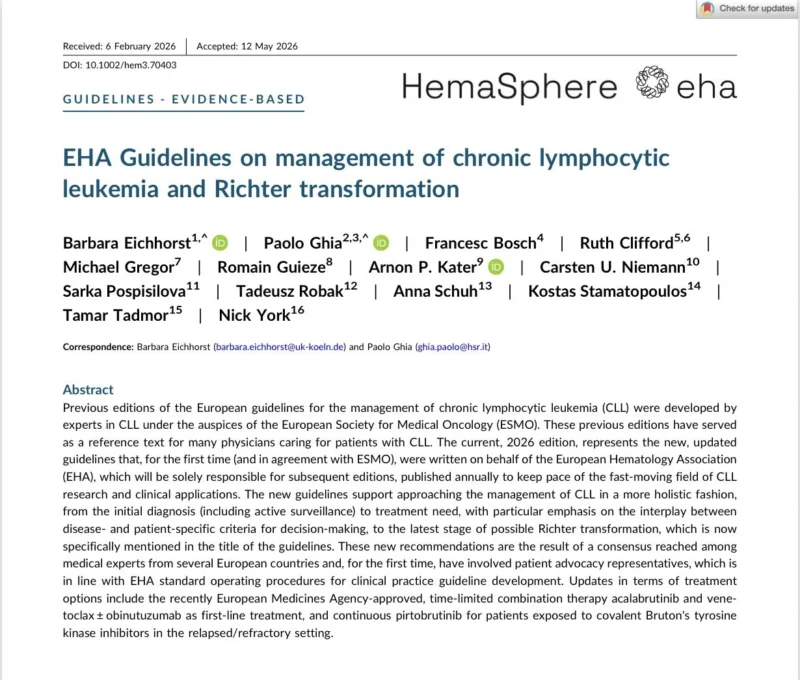
“EHA 2026: EHA Guidelines on the management of chronic lymphocytic leukemia and Richter transformation, published in HemaSphere.
Read more: https://onlinelibrary.wiley.com/doi/10.1002/hem3.70403”
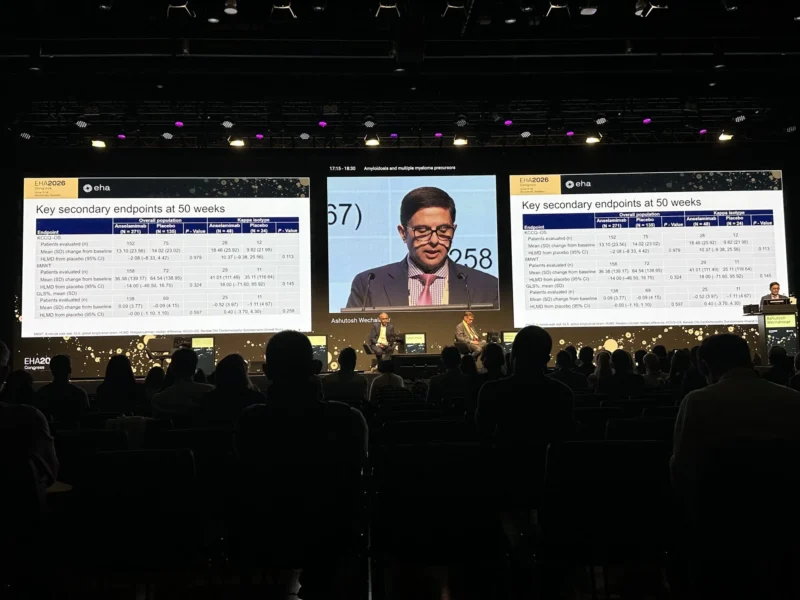
“Another oral abstract that drew considerable attention during the amyloidosis and multiple myeloma precursors session at EHA 2026 was presented by Dr. Ashutosh Wechalekar.
The phase 3 CARES study evaluated anselamimab, a first-in-class anti-fibril monoclonal antibody designed to directly target and promote the clearance of amyloid deposits in patients with newly diagnosed cardiac AL amyloidosis.
While the study did not meet its primary composite endpoint in the overall population, a prespecified analysis showed a notable reduction in all-cause mortality and cardiovascular hospitalizations among patients with κ light-chain disease.
These findings raise important questions about potential biological differences between κ and λ amyloidosis and may help shape future therapeutic strategies in this challenging disease.
What I found particularly interesting was the shift in focus beyond plasma cell-directed therapy alone. For decades, treatment has largely centered on suppressing the underlying clone; approaches aimed at directly removing existing amyloid deposits could represent an important addition to the therapeutic arsenal.”
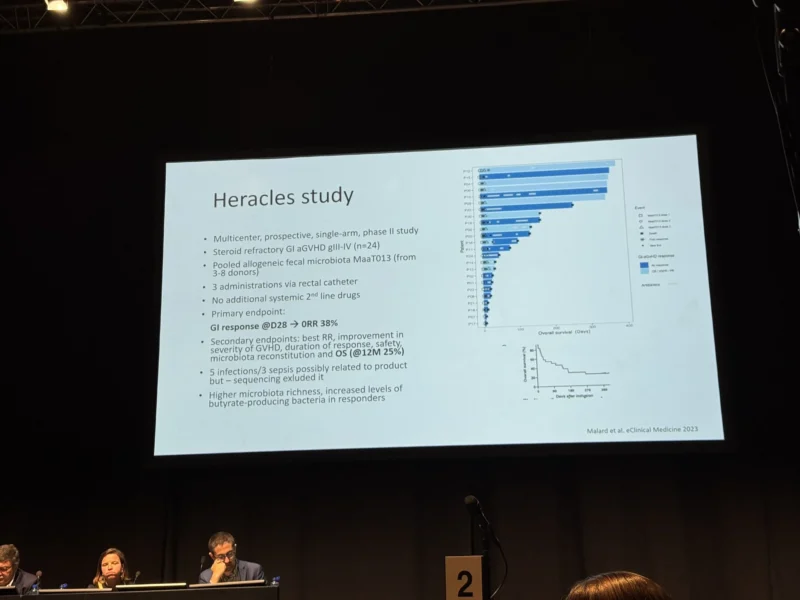
“One of the very interesting discussions today at EHA 2026 focused on the role of the gut microbiome and fecal microbiota transplantation in patients undergoing hematopoietic stem cell transplantation, particularly in steroid-refractory acute graft-versus-host disease.
The HERACLES study showed that pooled allogeneic fecal microbiota transplantation in gastrointestinal acute graft-versus-host disease was associated with a gastrointestinal response rate of around 38%, alongside increased microbial diversity and higher levels of butyrate-producing bacteria in responders.
In pediatric patients, data remain limited, but early experience suggests that the procedure is feasible and relatively safe. More multicenter trials are clearly needed.
At the same time, the higher prevalence of multidrug-resistant Enterobacterales in hematopoietic stem cell transplantation recipients, and its association with increased mortality, reminds us that microbiome restoration is not a peripheral issue.
The microbiome is becoming an important part of the future of transplant medicine.”
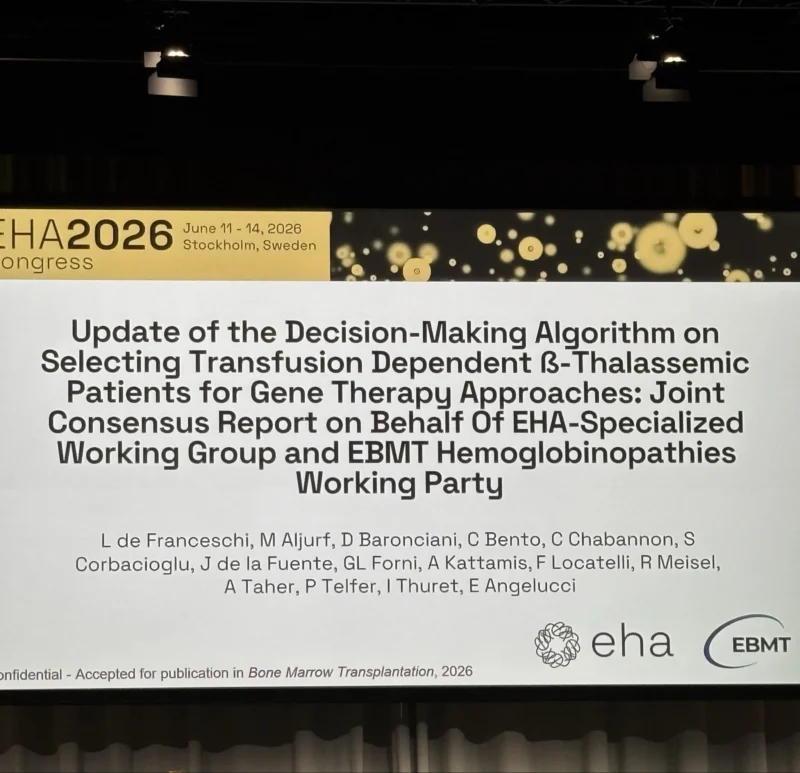
“Today at EHA 2026, we had a preview ahead of the publication of the EHA and EBMT guidelines for beta-thalassemia, with a special focus on gene therapy.
An important question was discussed: how should we evaluate patients before beginning the process?”
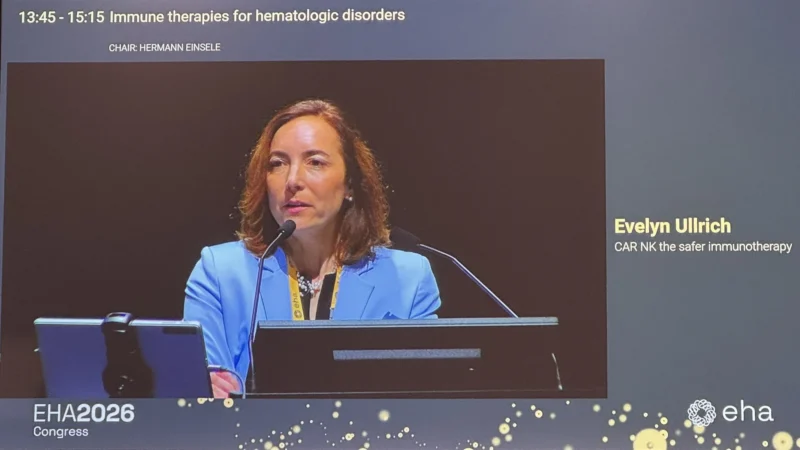
“Dr. Evelyn Ullrich made a strong case at EHA 2026 for CAR-NK cells as a potentially safer immunotherapy approach.
Exciting CLEC12A-CAR-NK work was also highlighted.
The team is putting Seraphina, the actual llama involved, to good work and is looking for recruits.”
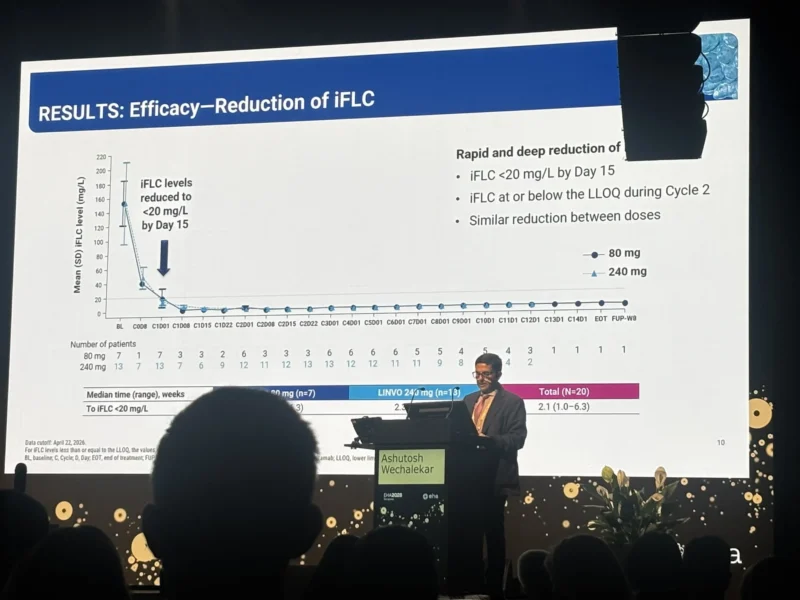
“The curves say it all — BCMA bispecifics in AL amyloidosis lead to rapid reduction in pathogenic light chains.
Looking forward to opening the AMaRC Myeloma ENLIGHT study of elranatamab for newly diagnosed AL amyloidosis, led by Dr. Matthew Rees and Hang Quach at St Vincent’s Sydney.”
“Delighted to serve as moderator and speaker for our PV Symposium this morning at EHA 2026, alongside wonderful colleagues Prof. Vannucchi and Prof. Greisshammer.
It was amazing to see so many interested people attend — standing room only, with an overflow room as well.”
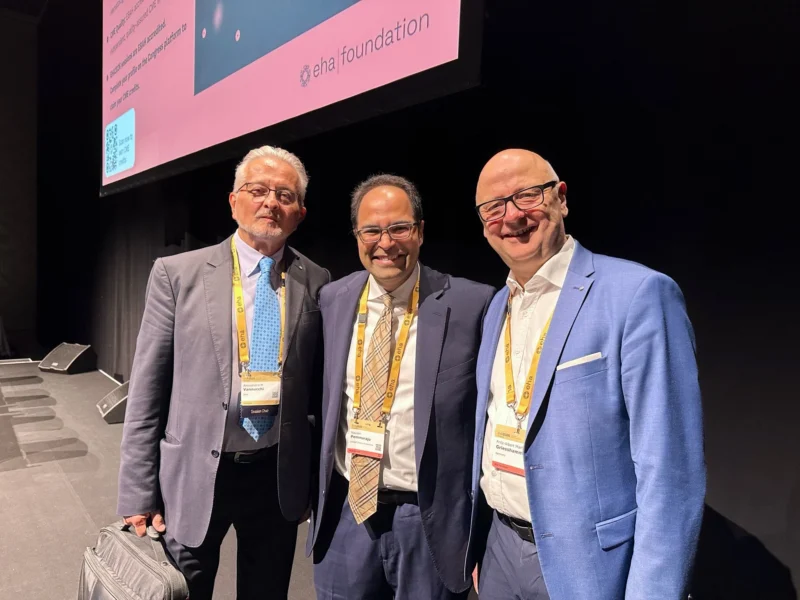
“Poster presentation at EHA 2026: High-Risk Genetics in ALL: Outcomes Improving, But Not Equally Across Subtypes.
In 615 children and young adults with high-risk genetic acute lymphoblastic leukemia, overall survival improved substantially across successive UKALL trials, increasing from 47% to 84%, while relapse rates decreased from 65% to 27%.
The greatest gains were observed in KMT2A-rearranged and iAMP21 ALL. In contrast, outcomes for low hypodiploid, near-haploid, and BCR::ABL1 ALL showed less improvement in the pre-TKI era.
Risk factors differed by genetic subtype. CNS involvement and immunophenotype predicted relapse in KMT2A-rearranged ALL, while relapse was more frequent in B-cell than T-cell ABL-class ALL.
These findings underscore the need for genotype-specific risk stratification in high-risk ALL.”
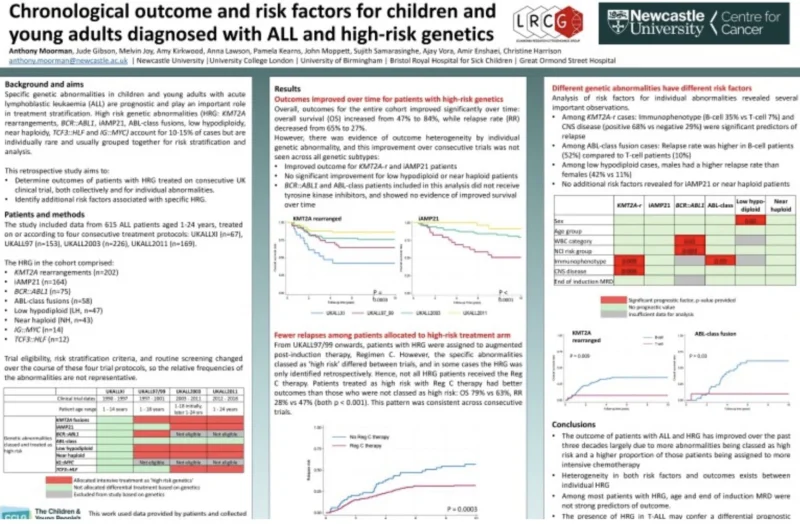
“Super proud of Beat AML for delivering a fantastic presentation of the OPTI-AML data.
The study showed that Aza/Ven-14 is not equivalent to Aza/Ven-28, at least during induction cycles 1–2.
This is a highly impactful study from the BEAT AML team.”
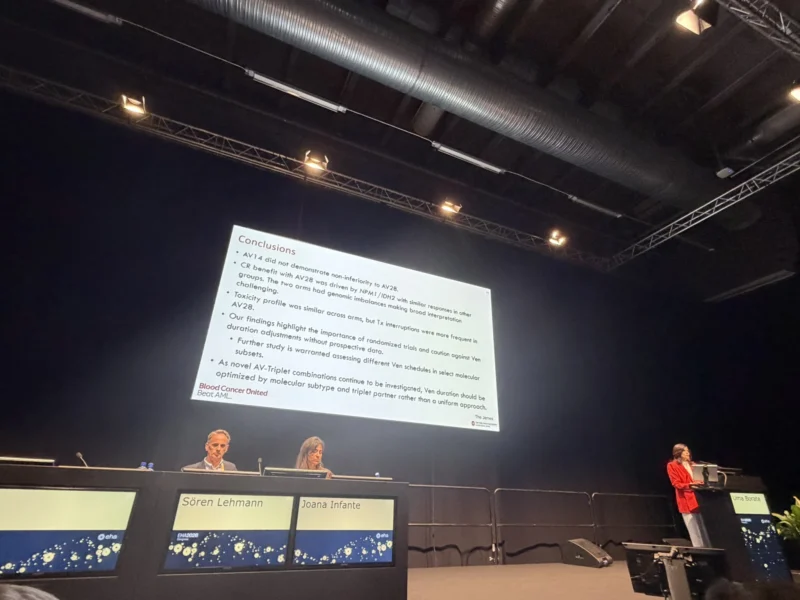
“Congratulations to Beat AML and Jen Marvin-Peek on their outstanding AML presentations at EHA 2026.”
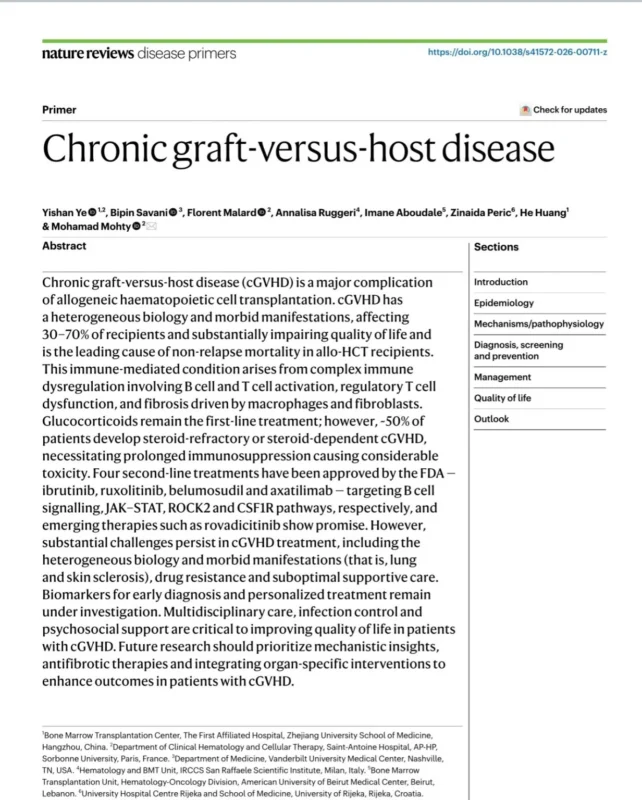
“Just published in Nature Reviews Disease Primers during EHA 2026.
Chronic graft-versus-host disease remains the leading cause of non-relapse mortality and one of the greatest unmet needs after allogeneic transplantation.
This comprehensive review captures where the field stands today and where it is heading tomorrow — from disease biology and biomarkers to novel therapies and personalized care.
The mission is no longer just to help patients survive transplantation, but to help them live well after it.”
“Delighted to present the robust clinical and translational data from AZD0120 in the DURGA-1 trial in relapsed myeloma at EHA 2026 in Stockholm, Sweden.”
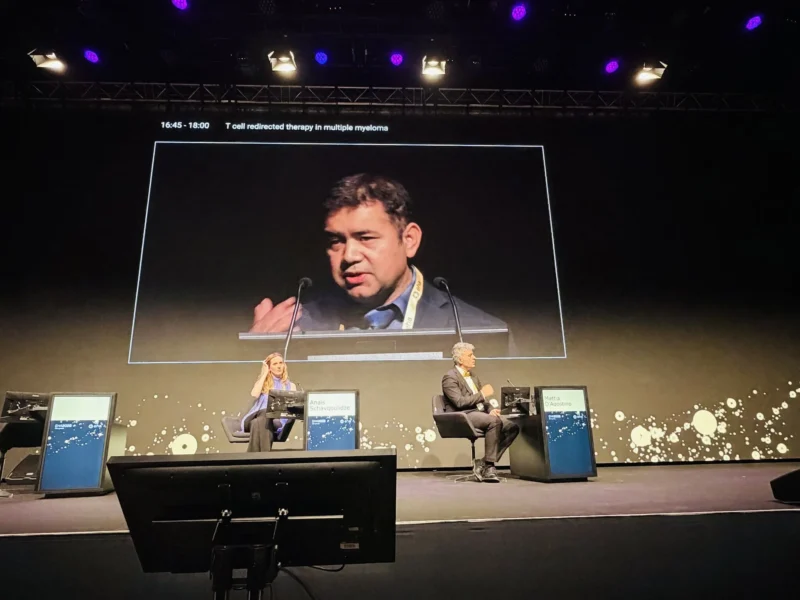
“Main auditorium packed for the MPN Educational Session at EHA 2026.
Excellent presentation by Francesca Palandri on emerging therapies and the future treatment landscape in myeloproliferative neoplasms.”
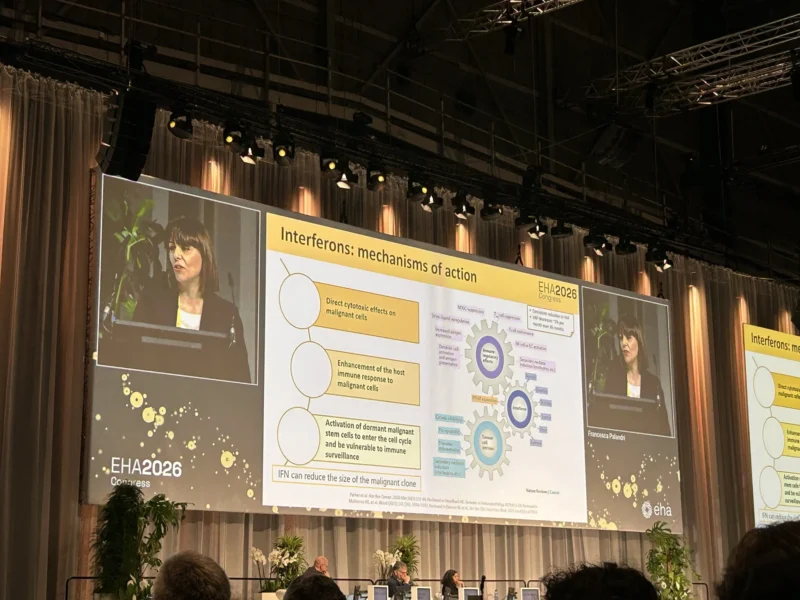
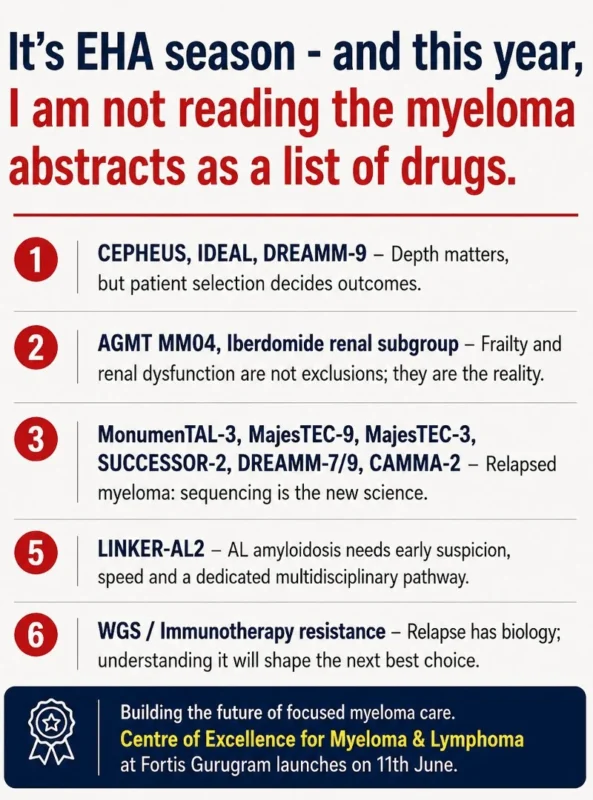
“After ASCO, it is EHA 2026 season — and this year, I am reading multiple myeloma differently.
Not as a list of exciting abstracts, but as a blueprint for what focused myeloma care must actually deliver.
A few EHA 2026 themes I am watching closely:
Frontline myeloma: depth is important, but patient selection is everything.
CEPHEUS, IDEAL, and DREAMM-9 continue the global movement toward deeper frontline responses. For us, the best frontline strategy is not just the most powerful regimen. It is the most appropriate, deliverable, and sustainable one.
Frailty and renal dysfunction cannot be side notes.
AGMT MM04 with isatuximab-Rd in elderly patients with newly diagnosed multiple myeloma, and iberdomide, daratumumab, and dexamethasone analyzed by renal function, are highly relevant to real-world patients.
Many patients do not come to us as “trial-perfect” patients. They come with anemia, renal dysfunction, infections, bone disease, frailty, delayed diagnosis, and financial limitations.
Relapsed myeloma: sequencing is becoming the real science.
MonumenTAL-3, MajesTEC-9, MajesTEC-3, SUCCESSOR-2, DREAMM-7/9, and CAMMA-2 all point in the same direction. The relapse clinic is becoming target-based.
For us, many patients may not receive unlimited lines of therapy. The sequence we choose today may decide what remains possible tomorrow.
AL amyloidosis deserves its own pathway.
LINKER-AL2 with linvoseltamab in relapsed/refractory systemic AL amyloidosis is important beyond the molecule.
The bigger challenge for us is not only access to newer therapy, but earlier diagnosis and faster referral.
Biology cannot remain optional.
The whole-genome sequencing and immunotherapy-resistance abstract is an important reminder: relapse has biology.
We need to ask better biological questions before choosing the next treatment.
As EHA 2026 begins globally, we also launch the Centre of Excellence for Myeloma and Lymphoma at Fortis Gurugram on June 11.
This week feels special.”
“Promising results from the ERASMM (EMN34) study on elranatamab for high-risk smoldering myeloma were presented at EHA 2026.
The study reported an overall response rate of 92%, a complete response or better rate of 45%, and a 9-month progression-free survival rate of 95%.
Early intervention with T-cell engagers showed robust efficacy and a manageable safety profile in this high-risk population.”
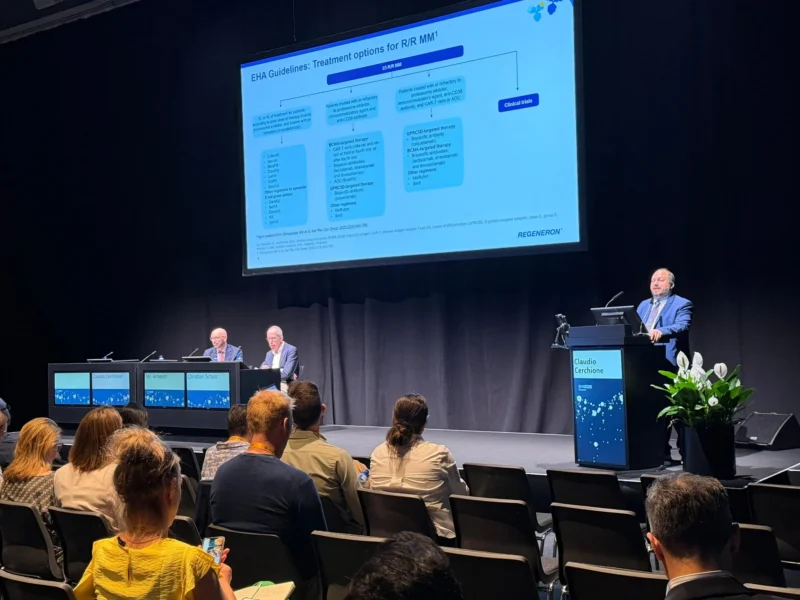
“Dear friends,
Today, I had two talks at EHA 2026 in Stockholm — an incredible acknowledgement.
We focused on the therapeutic revolution in multiple myeloma, which continues without stopping.”
Discover more articles like this on OncoDaily
Written by Nare Hovhannisyan, MD