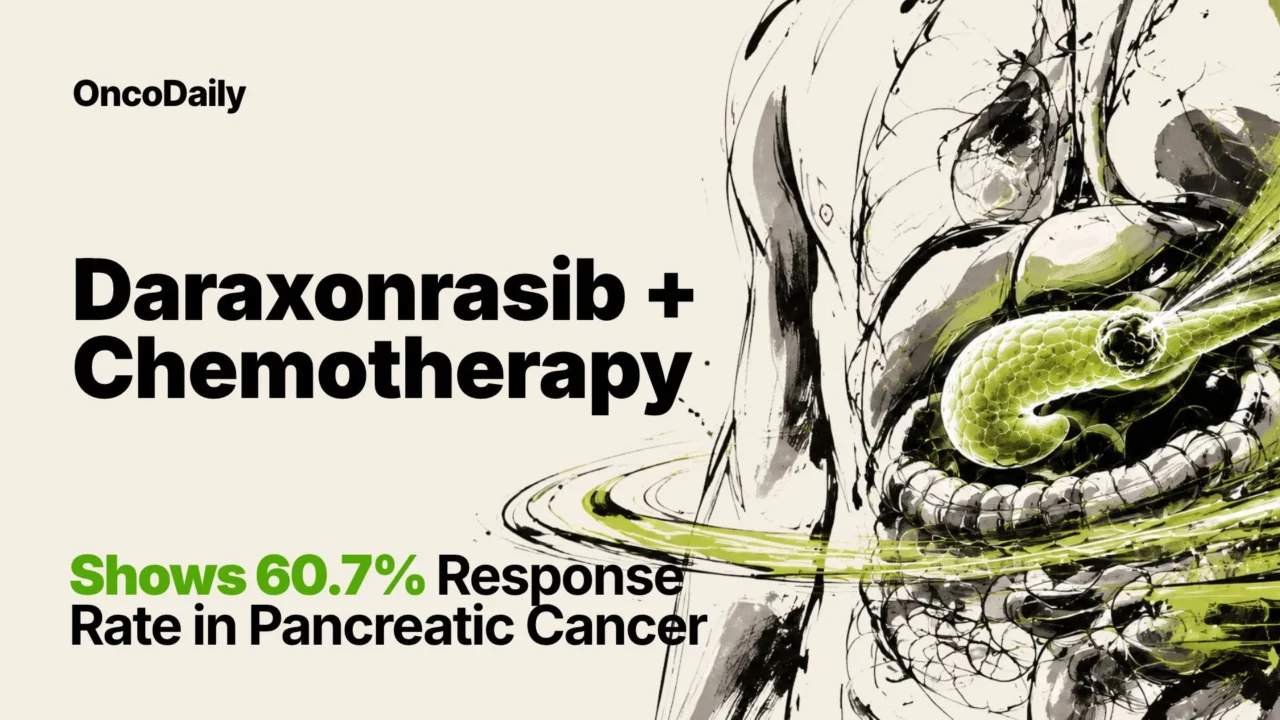
Updated Phase 1/2 data presented at ENA 2026 show a median progression-free survival of 12.8 months with daraxonrasib plus gemcitabine and nab-paclitaxel in previously untreated metastatic pancreatic cancer.
Revolution Medicines has reported updated results from the Phase 1/2 RMC-GI-102 clinical trial, evaluating daraxonrasib (Rasonque) in combination with gemcitabine and nab-paclitaxel as a first-line treatment for metastatic pancreatic adenocarcinoma (PDAC).
The findings, presented on November 20, 2026, at the EORTC-NCI-AACR Symposium on Molecular Targets and Cancer Therapeutics (ENA 2026) in Barcelona, Spain, demonstrated a confirmed objective response rate (ORR) of 60.7%, including complete responses in 8.2% of patients.
With a median follow-up of 18.3 months, median progression-free survival reached 12.8 months, while the estimated 12-month overall survival rate was 76.6%.
The results provide additional evidence supporting the investigation of RAS-targeted treatment in the first-line setting, although randomized Phase 3 evidence is still needed to determine whether adding daraxonrasib improves outcomes compared with chemotherapy alone.
Updated RMC-GI-102 Results Show Sustained Antitumor Activity
The RMC-GI-102 study (NCT06445062) is an open-label, multicenter Phase 1/2 trial evaluating daraxonrasib-based combinations in patients with RAS-mutant gastrointestinal malignancies.
In the first-line metastatic pancreatic cancer cohort, patients received oral daraxonrasib at 200 mg once daily, combined with gemcitabine and nab-paclitaxel administered on days 1 and 15 of a 28-day treatment cycle.
As of the September 28, 2026, data cutoff, 61 patients had received the combination.
Key efficacy findings included:
- Confirmed objective response rate: 60.7% (95% CI: 47.3–72.9)
- Complete response rate: 8.2%
- Disease control rate: 90.2% (95% CI: 79.8–96.3)
- Median duration of response: 11.1 months (95% CI: 7.6–18.4)
- Median progression-free survival: 12.8 months (95% CI: 10.8–18.4)
- Estimated 12-month overall survival: 76.6% (95% CI: 63.7–85.4)
The new analysis expands on results presented at the American Association for Cancer Research Annual Meeting in April 2026.
At that time, data from 40 patients demonstrated a confirmed response rate of 58%, including one complete response. Median progression-free survival and overall survival were not yet mature.
The November update includes 21 additional patients and longer follow-up, providing a more developed assessment of treatment activity and response durability.
Why Targeting RAS Matters in Pancreatic Cancer
Pancreatic adenocarcinoma remains one of the most difficult malignancies to treat, particularly when diagnosed at an advanced stage.
More than 90% of pancreatic adenocarcinomas harbor mutations involving RAS signaling, most commonly KRAS. These alterations can promote continuous activation of molecular pathways that regulate cancer-cell growth and survival.
Daraxonrasib is an oral, multiselective RAS(ON) inhibitor designed to interfere with active RAS signaling through a noncovalent tri-complex mechanism.
Unlike agents targeting individual KRAS mutations, daraxonrasib is designed to inhibit multiple forms of active RAS.
The current study is investigating whether combining this targeted approach with established cytotoxic chemotherapy can improve tumor responses and prolong disease control in patients receiving their first systemic treatment for metastatic disease.
For context, gemcitabine and nab-paclitaxel remains an established chemotherapy regimen for metastatic pancreatic cancer. However, resistance frequently develops, and durable disease control remains a major clinical challenge.
Safety Findings and Treatment Tolerability
According to Revolution Medicines, the updated safety profile was consistent with previously observed adverse events associated with daraxonrasib and gemcitabine plus nab-paclitaxel.
The ENA symposium report identified rash, diarrhea, fatigue, and chemotherapy-associated cytopenias among the commonly observed adverse events.
Treatment discontinuation due to daraxonrasib-related adverse effects occurred in approximately 5% of patients.
The November announcement did not provide a complete updated numerical breakdown of Grade 3 or higher treatment-related adverse events.
This remains an important consideration because combining a targeted inhibitor with cytotoxic chemotherapy may increase the complexity of adverse-event management, particularly during prolonged treatment.
Investigators Highlight the Need for Randomized Evidence
Wungki Park, MD, MS, a medical oncologist at Memorial Sloan Kettering Cancer Center and an investigator in both RMC-GI-102 and RASolute 303, presented the findings at ENA 2026.
Discussing the updated survival findings, Park stated:
“The emerging survival signal is meaningful and is estimated at 76.6% for patients to be alive at one year.”
However, investigators also emphasized the limitations of interpreting early-phase results without a randomized comparator.
The observed progression-free survival and response rates can be viewed alongside historical outcomes with chemotherapy, but such comparisons cannot establish superiority. Differences in patient selection, follow-up, and study design may influence the results.
The central question is therefore whether the activity observed in RMC-GI-102 will translate into a statistically significant clinical benefit in a larger randomized population.
RASolute 303 Will Evaluate Daraxonrasib in First-Line Pancreatic Cancer
The updated findings support the ongoing global Phase 3 RASolute 303 trial (NCT07491445).
The randomized, open-label study is evaluating three treatment approaches in previously untreated metastatic pancreatic adenocarcinoma:
- Daraxonrasib monotherapy
- Daraxonrasib plus gemcitabine and nab-paclitaxel
- Gemcitabine and nab-paclitaxel alone
The study is designed to determine whether daraxonrasib, alone or in combination with chemotherapy, can improve progression-free survival and/or overall survival compared with standard chemotherapy.
Importantly, patients are eligible regardless of whether their tumors harbor an identified RAS mutation, provided they meet the other study requirements.
In September 2026, the US Food and Drug Administration granted Breakthrough Therapy Designation to daraxonrasib combined with gemcitabine and nab-paclitaxel for treatment-naïve metastatic pancreatic cancer.
The designation is intended to facilitate development and regulatory review but does not constitute approval of the first-line combination.
Daraxonrasib Already Approved in Previously Treated Pancreatic Cancer
The latest findings come after two regulatory milestones for daraxonrasib.
On August 26, 2026, the FDA approved daraxonrasib for adults with metastatic pancreatic adenocarcinoma who have received at least one prior systemic therapy or are not candidates for multiagent systemic therapy.
The decision was supported by the randomized Phase 3 RASolute 302 trial, in which median overall survival reached 13.2 months with daraxonrasib compared with 6.7 months with standard chemotherapy in the overall study population.
More recently, on November 16, 2026, the European Commission approved daraxonrasib as monotherapy for adults with metastatic pancreatic adenocarcinoma who have received at least one prior systemic therapy.

These approvals establish daraxonrasib as a treatment option in defined metastatic pancreatic cancer populations. However, its combination with chemotherapy as first-line treatment remains investigational.
What Comes Next for Daraxonrasib in Pancreatic Cancer
The updated RMC-GI-102 findings add to the clinical evidence supporting the evaluation of daraxonrasib earlier in the treatment pathway for metastatic pancreatic cancer.
The combination produced responses in more than half of patients, with median progression-free survival exceeding one year and an estimated 76.6% of patients alive at 12 months.
Nevertheless, the results come from a relatively small, nonrandomized cohort, and the reported 12-month overall survival estimate should not be interpreted as a demonstrated survival advantage over chemotherapy alone.
The ongoing RASolute 303 trial will be critical in determining whether these early efficacy findings can be confirmed in a controlled setting and whether a RAS-targeted approach can meaningfully improve first-line outcomes for patients with metastatic pancreatic adenocarcinoma.
To learn more about what’s next for daraxonrasib in pancreatic cancer, watch our exclusive OncoDaily interview with Eileen M. O’Reilly, MD, discussing the results of the Phase 3 RASolute 302 trial, their clinical significance, and the future of pancreatic cancer treatment.