
ASCO 2026 brought together the global oncology community for several days of important research, clinical discussions, and expert insights across cancer care. Genitourinary oncology had a strong presence this year, with updates spanning prostate, bladder, kidney, testicular, and other GU cancers.
To capture some of the most interesting conversations from the meeting, we selected 15 GU oncology posts from ASCO 2026 not to miss. These posts highlight key studies, expert perspectives, and meaningful moments shared by oncology professionals during one of the most influential cancer meetings of the year.
15 Posts Not To Miss From ASCO 2026
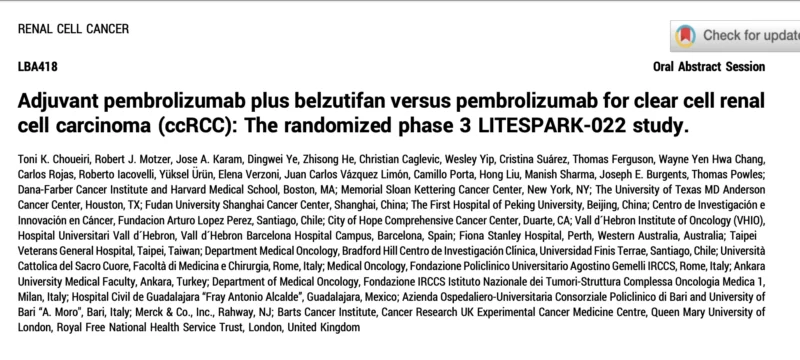
“Phase 3 LITESPARK-022 in high-risk ccRCC after nephrectomy: adjuvant pembrolizumab plus belzutifan versus pembrolizumab alone, with 1,841 patients.
24-month DFS was 80.7% versus 73.7%, with a hazard ratio of 0.72 and P=0.0003.
This is the first phase 3 adjuvant trial to demonstrate a DFS benefit versus pembrolizumab monotherapy — a potential new standard of care.”
“The ASCO 26 conference has concluded, bringing forth numerous practice-changing and informative data across various cancers.
OncoWisdom is excited to announce our 9th Global Academic Webinar, focusing on GU updates from ASCO 2026.
We have gathered global experts, both international and national, for this session, promising an engaging discussion.
Join us on June 16th at 7:30 PM IST.
The registration link is provided below.
If you are involved in managing GU cancers and wish to delve into the details of the new data, we encourage your participation.
Guru Sonpavde, MD, Giuseppe Banna, Dr. Emre Yekedüz, Vanita Noronha, Dr. Daniel Araujo, Dr. Priya Tiwari, and Uddiptya Goswami.”
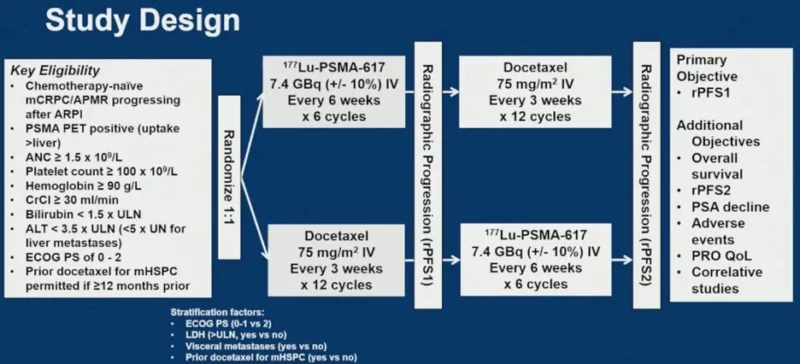
“PLUDO PR.21: Crossover outcomes with 177Lu-PSMA-617 versus docetaxel in post-ARPI mCRPC, with 199 patients.
Crossover: 42 of 79 patients, 53%, crossed from LuPSMA to docetaxel, versus 62 of 99 patients, 63%, crossed from docetaxel to LuPSMA.
rPFS2 from randomization:
LuPSMA to docetaxel: 18.5 months.
Docetaxel to LuPSMA: 15.8 months, with a hazard ratio of 0.91.
Overall survival from randomization was 23.2 versus 20 months, with a hazard ratio of 0.88.
PSA50 after crossover was 69% versus 40%, with p=0.004.
Lower crossover from LuPSMA to docetaxel was not explained by worse quality of life or toxicity at progression.
Among patients receiving both therapies, sequencing LuPSMA and docetaxel yielded similar rPFS2 and overall survival, supporting the use of both agents after ARPI progression.”
“Today at ASCO26, new Phase 3 data in men with advanced prostate cancer demonstrated a meaningful delay in disease progression, with results simultaneously published in NEJM Group.
For men with HRR gene alterations, these findings mark an important step forward.
The results demonstrate the potential to delay disease progression, while reinforcing the critical role of biomarker testing in identifying those who may benefit at a pivotal point in their diagnosis.
I want to extend my deepest thanks to the patients, families, and investigators, as well as the dedicated Pfizer teams, whose partnerships are helping create more moments that matter for patients and their families.”
“As ASCO26 comes to a close, I am reminded once again why the American Society of Clinical Oncology Annual Meeting is such a special gathering for the oncology community.
Beyond the groundbreaking science and new treatment breakthroughs, one of the most rewarding aspects is seeing trainees present their work, reconnecting with friends and colleagues from around the world, and learning from one another in ways that continue to move the field forward.
I also greatly valued the opportunity to work with ASCO Daily News to help share emerging, practice-changing data with the worldwide oncology community.
The icing on the cake this year was the breaking presentation of the TALAPRO-3 phase 3 trial in metastatic castration-sensitive prostate cancer with HRR alterations, accompanied by a simultaneous publication in NEJM.
The study demonstrated that adding talazoparib to enzalutamide significantly improved radiographic progression-free survival, with an overall hazard ratio of 0.48.
Encouraging activity was observed across molecular subgroups, including BRCA, non-BRCA HRR, ATM, and CDK12 alterations.
These findings represent an important step toward more personalized treatment approaches in prostate cancer and may help further expand the role of PARP inhibition in earlier disease settings.
Looking forward to continued progress and, hopefully, regulatory approval in this setting.”
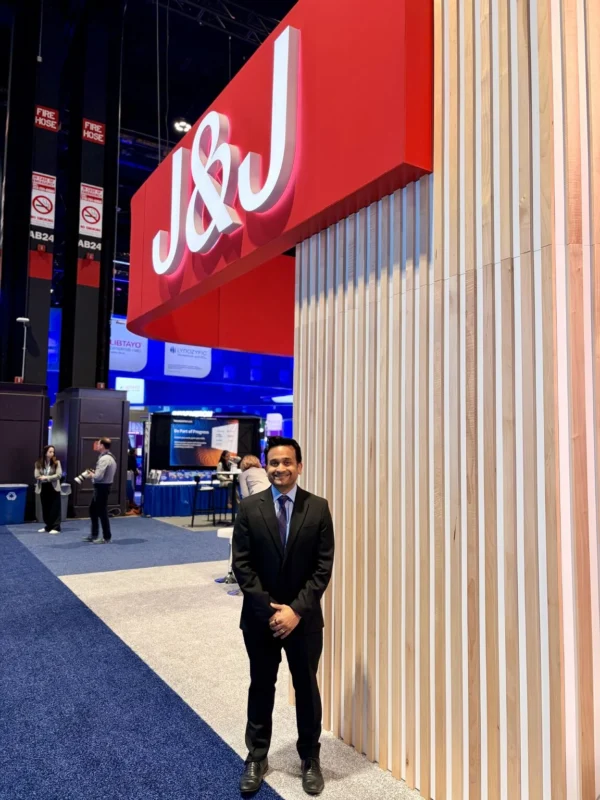
“At ASCO26, representing Johnson & Johnson, I found myself pausing more than once, not just to take in the science, but to reflect on why we do this work.
On the flight back home, those moments stayed with me.
The conversations around prostate cancer, the shared challenges, and the collective commitment reinforced that real-world evidence is more than data or methodology.
It is a way of bringing us closer to the lived experiences of patients.
It is how we ensure that what we generate reflects real people, not just ideal scenarios.
What stays with me most is the reminder that behind every dataset is a patient, a family, and a hope for something better.
I feel deeply grateful to be part of work that helps translate those experiences into evidence, and ultimately into better decisions, better access, and better care.
Moments like this remind me why I chose this path — and why it continues to matter so much.”
Dra. María Natalia Gandur Quiroga:
“PROTEUS LBA1.
Published in The New England Journal of Medicine.
High-risk localized prostate cancer may be entering a new perioperative era.
PROTEUS evaluated apalutamide plus ADT before and after radical prostatectomy in patients with high-risk localized or locally advanced prostate cancer.
Key results:
pCR/MRD: 8.9% versus 1.0%.
MFS: hazard ratio 0.80, 95% CI 0.67–0.96.
EFS also favored apalutamide plus ADT.
This matters because systemic intensification around surgery has long been a difficult question in prostate cancer.
But the key clinical question is not simply: ‘Should we add more treatment?’
It is: ‘Who is most likely to benefit — and who may be overtreated?’
Implementation requires nuance:
Overall survival maturity.
Patient selection.
Toxicity and rash management.
Post-operative radiotherapy strategy.
Cost and access.
MDT capacity.
Patient preference.
My take:
PROTEUS is practice-informing and potentially paradigm-shaping.
But it should move us toward better selection, not automatic escalation for every high-risk patient.”
“PROTEUS making waves at ASCO26.
Much discussion across many platforms.
Dr. Mary-Ellen Taplin sharing results that have been highly awaited.
Professor Declan Murphy as discussant.
Full house at ASCO listening in.
Listen to the concurrently released GU Cast episode with first author Dr. Mary-Ellen Taplin.
What are your thoughts on these results? Drop them as a comment below.”
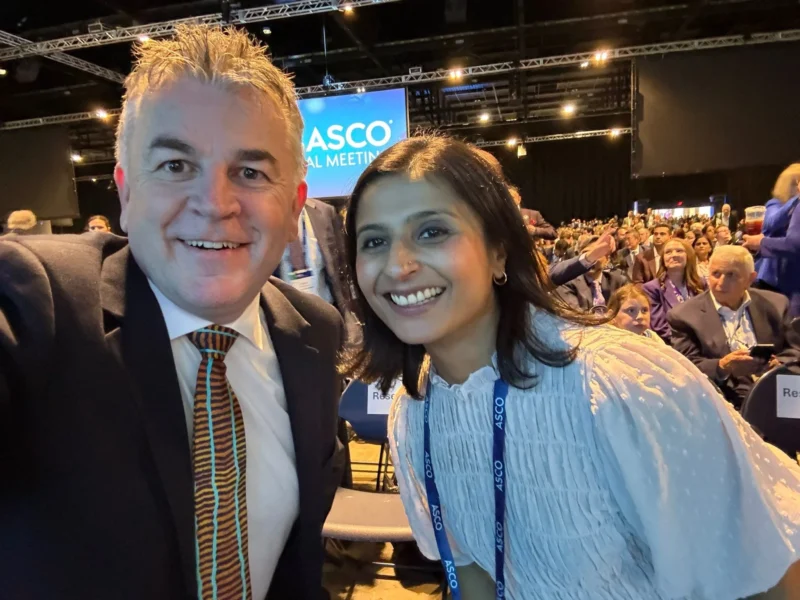
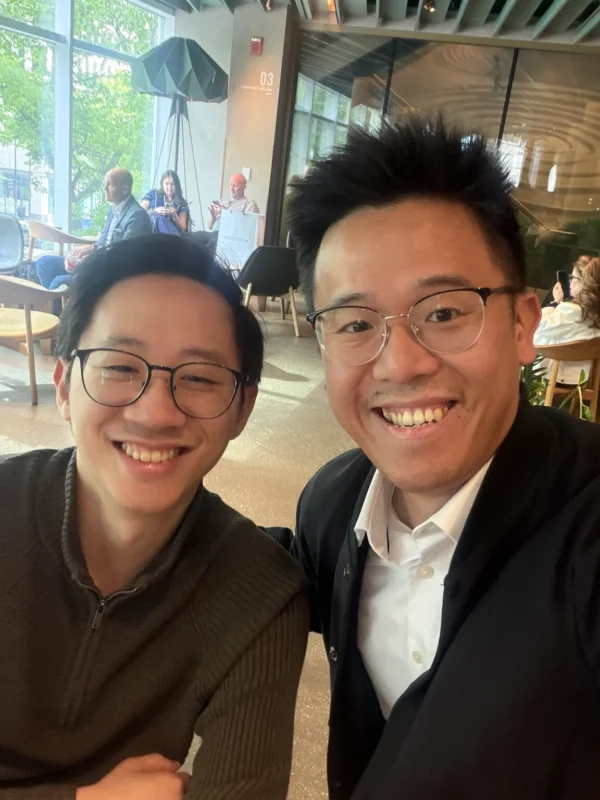
“One of my highlights of ASCO — running into my old friend, now Dr. Samuel Chan.
We did our undergrad together and haven’t talked much since.
Serendipitously, we ran into each other at ASCO. It turned out that we have both been deep into GU over the last decade.
From undergrad pre-med friends to scientist and clinical investigator.
We had a great few hours just talking shop over prostate and kidney cancer trials, and the way we see the GU space.
What a small world.”
Prof. Dr. Axel S. Merseburger:
“ASCO26: Latest in prostate cancer.
Honored to discuss key messages from the perioperative PROTEUS data and the precision-medicine signal from TALAPRO-3 in HRR-altered mHSPC.
ecancer, OncoAlert, Mary-Ellen Taplin, Eleni Efstathiou, Boris Hadaschik, UroToday, and GU OncToday.”
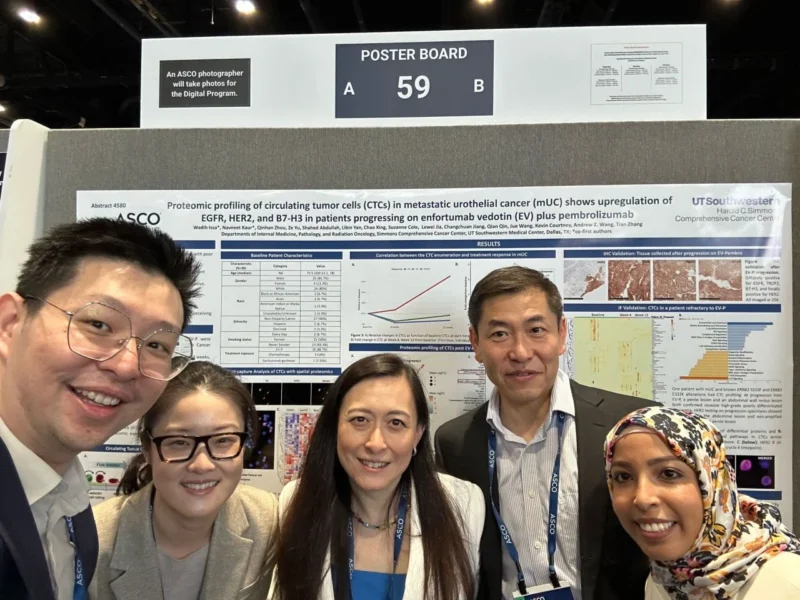
“Our UTSW Cancer GU group out in force showing our CTC work in bladder cancer.
The GU posters are hopping.”
Written by Nare Hovhannisyan,MD