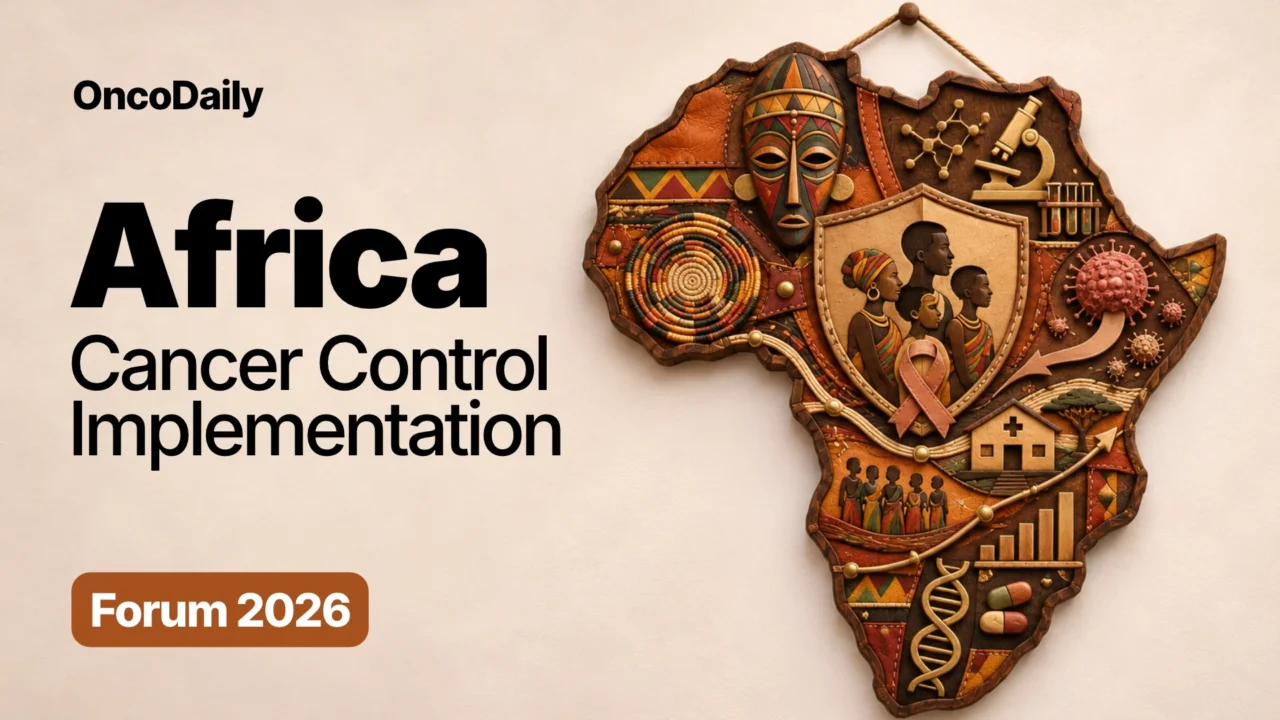
The inaugural Africa Cancer Control Implementation Forum (ACIF) will take place on December 7, 2026, in Abuja, Nigeria, bringing together government officials, cancer programme leaders, clinicians and health partners to address one of Africa’s most pressing healthcare challenges: turning cancer control policies into accessible, reliable and equitable care for patients.
Hosted by City Cancer Challenge (C/Can) alongside Nigeria’s Federal Ministry of Health and Social Welfare, and in collaboration with the Africa Centres for Disease Control and Prevention (Africa CDC), the Forum will focus on strengthening cancer care systems through practical implementation, sustainable financing and collaboration across the continent.
As cancer cases continue to rise, the discussions will examine how African countries can move beyond policy commitments to deliver coordinated care, from diagnosis and treatment to recovery and long-term patient well-being.
Africa’s Growing Cancer Burden: Why Implementation Matters
Africa recorded an estimated 1.2 million new cancer cases in 2024, highlighting the increasing pressure on healthcare systems across the continent.
The outlook is particularly concerning for certain malignancies. In sub-Saharan Africa, deaths from breast cancer alone are projected to nearly quadruple by 2050.
Across Africa, governments, institutions and healthcare partners have been advancing national cancer control plans, Universal Health Coverage reforms and investments in stronger health systems. However, the existence of these policies does not necessarily guarantee that patients can obtain timely diagnosis, appropriate treatment or continuous care.
The challenge extends beyond identifying effective interventions. It involves establishing the infrastructure, referral pathways, trained workforce and financing mechanisms needed to deliver those interventions consistently.
The inaugural ACIF will address this gap by bringing together stakeholders responsible for translating cancer control strategies into everyday clinical practice.
From Policy to Practice: Lessons from Six African Cities
A central focus of the Forum will be the experience of locally led cancer care initiatives in Abidjan, Abuja, Kampala, Kigali, Kumasi and Nairobi.
These initiatives demonstrate how changes in care coordination, workforce development and referral systems can improve access to cancer services.
Kigali: Reducing the Wait for Cancer Treatment
In Kigali, Rwanda, a patient navigation programme connecting the country’s five main cancer centres has reduced the time required to begin cancer treatment from 82 days to 28 days.
The programme illustrates the importance of coordinated referral pathways and patient navigation in addressing delays between diagnosis and treatment.
By improving communication and coordination between cancer centres, such initiatives can help patients move through complex healthcare systems more efficiently.
Kumasi: Strengthening Childhood Cancer Referrals
In Kumasi, Ghana, local healthcare leaders have established a referral network for children diagnosed with cancer.
The initiative has more than tripled annual referrals, demonstrating how stronger connections between healthcare providers can improve access to specialised paediatric oncology services.
Timely referral is particularly important in childhood cancer, where delays in diagnosis and access to appropriate treatment can significantly affect outcomes.
Building Local Expertise Through International Training
Workforce development is another priority in strengthening cancer care delivery.
Through C/Can-supported initiatives, 45 health specialists from Rwanda and Ghana have received specialised training in Africa, Europe, Asia and the United States.
These professionals are now sharing their knowledge with local colleagues, helping strengthen cancer care expertise within their respective healthcare systems.
This approach places particular emphasis on developing local capacity and ensuring that specialised knowledge continues to benefit healthcare professionals and patients beyond the initial training period.
Nairobi: Advancing Gender-Responsive Cancer Care
In Nairobi, Kenya, researchers are working to better understand how gender influences access to cancer care and patient experiences.
A consortium of more than 30 international cancer researchers, including several from Kenya, is developing the evidence base for gender-responsive cancer care in Nairobi and other cities worldwide.
The initiative aims to support cancer services that better recognise and respond to gender-related barriers and differences in healthcare access.
Together, these examples will provide a foundation for discussions at ACIF on how locally developed approaches can inform cancer control efforts across the continent.
Financing Cancer Care in a Changing Global Health Landscape
Sustainable financing will be another major topic at the Forum.
With donor funding for health under increasing pressure, African healthcare systems face the challenge of maintaining and expanding essential cancer services while managing limited resources.
Discussions will explore how countries can finance cancer care more sustainably, improve the use of existing resources and support long-term implementation of national cancer control priorities.
The Forum will also examine patient well-being, data sharing and the practical requirements for delivering timely and reliable cancer care.
Rather than focusing exclusively on new policy commitments, ACIF will consider how existing investments and programmes can be organised to achieve measurable improvements in healthcare delivery.
Building a Shared Roadmap for Cancer Control
Beyond the discussions in Abuja, the Forum is expected to produce a white paper outlining practical recommendations for strengthening cancer care implementation across Africa.
Participants will also explore the establishment of a regional Community of Practice, creating opportunities for continued collaboration and knowledge exchange among cancer programme leaders, policymakers, clinicians and health partners.
Such a network could support the sharing of experiences from different cities and healthcare systems, helping stakeholders identify approaches that can be adapted to local needs.
The emphasis will remain on locally owned, coordinated and sustainable solutions that can be implemented and maintained over time.
ACIF 2026: Event Details and Press Conference
The inaugural Africa Cancer Control Implementation Forum will take place on Monday, December 7, 2026, at the Abuja Continental Hotel in Abuja, Nigeria.
A press conference will be held during the event from 09:45 to 10:15 West Africa Time (WAT) and will be available via livestream.
The press conference is expected to feature:
- Dr Iziaq Adekunle Salako – Minister of State for Health and Social Welfare, Nigeria
- Dr Mohammed Abdulaziz – Head of Division, Disease Control and Prevention, Africa CDC
- Dr Mya Ngon – Cluster Lead, Disease Prevention and Control/Health Promotion, WHO Nigeria
- Gloria Chinyere Okwu – Founder, Gloria’s Cancer Foundation; cancer survivor, Nigeria
- Sophie Bussmann-Kemdjo – Director, Africa and Europe, City Cancer Challenge
The speakers will represent government leadership, regional and international public health institutions, cancer care implementation organisations and the patient community.
Registration for the livestreamed press conference is available here.
Media attendance at the Forum itself is limited and requires a separate request.
Experts Available for Interviews
Ahead of the Forum, several representatives involved in cancer care implementation across Africa are available for media interviews:
- Isabel Mestres – CEO, City Cancer Challenge
- Sophie Bussmann-Kemdjo – Director, Africa and Europe, City Cancer Challenge
- Dr Mohammed Abdulaziz – Head of the Division of Disease Control, Africa CDC
- Patricia Tum – Nairobi City Manager, City Cancer Challenge
- Abubakari Jaliu – Kumasi City Manager, City Cancer Challenge
- Chris Chukwunyere – Abuja City Manager, City Cancer Challenge
Their perspectives will offer insight into the progress achieved through city-led initiatives, the challenges that remain and the opportunities for strengthening cancer care delivery across African healthcare systems.
About City Cancer Challenge
City Cancer Challenge (C/Can) is a global not-for-profit organisation working to close the gap between cancer care policies and their implementation.
The organisation collaborates with local and national stakeholders in low- and middle-income countries to strengthen cancer care systems through coordinated, locally owned, scalable and sustainable solutions.
By sharing experiences and effective approaches across cities, C/Can seeks to inform national policies and global standards while improving access to quality cancer care.
The inaugural Africa Cancer Control Implementation Forum represents an opportunity to bring these experiences into a wider regional conversation, with a focus on what is already working, what remains difficult to implement and how African healthcare systems can build on existing progress.