Matthias Guckenberger, Director of the Department of Radiation Oncology at University Hospital Zurich and Professor of Radiation Oncology, shared on LinkedIn:
“Target volume definition in SBRT for vertebral metastases
- GTV-based dose escalation
- Segment-based dose escalation
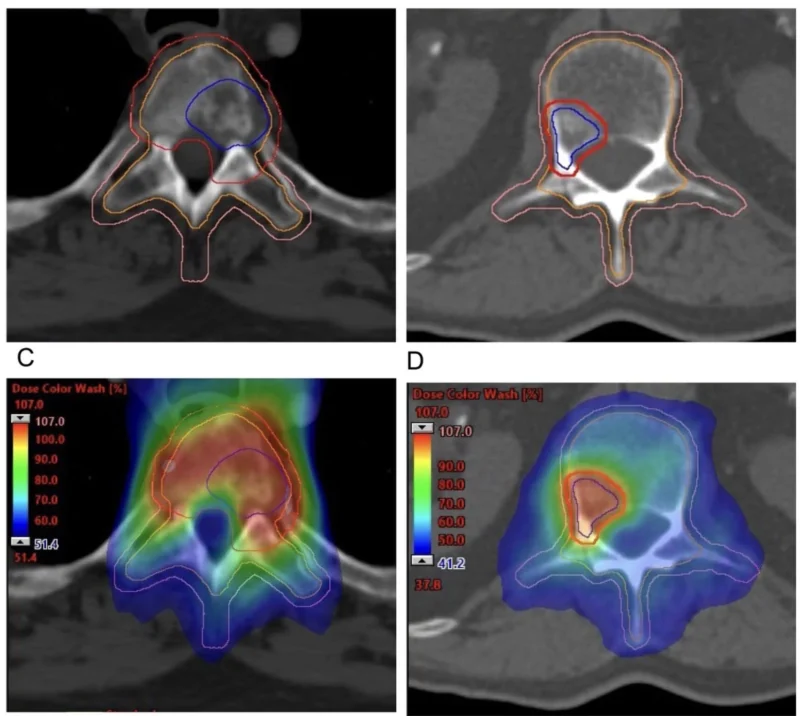
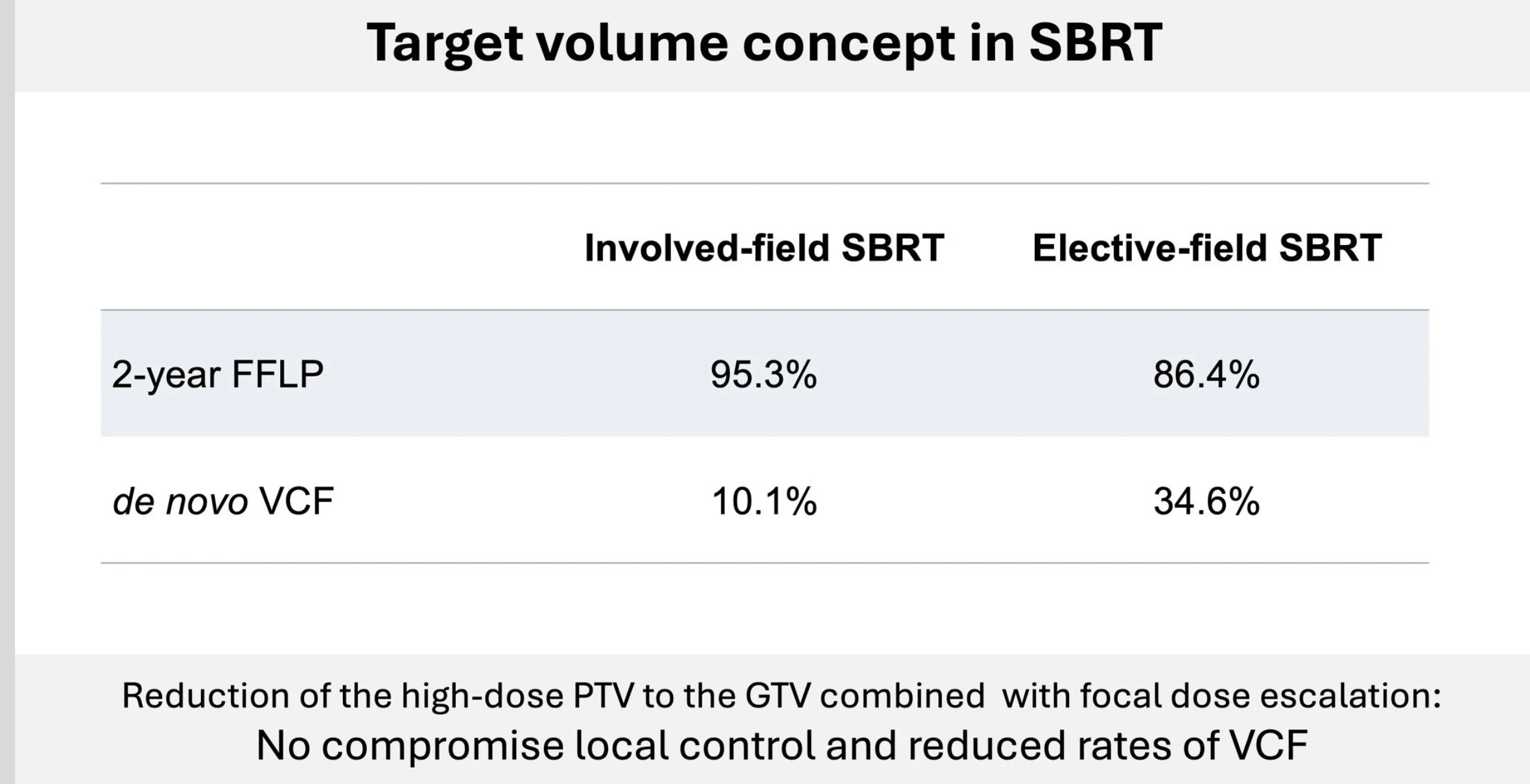
Exploratory comparison of two prospective clinical trials: Reduction of the high-dose PTV to the GTV combined with focal dose escalation and low-dose elective vertebral coverage did not compromise local control and lowered the rates of VCF
Thanks to all contributing centers, colleagues, patients are their families.”
Read the full article.
Title: Comparison of Segment- and GTV-Based Target Volume Concepts in SBRT for Vertebral Metastases: A Post Hoc Secondary Analysis of Two Prospective Clinical Trials
Authors: Indira Madani, Reinhart A. Sweeney, Maria Hawkins, Jose Belderbos, Nicolaus Andratschke, Lotte Wilke, Merina Ahmed, Frederick Mantel, Charlotte Billiet, Susanne Rogers, Ciro Franzese, Daniel Schnell, Mateusz Spałek, Daniel M. Aebersold, Hossein Hemmatazad, Thomas Zilli, Nikolaos Koutsouvelis, Judit Boda-Heggemann, Brigitta G. Baumert, Jean-Jacques Stelmes, Franziska Nägler, Philipp Gut, Christian Weiß, Alessio Bruni, Frank Zimmermann, Robert Förster, Jörg Zimmer, Matthias Guckenberger.
Key Takeaways
- Study focus: The researchers compared two approaches to defining radiation treatment volumes for SBRT in patients with vertebral metastases.
- Smaller treatment areas: The GTV-based approach used considerably smaller high-dose treatment volumes (11 cm³ compared with 58 cm³).
- Tumor control: At two years, local tumor control was higher with the GTV-based approach (95.3% vs. 86.4%).
- Fewer fractures: Vertebral compression fractures occurred less frequently with GTV-based treatment (10.1% vs. 34.6%).
- Safety: No radiation-induced myelopathy or plexopathy was reported in either group.
Overall, the findings suggest that targeting the visible tumor more precisely may help improve local control while reducing the risk of vertebral fractures. However, further studies are needed to confirm these results.
You may also be interested in: