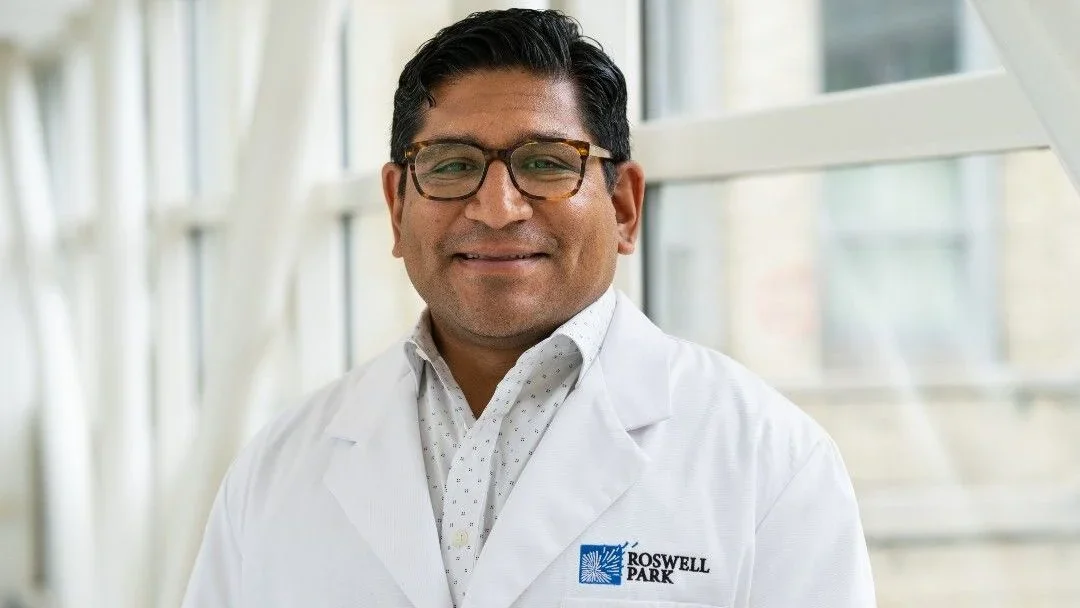
Marco Davila, Senior Vice President of Translational Medicine at Roswell Park Comprehensive Cancer Center, shared on LinkedIn:
“CAR T-cell therapy has delivered on its promise. Now we need to do a better job delivering CAR T to patients. When CAR T first entered the clinic, the aspiration was extraordinary: could a single infusion of engineered T cells produce durable – and perhaps curative – remissions in patients with an otherwise incurable cancer?
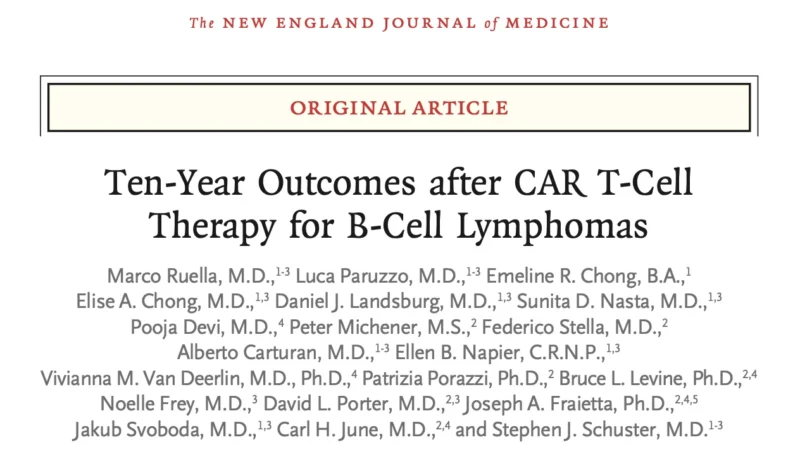
This important report in The New England Journal of Medicine from Marco Ruella, Luca Paruzzo, Stephen Schuster, Carl June, and colleagues provides a 10-year answer.
Among 38 heavily pretreated patients with relapsed or refractory B-cell lymphoma, followed for a median of 10.1 years:
- No lymphoma relapses occurred beyond 5.4 years.
- Ten-year lymphoma-free survival was 32% for large B-cell lymphoma and 47% for follicular lymphoma.
- Some patients remained in remission for a decade after a single infusion, without maintenance or additional lymphoma therapy.
That is more than a durable response. It is compelling evidence that CAR T-cell therapy may be curative for a subset of patients. Over the same decade, our field has made remarkable progress in recognizing, grading, and managing acute toxicities such as CRS and ICANS. We now have a shared language and much more consistent management strategies. That does not mean the safety work is finished. Long-term infection risk, immune reconstitution, IVIG dependence, cytopenias, and second malignancies remain important areas for continued research and better guidance.
But in my view, the defining challenge now can be summarized in one word: Access.
Timely referral. Geography. Caregiver and logistical requirements. Insurance and financial burden. Too many patients who could benefit from CAR T never reach it – or reach it only after their disease has progressed too far.
Our next measure of progress cannot be only how well CAR T works in the patients who receive it. It must also include how many eligible patients can actually receive it.
CAR T has delivered on the science. Our next obligation is to deliver CAR T to the patients who need it. Congratulations to the entire Penn team on this important decade-long follow-up.”
Title: Ten-Year Outcomes after CAR T-Cell Therapy for B-Cell Lymphomas
Authors: Marco Ruella, Luca Paruzzo, Emeline R. Chong, Elise A. Chong, Daniel J. Landsburg, Sunita D. Nasta, Pooja Devi, Peter Michener, Federico Stella, Alberto Carturan, Ellen B. Napier, Vivianna M. Van Deerlin, Patrizia Porazzi, Bruce L. Levine, Noelle Frey, David L. Porter, Joseph A. Fraietta, Jakub Svoboda, Carl H. June, Stephen J. Schuster
Read the Full Article