


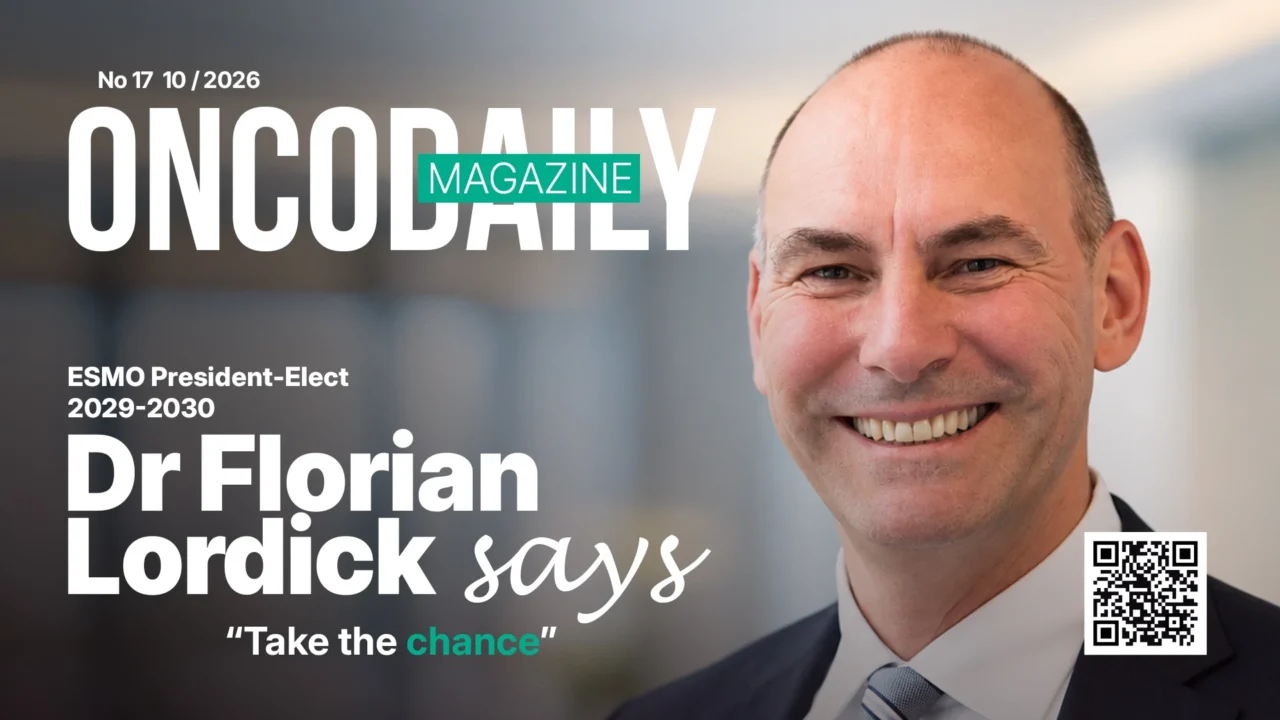
His colleagues called GI oncology boring. Florian Lordick made it his life’s work – and now, as ESMO’s President-elect, he wants the next era of oncology to stay human.
In the early 2000s, the young internists at Munich’s university hospital had a verdict on gastrointestinal cancer, and it was not flattering.
“They said, this is boring,” Florian Lordick recalls, laughing. “You give 5-FU. You give it up and down, and from left to right, and from right to left – and in the end the patients do not benefit from it.”
The ambitious ones went to hematology – to transplants, leukemia and lymphoma, where the science seemed to be moving. Lordick walked the other way: down the corridor to the surgical wards, where esophagectomies and gastrectomies were performed at a scale few centers in Europe could match, on patients most of his medical colleagues preferred not to think about. He made a surgeon his mentor. He made the “boring” disease his life’s work.
“I was always swimming a bit in another pool than the majority,” he says.
A quarter of a century later, the field his colleagues dismissed has been transformed by targeted and immune therapies, and by trials and guidelines he helped shape. And the internist who chose the unfashionable door is preparing to lead Europe’s largest oncology society. Elected in June 2026 as President of the European Society for Medical Oncology for 2029-2030, Lordick – Director of the University Cancer Center Leipzig and ESMO’s former Director of Education – will take charge of a community that has grown almost beyond recognition since he first walked into an ESMO congress.
Ask him how he got there and he does not describe a plan. He describes doors, and the decision to walk through them.
“You get chances,” he says. “And it’s your decision if you want to take them and develop them, or if you let them pass.”
A hospital instead of a barrack
Lordick is a Münchner – born and raised in the Bavarian capital, a city he still calls beautiful, “a great university city” of more than a hundred thousand students, “very vital, with a lot of academic activities, many ambitious and inspired people.”
Medicine was not a childhood certainty. After school, young German men faced a choice: military service or civilian social service. He chose the hospital. For almost twenty months he worked at the university hospital of the Technical University of Munich, moving between orthopedics and the emergency department, transporting patients, doing whatever needed to be done.
“I just became fascinated by the environment of a hospital,” he says. By the end of that service he had applied to medical school. Admission depended on grades and on a demanding selection test. “I became quite ambitious and prepared vigorously,” he recalls, with some satisfaction. He got his place.
The patients who needed someone
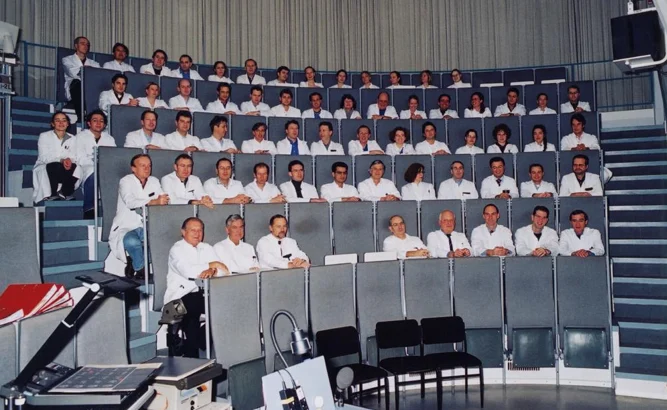
Throughout medical school he kept working in the hospital – partly for the money, partly for the experience. His doctoral thesis took him into respiratory physiology: the mechanisms of hypoxemia and how blood flow is regulated in the lung. Many of the patients he studied had chronic obstructive pulmonary disease. Many had lung cancer. Many had both.
After graduation he stayed with his thesis supervisor and went deeper into pulmonology. But one group of patients kept drawing him back.
“Always I felt that working with the cancer patients was most meaningful for me,” he says. “Maybe it was the seriousness of the disease. Or maybe it was because they really need a dedicated doctor. They cannot go to anyone. They need someone who really takes care.”
This was the 1990s. Operable patients went to surgery; for the many who were not, systemic chemotherapy offered little. “We need to push this field forward,” he remembers thinking. The conviction pulled him toward research – toward trials, new drugs and multidisciplinary care – at a time when the tools to deliver on that ambition barely existed.
“They cannot go to anyone. They need someone who really takes care.”
“Now it’s starting”
The first targeted therapy of Lordick’s training was imatinib, in chronic myeloid leukemia – “a big success story,” he says, but one that belonged to hematology. Solid tumors still seemed out of reach.
Then, one day in 2004, a colleague forwarded him a paper with a short note: Look, now it’s starting in solid tumor oncology. It was the first description of activating EGFR mutations in lung cancer. At the time, early EGFR inhibitors such as gefitinib had just produced disappointing trial results. Suddenly the field understood why. “They did not work in every patient,” he says. “But in some patients they worked fantastically.”
It was the beginning of a new era, and Lordick had a front-row seat. He took part in some of the very first clinical studies of cetuximab in colorectal cancer – “not the same success story” as the drugs aimed at oncogene-addicted tumors, he notes candidly, but fascinating all the same. “And so it started. I got deeper and deeper into oncology.”
The oncologist in the surgeon’s house
In Germany, hematology and oncology are trained together, and Lordick’s training was broad: leukemias, lymphomas, lung and gastrointestinal cancers. But the Munich university hospital had one field in which it stood among the strongest in Europe – the surgery of GI cancers. Esophagectomies, gastrectomies, pancreatic and rectal surgery were performed there at a scale few centers could match.
Few of his medical colleagues wanted any part of it. Transplants, leukemia and lymphoma were where the excitement was. “So they missed the chance to jump into this field,” he says.
He jumped. He joined a research group that was almost entirely surgical, and found his scientific mentor in the operating theatre: Jörg Rüdiger Siewert, the towering figure of Munich upper GI surgery.
Siewert could be strict with his surgical staff. With the young internist, he was generous. “I did not do surgery,” Lordick says, “so I did not do nonsense in his field. I stayed outside the operating theatre. But I took care of his patients.” Every day he went to Siewert’s ward and to the meetings of his senior staff. He consulted on patients, enrolled them in trials, treated them, and coordinated with outside oncologists. “I think he saw the engagement of this young Dr. Lordick.”
What followed – roughly 2002 to 2007 – he describes in a single image: “I had the impression that I’m sitting in a rocket.”
HER2-targeted therapy arrived. EGFR-targeted therapy arrived. He ran trial after trial, including his own investigator-initiated studies – easier then, he says, “not so expensive, not so overregulated.” Siewert sent him to national and international meetings. Within a few years the young internist had become a recognized name in GI oncology, and the road to a professorship lay open.
One study from those years captures the spirit of the Munich group. In MUNICON, published in The Lancet Oncology in 2007 with Lordick as first author, the team used PET scans to measure metabolic response after just two weeks of chemotherapy in adenocarcinoma of the esophagogastric junction. Responders continued chemotherapy before surgery; non-responders stopped and went straight to the operating theatre. The phase II trial showed that treatment could be steered by an early biological signal – a practical question that needed oncologists, surgeons, radiologists, nuclear medicine physicians, and pathologists at the same table. His daily walks to the surgical ward and the famous Munich multidisciplinary GI tumor board had prepared him for exactly that.
The rocket was not only his. Medical oncology itself was lifting off. When Lordick began travelling to ESMO congresses, attendance ran to perhaps five or six thousand. Today the meeting draws more than thirty thousand. “I entered this field when it was just at its beginning,” he says. “It was not only my personal story that things went fast. It was also what happened suddenly in oncology. That was fascinating.”
“I had the impression that I’m sitting in a rocket.”
— ON HIS MUNICH YEARS, 2002–2007
It also required something more than talent, he adds – a word of advice an early mentor once gave him, which he translates carefully into English: Dr.
Lordick, I think you can make a good way. But you need to use the chances that are given to you. “This is a bit like a motto for my career,” he says.
Seven days in New York
One of those chances came in 2006, and it lasted seven days. Murray Brennan, then chair of surgery at Memorial Sloan Kettering, was visiting Siewert in Munich. On Brennan’s last day oh his visit, Lordick asked for a few minutes, introduced himself and said he would love to see how oncology was practiced in New York. Write me an email, Brennan said. He did. An invitation came back.
“It was probably one of the most meaningful weeks of my whole professional life,” Lordick says. “I saw a different dimension of oncology. Really a bit different from how we did it in Germany.”
The friendships lasted – and reached the next generation. Yelena Janjigian and Andrea Cercek had not yet joined the GI service, but in the years that followed they and many other NYC colleagues became his friends too. Today, from opposite sides of the Atlantic, they work together to push gastrointestinal oncology forward – in clinical trials, on congress stages and in the conversations in between. Colleagues in New York still ask how long he stayed. A year? Two?
“No, no,” he tells them. “It was a week.”
Three cities, one missing piece
The next door opened in a corridor. Siewert was retiring from surgery to become chief executive of Heidelberg University Hospital, and Lordick had assumed he would stay behind in Munich. Then, in one of those brief exchanges between one meeting and the next, his mentor turned to him. “Lordick, don’t you want to join me in Heidelberg? It’s a good place. Maybe it’s good for you to see something new.”
He thought twice, weighed his prospects in Munich, and went. Heidelberg’s National Center for Tumor Diseases was in its pioneering phase – well funded, full of research opportunity – and Lordick, now senior, found himself surrounded by talented young fellows, “many of whom made great careers now.”
He did not stay long. The chance to become head of a large hematology-oncology department in Braunschweig was too tempting for a physician who wanted, as he puts it, to learn “how you deal with a big team and how you take final decisions.” He is candid about the move. “Honestly, I don’t know if it was a good step to leave Heidelberg at this phase,” he says. He loved the work in Braunschweig. But something was missing.
“We did a lot of interesting treatments, but you have almost zero support for research,” he says. “The self-initiated research, and also the daily contact with students, with people who want to learn – it’s not there. And I missed it.”
Then the phone rang. It was the hospital director in Leipzig. Did you see we are searching for someone to lead our cancer center? Maybe you aren’t interested. But maybe you are missing the university.
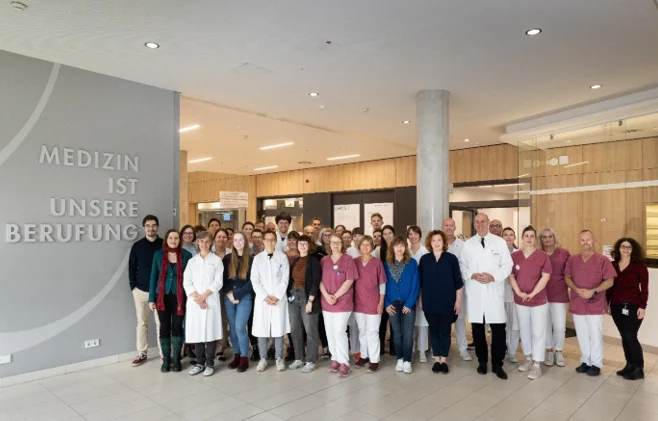
He was. After a competitive process for a full professorship, Lordick arrived in Leipzig in 2012 – one of Germany’s oldest university cities – to build a university cancer center essentially from scratch. Fourteen years later, Leipzig is a certified comprehensive cancer center, and Lordick leads the Comprehensive Cancer Center Central Germany, a Leipzig–Jena partnership serving a population of around five million people.
“We arrived at the level where we wanted to arrive,” he says. “I love the surroundings that we created here – and this is only the beginning of something to grow further and get stronger.”
The teacher
One of Lordick’s earliest papers on PubMed is not about a drug at all. It describes a program he built in Munich with a psycho-oncology colleague to teach patients about their disease and treatment – on the conviction that patients who understand more cope better, feel more balanced and adhere better to therapy. They evaluated it and published it.
Teaching, it turns out, is the thread that runs through everything: bedside teaching, literature clubs, coaching students to read research critically and explain it to their peers. In the 2000s, ESMO noticed. “ESMO discovered me,” he says. “Colleagues had heard me somewhere and saw that I like teaching, and maybe I also have a little bit of talent for that.”
Preceptorships and courses followed, then educational sessions at the annual congress. In 2016 he led the GI track of the ESMO Congress in Copenhagen. From 2020 to 2023 – much of it through the COVID-19 pandemic – he served as ESMO’s Director of Education. He calls his relationship with the Society, now more than twenty years long, “a marriage.”
He is clear that education cannot stand apart from discovery. “Education alone is nice,” he says. “But it’s even better when it’s together with telling people about your own data, your own research perspectives on these topics.”
For oncologists in countries with less access to European training, those preceptorships can matter more than their brief format suggests. A day and a half in a room with colleagues from across a region can seed collaborations that change not one patient’s care but an entire team’s. It is a point Lordick feels strongly about. “It’s also my feeling,” he says. “And it’s the reason why I’m always motivated to go there.”
“Education alone is nice. But it’s even better when it’s together with telling people about your own data.”
7:00 a.m., Leipzig
His day, he says, is “full, full, full.”
It starts at seven in his office: first emails, the day’s tasks. At 7:30 comes the part he protects most – the morning round with his oncology department. It may last only five or ten minutes. It is not negotiable.
“That I always see my team every morning,” he says, “is very meaningful to me. Who is there? Is there any problem? Should we solve anything?” They run through the outpatient clinics, problems from the day before, difficult cases, tumor board questions, serious adverse events in clinical trials. Twice a week, the imaging is reviewed together, so problems can be discussed on the spot.
From there, no two days are alike: the GI tumor board, internal medicine teaching sessions, outpatient clinics. He tries to do ward rounds with his doctors every week – “a quality check,” he calls it, and a way “not to lose the contact to patients.” Then come the demands of running both a department and a comprehensive cancer center – staffing, structures, everything that keeps a large institution moving. He insists none of it is dull. “It really needs an experienced person to do that in a skilled way.”
And around all of it: ESMO, editorial work, international projects, talks to prepare, people to connect.
A lake, a bicycle, a partnership
What keeps him going? Asked the same question once at a meeting in Singapore, he gave the answer he still gives. The fascination of oncology. The will to help patients as well as possible. And people.
“When I’m entering my morning round and I see my team, these promising young colleagues – well educated, nice, friendly – that gives me a lot of energy,” he says. “It tells me that’s the right place to be.”
Outside the hospital, the rhythm is simple. He cycles to work. In summer, he rides home, drops his things, takes a towel and walks five minutes to a nearby lake for a fifteen- or twenty-minute swim. A few minutes of yoga each morning keep a back strained by long hours at the screen in working order.
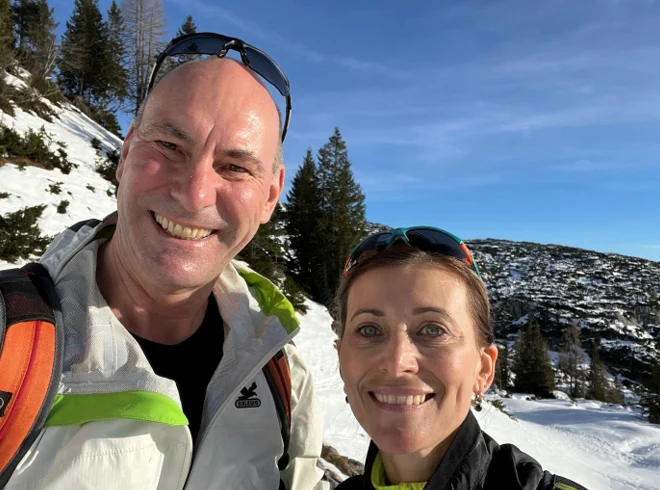
And there is his wife – also an oncologist, also working in gastrointestinal cancers. Much of their work is shared: they travel to congresses together, teach courses together, and support a network in Africa focused on esophageal cancer, a common disease on the continent. “Activities like that are an enrichment,” he says, “even more if you can do it together.”
Away from medicine, they cook – “we are not professional chefs, but we like to prepare something” – visit museums, go out for a good meal, go hiking and skiing in the mountains and listen to classical concerts. “One of the most important things in life is partnership,” he says. “It is a very important resource of energy.”
“I rather try to create opportunities”
For a man who has mentored so many, Lordick is surprisingly reluctant to give advice.
“In principle, I’m not giving advice,” he says. “Everyone needs to find out what is the right thing for him or her. I rather try to create opportunities.”
At least once a year, he sits down individually with every doctor and scientist in his team – more often if needed – to understand what interests and fascinates them. Then he looks for the right opening: a talk somewhere, a protocol to work on, time in the laboratory.
He is honest about what frustrates him. Some of the young people he sees are “so talented, so brilliantly educated,” he says, and yet hesitate to seize what is in front of them – a year abroad, extra time in the lab. “Every career – you can ask whoever you like who has made a career – needs some extra effort. It’s not done within the regular working hours. Naturally not.”
But he has also learned where a mentor’s role ends. A mentor can open the door; the young doctor has to walk through it.
“You cannot carry people to success,” he says. “Sometimes you need to give a small push. But in principle, people need to find their direction, and need to feel happy with it, balanced with it.”
“You cannot carry people to success. Sometimes you need to give a small push.”
— ON MENTORING THE NEXT GENERATION
What he does encourage, warmly, is movement: visiting other centers, reaching out to people you have never met, building connections across borders. “This is exactly the right way,” he says. “This is the way the young generation can develop.”
Keeping medicine human
Ask the incoming president where oncology is heading and he begins with a caveat. “Looking into the future is not something humans are able to do.” Then he answers anyway.
We are, he believes, in another great transition – this one driven by artificial intelligence and the digitalization of knowledge. The complexity of modern oncology, he says, “has already become too much for all of us to understand all the details.” We will need tools to support decisions and to explain that complexity to patients. ESMO, he argues, must build those tools into how it educates, how it interprets new evidence and how it writes guidelines.
But he is equally clear about what must not change.
“What I feel is extremely important in this transition is that medicine keeps human,” he says. “That we don’t lose the control of all that, and that in the end it’s the human interaction which drives decisions, which gives confidence. In the end of the day, it’s experienced, balanced, ethically educated humans who are driving the whole thing.”
“What is extremely important in this transition is that medicine keeps human.”
Someone who really takes care
Listen to Lordick long enough and a pattern emerges. The rocket years in Munich, the week in New York, the center built from scratch in Leipzig – each began with someone who opened a door, and a young doctor willing to walk through it.
It all began, too, with a young man pushing patients through the corridors of a Munich hospital, before he had even decided to study medicine. He could not have imagined the drugs that would arrive, the institutions he would build or the society he would one day lead. What held him then was simpler: the hospital, and the people in it who needed help.
“They need someone who really takes care,” he said of the cancer patients who first drew him in.
As he prepares to lead ESMO into oncology’s next transformation, it is still the best description of the job.
By Amalya Sargsyan, VP of Intelligence and Research, OncoDaily