





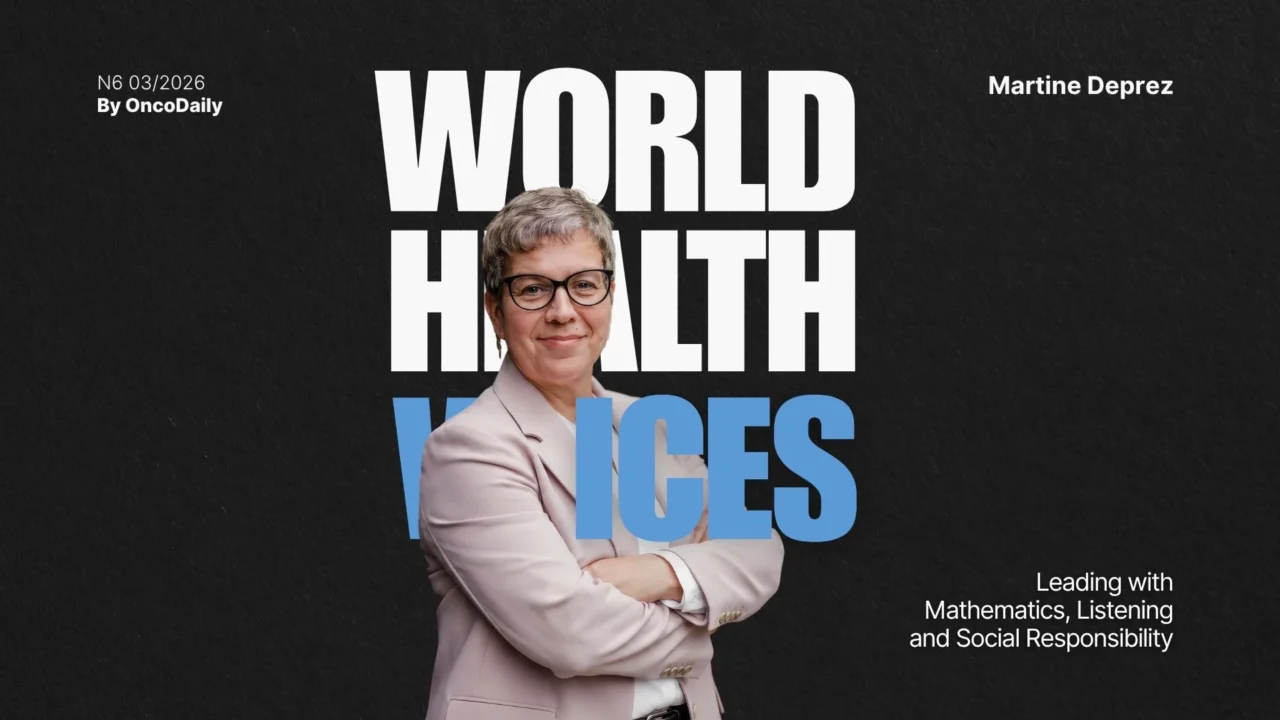
Luxembourg’s Minister of Health and Social Security and her vision for a responsive, humane, and sustainable health system
The next conversation in World Health Voices brings us to Luxembourg, where Minister of Health and Social Security Martine Deprez reflects on a career shaped not by ambition for office, but by a steady accumulation of experience — in social security, education, and public service.
Her story is one of quiet preparation rather than political design, and of leadership grounded in responsibility rather than ideology.
A Path Not Planned
“I never imagined becoming a minister,” she says with a smile.
Her journey into public service began early. While still a high-school student in 1986, she joined the Luxembourg’s People’s Party (CSV). After completing a degree in mathematics, she entered the General Inspectorate of Social Security, where she worked for a decade.
Life then took a different turn.
“When my third child arrived, I chose to leave that job and become a mathematics teacher,” she recalls. “Later, when my children had grown up, I was offered a position in the State Council — Luxembourg’s advisory body on legislation. I did this part-time alongside teaching.”
Then, in 2023, came an unexpected call.
“The Prime Minister invited me for a meeting,” she says. “At first, I assumed he wanted me as an adviser. When I realized he was offering me the role of Minister of Health and Social Security, I had to take a deep breath.”
She asked him why he believed she could do the job.
“He reflected back to me my whole professional path,” she explains. “I asked for one day to think — and then I said yes.”
Learning to Lead
The transition was steep.
“I had no prior experience leading an administration,” she admits. “That was the most challenging part in the beginning.”
Two years later, she speaks with calm confidence.
“Now I understand how to lead an administration, how to motivate people, and how to bring them together around a shared vision.”
From Pension Reform to System Renewal
Her most significant political achievement so far, she says, has been the pension reform debate.
“We spent more than a year working on it — from October 2024 to December 2025 — and adopted legislation that gives us four additional years to prepare deeper structural reforms.”
At the same time, she began an extensive listening tour.
“I met with all political parties and with all stakeholders in Luxembourg’s health system,” she explains. “We strengthened prevention, reinforced some hospitals, and began preparing the ground for broader reform. But there is still much to do.”
What Success Would Look Like
Asked how she would define success in the coming years, she reaches for a sentence she had written recently:
“Success is the day when a parent no longer worries about finding a doctor for their child, when a sick person does not have to wait too long for care, and when a newcomer immediately knows where to turn.”
“That,” she says simply, “is when I will know our system works.”
Europe: Cooperation Without Losing Sovereignty
For Minister Deprez, the European Union’s role in health policy is essential but delicate.
“Health systems remain the responsibility of individual countries,” she notes. “The EU’s strength lies in coordination — especially in prevention, cross-border cooperation, and joint procurement.”
For Luxembourg, a small country, this cooperation is not theoretical — it is practical.
“We cannot provide highly specialized care in every domain,” she explains. “We rely heavily on collaboration with our neighbors — France, Germany, Belgium — and also on EU-level cooperation for medicines and supplies.”
In her view, European collaboration is not about replacing national systems, but strengthening them.
Cancer Care in Luxembourg: A Structured National Approach
Luxembourg’s national cancer strategy, she explains, is built around a continuous care pathway:
“From diagnosis — including psychological support — through treatment and recovery.”
Patients, survivors, and families are included at every stage.
“We want their experience to shape the system,” she says.
Key components of the strategy include:
- A national cancer network coordinating treatment across hospitals
- Multidisciplinary teams in each hospital ensuring integrated care
- The Institut National du Cancer, linked to European cancer networks
- Expansion of personalized cancer medicine initiatives
- Formal recognition of the genetic counselor profession
- Strengthening and expansion of screening programs, including future lung cancer prevention initiatives
Together, these elements aim to build not just treatment capacity, but a coherent cancer ecosystem.
The Right to Be Forgotten: From Convention to Law
One reform she speaks about with particular conviction is the effort to legally establish the “Right to Be Forgotten” for cancer survivors.
“We previously had a convention between banks, insurers, and the government,” she explains. “But conventions can change at any time.”
Now Luxembourg is moving toward a legal framework that:
- Extends eligibility periods
- Broadens protection across more conditions
- Provides durable guarantees for survivors
“We also maintain a platform where insurers, banks, patients, and government continue exchanging perspectives,” she adds. “That dialogue is essential.”
For her, this reform reflects a broader principle:
“Health policy must also protect people’s lives after illness.”
A New Challenge: Tobacco in a New Form
When asked about smoking, she points to a shifting landscape.
“Young people still use nicotine,” she says, “but increasingly through new products rather than traditional cigarettes.”
Luxembourg is responding with updated legislation and prevention strategies.
For example:
- Restrictions on high-nicotine pouches and similar products
- Lower nicotine thresholds intended to reduce market availability
- Ongoing national surveys tracking consumption trends
“We hope prevention and education will convince young people early that nicotine is not a solution,” she says.
A new national prevention strategy is expected following the release of the next survey results.
Europe’s Tobacco Puzzle: When Borders Are Open but Policies Differ
When asked whether differing tobacco regulations across EU member states create challenges, Minister Deprez describes a reality shaped more by economics than legislation.
“Not directly — but indirectly, yes,” she explains.
Luxembourg sits between France, Belgium, and Germany, each moving at a different pace in tobacco control. France has introduced broader bans in public spaces. Belgium has prohibited certain nicotine products. Germany’s policies remain more gradual.
“For us, pricing is one of the biggest issues,” she says. “Research clearly shows that higher prices reduce consumption.”
Yet taxation decisions require unanimity at the EU level — and that creates friction.
“There is sometimes tension between financial policy and health prevention,” she notes. “If some countries resist price increases, progress becomes slower for everyone.”
The Future of Cancer Care: European Networks, Shared Learning
Luxembourg’s strategy for cancer care, she emphasizes, is deeply interconnected with Europe.
“We are closely linked with countries that already run lung cancer prevention programs,” she says. “Their experience helps us design our own.”
Luxembourg also participates actively in major European initiatives, including:
- The European Network of Comprehensive Cancer Centres
- JANE 2, the Joint Action Network of Expertise on Cancer
- The establishment of Luxembourg’s own Comprehensive Cancer Centre platform, launched in March 2025
“For a small country,” she explains, “European cooperation is not optional — it is essential.”
Small Countries, Big Impact
Despite limited resources, she believes small countries like Luxembourg can play an outsized role in global oncology.
“Our strength is agility,” she says.
Smaller systems allow faster testing of new approaches.
“We can pilot initiatives more quickly, connect sectors more directly, and bring innovations to patients faster because decision-makers are closer to the field.”
These experiments, she argues, can benefit much larger countries.
“We can test solutions at a small scale that later inspire broader reforms elsewhere.”
Her experience within the WHO Small Countries Initiative reinforces this view.
“If you bring many small countries together,” she smiles, “you create something much bigger.”
Global Health: The Power of Sharing Experience
Asked about improving global health cooperation, Minister Deprez returns to the importance of visibility and exchange.
“A small country is never alone,” she says. “It has something to contribute.”
She recalls her work as a mental health ambassador at the European level.
“When countries share concrete actions — not just ideas — others listen. That’s how best practices spread.”
For her, global health progress depends less on declarations and more on practical learning between systems.
Uniting Health and Social Protection
One of her first major structural reforms was merging Luxembourg’s previously separate ministries of Health and Social Security.
“For me, this was essential,” she explains. “Because you cannot separate how money is collected from how it is spent.”
The merger allows policymakers to view the citizen’s entire life trajectory.
“A person is born, grows up, works, contributes, and eventually depends on the system again,” she says. “By combining health and social protection, we can see the whole picture.”
The reform also strengthens universal access.
“Everyone living in Luxembourg can receive care,” she explains. “Even those without employment can be covered voluntarily or through support mechanisms involving NGOs.”
She believes this integrated model strengthens both fairness and sustainability.
“And now,” she adds, “people working in the system cannot imagine going back to the old separation.”
Mentorship, Values, and the Importance of Support
When reflecting on mentors, Minister Deprez begins not with politics, but with family.
“My parents shaped my approach to life,” she says. “They were attentive to others and focused on solving problems, not creating them.”
Her political journey was also influenced by experienced leaders in her party, particularly Marc Spautz, now Minister for Labour, and Michel Wolter, who led civil service pension reforms
“They supported me — and that is why I want to support younger people starting their political path,” she explains. “Without mentorship, it is difficult to succeed.”
A Belief in Youth
Her belief in the next generation is deeply rooted in her years as a teacher.
“I always believed in young people,” she says.
That belief shaped her approach to pension reform discussions.
“We made sure to include the younger generation in those conversations, because the system concerns them most.”
Advice to the Next Generation
Her message to young people entering public life is simple:
“Be authentic. Do not fear the future. And seize the moment.”
The Case for Integrated Systems
Would she recommend other countries merge health and social security governance?
“Absolutely,” she says without hesitation.
“You cannot separate the collection of resources from their allocation. Bringing the two together strengthens accountability and stability.”
International analyses, she notes, support the effectiveness of this integrated approach.
A Book, a Philosophy, a Guiding Quote
Asked what book she would recommend to everyone, her answer reflects both humility and humanism.
“The Little Prince by Antoine de Saint-Exupéry,” she says.

“It teaches us to care — not only for ourselves, but for others.”
Another influence comes from John F. Kennedy.
“His words have guided me for years,” she says.
“Ask not what your country can do for you — ask what you can do for your country.”
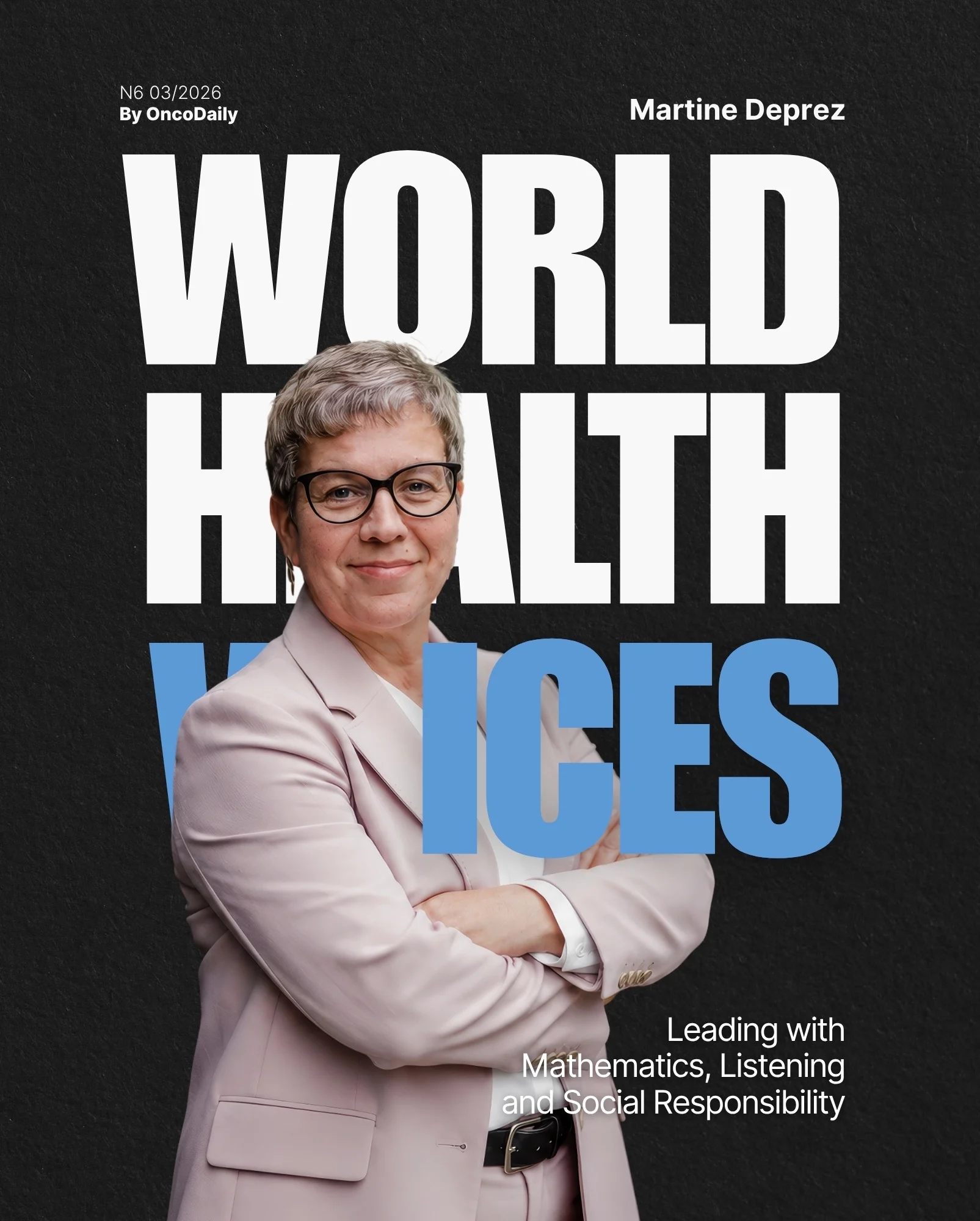
Interview by Gevorg Tamamyan, Editor-in-Chief of OncoDaily