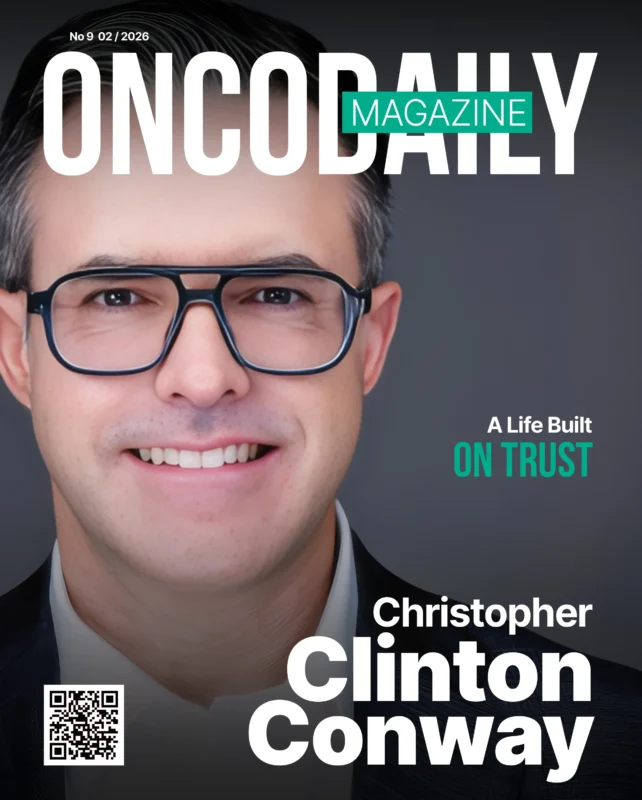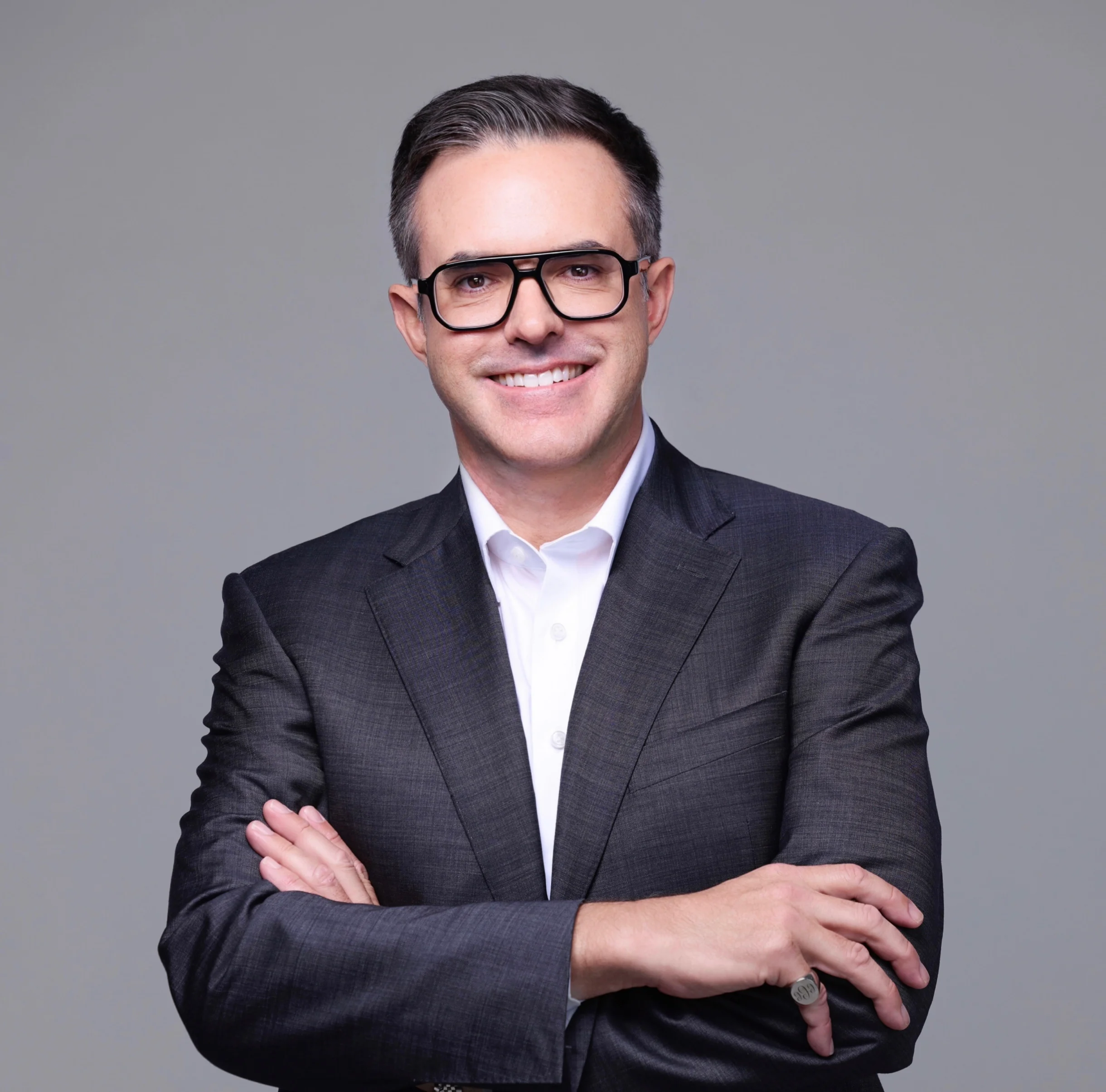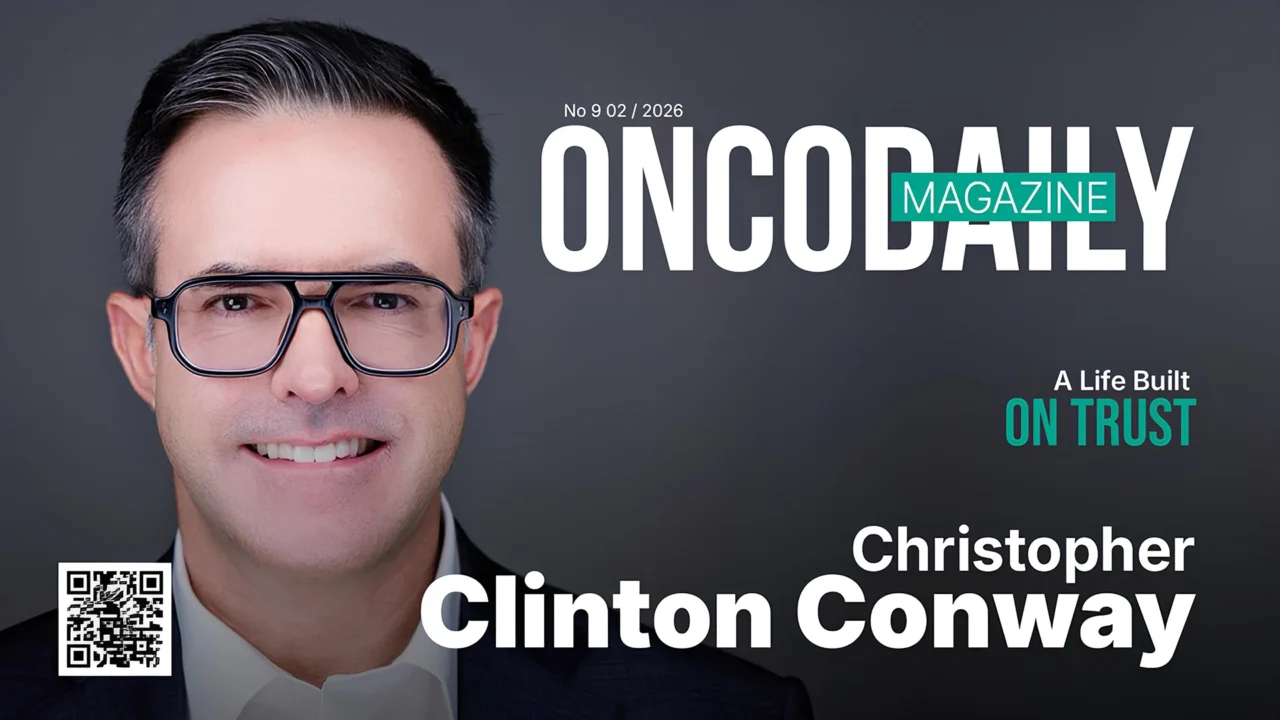
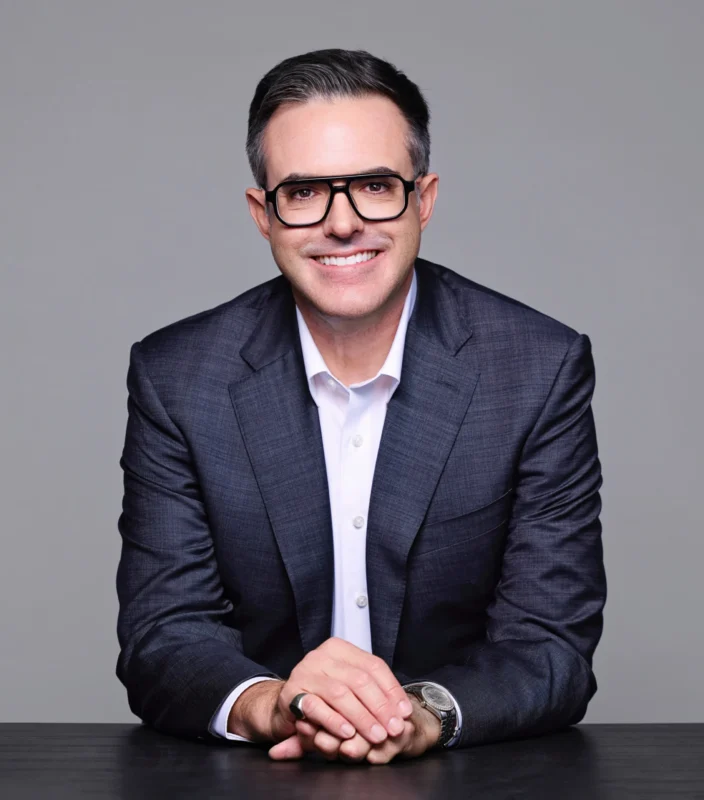
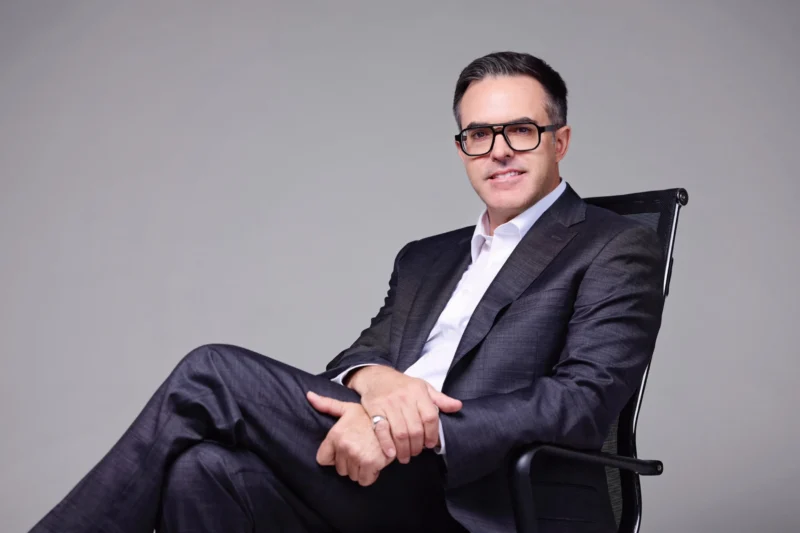
Christopher Clinton Conway has spent more than 30 years in philanthropy, moving across worlds that don’t always touch – law, global humanitarian work, the arts, and cancer fundraising, and building something rare: the ability to connect visionary people with missions that matter.
When we spoke on the OncoDaily podcast, he introduced himself in a simple way: he was in Indianapolis, it was raining, and it was still “a perfect day.” But his story is anything but simple, because it spans a Nobel Prize, a $300 million museum campaign, a major Chicago arts landmark, and over a decade in cancer philanthropy.
Today, he serves as Chief Philanthropy Officer and Executive Vice President of the Indiana Biosciences Research Institute, known simply as IBRI.
From Classics to Law and a Door into Global Service
Christopher’s professional life began far from labs and fundraising campaigns. He graduated with a degree in classics and ancient civilizations, only to discover that admiration for history does not always translate into a clear first job.
So he chose law school.
He loved it, especially the parts that felt global and structural: international law and tax law. And when he finished, he aimed to use those tools in a way that matched what he valued most.
That direction brought him to The Carter Center, the post-presidential non-profit established by President and Mrs. Carter. Conway emphasized that the work was not political and not U.S.-based, most of it, he said, unfolded in sub-Saharan Africa, with efforts revolving around peacekeeping and water filtration projects.
He worked there for several years, long enough, he noted, to be part of the effort that led to President Carter receiving the Nobel Peace Prize in 2002.
“It was a great honor,” he said simply.
Los Angeles and a $300 Million Museum
After the Carter Center, Christopher’s path shifted dramatically, into the arts and large-scale philanthropy. The chair of the Carter Center board, Eli Broad, recruited Christopher and two colleagues to Los Angeles to help build a museum named for Broad.
They led a fundraising effort totaling $300 million. Broad contributed $50 million in art and $50 million in cash. The remainder, in his words, was “hard fought—and won.”
Chicago and the Joffrey Ballet’s Home
Christopher Clinton Conway was then recruited back to his hometown, Chicago, to fulfill a major civic promise.
Chicago had recruited the Joffrey Ballet, a storied company that began in New York and later became itinerant, appearing in major venues each year, including the LA Music Center, Houston Performing Arts, and the Kennedy Center. The city had promised the Ballet a building and an endowment. And they turned to Conway to make that promise real.
The outcome was a 42-story mixed-use tower at the corner of State and Randolph, one of the busiest corners in the Loop. Within it two floors housed a school, and other floors supported dancers’ daily lives – studios, locker rooms, and the full infrastructure that a world-class ballet institution requires.
At that point, he felt he had reached what he called “the pinnacle” of his arts ambitions.
So he left again, back toward California, where he still owned a home and maintained many relationships.
Back to California and Into Cancer Fundraising
Christopher returned to Los Angeles, worked at UCLA, and later was recruited by a foundation affiliated with Cedars-Sinai Medical Center, holding cancer fundraising roles in both environments.
For the last twelve years, he has been focused on cancer fundraising, work that continues now at IBRI, where much of his effort is cancer-related, with a strong emphasis on pediatrics.
What Is IBRI and Why Indianapolis?
Christopher is now Chief Philanthropy Officer and Executive VP at the Indiana Biosciences Research Institute. He described IBRI as a “first in class” institution and explained why Indianapolis can support something like it. He highlighted three core assets: Indiana University, home to the largest medical school in the U.S; Eli Lilly, which he noted is, by capitalization, the largest pharmaceutical company in the world (recently reached $1 trillion); and a local ecosystem of people connected to Lilly and the medical school, including retirees and those benefiting from Lilly’s growth, who can now contribute more “out of want than need”
They came together to create IBRI.
What makes IBRI unique, he said, is that it is translational, built to move science toward practical impact.
He added a striking Indiana detail: “Indiana exports more medical goods, including devices and therapeutics, than any other U.S. state. It used to be California and is now Indiana.”
IBRI’s work includes training the next generation of chemists and biologists to strengthen this ecosystem and pursuing therapeutics across multiple disease areas, including pediatric cancer, Alzheimer’s, cardiometabolic challenges and diabetes.
“About $2 Billion”—And No Commission
I asked him directly: how much has he raised?
He paused, careful not to claim others’ contributions as his own:
“About $2 billion.”
And then, with a smile in his voice:
“And I don’t get a commission.”
The Key to His Success: Relationships, Memory, Authentic Enjoyment
Then I asked what he believes is the key to that success, and Christopher replied:
“I never forget a person. Not only their name or face, but how I know them.”
He enjoys spending time with people and getting to know them authentically. Even across long gaps in communication, he believes people still feel close, because the connection was real.
And that, he emphasized, is the essence of fundraising.
“Fundraising is relationship building.”
Mentors and a Model of Giving Everything Away
When I asked about mentors, Conway named Bill Danforth, a figure he described as pivotal in his life.
Dr. Danforth, Conway said, led the medical school at Washington University and later became Chancellor of the university. He was also the largest donor to the institution. Danforth’s grandfather founded Ralston Purina, an animal feed company, and helped establish a foundation that held, at the time, over a billion dollars.
What impressed Clinton Conway most: Danforth gave away all the money in that foundation over his lifetime. Ralston Purina was later sold, adding additional assets. Danforth helped build the university’s reputation and created another institution as well: the Danforth Plant Science Center.
Clinton Conway described it as similar in spirit to IBRI, but focused on the plant and animal space, pursuing translational solutions tied to water and agriculture, work he illustrated with an example of developing a tomato that could grow with minimal moisture, in some of the most inhospitable environments on Earth.
“Sell Me This Pen” and Why Philanthropy Is Different
I brought up the famous scene from The Wolf of Wall Street: “Sell me this pen.” And I asked Christopher: if someone asked you to raise a million dollars, what is your recipe?
His answer began with a reality most people don’t understand.
Most campaigns, he said, unless they are broad university campaigns asking every alumnus for amounts ranging from a few dollars to millions, are won through 50 people or fewer.
“It’s a very small universe,” he said. “I don’t need to know a thousand people. I need to know the fifty really well.”
That, to him, is doable, because he has energy and because he truly enjoys the work.
He described fundraising as the way he contributes to humanity.
“I’m not a great scientist, I’m not a great painter or dancer. But I know how to raise money.”
He was raised in a family rooted in volunteerism and philanthropy, and he described doing it “since a child,” almost as second nature.
Giving as an Opportunity
I referenced a thought I had heard from Princess Dina: that philanthropy isn’t about yourself, it’s about creating help that ultimately shapes everyone.
Clinton Conway agreed, and broadened the point: giving is not only generosity; it is also an opportunity.
He described meeting people who already love an institution, board members who believe in it and know it, but who may not have considered how or when they should give.
In that moment, his legal training becomes practical. As a tax attorney, he can help donors think through options: long-term estate commitments, income vehicles like annuities, or straightforward gifts of appreciated securities, which he described as a major theme right now.
The First Meeting: Trust Before Anything Else
Then I asked the question that matters most: if you meet someone out of the blue, someone you don’t know, what do you do first?
Christopher didn’t hide behind jargon.
“I would charm them first,” he said, then clarified immediately: not to “charm the money out of them,” but to engage them as a person.
He said he could talk for hours, genuinely interested in the other person’s story, goals, and motivations. And before he would ever solicit someone, he would do his homework: learn their giving pattern, understand their capacity through screening, and build a narrative of why they are connected to the organization.
By the time Clinton Conway meets them, he wants to already be far along.
Because, ultimately, he believes fundraising rises and falls on something simple and rare:
Trust.
“You have to be likable,” he said.
And this is where he drew a firm boundary between fundraising and sales. Clinton Conway does not see himself as selling a product or service.He described it plainly:
“I’m selling the chance to give away your money.”
That, he said, takes nuance and sophistication. It requires being well-read, well-traveled, and deeply informed, especially in cancer, where donors may be carrying a personal history of illness, loss, or grief.
He reflected on the range of knowledge the work has demanded from him over time: from learning water filtration for parasites and river blindness, to understanding pediatric sarcomas, cardiometabolic disease, and diabetes.
And across that wide landscape, he returned to the same conclusion:
The work is fascinating. And the research is real.
The Mentor Behind the Mentor
After speaking about the people who shaped him, I wanted to turn the lens back toward Christopher himself, because those who have been guided by great mentors often become mentors in return.
I mentioned that he serves as a mentor through the Chan Zuckerberg initiative, and asked: who are your mentees?
Clinton Conway explained that, through Chan Zuckerberg, he mentors small organizations in the rare disease space, groups that receive an $800,000 grant.
The scale matters, he emphasized. Sometimes the recipient organization might have an annual budget of only $50,000, making the grant not just helpful, but transformational.
And yet, he said, the challenge is not only funding.
Many of these organizations do not have the systems in place to manage such a leap responsibly. They may arrive with ideas – start a podcast, buy a building, invest in growth, but the purpose of the money is fundamentally different: to pursue the research goals of that charity.
That is where Christopher Clinton Conway enters.
He helps them build basic infrastructure, and then builds strategy on top of that, so the organization can use the infrastructure to move the mission forward. He does thisformally with Chan Zuckerberg, and informally with other individuals and organizations as well.
And then he added something that sounded both proud and deeply human: many people who have worked for him over the years have gone on to extraordinary roles.
“Someday,” he said, “I wouldn’t mind working for a couple of them.”
Working with a President
I asked him to return to a chapter that still carries weight: his work with a U.S. President and the path that led to the Nobel Peace Prize effort.
Clinton Conway described it as “truly extraordinary” and contrasted it with something he has seen many times in a high-profile career.
He has met many former U.S. presidents, and many celebrities, especially after years in Los Angeles. But he noted that such encounters are often not exactly what you imagine – someone seems different than expected, in presence or personality.
With Mr. and Mrs. Carter, he said, it was the opposite.
They were exactly as he imagined.
They did not have public personas that switched on in the morning and off in the evening. They worked all the time. They took no salary. President Carter read six newspapers every morning in three different languages, even into his late nineties.
He recalled the people who came to the Center: heads of industry, royalty, and others of global stature. He traveled with the Carters to a number of countries, and described their primary home in Plains, Georgia, a small town of only a few hundred people, about three hours south of Atlanta.
Yet even this small town carried the infrastructure of global diplomacy.
They had installed an airstrip that could accommodate a full-size jet, because high-profile figures would fly in to meet with President Carter for discussions involving U.S. security, negotiations, and other major issues.
And despite all of this, Carter worked until the very end and taught Sunday school on Sundays.
“He was exactly who he purported to be.”
He acknowledged that some people believed this character may even have been Carter’s political weakness, that he was “too nice,” not cutthroat enough for the White House. Conway said he didn’t know if that was true, but underscored Carter’s intellect: a nuclear engineer, a Naval Academy graduate, unmistakably smart.
Then Christopher shared a detail that captured Carter’s instinctive humanity.
Sometimes they would fly on Delta because the airline was a sponsor and based in Atlanta. When they boarded, before the seatbelt lights came on, President Carter would walk up and down the rows shaking everyone’s hand—simply because he liked people.
“How many children, or anyone, might have been inspired by a single handshake.”
He did not call it nostalgia. He called it mentoring.
President Carter, he said, shaped his orientation toward servant leadership, toward a life driven by meaning and impact.
Other Leaders Who Left a Mark
I asked who else had made a strong impression on him beyond the President. Conway spoke about the Daly family of Chicago.
He mentioned Rich Daly, part of what he called a famous, and at times infamous, Chicago political family, who served on his board at the Joffrey Ballet, along with Rich Daly’s wife and one of his nieces.
He admired Rich Daly for having a clear vision, even when not everyone shared it. He was accessible, present in the community, and when he wanted things to happen, Conway said, they happened.
After the mayor left, Conway said, Bill Daly, Rich Daly’s brother and former Chief of Staff to President Obama, became chair of the board. Conway described Bill Daly as brilliant in strategy, business, and politics, while also grounded and down-to-earth.
Working with the broader Daly family, he said, was a highlight.
Advice to the Next Generation: Seize the Unusual Opportunity
I asked what advice he would offer to those just beginning, those who want to take a path like his.Conway began by placing the present in context.
When Christopher Clinton Conway started, there were no degrees in philanthropy. Today, he works on projects with the Lilly Family School of Philanthropy at Indiana University, which he described as the original, and the first philanthropy program. It offers degrees through graduate levels and up to a PhD.
But that wasn’t an option when he began.
He said he was thrown into the field though his upbringing helped: a family committed to volunteerism and giving, which put him at a head start.
Then he shared a story that felt like a blueprint.
At 16 years old, he wrote a letter to the president of the Art Institute of Chicago, asking to be considered for a summer internship in the fundraising department. The Art Institute, he noted, is one of the three biggest art museums in the U.S., raising significant funds each year.
Clinton Conway received a letter back: he got the internship.
On his first day, he asked why he had been chosen, what set him apart in a competitive process.
The answer was unexpectedly simple:
He was the only person who had ever applied to be a fundraising intern.
For Conway, the lesson was clear: seize opportunities when they pass you, especially the ones others overlook.
He connected that principle to other turning points: moving to Georgia to work for President Carter drew sideways glances from his family, but he knew it would be transformational. The same logic applied to internships, to networking, to stepping forward when the moment arrives.
Your Brand Exists, Whether You Curate It or Not
Christopher Clinton Conway then shifted toward a modern truth he treats as non-negotiable: personal brand.
He said he is a big believer in it because everyone has one. And if you do not curate it, it will be curated by someone else.That is why he stays active, on the speaking circuit, on social media, because people look to him, and to what he represents, for consistency around philanthropy, community service, and special events.
A Book That Became a Life Chapter
When I asked what book had made the most impact on him, he chose something deeply personal. He spoke about Dr. Susan Love, whom he worked closely with at UCLA. She authored the Breast book, six editions, known as the best-selling book worldwide for breast health.
As she declined and, tragically, passed away from AML, Conway worked with her sister, her wife, and others connected to the prior editions to write the seventh edition.
“While I didn’t write the science, I touched every part of that book. And so, you know, it would not have the meaning for most as it does for me, but it’s still the most comprehensive resource for breast health, not just breast cancer, but breast health generally. And so that that’s the book that will always be on my shelf.”
OncoDaily and the Fight for Accurate Information
Before closing, I asked what role he sees for platforms like ours, OncoDaily. Christopher Clinton Conway answered without hesitation: they are essential.
“You all have grown considerably in a short amount of time. I don’t have the numbers, but I’ve certainly witnessed it. The largest one now. Now the largest one, I guess in the US. Amazing, right? We need those things, because we need true and accurate information. And so so often people are distracted by clickbait, or, you know, information that has been designed not to inform but to maybe manipulate or other dark reasons. And so having something, like OncoDaily, that is real science, speaking to people involved in the entire oncology ecosystem, it’s just vital. It’s vital.
Keep on doing it. It’s just so important.”
Interview by Gevorg Tamamyan, Editor-in-Chief of OncoDaily