
A prospective multicenter study published as a journal pre-proof in Lung Cancer provides mature five-year outcomes for patients with extensive-stage small-cell lung cancer treated with first-line carboplatin, etoposide, and atezolizumab. Among 207 patients treated across 32 Japanese hospitals, five-year overall survival was 10.0%, while progression-free survival was only 3.1%. The findings highlight an important distinction between long-term survival and sustained disease control, with particularly unfavorable outcomes among patients with impaired performance status, liver metastases, or characteristics that would have excluded them from pivotal clinical trials.
The introduction of immune checkpoint inhibitors has changed the treatment landscape of extensive-stage small-cell lung cancer (ES-SCLC). For decades, platinum-based chemotherapy remained the foundation of first-line treatment, producing relatively high initial response rates but limited durability and frequent disease recurrence.
The addition of PD-L1 inhibitors to platinum–etoposide chemotherapy represented a major therapeutic advance. The IMpower133 and CASPIAN trials established chemoimmunotherapy as a first-line standard, demonstrating improvements in overall survival compared with chemotherapy alone.
However, despite these advances, ES-SCLC remains an aggressive malignancy with poor long-term outcomes. An important question has persisted since immunotherapy entered routine clinical practice: How many patients experience genuine long-term disease control, rather than prolonged survival following progression and additional treatment?
The five-year follow-up of IMpower133 and its IMbrella A extension demonstrated that a small subset of patients could achieve long-term survival with atezolizumab-based chemoimmunotherapy. Nevertheless, five-year progression-free survival remained insufficiently characterized, particularly among patients treated outside the highly selected populations of randomized clinical trials.
A new prospective multicenter analysis led by Daichi Fujimoto and colleagues provides important evidence addressing this gap. The study, Five-year outcomes of first-line chemoimmunotherapy for extensive-stage small-cell lung cancer: A prospective real-world multicenter cohort study, was accepted for publication in Lung Cancer on November 21, 2026.
Using mature follow-up from the Japanese APOLLO cohort, the investigators examined five-year survival, sustained disease control, long-term safety, and the clinical characteristics associated with extended survival.
The central finding is that 10.0% of patients were estimated to be alive at five years, but only 3.1% remained progression-free. This difference provides an important perspective on the achievements and continuing limitations of first-line chemoimmunotherapy in ES-SCLC.
APOLLO Study: Evaluating Long-Term Outcomes in Routine Clinical Practice
The APOLLO study was a prospective, multicenter, hospital-based cohort involving 32 participating institutions across Japan. Patients were consecutively enrolled between September 1, 2019, and September 30, 2020, after initiating first-line treatment with carboplatin, etoposide, and atezolizumab.
Unlike registration trials, which generally enroll patients meeting strict eligibility requirements, APOLLO included a broader population reflecting routine oncology practice. Treatment was administered according to standard clinical schedules, with chemotherapy dosing and the number of cycles determined by treating physicians.
Atezolizumab was generally administered at 1,200 mg every three weeks and continued until disease progression or unacceptable toxicity. The updated analysis included 207 patients, with a median age of 72 years.
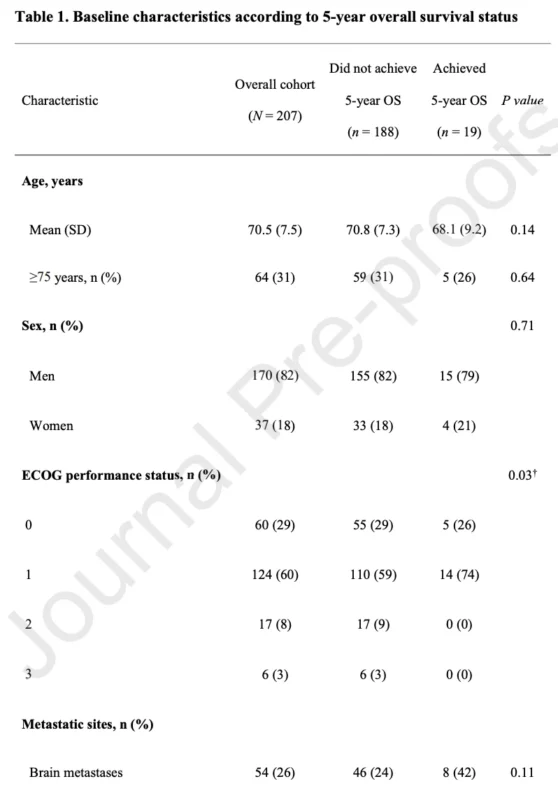
Approximately 31% were aged 75 years or older, while 89% had an Eastern Cooperative Oncology Group performance status (ECOG PS) of 0–1. Brain metastases were present in 54 patients (26%), and liver metastases were documented in 64 patients (31%).
Most patients received four cycles of induction chemoimmunotherapy, while treatment intensity varied according to clinical circumstances. Importantly, 75 patients (36.2%) would not have met the key eligibility criteria of pivotal phase III clinical trials.
These patients could have characteristics such as ECOG PS ≥2, symptomatic central nervous system metastases, inadequate organ function, pre-existing interstitial lung disease, autoimmune conditions, or other factors typically excluded from registration studies.
The analysis therefore provides an opportunity to examine whether long-term outcomes observed in controlled clinical trials are also achievable in a broader clinical population. The data cutoff was September 30, 2025.
Median follow-up from treatment initiation to cutoff reached 66.2 months, and only five patients (2.4%) were censored before 60 months in the overall survival analysis. This maturity is particularly important when evaluating five-year survival, because incomplete follow-up can introduce uncertainty into estimates of long-term treatment outcomes.
Five-Year Overall Survival Reaches 10%, but Progression-Free Survival Remains 3.1%
The primary analysis demonstrated that a small proportion of patients experienced prolonged survival following first-line chemoimmunotherapy. At five years, the Kaplan–Meier overall survival estimate was 10.0%, with a 95% confidence interval of 6.5%–15.0%.
The corresponding five-year progression-free survival estimate was only 3.1%, with a 95% confidence interval of 1.4%–6.7%. Nineteen patients achieved at least five years of overall survival, while only six remained alive and progression-free for at least five years.
These findings demonstrate that long-term survival and sustained disease control represent substantially different outcomes in ES-SCLC. Although immune checkpoint inhibition can produce durable benefit in selected patients, remaining free from disease progression for five years is uncommon.
The difference between overall survival and progression-free survival may partly reflect survival after progression, including the potential contribution of subsequent systemic therapies or local interventions. During follow-up, 140 patients (67.6%) received additional anticancer treatment.
However, the study did not systematically collect detailed patterns of progression or fully characterize the contributions of individual post-progression treatments. Therefore, the observed difference between five-year OS and PFS cannot be attributed to any specific subsequent intervention.
Importantly, the five-year PFS estimate represents a particularly valuable contribution. Although long-term overall survival had previously been reported from IMpower133 and its extension study, mature five-year PFS estimates were not available from the pivotal trials discussed by the investigators.
APOLLO therefore provides a clinically relevant benchmark for the probability of maintaining sustained disease control following first-line atezolizumab-based chemoimmunotherapy. The findings suggest that the principal remaining challenge is not simply extending survival, but increasing the proportion of patients who achieve prolonged freedom from progression.
Trial Eligibility: A Major Difference in Five-Year Outcomes
One of the most important aspects of the study concerns the relationship between clinical trial eligibility and long-term survival. Pivotal randomized trials often exclude patients with impaired performance status, substantial comorbidities, symptomatic brain metastases, or compromised organ function.
Although these restrictions improve internal validity and patient safety, they also limit the direct applicability of trial outcomes to patients encountered in routine clinical practice. In APOLLO, 132 patients (63.8%) met the key eligibility criteria of pivotal phase III studies, while 75 (36.2%) were classified as trial-ineligible.
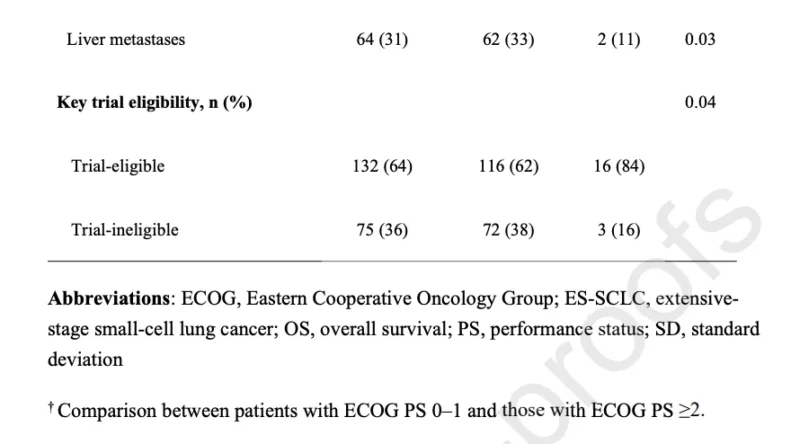
Five-year overall survival was achieved by 16 of 132 trial-eligible patients (12.1%), compared with three of 75 trial-ineligible patients (4.0%). The difference was statistically significant in the reported exploratory comparison (P = 0.04).
This approximately threefold difference in observed five-year survival proportions illustrates the considerable prognostic variation between selected trial populations and broader real-world cohorts. However, trial eligibility encompasses multiple clinical characteristics rather than representing an independent biological determinant of response.
Patients classified as trial-ineligible may differ substantially in functional status, disease burden, comorbidities, and treatment tolerance. Consequently, these observational findings should not be interpreted as establishing that trial eligibility independently predicts the benefit of atezolizumab.
Instead, they emphasize that survival estimates from registration trials should be interpreted within the context of the populations studied. The results also reinforce the importance of generating prospective evidence among patients frequently underrepresented in randomized clinical trials.
Performance Status: No Five-Year Survivors Among Patients With ECOG PS ≥2
Baseline performance status emerged as another important characteristic associated with long-term outcomes. Among the 184 patients with ECOG PS 0–1, 19 achieved five-year overall survival, corresponding to 10.3%.
In contrast, none of the 23 patients with ECOG PS ≥2 survived for at least five years. The difference was statistically significant in the exploratory analysis (P = 0.03). This observation is consistent with the recognized prognostic importance of functional status in SCLC.
Patients with impaired performance status may have more advanced disease, reduced physiological reserve, greater comorbidity burden, or a lower capacity to tolerate treatment. However, the absence of five-year survivors in this relatively small subgroup should not be interpreted as evidence that chemoimmunotherapy provides no clinical benefit to patients with ECOG PS ≥2.
The study did not include a chemotherapy-only comparator, and the subgroup analysis was not designed to determine treatment efficacy according to performance status. Nevertheless, the results highlight the need for more effective and tolerable therapeutic strategies for clinically vulnerable patients who are frequently excluded from registration trials.
Liver Metastases Are Associated With Particularly Unfavorable Long-Term Survival
The presence of liver metastases was also associated with markedly lower five-year survival. Among 143 patients without liver metastases, 17 achieved five-year overall survival, corresponding to 11.9%. In comparison, only two of 64 patients with liver metastases survived for at least five years, corresponding to 3.1%.
The difference was statistically significant (P = 0.03). These findings are consistent with previous evidence suggesting that hepatic metastatic involvement may be associated with reduced outcomes during immune checkpoint inhibitor treatment.
Liver metastases have attracted increasing interest as a potential contributor to systemic antitumor immune suppression. Preclinical investigations have suggested that the hepatic metastatic microenvironment may influence immune-cell trafficking, promote depletion of activated T cells, and limit systemic immune responses.
Such mechanisms could potentially contribute to resistance to immune checkpoint blockade. However, APOLLO was not designed to investigate these biological pathways. The observed association may also reflect differences in tumor burden, aggressiveness, or other baseline prognostic factors.
Furthermore, because the study was observational and lacked a randomized comparator, it cannot determine whether liver metastases specifically predict reduced benefit from atezolizumab or simply identify patients with poorer overall prognosis.
This distinction is important for clinical decision-making The presence of liver metastases should not be interpreted as a reason to withhold standard first-line chemoimmunotherapy solely on the basis of these findings. Instead, the data support further investigation into therapeutic approaches capable of improving outcomes in patients with hepatic involvement.
How Do the APOLLO Results Compare With IMpower133?
The long-term APOLLO findings are broadly consistent with survival outcomes reported from the pivotal IMpower133 program. In the five-year follow-up of IMpower133 and its IMbrella A extension, the five-year overall survival rate among patients treated with atezolizumab-based chemoimmunotherapy was approximately 12%.
APOLLO reported a five-year OS estimate of 10.0%, despite enrolling a broader real-world population that included patients ineligible for registration trials. This numerical similarity is noteworthy. It suggests that prolonged survival following first-line atezolizumab, carboplatin, and etoposide is achievable outside the controlled environment of a randomized clinical trial.
However, direct cross-study comparisons must be interpreted cautiously. Differences in baseline characteristics, disease burden, subsequent therapies, clinical management, and follow-up procedures may influence long-term outcomes. Importantly, APOLLO did not include a concurrent chemotherapy-only control group.
Therefore, it cannot independently establish the magnitude of survival benefit attributable to atezolizumab or demonstrate equivalence with the IMpower133 population. Its contribution is complementary rather than confirmatory of a comparative treatment effect.
The study extends the evidence base by providing mature real-world estimates of both five-year OS and PFS in patients receiving an established first-line chemoimmunotherapy regimen.
Long-Term Safety: No New Severe Events, but Limited Evidence
The investigators also evaluated late treatment-related adverse events among patients who achieved prolonged progression-free survival while receiving atezolizumab-containing treatment. Long-term safety was assessed in 11 patients who remained progression-free for at least three years.
No grade ≥3 treatment-related adverse events or treatment-related deaths were observed beyond three years after treatment initiation. These findings provide some reassurance regarding extended treatment exposure among selected long-term responders.
However, the small number of patients limits the conclusions that can be drawn. Patients who remain progression-free for several years may also represent a particularly selected subgroup with favorable treatment tolerance and disease characteristics.
Therefore, the absence of severe late adverse events does not exclude the possibility of uncommon or delayed immune-related toxicities. Larger cohorts with systematic collection of long-term safety outcomes remain necessary to better understand the risks of extended maintenance immunotherapy.
What Does the Study Tell Us About the Future of ES-SCLC Treatment?
The APOLLO analysis provides an important benchmark for evaluating future therapeutic advances in ES-SCLC. The introduction of PD-L1 inhibitors improved first-line outcomes and demonstrated that a subset of patients could experience prolonged survival.
However, the very low five-year PFS rate shows that sustained control of ES-SCLC remains a major unmet medical need. Future treatment development must therefore address more than modest improvements in median survival.
Strategies capable of preventing early progression, deepening initial responses, or maintaining disease control for substantially longer periods may have a greater impact on the long-term survival landscape.
This is particularly relevant as newer therapeutic approaches, including T-cell-engaging agents, antibody–drug conjugates, and other immunotherapy-based strategies, are investigated across the SCLC treatment continuum. Another important priority is the identification of patients most likely to achieve exceptional benefit.
Although APOLLO identified associations involving performance status, trial eligibility, and liver metastases, the study lacked sufficiently detailed biomarker data to identify biological determinants of durable response.
Clinical characteristics alone may be insufficient to explain why a small subset of patients remains progression-free for five years while most experience recurrence. Further integration of molecular profiling, tumor microenvironment characterization, and longitudinal biological assessment may help improve patient selection and treatment development.
The study also highlights the continuing importance of clinical trial inclusivity. More than one-third of the APOLLO cohort would have been ineligible for pivotal registration trials, and their five-year outcomes were substantially less favorable.
Developing effective treatment strategies for these patients remains essential if advances in SCLC care are to benefit the broader population treated in routine oncology practice.
What Changes in Clinical Practice?
The APOLLO results do not establish a new first-line standard or support modification of the existing chemoimmunotherapy regimen. Instead, they provide important information for clinical counseling, prognostic assessment, and interpretation of long-term treatment outcomes.
For patients receiving carboplatin, etoposide, and atezolizumab, the data suggest that approximately 10% may survive five years, although only a much smaller proportion remain progression-free over that period.
These estimates should be discussed as population-level outcomes rather than individualized predictions. Baseline characteristics, including ECOG performance status and the presence of liver metastases, may help inform prognostic conversations, but should not be used as validated predictive biomarkers for selecting or excluding patients from immunotherapy.
The trial-eligibility findings also emphasize the limitations of applying registration-trial survival estimates uniformly to patients with more complex clinical presentations. For clinicians, the study reinforces the distinction between prolonging life after treatment initiation and achieving sustained disease control.
For investigators, it establishes a mature real-world reference point against which future therapeutic strategies can be evaluated. Ultimately, the findings highlight both the progress achieved through chemoimmunotherapy and the substantial improvements still required to change the long-term natural history of extensive-stage SCLC.
OncoDaily Takeaway
The five-year APOLLO analysis demonstrates that long-term survival following first-line chemoimmunotherapy is achievable in extensive-stage small-cell lung cancer, but durable progression-free disease control remains exceptionally uncommon.
Among 207 patients treated with carboplatin, etoposide, and atezolizumab across 32 Japanese hospitals, five-year overall survival was 10.0%, while five-year progression-free survival reached only 3.1%.
The findings provide important real-world context for the long-term IMpower133 results and demonstrate that prolonged survival can occur outside highly selected randomized clinical trial populations.
However, outcomes were not uniform. Patients with preserved performance status, without liver metastases, and meeting pivotal trial eligibility criteria were more likely to achieve five-year survival. These exploratory associations offer clinically relevant prognostic information but do not establish independent predictors of immunotherapy benefit.
The substantial difference between five-year OS and PFS is particularly important. It demonstrates that living longer after chemoimmunotherapy does not necessarily mean remaining free from disease progression, and reinforces the need for therapies capable of producing deeper and more sustained disease control.
The findings should also be interpreted within the limitations of a single-arm observational cohort, including the small number of long-term survivors, limited biomarker characterization, and inability to quantify the contribution of subsequent treatments.
The central message from APOLLO is that chemoimmunotherapy has made five-year survival possible for a meaningful minority of patients with ES-SCLC, but the next major therapeutic objective must be to transform prolonged survival into sustained disease control for a much larger proportion of patients.
Sources
- Fujimoto D, Tamiya M, Hata A, et al. Five-year outcomes of first-line chemoimmunotherapy for extensive-stage small-cell lung cancer: A prospective real-world multicenter cohort study. Lung Cancer. 2026. Accepted November 21, 2026. Journal pre-proof. DOI: 10.1016/j.lungcan.2026.109699
- Horn L, et al. First-line atezolizumab plus chemotherapy in extensive-stage small-cell lung cancer. New England Journal of Medicine. 2018.
- Reck M, et al. Five-year survival in patients with extensive-stage small cell lung cancer treated with atezolizumab in the Phase III IMpower133 study and the Phase III IMbrella A extension study. Lung Cancer. 2024.
- Fujimoto D, et al. Outcomes of chemoimmunotherapy among patients with extensive-stage small cell lung cancer according to potential clinical trial eligibility. JAMA Network Open. 2023.
- Sugisaka J, et al. Long-term outcome of chemoimmunotherapy for extensive-stage small-cell lung cancer according to key clinical trial eligibility: 3-year outcomes from a prospective cohort study. Lung Cancer. 2025.