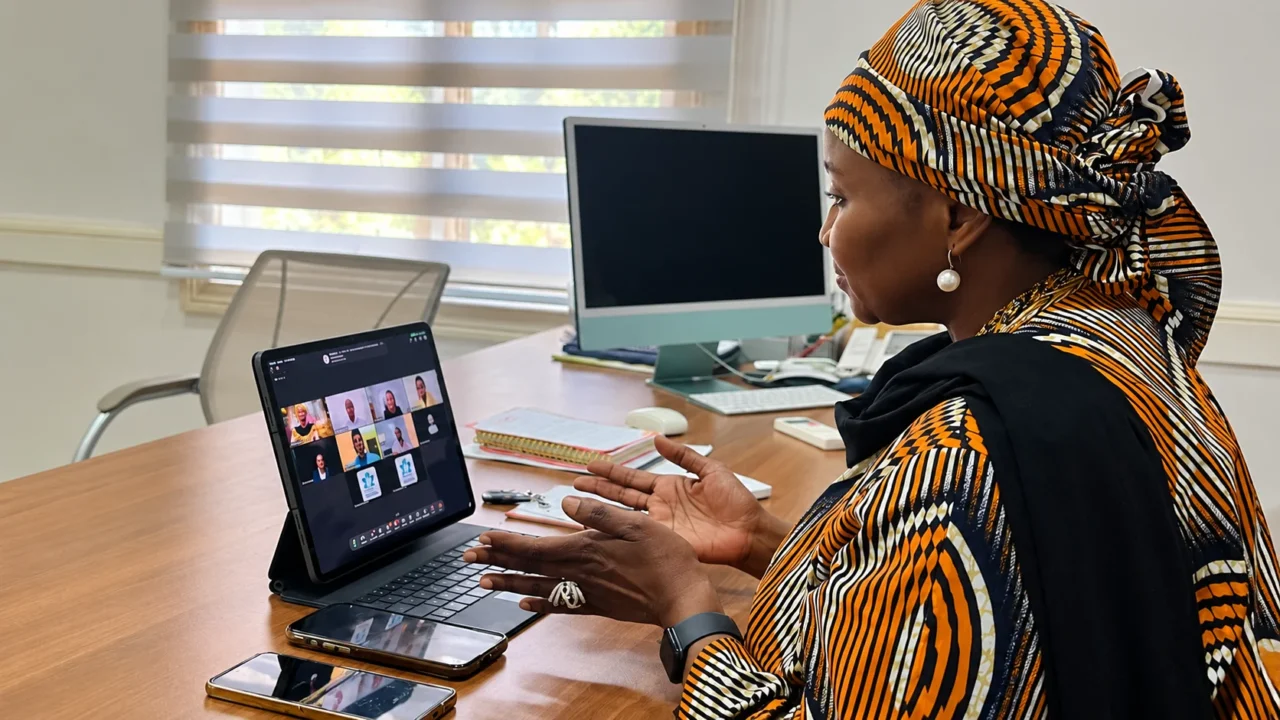
Zainab Shinkafi-Bagudu, UICC President-Elect of 2024-2026, Founder and CEO of the Medicaid Cancer Foundation, shared on LinkedIn:
“What happens when conversations at global conferences move beyond the meeting room and become practical action?
My recent collaboration with the Oncidium Foundation led to a three-part Virtual Radiotheranostics Summit, bringing experts from Africa, UK and US together to examine what it will take to make radiotheranostics more accessible in Nigeria and other LMICs.
From workforce and infrastructure to radiopharmaceutical supply, financing and policy, the discussions raised important questions about the future of precision cancer care in Africa.
I shared the key lessons, challenges and the way forward in my full article below:
From Conversations to Action: Building the Future of Radiotheranostics in Africa
Cancer care has entered an era where precision medicine is changing how the disease is diagnosed, treated, and monitored. I attend meetings and conferences around the world, and like many others, I often ask myself a simple question:
What next, and how can our conversations benefit cancer patients?
The findings presented are often mind-blowing, and I am inspired by many of them. I listen and learn while comparing what I hear with my local realities. Through my membership and leadership at Union for International Cancer Control (UICC), I have built a vast network of experts, patient advocates, and industry partners across the world. But how much effort goes into turning those conversations into practical action?
In November 2025, my team from MEDICAID CANCER FOUNDATION and I attended the AORTIC- Africa Conference in Hammamet, Tunisia, where we met the Oncidium foundation at their stand. Pharmacist Aisha Mohammed took the lead, and we slowly developed that initial conversation into a partnership between the two foundations.
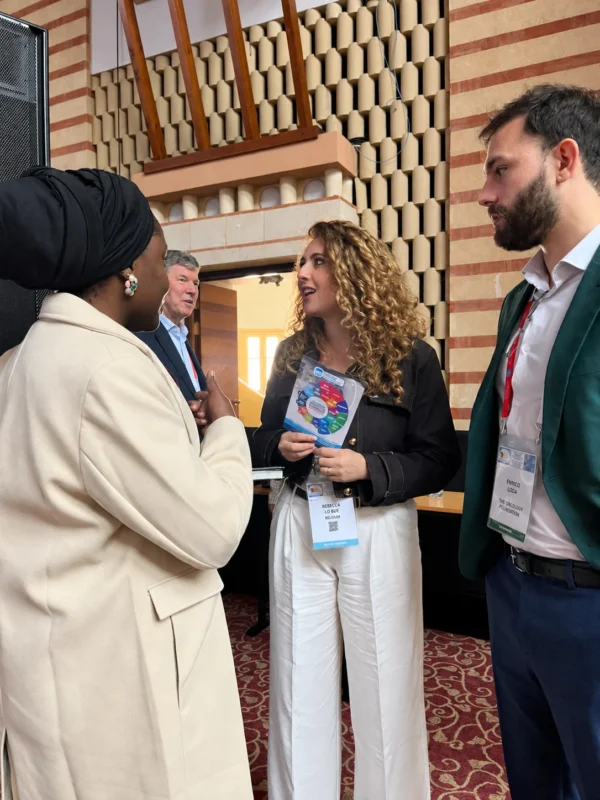
Medicaid Engaging with the Oncidium Team at Tunisia
The first tangible action was the development of a three-part Virtual Radiotheranostics Summit. Through this collaboration, we aim to build workforce capacity in oncology and contribute to improved cancer outcomes in Africa. The three webinars were held weekly from 12th to 26th August 2026, bringing together specialists from United Kingdom, Kenya, United States of America, Nigeria, and other members of the nuclear medicine community.
The sessions focused on the science of radiotheranostics, the infrastructure and skills required in Nigeria, and lessons from established programs worldwide.
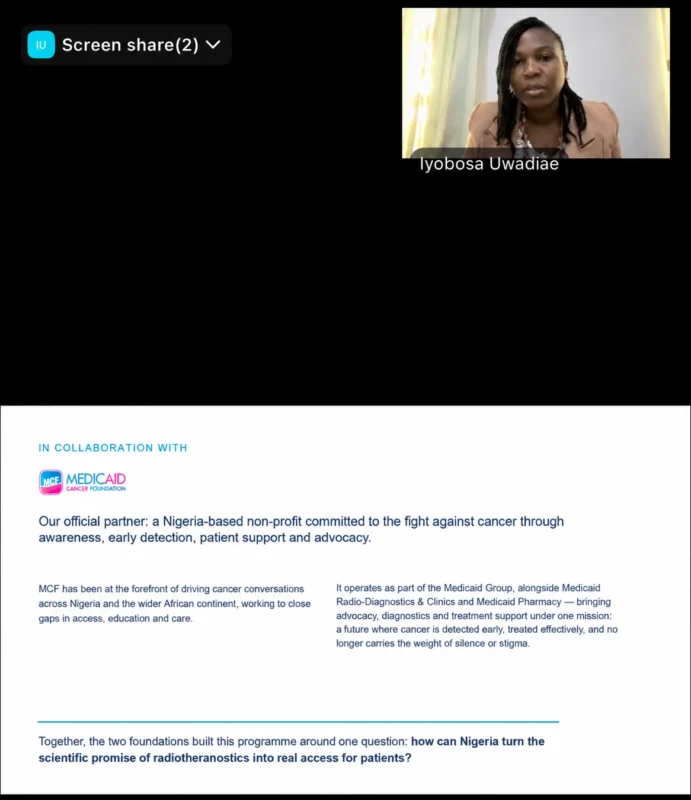
Partnership and Collaboration
Radiotheranostics is part of the shift towards more precise cancer treatment. It combines molecular imaging with targeted radionuclide therapy to identify cancer cells and deliver treatment directly to them. While the approach is developing rapidly, many of the radioactive compounds and technologies required remain expensive and difficult to access in Africa.
Access is also affected by gaps in infrastructure, specialist workforce capacity, regulatory systems, radiopharmaceutical supply, and technical expertise.
Addressing these challenges will require the involvement of nuclear medicine physicians, medical physicists, pharmacists, radiochemists, oncologists, regulators, policymakers, researchers, and industry partners.
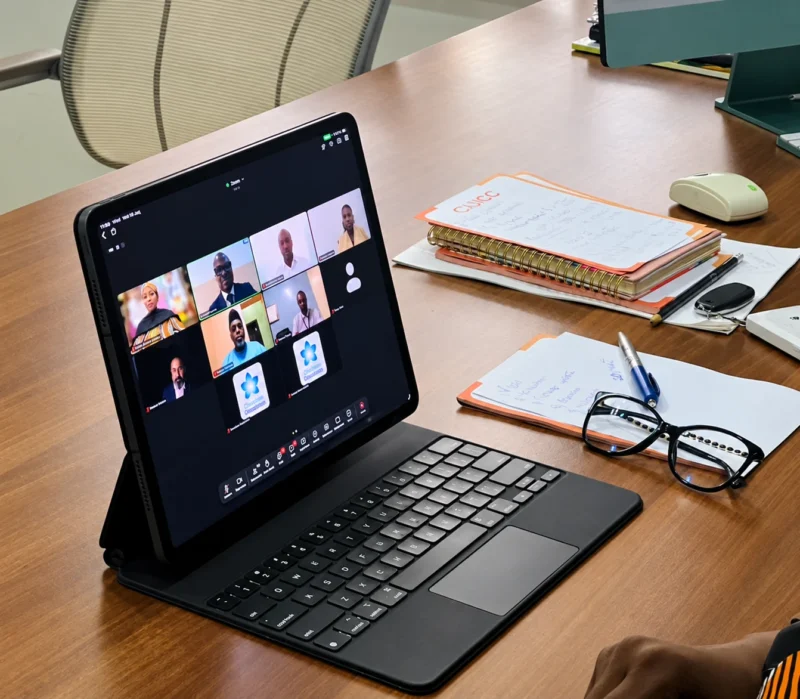
The central question throughout the series was simple: What will it take to make radiotheranostics clinically available and accessible in Nigeria and other LMICs?
The answer extends beyond acquiring equipment or introducing new technology. Governments have an important role in creating the right policy and financing environment. Health institutions need the infrastructure and skilled workforce to provide these services safely. International partners can support technical expertise, training, research, and knowledge exchange. Patient organizations and civil society also have an important role in keeping affordability and access at the center of the conversation.
The first webinar featured Dr. Akintunde Orunmuyi MBBS (Ilorin), MMed (Pretoria) FCNP SA, Consultant in Nuclear Medicine at University Hospital Southampton NHS FT, London, UK, and Dr. ‘Mayowa Kolade, Nuclear Medicine Physician at University College Hospital Ibadan, Nigeria. They introduced participants to radiotheranostics, explaining the science behind the field, how it moves from therapy to service delivery, and its clinical applications and treatment workflows.
The second webinar featured Dr. Iyobosa B. Uwadiae, President of the Nigerian Association of Medical Physicists (NAMP), and Dr. Mahipal Rathod of The The Ohio State University Wexner Medical Center and OSUCCC. Their contributions brought perspectives on the technical, infrastructure and service-delivery requirements needed to establish and sustain radiotheranostics programmes.
Dr. Samuel Nguku, Head of the Theranostics Program at Aga Khan University Hospital, Nairobi, also contributed to the series, bringing valuable experience from an established theranostics programme in Africa and highlighting practical considerations for developing and strengthening services within the African context.
He reminded participants that no two radiotheranostics centres are configured in the same way. Countries such as Kenya, which have been developing radiotheranostics services for some time, can provide useful lessons.
National Institute for Cancer Research and Treatment Prof. Musa Ali-Gombe came in with some of the key challenges facing the development of radiotheranostics in Nigeria, including equipment and facility maintenance, inadequate financing, fragmentation, and the lack of central coordination. Thus, Nigeria will need to develop a model that reflects its own needs, capacity, and health-system realities.
Dr. Mahipal Rathod of The Ohio State University Wexner Medical Center and OSUCCC stressed the importance of investing in radiopharmaceuticals and putting the necessary infrastructure in place before attempting to scale up services. Drawing from experiences in other African countries, including Ghana, the discussions highlighted the need for practical systems that support the importation and reliable supply of isotopes and radiopharmaceuticals.
Prof. Abidemi Omonisi, President of the Nigerian Cancer Society emphasised the need for this emerging approach to be included in national policy. Progress will require political goodwill, government support, sustainable financing and a clear national strategy.
The Way Forward
The key takeaway from the series is clear: Africa and other LMICs must move from fragmented efforts to coordinated action. This means strengthening coordination, investing in sustainable infrastructure and maintenance, developing the workforce, improving access to radiopharmaceuticals, increasing advocacy and ensuring that radiotheranostics are included in national health and cancer policies.
Government support is crucial but not enough in isolation. Partnerships, advocacy, private-sector participation, and collaboration across the health system is necessary.
Nigeria is investing in the foundations of modern cancer care. The next question is how these investments can be connected to a financing system that flows from diagnosis to treatment, including radiotherapy and, progressively, precision therapies such as radiotheranostics.
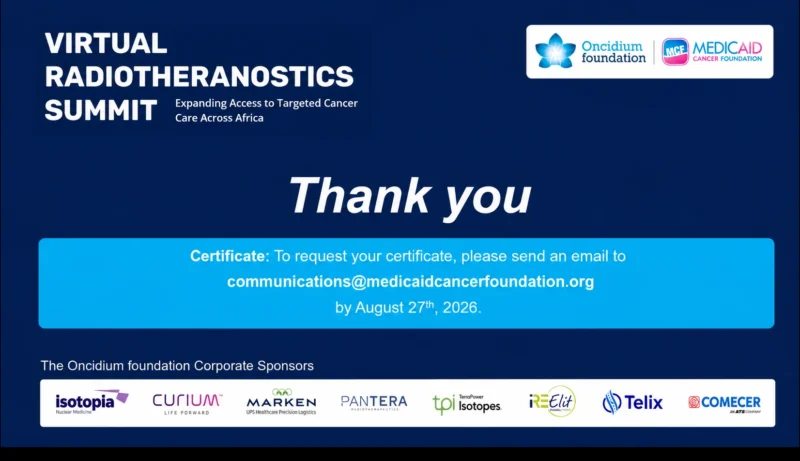
I appreciate the Oncidium Foundation, our excellent moderator, Dr. Iyobosa Uwadiae, and every participant who contributed to the series. The discussions have strengthened the case for practical collaboration around training, infrastructure, regulation, research, supply, and financing.
At Medicaid Radiodiagnostics and Medicaid Cancer Foundation, we remain committed to strengthening cancer diagnosis, treatment, access, and health-system capacity in Nigeria and other African countries.”
_______
Zainab Shinkafi-Bagudu was recognized among OncoDaily’s The 100 Most Influential People in Oncology in 2025, highlighting her contributions to the field of oncology.
Nominations for 100 Influential People in Oncology 2026 are now open, recognizing leaders, researchers, clinicians, innovators, advocates, and other individuals making a meaningful impact on oncology and cancer care.
Don’t miss the opportunity to nominate yourself, a colleague, or someone whose contributions deserve to be recognized.
Submit your nomination by September 15: 100 Influential People in Oncology 2026 – Nominations are Open!