Natera’s acquisition of Foresight Diagnostics has received the 2026 Deal of the Year Award from the Colorado BioScience Association (CBSA), recognizing a transaction that brought together two companies working to advance molecular residual disease (MRD) testing in cancer care.
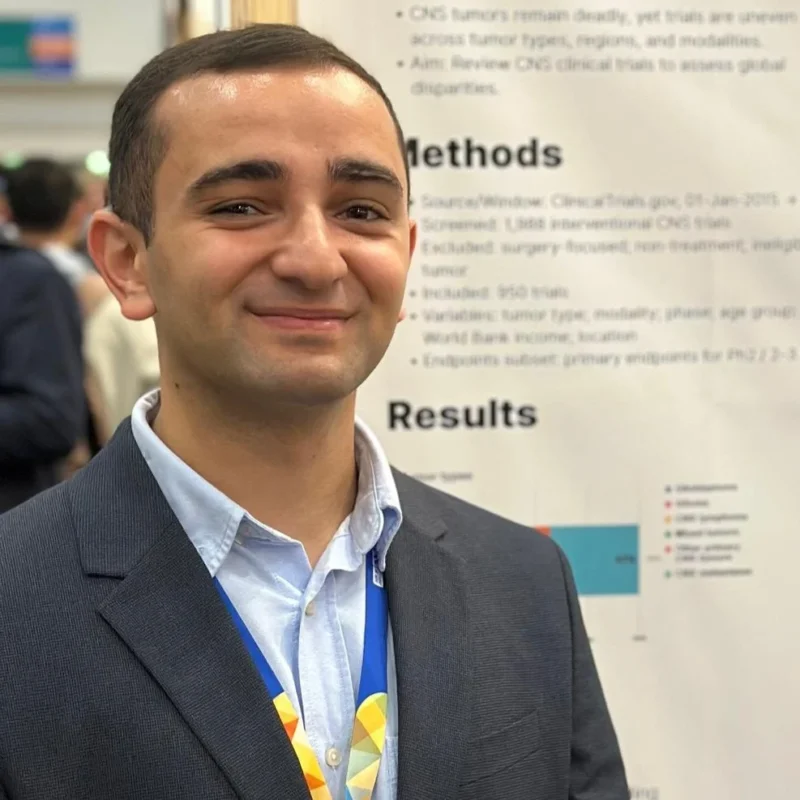
The recognition was announced by CBSA on November 17, following its 23rd Annual Awards Celebration, held on November 12 in Denver, Colorado. Jake Chabon, Senior Vice President and General Manager of the Hematology Franchise at Natera, accepted the award on behalf of the company.
While the award recognizes a major biotechnology transaction, the acquisition also reflects a broader shift in oncology toward blood-based technologies capable of detecting cancer at molecular levels that conventional imaging may not identify.
A $450 Million Deal Focused on Precision Oncology
In December 2025, Natera completed its acquisition of Boulder-based Foresight Diagnostics in an all-stock transaction involving $275 million in upfront consideration and up to $175 million in additional milestone payments, contingent on revenue and reimbursement targets.
Foresight Diagnostics was founded by Stanford University researchers Maximilian Diehn, Ash Alizadeh, David Kurtz, and Jake Chabon. The company developed a portfolio of technologies designed to detect circulating tumor DNA (ctDNA), including extremely small amounts of cancer-associated DNA that may remain in the bloodstream following treatment.
The transaction combined Foresight’s expertise in ultrasensitive cancer detection, particularly in lymphoma, with Natera’s established precision oncology infrastructure and personalized Signatera MRD testing platform.
According to CBSA, the acquisition demonstrated the value of Colorado’s biotechnology ecosystem and its capacity to develop technologies with broader clinical and commercial applications. Foresight had relocated to Colorado during the COVID-19 pandemic and expanded its operations in Boulder before the acquisition.
Why Foresight’s Technology Matters for Cancer Detection
One of the central technologies behind the acquisition is PhasED-Seq (Phased Variant Enrichment and Detection Sequencing), an approach developed to improve the sensitivity of ctDNA detection.
Traditional tumor-informed MRD assays identify cancer-associated genetic alterations and subsequently monitor blood samples for evidence of residual disease. However, detecting extremely low concentrations of tumor DNA can be challenging, particularly when the number of cancer-derived DNA fragments is small.
PhasED-Seq addresses this limitation by tracking multiple tumor-specific mutations occurring together on the same DNA fragment, known as phased variants. This approach helps distinguish genuine tumor-derived signals from sequencing errors.
At the time of the acquisition, Natera reported that Foresight’s technology had demonstrated an analytical limit of detection at 95% sensitivity (LOD95) of 0.3 parts per million, with detection observed below 0.1 parts per million in research testing.
The implications extend beyond identifying recurrence. More sensitive MRD testing could potentially help clinicians distinguish patients who remain at high risk after treatment from those who may not require additional intervention. Establishing how these findings should change treatment decisions remains an important area of clinical investigation.
Clinical Evidence Supports MRD Testing in Lymphoma
Lymphoma represents one of the most clinically relevant applications of Foresight’s technology.
A study published in the Journal of Clinical Oncology in 2025 evaluated ctDNA-based MRD assessment in 137 patients with large B-cell lymphoma who received frontline chemotherapy. Researchers analyzed 409 plasma samples collected during and after treatment.
The findings demonstrated a substantial difference in outcomes according to molecular disease status.
At the end of therapy, patients with undetectable ctDNA had a two-year progression-free survival rate of 97%, compared with 29% among patients with detectable ctDNA (HR 28.7; p<0.0001).
The analysis also found that MRD status provided stronger prognostic information than conventional PET-based response assessment.
Further evidence emerged from a prospective study published in 2026, which evaluated PhasED-Seq in patients with large B-cell lymphoma receiving first-line treatment.
In the study, three-year progression-free survival was 85% among MRD-negative patients versus 17% among MRD-positive patients (HR 9.8; 95% CI 5.1–19). MRD status remained independently prognostic after accounting for established clinical risk factors and PET/CT findings.
These results support the potential role of molecular testing alongside imaging in lymphoma management. However, identifying patients at higher risk of recurrence does not automatically establish that changing treatment based on MRD results will improve survival. Prospective interventional trials remain essential.
From Research to Clinical Applications
The acquisition has also expanded Natera’s opportunities to incorporate phased variant technology into its broader oncology portfolio.
Following the transaction, Natera outlined plans to integrate phased variants into its Signatera platform, making enhanced technology available to biopharmaceutical and academic research partners while targeting clinical use in 2026.
Foresight’s CLARITY MRD assay was already supporting three prospective trials investigating how molecular disease detection might inform treatment decisions in lymphoma.
Among these are studies examining whether persistent MRD after frontline treatment can identify patients who may benefit from additional therapy, and whether early molecular clearance could eventually support treatment de-escalation.
The clinical relevance of ctDNA testing has also been reflected in National Comprehensive Cancer Network (NCCN) guidelines for diffuse large B-cell lymphoma, which recommend considering ctDNA-MRD assessment to help clarify positive end-of-treatment PET findings when a biopsy is not feasible.
These developments illustrate how the field is moving beyond simply detecting residual cancer toward determining when molecular information can safely and effectively influence clinical management.
Recognition of a Growing Precision Oncology Partnership
The Deal of the Year Award also acknowledges the scientific and organizational foundations behind the acquisition.
Chabon, who previously served as Foresight Diagnostics’ Chief Executive Officer, emphasized the opportunity for broader collaboration when the transaction was announced in December 2025.
“Together, we can realize this mission on a far greater scale, accelerating the pace of discovery across both hematologic and solid tumors.”
At CBSA’s 2026 awards ceremony, Foresight’s recognition highlighted the significance of connecting specialized biotechnology research with the resources needed for broader clinical development.
For Natera, the acquisition strengthens its molecular diagnostics portfolio and expands its involvement in hematologic malignancies. For the oncology community, the longer-term importance of the partnership will depend on whether increasingly sensitive MRD testing translates into improved treatment selection, fewer unnecessary interventions, and better patient outcomes.
The 2026 Deal of the Year Award recognizes a transaction completed in 2025, but the most consequential questions surrounding that acquisition remain clinical: how early can residual cancer be detected, and what should physicians do with that information?
Those questions will continue to shape the next generation of precision oncology research.
Read further on OncoDaily: Natera Wins Best in Class Award at HLTH 2026 for Cancer Detection