



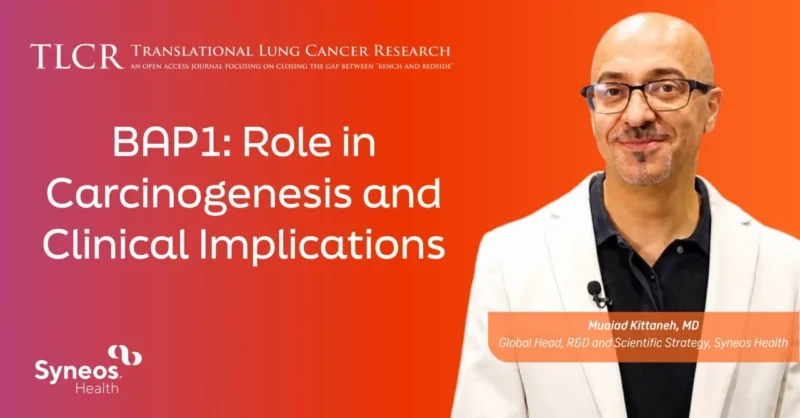
Muaiad Kittaneh, Global Head of R and D and Scientific Strategy of Syneos Health, shared on LinkedIn:
“Honored to see our publication, ‘BAP1: Role in Carcinogenesis and Clinical Implications,’ recognized with the Most Read Paper Award by Translational Lung Cancer Research.
Grateful to my coauthors, Daniel Kobrinski and Haining Yang, for their collaboration on this work.
BAP1 remains an important area of investigation in cancer biology, with implications for
- hereditary cancer predisposition
- molecular characterization
- biomarker-driven therapeutic strategies.
My thanks to Syneos Health for its continued commitment to advancing oncology research and innovation.”
Syneos Health, added:
“Congratulations to our own Muaiad Kittaneh, co-author of BAP1: Role in Carcinogenesis and Clinical Implications, recognized among the Most Cited Papers in Translational Lung Cancer Research.
The review explores the role of BAP1 in cancer development, hereditary cancer predisposition and emerging opportunities for biomarker-driven approaches.
We’re proud to have scientific experts like Dr. Kittaneh contributing to the broader oncology research community.”
Main findings on BAP1
- BAP1 as a tumor suppressor: BAP1 regulates DNA damage repair, cell differentiation, apoptosis and cellular metabolism. Its inactivation contributes to cancer development through several molecular mechanisms.
- Hereditary cancer predisposition: Germline BAP1 mutations cause BAP1 tumor predisposition syndrome, increasing susceptibility to malignant mesothelioma, uveal melanoma, cutaneous melanoma, clear cell renal cell carcinoma and other malignancies.
- Clinical surveillance: Identifying individuals with germline BAP1 mutations can support genetic counseling, family testing and individualized cancer surveillance, although standardized screening guidelines remain unavailable.
- Emerging therapeutic targets: BAP1-deficient tumors may be vulnerable to targeted approaches involving PARP and EZH2 inhibitors, highlighting opportunities for biomarker-driven treatment strategies. However, no BAP1-specific therapies have received FDA approval.
You may also be interested in:
Muaiad Kittaneh: Can AI and Real-World Evidence Transform Oncology Drug Development?
Misty Shields: Translational Research in Small Cell Lung Cancer at WIN Consortium