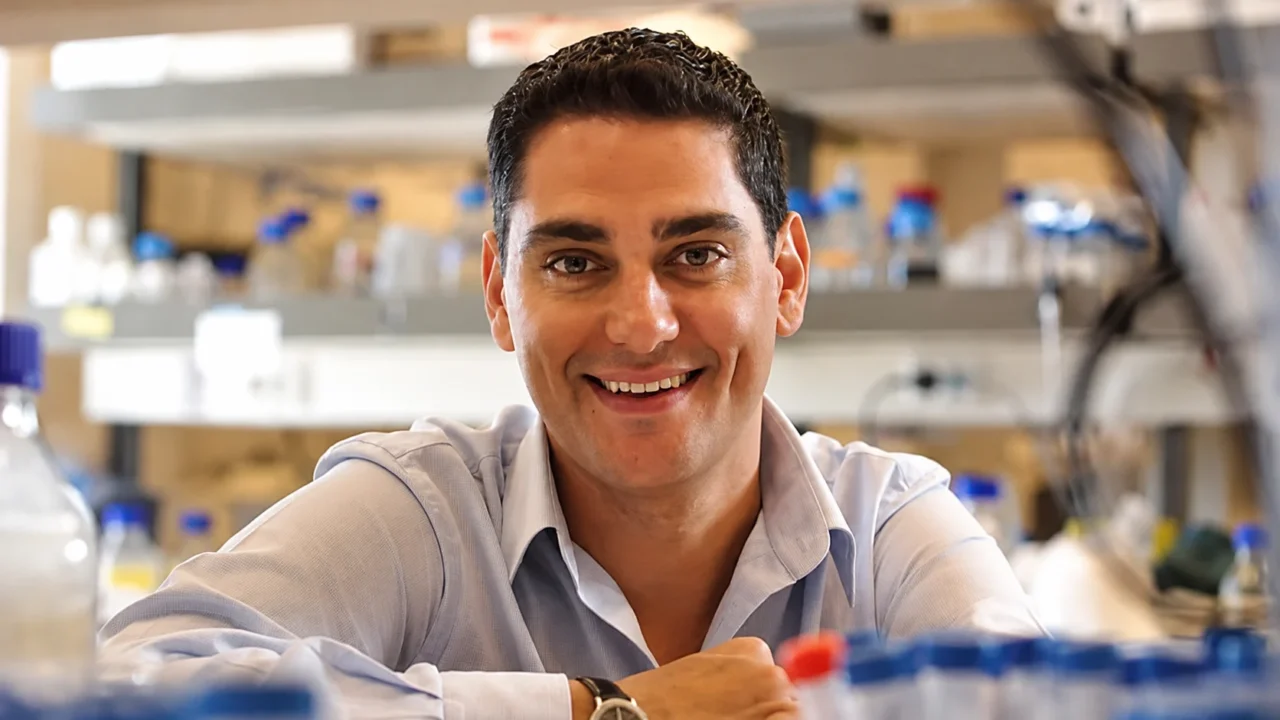
Rondo Therapeutics shared Dimitris Skokos’s, Vice President at Regeneron, post on LinkedIn:
“A growing body of evidence supports the therapeutic benefit of CD28 co-stimulatory bispecific T-cell engagers with potential as standalone agents and in combination with other modalities, including ADCs and CD3 bispecific T-cell engagers.
Regeneron’s new publication in Nature Communications shows how tumor-targeted CD28 bispecifics combine with ADCs and chemotherapy to expand tumor-reactive CD8+ T cells and sustain durable antitumor immunity.
Johnson and Johnson Innovative Medicine’s recent data at Society for Immunotherapy of Cancer (SITC) pairs a CD28 x PSMA co-stimulatory antibody with a CD3 x KLK2 engager in metastatic prostate cancer, providing early clinical validation of the dual-molecule, dual-signal approach.
Rondo Therapeutics’ ongoing clinical study of RNDO-564, our CD28 x Nectin-4 bispecific T-cell engager, is designed to evaluate monotherapy activity in metastatic bladder cancer and other Nectin-4-positive solid tumors.”
Quoting Dimitris Skokos:
“Two studies, one goal: longer-lasting tumor control with TCE combinations.
Novel combination immunotherapies are vital to overcome resistance and achieve durable anti-tumor immunity – bringing us closer to making cancer a chronic, and hopefully curable, disease. Choosing which medicines to pair isn’t simple; it demands deep understanding of disease pathophysiology and the cellular and molecular mechanisms of immunotherapy.
I’m excited to share two new publications from our very talented team:
- Pairing cytotoxic agents with T-cell engagers (TCE), including costimulatory CD28 bispecifics, to overcome resistance and improve long-term control in refractory solid tumors.
- Enhancing T-cell engager therapy via epigenetic reprogramming to deepen and prolong responses.
Together, these studies provide mechanistic support for combining cytotoxic or epigenetic therapies with TCEs and show how deep immune-state profiling can guide the design of more durable immunotherapies.
A huge thank you to everyone involved in this endeavor.”
Title: Cytotoxic Drugs and Bispecific T-Cell Engagers Synergize to Rewire Host Immunity and Elicit Polyclonal Antitumor T-Cell Responses
Authors: Dylan Kwart, Qiaozhi Wei, Wei-Yi Cheng, Kamilah Ryan, Allen Leary, Jacquelynn Golubov, Ciara Torres, Patrick Poon, Jacqueline Warsaw, Jacob Lowy, Erica Ullman, Aynur Hermann, Jennifer Finney, Lauric Haber, Albert Canturri, Dharani Ajithdoss, Andria Skinner, Eric Smith, Christopher Daly, Jeremy Rabinowitz, Erin Paul, Nicole Stokes Oristian, William Poueymirou, Christina Adler, Min Ni, Namita T. Gupta, Frank Seebach, Melissa Mathias, Matthew Fury, Israel Lowy, William Olson, John C. Lin, Andrew Murphy, Bei Wang, Dimitris Skokos.
Read the full article.
Key Takeaways
- The study explored combining chemotherapy and ADCs with CD28 bispecific antibodies to enhance antitumor immunity.
- Combining CD28 bispecific antibodies with trastuzumab deruxtecan (Enhertu) improved tumor rejection, including in resistant tumors.
- Similar benefits were seen with 5-fluorouracil (5-FU).
- The combinations expanded tumor-reactive CD8+ T cells while preserving stem-like T cells.
- The approach promoted longer-lasting antitumor immunity.
- ADCs increased dendritic cell activity, while chemotherapy reprogrammed immunosuppressive myeloid cells.
- The strategy may help overcome treatment resistance and improve response durability.
- The findings are preclinical and require clinical trials for validation.
Title: DNA Hypomethylating Agents Preserve T-Cell Stemness and Potentiate the Efficacy of CD3-Bispecific Antibodies
Authors: Mark Aleynick, Qingqing Wang, Jennifer E. Wu, Samantha Lemus, Matthew Chaimowitz, Hannan Mir, Jacqueline J. Warsaw, Chunguang Guo, Lynn E. Macdonald, Janelle C. Waite, Nikos Kourtis, and Dimitris Skokos.
Read the full article.
Key Takeaways
- The study explored combining CD3-bispecific antibodies with decitabine to enhance antitumor immunity.
- The combination improved tumor control and survival in preclinical models.
- It was tested in prostate and colorectal cancer models.
- Decitabine helped preserve stem-like T cells and delay T-cell exhaustion.
- The combination may improve the effectiveness and durability of bispecific antibody therapies.
- Further clinical studies are needed to confirm its benefits in patients.
You may also be interested in: CAR T-Cell Therapy Recovery Time: Timeline After Infusion and Follow-Up