The scientists behind one of the world’s most widely used COVID-19 vaccines are preparing to embark on a new biotechnology venture, returning to the scientific mission that originally brought them together: developing innovative treatments for cancer.
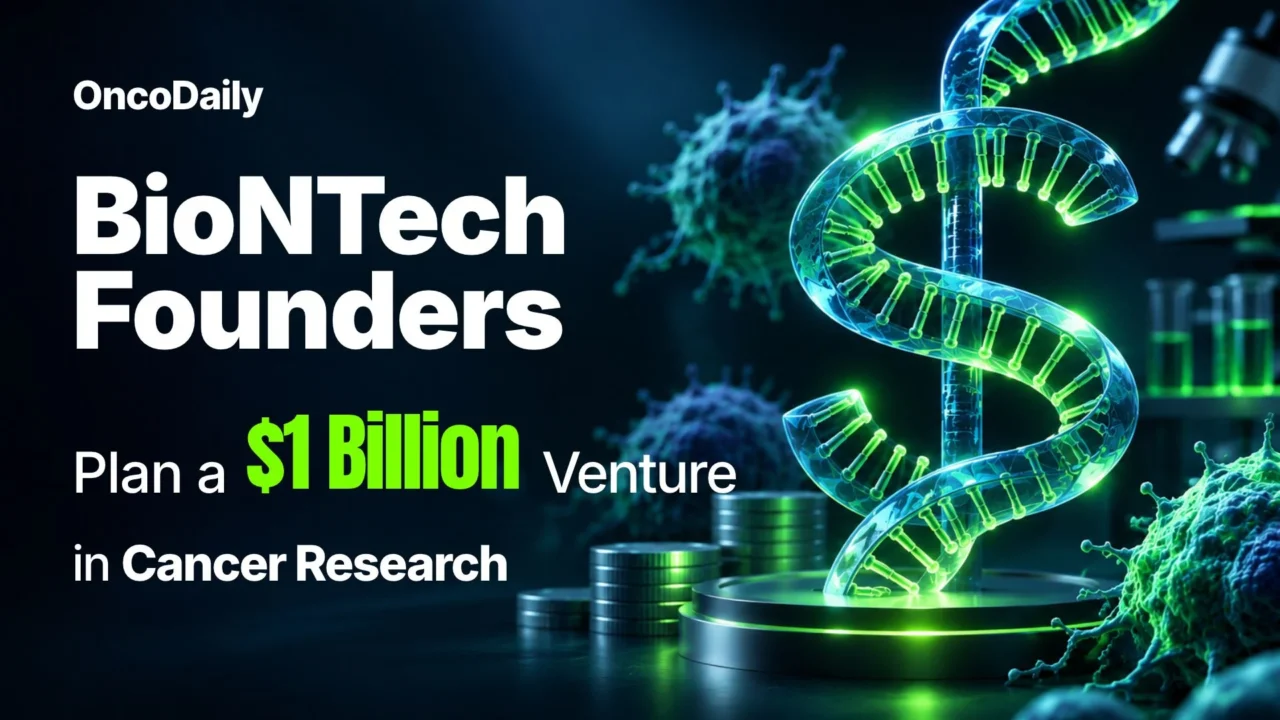
BioNTech co-founders Prof. Uğur Şahin and Prof. Özlem Türeci are reportedly in discussions to secure approximately $1 billion in financing for their new biotechnology company, Arife. Recent industry media reports suggest that the financing discussions involve European venture capital firm Plural and could value the company at approximately $2.5 billion.
The development follows BioNTech’s official announcement on March 10, 2026, that its co-founders would establish an independent biotechnology company dedicated to advancing next-generation messenger RNA (mRNA) technologies. The founders are expected to transition from their leadership positions at BioNTech by the end of 2026.
A New Scientific Venture for BioNTech Founders
For Şahin and Türeci, Arife represents the beginning of their third biotechnology venture, following the establishment of Ganymed Pharmaceuticals in 2001 and BioNTech in 2008. Although the physician-scientists gained worldwide recognition during the COVID-19 pandemic, their scientific and entrepreneurial careers have largely been dedicated to cancer immunotherapy and personalized medicine.
According to BioNTech, the new company will operate independently, with its own resources, funding opportunities and research priorities. Its primary objective will be to develop innovative mRNA platforms and explore therapeutic applications that could expand the capabilities of existing technologies.
“At the same time, Özlem and I are ready to become pioneers once again,” said Prof. Uğur Şahin, Chief Executive Officer and Co-Founder of BioNTech, in the company’s March announcement.
The reported billion-dollar financing discussions suggest considerable investor interest in the founders’ new scientific venture. However, the financing has not yet been officially confirmed, and the company has not publicly disclosed a detailed clinical development pipeline.
BioNTech and Arife Could Develop Complementary Cancer Treatments
As part of its original announcement, BioNTech outlined a potential arrangement under which the company would provide relevant intellectual property and mRNA technologies to the new venture. In return, BioNTech could receive a minority ownership interest, milestone payments and royalties.
The proposed relationship could also create opportunities for collaboration between the two companies, particularly in developing combination therapies that bring together different therapeutic approaches and mechanisms of action.
However, in its November 2026 financial disclosures, BioNTech confirmed that discussions regarding potential contributions to the founders’ new company were still ongoing. The company clarified that a transaction was not essential for either party, leaving the final structure of their relationship uncertain.
Why mRNA Technology Matters for Cancer Treatment
The success of mRNA vaccines during the COVID-19 pandemic demonstrated the potential of using genetic instructions to generate an immune response. In oncology, researchers are exploring how the same underlying technology could be adapted to recognize and eliminate cancer cells.
One of the most promising applications is personalized cancer vaccination. By analyzing the genetic characteristics of an individual patient’s tumor, scientists can identify tumor-specific antigens and design mRNA-based treatments intended to stimulate an immune response against cancer cells.
Unlike conventional preventive vaccines, therapeutic cancer vaccines aim to treat existing malignancies or reduce the risk of recurrence following treatment. Researchers are also investigating whether these vaccines can improve the effectiveness of immune checkpoint inhibitors and other anticancer therapies.
Beyond cancer vaccines, mRNA technology could enable the production of therapeutic proteins within the body, support immune system modulation and create new opportunities for combination treatment strategies.
Despite its potential, the field continues to face significant challenges, including tumor heterogeneity, immune evasion, efficient mRNA delivery, manufacturing complexity and the need to demonstrate durable clinical benefits across different cancer types.
BioNTech Continues Its Expansion in Oncology
The departure of its founders comes at an important stage in BioNTech’s evolution from a research-driven biotechnology company into a commercial biopharmaceutical organization.
BioNTech aims to bring multiple products to market by 2030, with an oncology portfolio spanning mRNA cancer immunotherapies, antibody-drug conjugates, immunomodulatory agents, and other innovative therapeutic modalities.
In its March announcement, the company projected that it would have 15 ongoing Phase 3 oncology trials by the end of 2026. BioNTech emphasized that the founders’ transition would not disrupt its existing clinical development programs or previously announced milestones.
The establishment of an independent research-focused venture could allow Şahin and Türeci to concentrate on emerging mRNA technologies while BioNTech directs its resources toward late-stage clinical development, regulatory approvals and potential commercial launches.
Could Arife Shape the Future of mRNA Cancer Therapies?
The reported financing discussions surrounding Arife come at a time of growing scientific and commercial interest in mRNA-based cancer treatments. Clinical development programs across melanoma, pancreatic cancer, lung cancer and other malignancies are investigating whether personalized immunotherapies can improve patient outcomes.
For Arife, securing substantial initial funding could provide an opportunity to invest in advanced research platforms, overcome technological limitations and accelerate the development of new therapeutic candidates.
Nevertheless, the scientific direction of the company, its specific drug candidates and its clinical development timeline remain to be disclosed. The ultimate significance of the venture will depend not only on the amount of capital it attracts but also on its ability to translate scientific discoveries into safe, effective and accessible cancer treatments.
Nearly two decades after founding BioNTech, Şahin and Türeci are preparing to begin another chapter in biotechnology. Their next challenge is one that has defined much of their scientific careers: unlocking the full potential of mRNA technology for patients with cancer.
Read further on OncoDaily: BioNTech Shares Update on Phase 2/3 Clinical Trial for mRNA Cancer Immunotherapy in Metastatic HPV16-Positive HNC