“We wake up every day determined to use our resources to create a world where everyone has the opportunity to lead a healthy and productive life.”
The Bill & Melinda Gates Foundation primarily focuses on global health challenges in low- and middle-income countries, with limited but targeted cancer-related activities through grants and partnerships rather than a dedicated cancer program. Its efforts emphasize affordable innovations like monoclonal antibodies for therapeutics and collaborations with institutes such as the National Cancer Institute. This aligns with OncoDaily’s “Leaders of Cancer Charity” series by highlighting philanthropy-driven advancements in oncology accessibility.
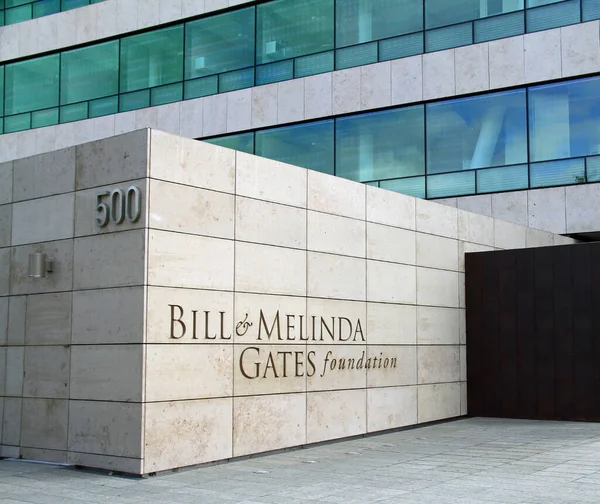
Photo: Depositphotos
Science That Works for Everyone, Everywhere. Powered by the Gates Foundation
A pivotal evolution came through the 2003 Grand Challenges in Global Health initiative, which directly addressed the “10/90 gap”—where 90% of health research funding targeted diseases affecting 10% of the world’s population (mostly high-income countries), neglecting the 90% burden in low- and middle-income countries (LMICs). This $200 million+ program funded 43 grants across 33 countries to spur breakthroughs in vaccines, diagnostics, and tools for diseases like malaria and tuberculosis, catalyzing a 96% increase in malaria vaccine research by prioritizing neglected areas.
The foundation has shifted toward targeted cancer technologies, emphasizing affordable monoclonal antibodies (mAbs) for LMICs, with recent efforts like a $10.5 million Grand Challenges award to NIIMBL-led teams aiming to drop mAb prices to $10 per gram through improved purification and production processes. Additional grants support NCI collaborations and scalable antibody manufacturing, extending global health equity to oncology amid rising non-communicable disease burdens. These initiatives total hundreds of millions, including $180 million for cervical cancer elimination, aligning philanthropy with practical oncology access.
Major Initiatives of the Gates Foundation in Cancer Prevention & Innovation
The Gates Foundation has strategically invested in several major initiatives to enhance cancer-related healthcare technologies and research, particularly focusing on accessibility and affordability for low- and middle-income countries (LMICs).
The $5 million LifeArc partnership aims to reduce the cost of monoclonal antibodies (mAbs) by developing innovative production methods using fungal cells combined with continuous processing technology. This project includes a $3 million pilot program at IIT Delhi focused on establishing scalable manufacturing processes that can produce affordable therapeutic antibodies, potentially transforming cancer treatment in resource-limited settings.
A $10.5 million Grand Challenges award is directed to the National Institute for Innovation in Manufacturing Biopharmaceuticals (NIIMBL)-led teams. This initiative targets reducing the cost of monoclonal antibodies to as low as $10 per gram by improving purification and production technologies. While the initial focus is on malaria therapies, the technology and processes developed are designed to be applicable to cancer therapies, extending the foundation’s impact into oncology.
The National Cancer Institute (NCI) has received multiple Gates Foundation grants, including a notable $4.18 million award in 2016. These funds support vaccine development and associated research opportunities that contribute to the broader understanding and treatment of cancers, facilitating collaborative efforts in global cancer research and innovation.
The Gates Foundation is part of a multi-partner pledge totaling $600 million, alongside the World Bank and UNICEF, committing $180 million specifically toward the elimination of cervical cancer. This initiative focuses on expanding access to vaccination, screening, and treatment, targeting 78 high-burden countries to reduce cervical cancer incidence and mortality through a comprehensive public health approach.
You Can Also Read Bill Gates on Reversing the Rising Tide of Global Child Mortality by OncoDaily

Global Impact in Numbers. How the Gates Foundation Shapes Cancer Prevention
Gavi, the Vaccine Alliance, which receives major support from the Gates Foundation, has helped vaccinate more than 73 million girls with the HPV vaccine across lower income countries, contributing to a projected prevention of over 3.5 million cervical cancer cases in the coming decades. The Gates Foundation has committed over 4 billion dollars to Gavi since its inception, making it one of the largest private contributors to cervical cancer prevention globally. Global health modeling supported by the Foundation through the Institute for Health Metrics and Evaluation shows that cancer deaths in low and middle income countries have increased by more than 40 percent since 2000, with LMICs now accounting for 70 percent of global cancer mortality.
Cervical cancer alone causes over 340,000 deaths each year, with almost 90 percent occurring in LMICs. These data underscore the importance of expanding HPV vaccination, screening and early detection programs. The Foundation’s investments in vaccine and biologics manufacturing capacity are also quantifiable. More than 600 million dollars has been directed toward expanding regional vaccine production in Africa and South Asia, including mRNA manufacturing hubs that may eventually support oncology vaccines. These programs aim to reduce the time it takes for new vaccines to reach LMICs from an average of 5 to 7 years, down to 6 to 18 months.
Its partnership with the National Cancer Institute includes the 4.18 million dollar 2016 grant supporting cancer vaccine platforms and biomarker development. In addition, NIH and Gates Foundation collaborations on low cost diagnostic platforms have accelerated technologies reaching pilot-scale testing in more than 20 countries, improving access to early detection tools for cervical and breast cancer. Through Grand Challenges and related programs, the Foundation has issued more than 450 global health innovation grants, representing more than 1.7 billion dollars in early stage research funding.
A portion of these projects impacts oncology through scalable manufacturing, diagnostics, AI supported health tools, and health system strengthening, creating infrastructure that benefits cancer care. WHO’s cervical cancer elimination modeling, supported by partners including the Gates Foundation, estimates that achieving global HPV vaccination and screening targets could avert over 62 million deaths between now and 2120. These projections highlight the scale of impact possible when prevention tools reach the populations most affected.
A Leaders of Cancer Charity Initiative by OncoDaily: Together We Advance Innovation, Access, and Hope in Cancer Care.
The Bill & Melinda Gates Foundation stands as a champion for equitable oncology, driving innovation, affordability, and global access to life-saving cancer therapies and prevention tools. Through pioneering partnerships and strategic funding in monoclonal antibodies, vaccine development, and cervical cancer elimination, they model how philanthropy can transform cancer care worldwide. OncoDaily encourages its readers to amplify these impactful efforts by supporting and engaging with philanthropies dedicated to bridging oncology disparities. Collective awareness and advocacy are crucial to sustaining momentum toward accessible, world-class cancer treatment for all, regardless of geography or income. Join us in championing this vital cause.
Written by Aharon Tsaturyan, MD, Editor at OncoDaily Intelligence Unit
FAQ
How much money have Bill and Melinda Gates donated?
This is another top search. As of today, they have donated over 59 billion dollars to the Gates Foundation, making it the largest private philanthropic foundation in the world. Bill has also stated he plans to give away “virtually all” of his wealth within his lifetime.
Does the Bill & Melinda Gates Foundation fund cancer research?
Yes, but selectively. The Gates Foundation does not have a dedicated oncology division, but it funds cancer-adjacent technologies such as monoclonal antibodies, vaccine development, diagnostics, and cervical cancer elimination programs.
What cancer programs does the Gates Foundation support?
Its main cancer-focused initiatives involve HPV vaccination, global cervical cancer elimination, low-cost biologics manufacturing, and partnerships with research institutions like the National Cancer Institute.
How much money has the Gates Foundation invested in cancer prevention?
The Foundation has contributed over 4 billion dollars to Gavi, enabling HPV vaccination for more than 73 million girls and preventing millions of future cervical cancer cases. It also pledged 180 million dollars to cervical cancer elimination as part of a global partnership.
Why does the Gates Foundation focus on cervical cancer?
Because cervical cancer disproportionately affects low and middle income countries, and is highly preventable through vaccination and screening. This aligns with the Foundation’s goal to reduce global health inequities.
Does the Gates Foundation work with the National Cancer Institute (NCI)?
Yes. It has awarded grants to NCI, including 4.18 million dollars in 2016 to support vaccine platforms and biomarker development relevant to cancer detection and treatment.
Is the Gates Foundation developing affordable cancer treatments?
Indirectly, yes. It funds global manufacturing innovations aimed at lowering the cost of monoclonal antibodies to around 10 dollars per gram, which could significantly reduce the price of oncology drugs.
What is the Gates Foundation’s role in HPV vaccination worldwide?
The Foundation is a major supporter of Gavi, which has enabled HPV vaccine delivery across dozens of countries, helping prevent an estimated 3.5 million cervical cancer cases in the future.
Does the Gates Foundation support cancer screening technologies?
Yes. It supports low-cost diagnostic innovation, including point-of-care molecular platforms that can be adapted for cervical and breast cancer screening in low resource settings.
Why doesn’t the Gates Foundation have a dedicated cancer program?
Historically, its priorities centered on infectious diseases and maternal-child health. Cancer was treated as part of the broader rise of non-communicable diseases rather than as a standalone category. However, its investments increasingly touch oncology through technology, access, and prevention.
How does Gates Foundation philanthropy impact global cancer equity?
By funding affordable biologics, improving vaccine access, supporting local manufacturing, and strengthening health systems, the Foundation helps reduce disparities in cancer prevention and care, especially in LMICs where 70 percent of cancer deaths occur.