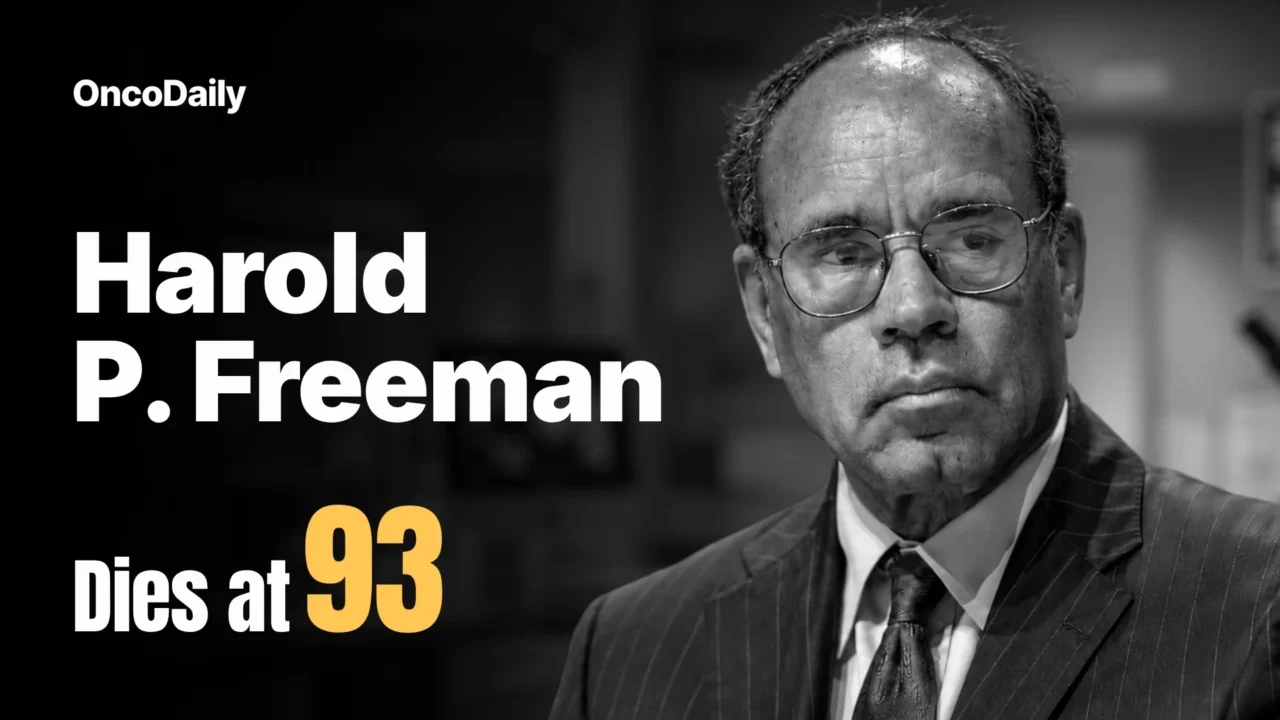
Harold P. Freeman, MD, a world-renowned expert and advocate for health equity and the pioneer of patient navigation services in oncology, died on August 11, 2026, at the age of 93.
Across a career spanning clinical practice, public service, research, and advocacy, Dr. Freeman worked to address disparities in cancer outcomes and improve access to timely, coordinated care for patients facing social and economic barriers. His work ultimately helped establish patient navigation as an important component of modern cancer care.
A Career Shaped by Cancer Care and Equity
Dr. Harold P. Freeman completed his medical training at Howard University Medical School, Howard University Hospital, and Memorial Sloan Kettering.
In 1967, he began his career as a surgical oncologist at Harlem Hospital Center, where he remained until 2000. His professional journey later continued at Columbia University and North General Hospital.
Throughout his career, Dr. Freeman used his clinical experience, research, publications, public service, and national influence to advocate for patients experiencing poorer cancer outcomes associated with race- and poverty-based health disparities.
His work extended beyond the clinic to volunteer leadership, the halls of Congress, and discussions with sitting U.S. presidents.
The Beginning of Patient Navigation
Dr. Harold P. Freeman is widely regarded as the father of patient navigation, also known as nurse navigation.
The concept grew directly from his experience caring for patients at a free clinic he established at Harlem Hospital Center. Through conversations with patients, he identified social determinants of health and other obstacles that prevented people from receiving breast cancer screening, completing follow-up, or beginning treatment.
In 1990, Dr. Freeman developed a program that trained nurses to help patients navigate the complexity of the medical system and overcome barriers that could delay or prevent cancer care.
The results were striking. Following implementation of the program, 5-year survival rates increased from 39% to 70%.
Patient navigation has since developed into a broader discipline of comprehensive care coordination, with attention not only to medical treatment but also to the patient, their community, and the environment in which care takes place.
Bringing Health Disparities to the National Stage
Dr. Harold P. Freeman held numerous leadership and volunteer positions focused on reducing cancer disparities.
He served on the Health Disparities Task Force and was chair of the American Cancer Society’s Cancer in Minorities Committee before later becoming president of the organization.
He also chaired the President’s Cancer Panel, having been appointed by two U.S. presidents, and served as associate director of the National Cancer Institute.
Dr. Harold P. Freeman was also the founding director of the Center to Reduce Cancer Health Disparities, further extending his work to address inequities in cancer prevention, diagnosis, treatment, and outcomes.
Building Cancer Care in Harlem
In 2003, Dr. Freeman and his friend and collaborator Ralph Lauren cofounded the Ralph Lauren Center for Cancer Care and Prevention in Harlem.
Dr. Harold P. Freeman served as chair of the center, continuing his longstanding commitment to bringing cancer prevention and care closer to communities affected by disparities.
That same year, he received the Special Recognition Award in honor of his sustained advocacy for health equity and his efforts to improve cancer outcomes for patients affected by health disparities.
A Legacy That Changed the Cancer Journey
Dr. Freeman’s influence reaches far beyond the institutions he led and the positions he held.
By recognizing that access to cancer care depends on more than the availability of medical treatment, he helped reshape how healthcare systems understand the barriers patients encounter between screening, diagnosis, and treatment.
The patient navigation model that began in Harlem in 1990 has since become part of comprehensive cancer care, helping patients move through increasingly complex healthcare systems while addressing obstacles that can interfere with timely treatment.
Dr. Harold P. Freeman leaves behind a legacy rooted in the belief that advances in cancer care must reach every patient, including those most vulnerable to being left behind.
His work changed not only how disparities in cancer care are discussed, but also how they can be addressed in practice.
Explore more oncology news and features on OncoDaily