T-cell redirecting therapies (TCRTs), including BCMA-directed CAR T-cell therapies and bispecific antibodies, are among the most important advances in the treatment of relapsed/refractory multiple myeloma (MM). Yet receiving these therapies remains considerably more difficult than proving their clinical benefit. Treatment requires referral to specialized centers, coordination across multiple teams, caregiver support, and, for CAR T-cell therapy, manufacturing time before infusion. Geographic distance, financial constraints, and logistical demands add further complexity.
In this study, Zalak Shah and colleagues evaluated the perspectives of patients, caregivers, and community physicians to identify barriers to T-cell redirecting therapies across the entire treatment pathway, from awareness and referral to treatment delivery and post-treatment care.
Study Methods and Survey Design
This prospective, cross-sectional study surveyed patients with MM, caregivers of patients receiving TCRTs, and community physicians between June and September 2025 using IRB-approved REDCap questionnaires.
Patient surveys assessed demographics, treatment history, familiarity with TCRTs, clinical trial attitudes, access barriers, and educational needs. Caregiver questionnaires evaluated caregiving responsibilities, emotional and logistical burden, and support needs, while physician surveys explored referral practices, confidence managing patients after TCRT, perceived barriers, and strategies to improve access.
Patients were recruited through the institutional MyChart portal, caregivers through institutional caregiver lists or patient referral, and physicians through community referral networks. The primary endpoint compared TCRT utilization between Black and non-Black patients who had previously received treatment for MM. Secondary analyses examined educational disparities, caregiver burden, and physician-reported barriers using descriptive statistics and logistic regression.
Study Population
The study included 428 respondents, comprising 346 patients, 51 caregivers, and 31 community physicians.
Among patients, 18% identified as Black, 79% as White, and 79% were aged 60 years or older. Most respondents (82%) had education beyond high school, while 68% lived in urban or suburban areas. Black patients were underrepresented compared with the institution’s MM population (18% vs. 34%). Caregivers were predominantly spouses or partners (82%), and physician respondents represented hematology, oncology, internal medicine, and other specialties.
Limited Awareness Persists Despite Increasing Use of TCRTs
More than one-quarter of patients (26%) reported being unfamiliar with TCRTs. Awareness was lower among Black patients than non-Black patients (32% vs. 25%) and among patients with a high school education or less compared with those with education beyond high school (42% vs. 23%).
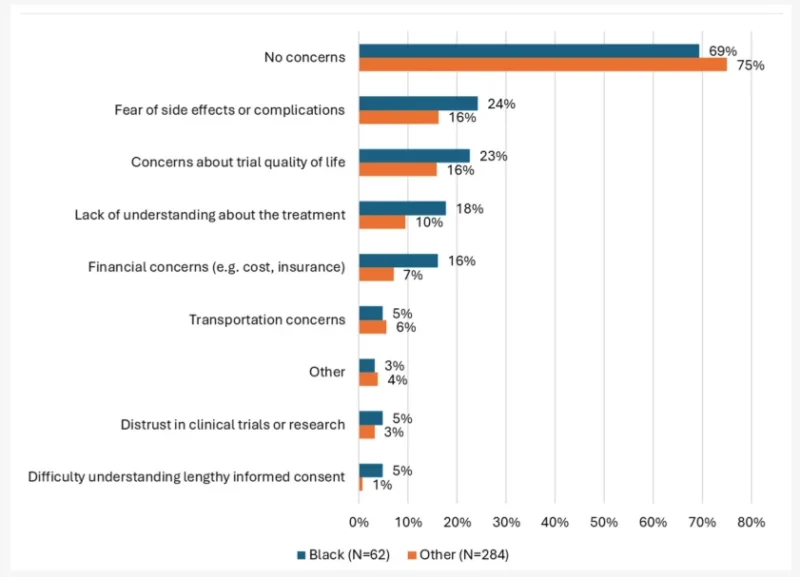
Interest in clinical trial participation was generally high. Nearly 74% of respondents reported no concerns about enrolling in clinical trials. However, Black patients more frequently expressed concerns related to treatment-related adverse effects, quality of life, understanding of treatment, and financial burden.
Educational Attainment, Rather Than Race, Was Associated With TCRT Utilization
Among the 254 patients who had previously received treatment for MM, TCRT utilization was similar across racial groups (39% of Black patients vs. 38% of non-Black patients; p = 0.87). Receipt of CAR T-cell therapy (28% vs. 27%) and bispecific antibodies (13% vs. 15%) also did not differ significantly by race, and logistic regression confirmed no association between race and TCRT utilization after adjustment.
Educational attainment showed a different pattern. Patients with education beyond high school were approximately twice as likely to receive a TCRT as those with a high school education or less (adjusted OR 2.2; p = 0.048). Bispecific antibody use was particularly lower among patients with less education (3% vs. 17%), while CAR T-cell therapy use was similar (24% vs. 28%). Age, sex, insurance status, and place of residence were not associated with TCRT utilization.
Patient-Reported Concerns
Most Treated Patients Reported Positive Treatment Experiences
Among patients who received a TCRT, 44% of Black respondents accessed treatment through a clinical trial compared with 34% of non-Black respondents. Once treatment was initiated, experiences were largely positive: 88% reported no challenges accessing therapy, and 82% said they would recommend TCRTs to other patients.
Physician Perspective: Referral Does Not Always Lead to Treatment
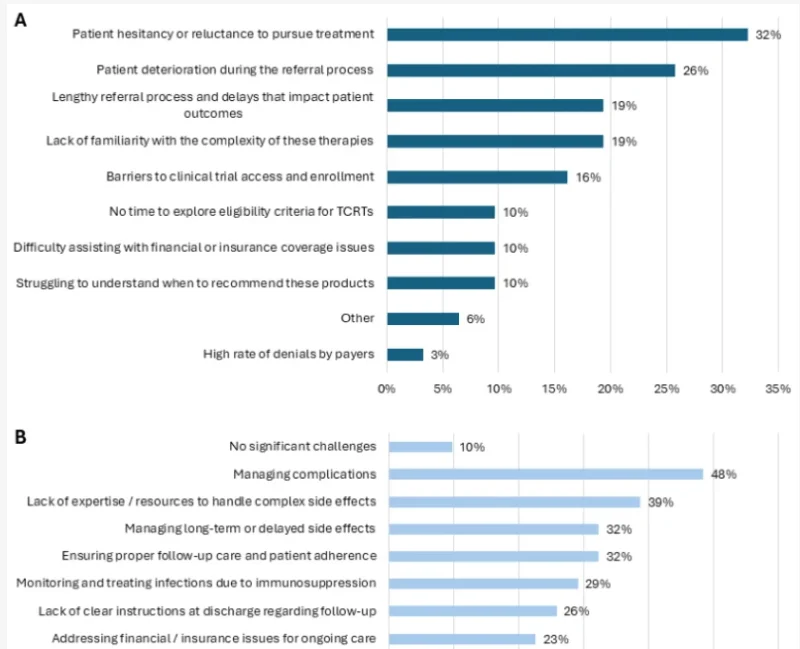
Most physicians (71%) reported referring patients for TCRTs, yet 48% estimated that fewer than one-quarter of referred patients ultimately received treatment. Patient hesitancy was the most frequently cited barrier to referral. In addition, 74% considered geography a moderate or major barrier to TCRT access, and 58% identified improved transportation and logistical support as the most important strategy for expanding access.
Although 65% of physicians had cared for patients after TCRT, nearly 29% reported low confidence managing post-treatment care. Managing treatment-related complications was the most frequently reported challenge.
Physician-Reported Barriers
Caregiver Burden Extends Beyond Logistical Support
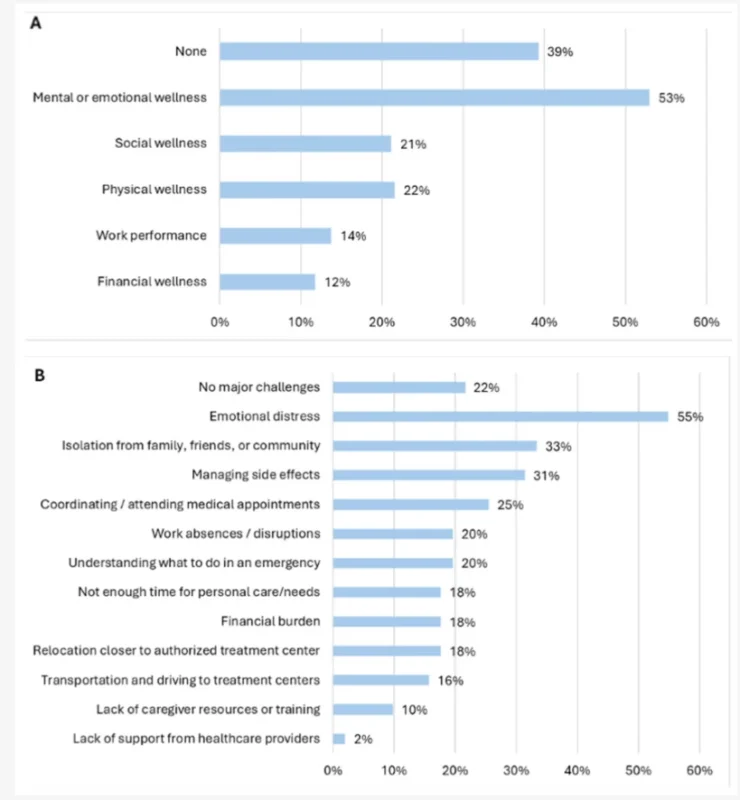
Although 90% of caregivers reported no difficulty identifying a TCRT treatment center, caregiving was associated with considerable emotional and practical burden. More than half (53%) reported adverse effects on their mental or emotional well-being, 61% experienced moderate-to-high emotional stress, and 33% spent more than 40 hours per week providing care during the first month of treatment.
The most frequently reported challenges were emotional distress (55%), isolation from family and community (33%), and managing treatment-related adverse effects (31%), underscoring the substantial demands placed on caregivers throughout the TCRT treatment.
Discussion
By integrating the perspectives of patients, caregivers, and community physicians, this study demonstrates that barriers to T-cell redirecting therapies arise throughout the treatment pathway rather than at a single point. Limited awareness may delay consideration of TCRTs, referral does not always culminate in treatment, caregivers shoulder substantial responsibilities during therapy, and community physicians face ongoing challenges both before referral and after patients return to local care.
One of the most informative findings is the apparent disconnect between awareness and treatment utilization. Although awareness was lower among Black patients and those with lower educational attainment, TCRT utilization among previously treated patients was similar across racial groups. The authors suggest that proactive referral practices and access to clinical trials at their institution may have helped offset differences in baseline awareness. Consistent with this interpretation, Black patients who received TCRTs were more likely to have accessed treatment through a clinical trial than non-Black patients.
Educational attainment was the only patient characteristic independently associated with TCRT utilization. They also note that many educational materials for CAR T-cell therapy are written above the reading level recommended for patient education, potentially limiting their effectiveness. Developing plain-language resources and incorporating visual educational tools may improve patient understanding and support informed treatment decisions.
The caregiver survey highlights an often underrecognized aspect of TCRT delivery. More than half of caregivers reported adverse effects on their mental or emotional well-being, nearly two-thirds experienced moderate-to-high stress, and one-third devoted more than 40 hours per week to caregiving during the first month after treatment. These demands extend beyond transportation or appointment coordination. As TCRTs increasingly move into the outpatient setting, caregiver education, psychological support, and remote monitoring will become increasingly important.
Caregiver-Reported Challenges
The authors also note that community physicians may have limited experience counseling patients about the benefits, risks, and logistics of TCRTs. Closer collaboration with specialized cellular therapy centers through shared-care models, virtual consultations, and practical educational resources may improve referral discussions and facilitate earlier identification of eligible patients.
An interesting contrast emerged between physician and patient perspectives. While physicians described substantial barriers throughout the referral process, most patients who ultimately received TCRTs reported little difficulty accessing treatment. The authors attribute this difference to survivorship bias: patients who completed TCRT had already overcome referral, eligibility, and logistical barriers, whereas individuals who never reached treatment were not represented in the patient survey.
Study Limitations
The findings should be interpreted in the context of several limitations. This was a single-center, cross-sectional survey study, limiting generalizability and precluding causal inference. TCRT utilization was self-reported rather than confirmed through medical records, introducing the potential for recall bias and treatment misclassification. Black patients were underrepresented among respondents, and recruitment through MyChart may have favored patients with greater digital engagement and health literacy.
Bottom Line
This study suggests that improving equitable access to TCRTs will require interventions across the entire treatment pathway rather than focusing solely on expanding treatment capacity. Future multi-institutional studies, accessible patient education, structured caregiver support, stronger collaboration between community physicians and specialized cellular therapy centers, and improved logistical coordination may all contribute to ensuring that the benefits of TCRTs reach a broader population of eligible patients.