Peripheral T-cell lymphomas (PTCLs) are rare, heterogeneous, and generally aggressive mature T-cell neoplasms associated with dismal clinical outcomes. Among patients with CD30-positive PTCL, the incorporation of brentuximab vedotin into cyclophosphamide, doxorubicin, and prednisone (BV-CHP) has improved survival outcomes and established a new treatment standard, but the relapse remains common.
Previous studies have suggested that the addition of etoposide to CHOP (CHOEP) may improve outcomes, particularly in younger and fit patients, providing a rationale for incorporating etoposide into BV-based therapy.
Based on this concept, the prospective multicenter single-arm Phase 2 CHEPA trial (NCT05006664), conducted by the Czech Lymphoma Study Group (CLSG), was designed to assess the efficacy and safety of CHEPA (BV-CHEP) as frontline treatment for CD30-positive PTCL alongside ctDNA analysis. Primary results were presented by Marek Trněný at EHA 2026.
Patient Characteristics and Study Design
Eligible patients had previously untreated CD30-positive PTCL and were considered candidates for ASCT. Between February 2022 and August 2025, 33 patients were enrolled and received treatment.
The median age was 58 years, 67% of patients were male, and all had an ECOG performance status of 0-1. Most patients presented with advanced-stage disease (79%), while elevated LDH levels and bone marrow involvement were observed in 58% and 30% of patients, respectively.
Patients were treated with 6 cycles of CHEPA every 21 days, consisting of:
- brentuximab vedotin (1.8 mg/kg), cyclophosphamide (750 mg/m²), and doxorubicin (50 mg/m²) on day 1
- etoposide (100 mg/m²) on days 1-3
- prednisone (100 mg daily) on days 1-5
Following induction therapy, patients proceeded to either follow-up or high-dose therapy with ASCT according to the study plan.
The primary endpoint was complete metabolic response (CMR) assessed by PET at the end of treatment. Secondary endpoints included ORR, PFS, EFS, OS, DoR, and safety.
Exploratory analyses evaluated ctDNA, NGS-based mutational profiling, and outcomes according to CD30 expression.
Efficacy and Safety
The study population included 14 patients with ALCL (42%) and 19 with non-ALCL PTCL (58%), comprising PTCL-NOS (27%), nodal T-follicular helper (nTFH) lymphoma (27%), and enteropathy-associated T-cell lymphoma (3%).
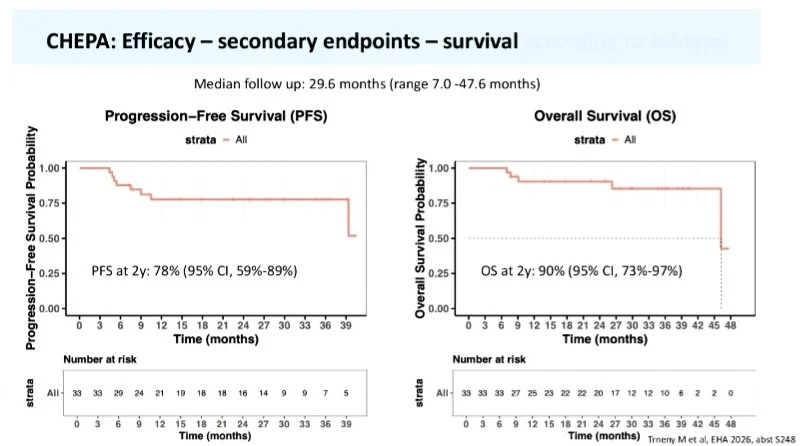
Treatment delivery was favorable, with all 33 patients completing 6 planned cycles of CHEPA. Twenty-one patients had preplanned ASCT, and 16 had undergone transplantation at the time of analysis. The relative dose intensity remained high across all treatment components, with median values of approximately 95%. At the end of treatment, 76% achieved CMR, meeting the study’s primary endpoint. The ORR was 91%.
Grade 3-4 adverse events occurred in 81.8%, predominantly hematologic, including neutropenia, thrombocytopenia, febrile neutropenia, and anemia. Importantly, no grade 3-4 peripheral neuropathy and no grade 5 adverse events were reported.
Histology-Specific Outcomes
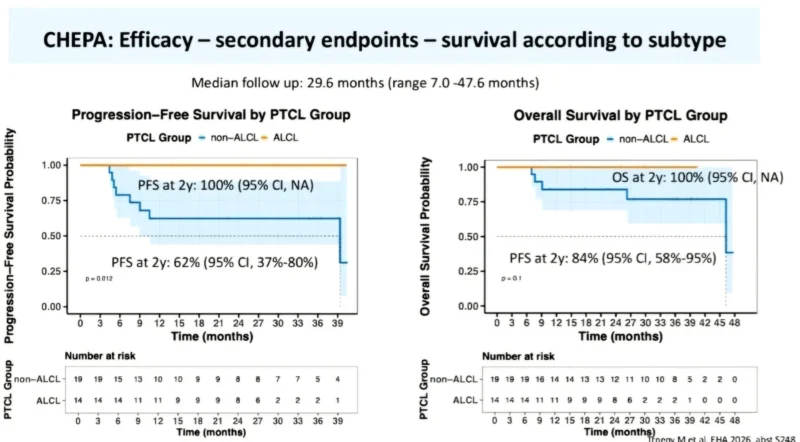
After a median follow-up of 29.6 months, outcomes differed according to histologic subtype. Patients with ALCL achieved a 2-year PFS of 100%, compared with 62% in the non-ALCL cohort (p=0.012). Two-year OS was 100% in patients with ALCL and 84% in those with non-ALCL disease.
ctDNA Profiling
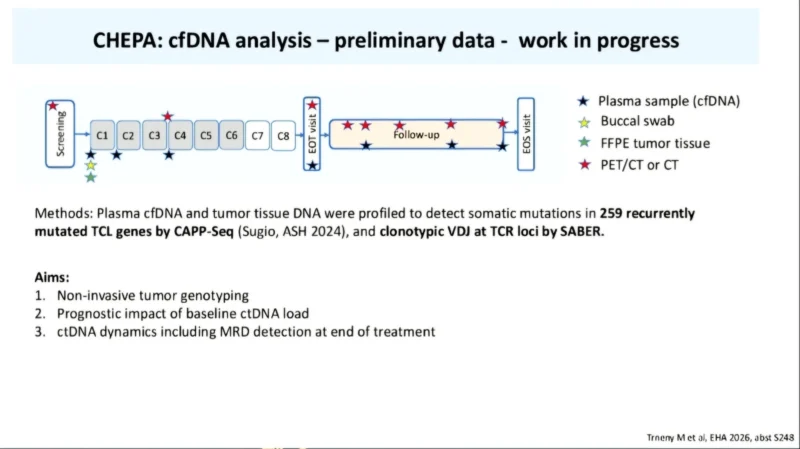
Exploratory ctDNA analyses are ongoing. Plasma cfDNA and tumor tissue DNA were profiled using CAPP-Seq targeting 259 recurrently mutated T-cell lymphoma genes, while clonotypic VDJ sequences across T-cell receptor loci were assessed using SABER. Baseline ctDNA profiling identified recurrent genomic alterations characteristic of PTCL biology, with TET2, DNMT3A, RHOA, and STAT3 among the most frequently mutated genes.
Notably, plasma samples appeared more informative than tumor tissue for molecular profiling, detecting TCR clones in 87% vs 77% of available samples and tumor-specific mutations in 91% vs 81%. Combined assessment of plasma and tissue enabled molecular disease monitoring in all evaluable patients.
Clinical Perspective
The CHEPA study met its primary endpoint, with 76% of patients achieving a CMR at the end of treatment. The addition of etoposide to the BV-CHP demonstrated a manageable safety, with no grade 5 adverse events reported despite one-third of patients being older than 60 years. Survival outcomes were encouraging, though longer follow-up is needed, especially given the predominance of non-ALCL subtypes in the study population.
Exploratory ctDNA analyses identified recurrent genomic alterations characteristic of PTCL biology and suggested that plasma may be more informative than tumor tissue for detecting baseline TCR clonotypes and tumor-specific mutations. Ongoing analyses will further explore the role of ctDNA-based MRD assessment and its potential prognostic value.