On August 13, 2026, the U.S. FDA granted accelerated approval to iberdomide (Zenbexus; Bristol Myers Squibb) with daratumumab and hyaluronidase-fihj plus dexamethasone for adults with multiple myeloma after at least one prior line of therapy, based on results from the phase 3 EXCALIBER-RRMM trial.
The decision introduces iberdomide into clinical practice as the first FDA-approved cereblon E3 ligase modulator (CELMoD) and brings this drug class into MM treatment as early as the first relapse. The regulatory strategy itself is significant with accelerated approval based on measurable residual disease (MRD)-negative complete response while traditional time-to-event outcomes continue to mature.
What Is Iberdomide?
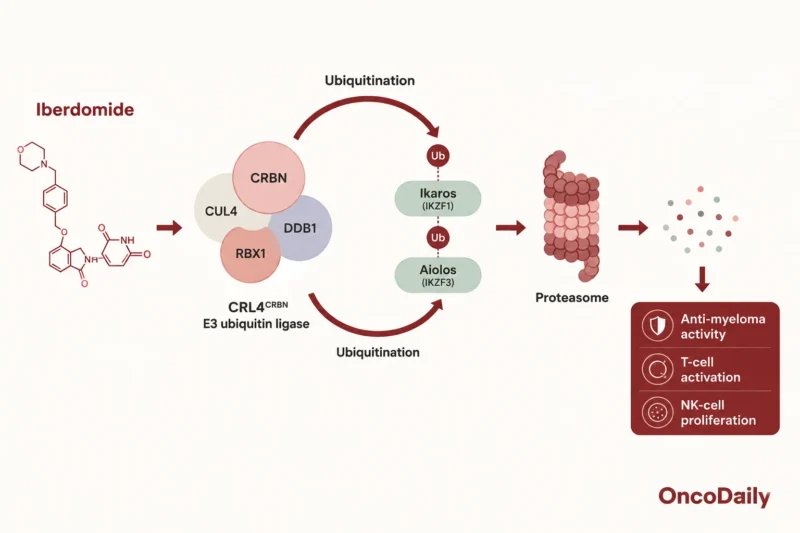
Iberdomide, previously known as CC-220, is an oral CELMoD developed as a next-generation cereblon-directed therapy. It is designed to achieve stronger cereblon activity and more efficient degradation of key proteins, then conventional immunomodulatory drugs.
Iberdomide promotes the degradation of Ikaros (IKZF1) and Aiolos (IKZF3), proteins involved in myeloma cell survival. This results in both direct antimyeloma effects and increased T-cell and natural killer-cell activity.
This is relevant as resistance to lenalidomide and other IMiDs becomes more common with their earlier and prolonged use in MM. Pharmacodynamic studies have shown that iberdomide can induce substrate degradation and immune activation even in some cases with low cereblon expression or cereblon pathway abnormalities.
The Path to the First CELMoD Approval
In the phase 1/2 CC-220-MM-001 trial, iberdomide + dexamethasone was evaluated in heavily pretreated relapsed/refractory MM. Patients in the dose-expansion cohort had received a median of six previous lines of therapy and had triple-class refractory disease. The combination produced an overall response rate of 26%, showing that iberdomide remained active in heavily pretreated patients with resistance to standard therapies.
Development subsequently moved iberdomide into combination regimens and earlier relapse. This progression ultimately led to EXCALIBER-RRMM (NCT04975997), the randomized phase 3 study supporting the FDA approval.
EXCALIBER-RRMM: IberDd vs DVd
EXCALIBER-RRMM is a two-stage, randomized, multicenter, open-label trial that enrolled adults with RRMM after one or two prior lines of therapy. Overall, 939 patients were randomized, excluding those with disease refractory to prior anti-CD38 monoclonal antibody therapy or bortezomib.
Stage 1 tested iberdomide at 1.0, 1.3, and 1.6 mg with daratumumab and dexamethasone. Based on efficacy, safety, and other clinical data, the 1.0-mg dose was selected for Stage 2, where patients were randomized to IberDd or DVd.
The trial has dual primary endpoints of MRD-negative CR at any time and PFS, with overall survival as the key secondary endpoint. The primary efficacy population included the first 420 patients randomized to iberdomide 1 mg plus daratumumab and dexamethasone (IberDd, n=207) or daratumumab, bortezomib, and dexamethasone (DVd, n=213) across Stages 1 and 2.
The difference in depth of response was substantial.
MRD-negative CR at any time was achieved in 41% of patients receiving IberDd vs 21% receiving DVd. MRD negativity was assessed in bone marrow aspirates by next-generation flow cytometry at a sensitivity of at least 10⁻⁵ in patients achieving CR or better.
Iberdomide Dosage and Safety
The recommended iberdomide dose is 1 mg orally once daily on Days 1-21 of each 28-day cycle, with or without food, administered with subcutaneous daratumumab and hyaluronidase-fihj and dexamethasone. Treatment continues until disease progression or unacceptable toxicity.
The prescribing information carries boxed warnings for embryo-fetal toxicity and serious venous and arterial thromboembolism. Additional warnings and precautions include neutropenia, infections, and secondary primary malignancies. Because of embryo-fetal toxicity, iberdomide is available through the restricted ZENBEXUS Risk Evaluation and Mitigation Strategy (REMS) program.
Positioning Iberdomide in Multiple Myeloma Treatment
The approval takes the IMiD approach into a new generation of cereblon-directed protein degraders designed to remain active as drug resistance develops. Its initial indication places iberdomide early in the treatment course, instead of reserving the new drug class for heavily pretreated disease.
EXCALIBER-RRMM excluded patients with disease refractory to prior anti-CD38 monoclonal antibody therapy or bortezomib, which should be considered when applying these results to the broader RRMM population.
PFS and other long-term results will show whether these deeper responses lead to lasting benefit. For now, the approval makes iberdomide and the CELMoD class new options for treating multiple myeloma, and gives MRD a new role in how these therapies reach patients with RRMM.
Healthcare professionals and patients are encouraged to report adverse events to the FDA MedWatch System.