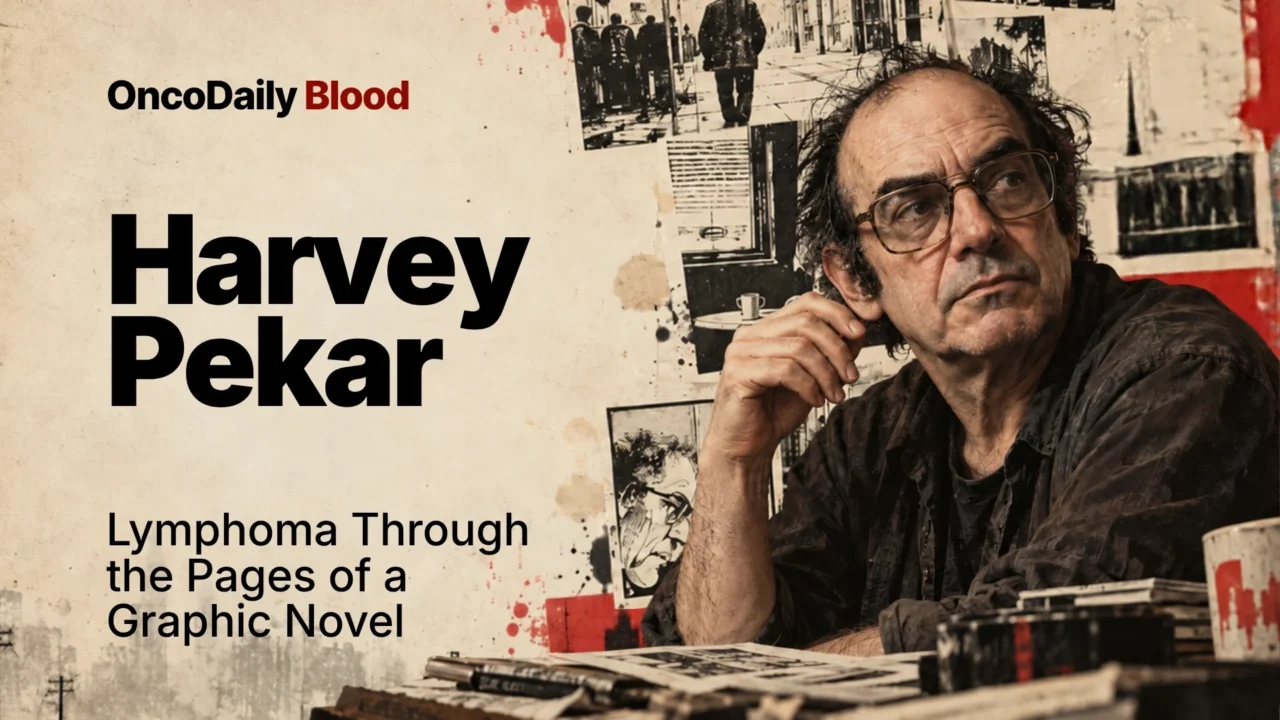
How the Cleveland comic-book writer Harvey Pekar and his wife, Joyce Brabner, turned chemotherapy, fear and caregiving into one of the earliest influential works of graphic medicine.
depositphotos.com
Our Cancer Year
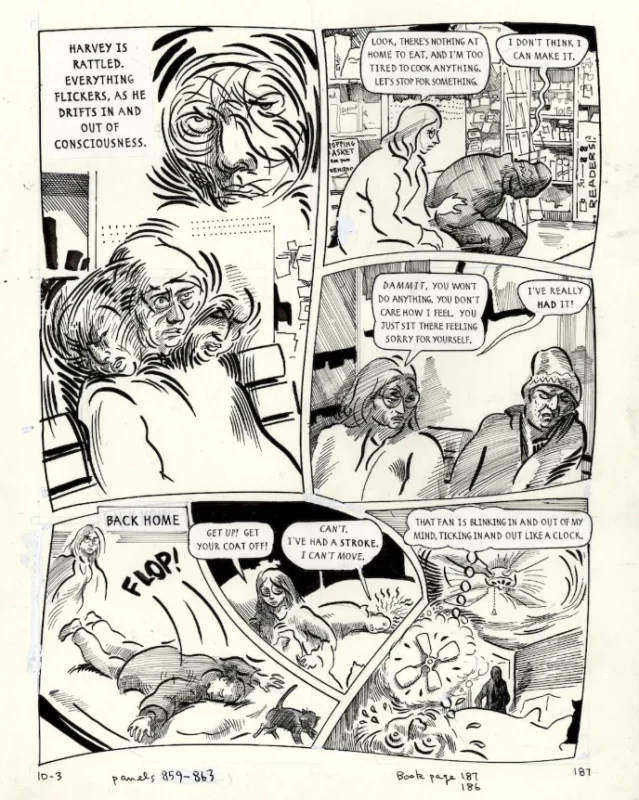
In one scene of the graphic novel Our Cancer Year, a physician explains a cancer diagnosis while Joyce Brabner struggles to understand what he is saying. His words are being delivered, but they no longer reach her. For the physician, the conversation is an explanation. For Brabner, it is the moment her husband’s future becomes uncertain. The panel captures a familiar moment in oncology: medical information becomes almost impossible to absorb because of what it means.
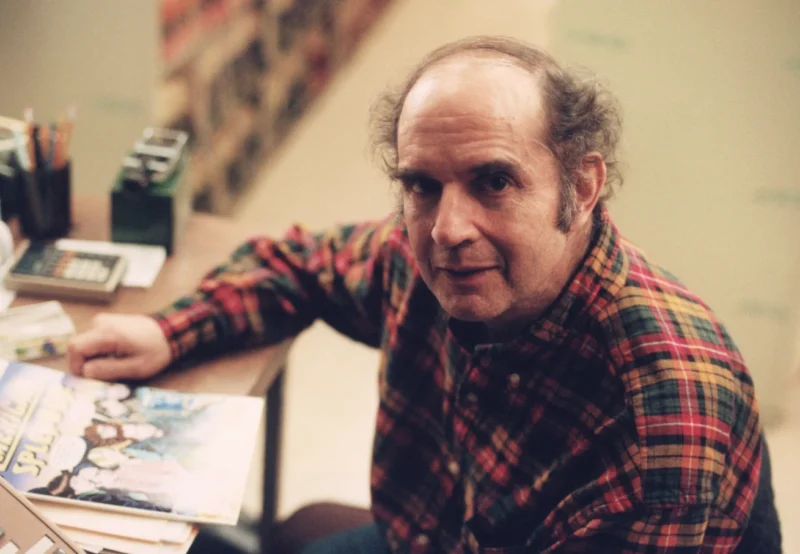
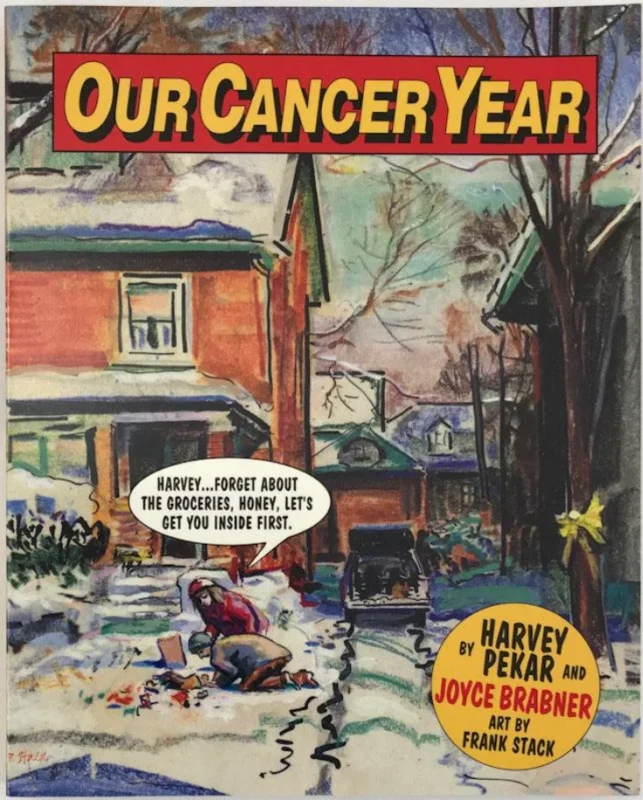
The patient is Harvey Pekar, an American comic-book writer known for turning ordinary life into literature. He was diagnosed with lymphoma in 1990. Four years later, Pekar and Brabner published Our Cancer Year, illustrated by Frank Stack. The book documented his treatment, physical deterioration, psychological distress and the strain of illness on their marriage.
Unlike conventional cancer memoirs built around a journey from diagnosis to recovery, the book presents illness as an unpredictable interruption of everyday life. Medical appointments coexist with financial worries, arguments, household responsibilities and political events. The characters are sometimes frightened, angry, unreasonable or exhausted.
The book appeared before the term graphic medicine, which now describes the intersection of comics and healthcare, was in wide use. It showed how sequential images and personal narrative can represent experiences that clinical records rarely capture: the disorientation of receiving a diagnosis, the loss of bodily confidence during treatment and the emotional burden shared by patients and caregivers.
nlm.nih.gov
The Art of Ordinary Life
Pekar was born in Cleveland, Ohio, in 1939. He spent much of his working life as a file clerk at a Veterans Administration hospital, a job he kept alongside his literary career. In 1976, he began publishing American Splendor, an autobiographical comic series about conversations, workplace frustrations, relationships and the small indignities of everyday existence.
At the time, comics were still widely associated with entertainment, humor and superheroes. Pekar wrote about people whose lives rarely appeared in popular fiction. His own anxiety, irritability and contradictions were part of the material.
By the time he developed lymphoma, Pekar had spent nearly two decades building a visual language for examining his own life without idealizing it. Cancer was an experience that challenged even his established method.
In a 1995 interview with the Los Angeles Times, he discussed the severity of chemotherapy and his fear that his strength might never fully return. Brabner described the decision to preserve their real conversations, including disagreements and interruptions, and not to write a polished account of courage and recovery.
Chemotherapy From the Inside
In one sequence, Pekar examines himself in a mirror as his hair begins to fall out. Across successive panels, Stack increasingly obscures his reflection with dark, tangled lines. The sequence conveys the psychological consequences of chemotherapy-associated alopecia, which can alter body image and make cancer visible to others.
Another sequence depicts profound disorientation. Pekar experiences the sensation that time is moving backward, and Stack abandons conventional visual continuity to show his altered perception. He draws the experience and does not explain it.
Joyce Brabner: The Caregiver’s View
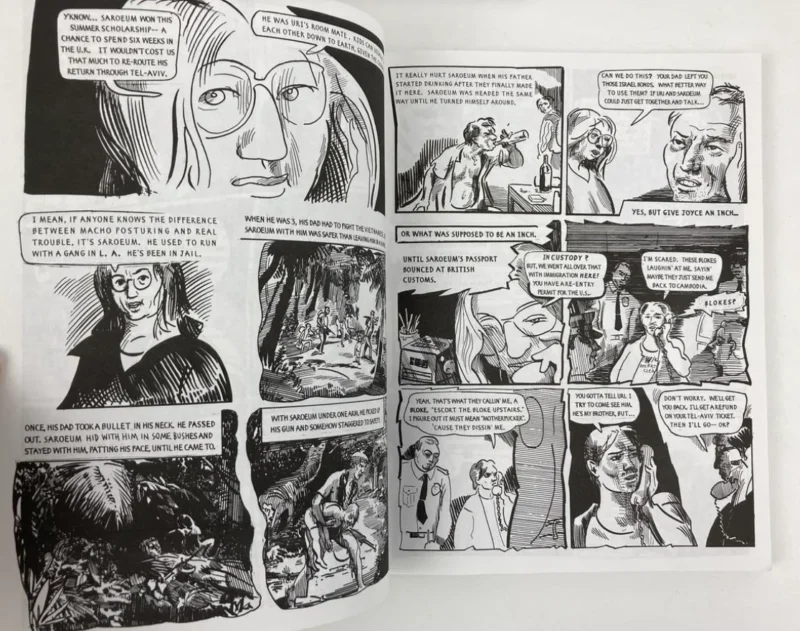
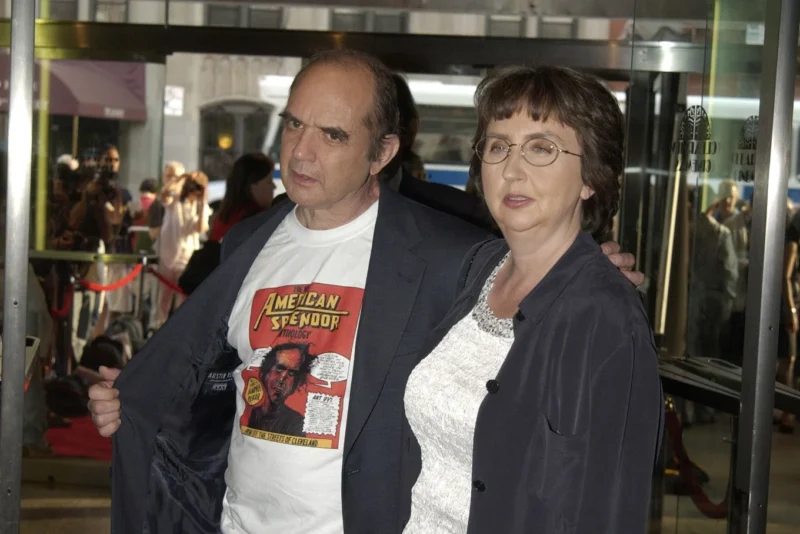
Our Cancer Year would have been a very different book without Brabner. An established writer and political activist, she worked on projects concerning war, displacement and young people affected by conflict. During Pekar’s illness, she also became his principal caregiver.
The book gives her an independent perspective. She must absorb medical information, make decisions, manage household responsibilities and respond to Pekar’s changing physical and emotional condition. Her frustration is sometimes as visible as her concern. She also keeps her own commitments: the Persian Gulf War and refugee children occupy considerable space in the book, even while Pekar is in treatment.
depositphotos.com
Lymphoma Care, 1990 to 2026
When Pekar was diagnosed in 1990, combination chemotherapy had already made several forms of lymphoma potentially curable. CHOP and other anthracycline-containing regimens were the standard for aggressive non-Hodgkin lymphomas, and radiotherapy still had a role in selected cases. Treatment was not yet guided by the detailed biological distinctions used today. Pekar reportedly had surgery, chemotherapy and radiation, but the available information does not give his subtype, stage or regimen, so his treatment cannot be matched to a modern protocol.
The biggest change for B-cell lymphomas came with rituximab, approved in the United States in 1997. It targets CD20 on B lymphocytes, and added to CHOP it improved survival in diffuse large B-cell lymphoma and made R-CHOP a standard of care.
Relapsed disease has changed the most. In 1990, options after chemotherapy failure were limited and relied largely on salvage high dose chemotherapy and autologous stem cell transplantation. Today, patients with relapsed or refractory B-cell lymphoma can receive CAR-T cell therapy, in which their own T cells are engineered to attack the lymphoma, or CD20×CD3 bispecific antibodies, which bring T cells into contact with the malignant B cells. Which of these is available depends on subtype, prior treatment and country.
Supportive care has moved forward alongside treatment. Better antiemetics, growth factors and antimicrobial strategies have made many regimens easier to tolerate, and survivorship care now addresses persistent fatigue, cardiovascular toxicity, cognitive symptoms and psychological distress.
A Memoir Before the Term
Our Cancer Year appeared in 1994, before graphic medicine was an established term. Pekar and Brabner were not writing a medical textbook or a patient education resource. They wrote an autobiographical account of illness, told through conversations, illustrations and the ordinary events that carried on around treatment.
The book later became an important example in the academic study of illness narratives. The US National Library of Medicine included it in its exhibition Graphic Medicine: Ill-Conceived & Well-Drawn!. Graphic medicine has since grown into an interdisciplinary field of clinicians, patients, artists, educators and researchers. Comics are now used to explain medical procedures, communicate health information and convey the experience of illness.
In 2003, Pekar’s autobiographical work reached a much larger audience through the film American Splendor, starring Paul Giamatti as Pekar and Hope Davis as Brabner.
Pekar had already published a book about surviving lymphoma when he faced the disease again. He died in 2010 at the age of 70. His work is still closely associated with the idea that ordinary experiences deserve serious artistic attention, including those that are uncomfortable, contradictory or difficult to explain.

You can also read: Non-Hodgkin Lymphoma (NHL): A Practical Biological Map and Integrative Overview
FAQ
Was Our Cancer Year based on Harvey Pekar’s real experience with cancer?
Yes. Published in 1994, Our Cancer Year is an autobiographical graphic novel written by Harvey Pekar and his wife, Joyce Brabner, and illustrated by Frank Stack. It documents Pekar’s experience with lymphoma, including chemotherapy, physical deterioration and the emotional difficulties of treatment. The book also explores how his illness affected Brabner and their everyday lives.
Did Harvey Pekar draw his own comics?
No. Harvey Pekar was primarily a comics writer who collaborated with artists to illustrate his stories. His best-known series, American Splendor, featured work by several illustrators, including Robert Crumb. Frank Stack illustrated Our Cancer Year, translating Pekar and Brabner’s experiences into visual narratives.
What type of lymphoma did Harvey Pekar have?
Pekar was diagnosed with lymphoma in 1990, but the publicly available information does not reliably establish his exact lymphoma subtype or stage. He underwent surgery, chemotherapy and radiation therapy. Without more detailed medical records, it is not possible to determine which contemporary treatment protocol would have been appropriate for his disease.
Why are comics increasingly used in medical education?
Medical comics can combine clinical information with visual representations of symptoms, procedures and emotional experiences. They are used in patient education, medical humanities and healthcare professional training. Their usefulness depends on accurate content and thoughtful design, but they can make unfamiliar medical situations easier to discuss and help clinicians consider perspectives that conventional teaching materials may overlook.
Who coined the term “graphic medicine,” and when?
The term graphic medicine is generally credited to Ian Williams, a British physician and comics artist, who established the Graphic Medicine website in 2007. The field examines the relationship between comics and healthcare, including patient experiences, medical education, disability and caregiving. Illness-related comics existed long before the term was introduced, with Our Cancer Year becoming an influential early example.
How has lymphoma treatment changed since Harvey Pekar’s diagnosis in 1990?
Lymphoma treatment has become more individualized through improved pathological and molecular classification, targeted therapies and immunotherapy. Rituximab transformed treatment for many CD20-positive B-cell lymphomas, while CAR-T cell therapies and bispecific antibodies have expanded options for certain relapsed or refractory diseases. Treatment still depends heavily on the lymphoma subtype, stage, patient characteristics and previous therapies.