frontMIND is a phase 3 study evaluating Tafa-Len-R-CHOP vs R-CHOP in previously untreated high-risk aggressive B-cell lymphomas. Georg Lenz, MD, PhD, presented interim findings at the 2026 ASCO Annual Meeting.
Rationale for frontMIND
Tafasitamab is an Fc-engineered anti-CD19 monoclonal antibody targeting malignant B cells. Fc modification enhances interaction with immune effector cells. Lenalidomide further augments immune activation by expanding and stimulating effector cells, resulting in synergistic antitumor activity.
Approximately 40% of patients with high-risk DLBCL are not cured with first-line R-CHOP. In R/R DLBCL, the tafasitamab-lenalidomide combination demonstrated clinically meaningful activity and led to FDA approval of the regimen for transplant-ineligible patients following the phase 2 L-MIND study. The phase 1b First-MIND study evaluated Tafa-Len-R-CHOP in previously untreated DLBCL and provided encouraging rationale for evaluation in the phase 3 frontMIND study.
Methods and Endpoints
frontMIND was a global, multicenter, placebo-controlled, double-blind, randomized phase 3 study enrolling patients aged 18-80 years with previously untreated DLBCL or HGBL. Eligible patients had IPI scores of 3-5 or age-adjusted IPI scores of 2-3 in patients aged ≤60 years, ECOG performance status 0-2, and were candidates for R-CHOP.
Patients were randomized 1:1 to receive Tafa-Len-R-CHOP (n=448) or standard R-CHOP (n=451) for six 21-day cycles. The primary endpoint was investigator-assessed PFS. Secondary endpoints included EFS, OS, PET-CR at EOT, ORR at EOT, and safety. Analysis was performed at a data cutoff of October 20, 2025, with a median follow-up of 35.2 months.
Key Outcome Measures
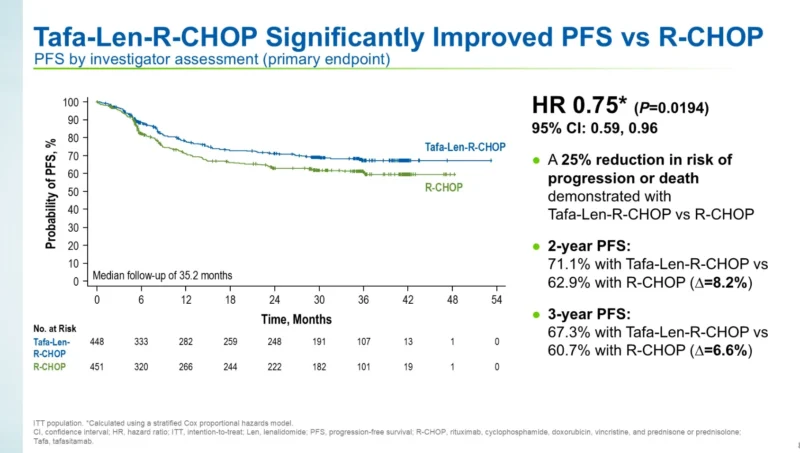
Baseline clinical characteristics were balanced between treatment arms. The primary endpoint was met, with Tafa-Len-R-CHOP improving PFS. Disease progression or death occurred in 27.0% of patients vs 34.4% with R-CHOP, corresponding to a 25% reduction in risk (HR 0.75; 95% CI: 0.59-0.96; P=0.0194).
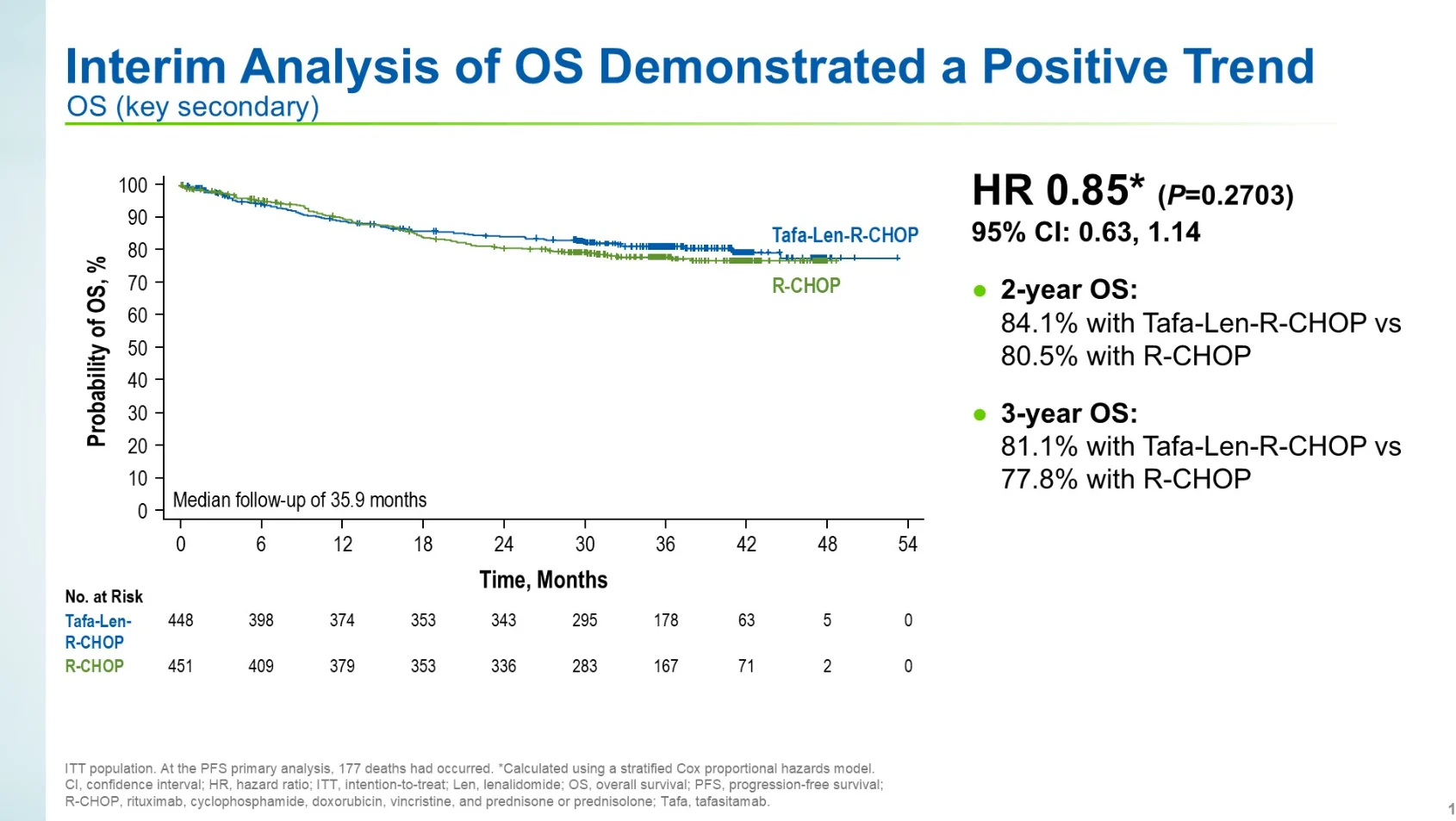
PET-negative CR rates were identical between arms (65.2%), while ORR was numerically higher with Tafa-Len-R-CHOP (80.4% vs 76.1%). OS data remained immature at the time of analysis.
Signals Across COO Subtypes
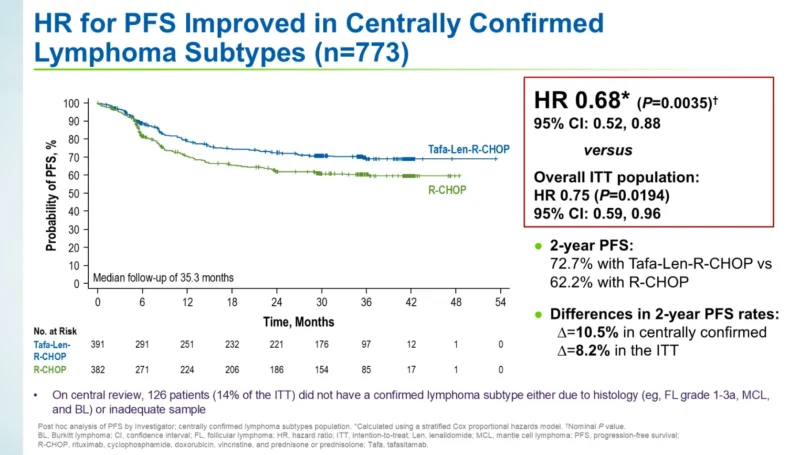
An important observation from frontMIND relates to cell-of-origin molecular subgroups. Tafa-Len-R-CHOP demonstrated a statistically significant PFS benefit in patients with the activated B-cell-like subtype (HR, 0.59; 95% CI, 0.36-0.95), a population historically associated with poorer outcomes following R-CHOP.
A directionally consistent benefit was also seen in the germinal center B-cell-like subtype (HR, 0.69; 95% CI, 0.40-1.19), suggesting activity across molecular subtypes. This is particularly notable in the context of prior frontline DLBCL studies, including POLARIX (NCT03274492), where benefit appeared more limited in GCB-like disease.
Safety Analysis
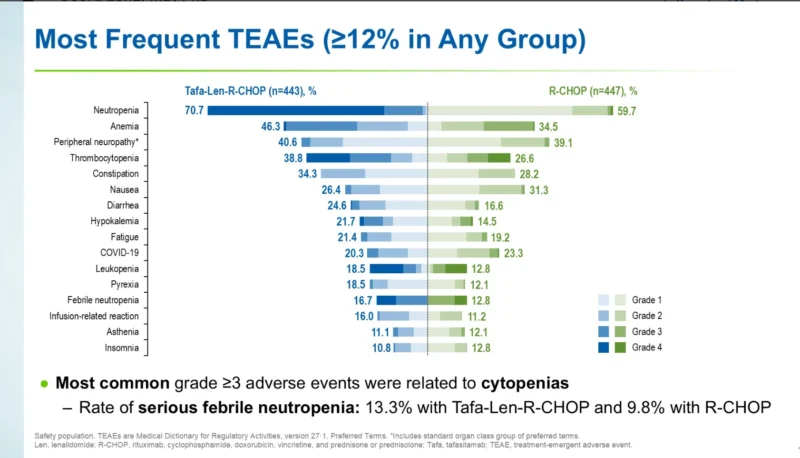
Safety findings reflected increased treatment intensity with the addition of Tafa-Len. Any-grade TEAEs occurred in nearly all patients, while grade ≥3 TEAEs were more frequent with Tafa-Len-R-CHOP (86.7% vs 76.1%). Hematologic toxicities, particularly cytopenias and febrile neutropenia, represented the most common higher-grade adverse events.
Discontinuation due to adverse events was balanced between treatment arms.Fatal TEAEs were generally comparable between treatment groups, with higher rates of COVID-19 and sepsis observed in the investigational arm, while deaths related to disease progression were more common with R-CHOP. Overall, the proportion of deaths was numerically lower in the investigational arm (18.5% vs 21.7%).
What These Results Add to the Field
frontMIND met its primary endpoint, demonstrating that Tafa-Len-R-CHOP significantly improved PFS compared with R-CHOP and represents one of the few positive phase 3 frontline studies in high-risk BCLs.
Although incremental safety events were observed with the addition of Tafa-Len, these were generally manageable and did not compromise delivery of the R-CHOP backbone.
Despite similar CR rates between arms, improved PFS suggests that achieved responses may have been more durable. Longer follow-up will determine more on OS benefit, but the study supports Tafa-Len-R-CHOP as a potential new frontline treatment option for patients with high-risk DLBCL and HGBL, regardless of molecular COO subtype.