According to the ECDC official website, the European Centre for Disease Prevention and Control (ECDC) and the World Health Organization Regional Office for Europe (WHO/Europe) have signed an updated Memorandum of Understanding (MoU), marking a renewed phase of cooperation between the two public health bodies. The agreement was signed in Stockholm, where ECDC Director Pamela Rendi-Wagner welcomed WHO/Europe Regional Director Hans Kluge and his expert delegation. “In the context of growing public health challenges – from infectious disease outbreaks to antimicrobial resistance – sustained collaboration is key,” Rendi-Wagner said.
The revised MoU builds on more than 20 years of close collaboration and reflects major changes in Europe’s public health landscape following the COVID-19 pandemic. In particular, it aligns with ECDC’s expanded mandate under the European Health Union, which strengthened the role of EU institutions in supporting Member States on disease prevention, preparedness, and response. The updated agreement also incorporates lessons learned from the pandemic and aims to improve coordination while avoiding duplication of work.
“Now is the time to find new efficiencies in the way we work together and provide true added value for Member States”
Rendi-Wagner noted.
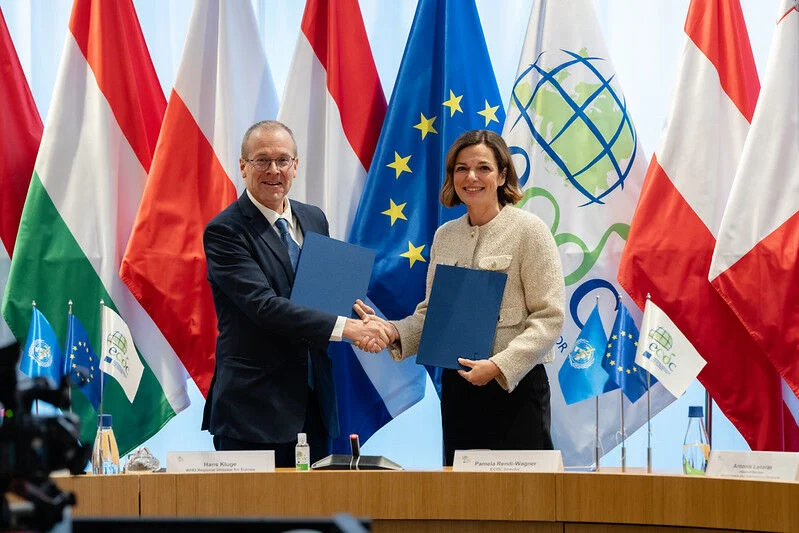
source: ECDC official website
Key areas of cooperation under the new agreement include epidemic intelligence, disease surveillance, preparedness planning, and antimicrobial resistance. Both organizations also committed to deepening collaboration on digital public health, including the technical interoperability of information systems and the management of health misinformation, recognizing their importance for public trust and rapid response to future health emergencies.
The MoU was signed during a two-day meeting at ECDC, where discussions also focused on its practical implementation. Ongoing collaboration will continue through the annual ECDC–WHO Coordination Meeting, which brings together technical experts to exchange information and align activities. The new agreement updates earlier versions signed in 2005 and revised in 2011 and builds on longstanding joint work such as surveillance reports, respiratory virus monitoring, and capacity-building initiatives.