The third week of September brought together important updates across GU oncology, with expert posts covering prostate cancer, renal cell carcinoma, bladder cancer, metastatic castration-resistant prostate cancer.
This week’s selection includes updates on MRI-guided adaptive re-irradiation for recurrent prostate cancer, consensus statements on advancing clinical trials for rare renal cell carcinoma subtypes, bone metastases and skeletal-related events in metastatic renal cell carcinoma, fracture hospitalization outcomes in STAMPEDE M1, and the evolution and heterogeneity of bladder cancer subtypes.
Other posts highlight serial ctDNA, CTCs, and imaging features in mCRPC treated with ¹⁷⁷Lu-PSMA-617 plus pembrolizumab, the changing role of cisplatin eligibility in muscle-invasive bladder cancer after perioperative enfortumab vedotin plus pembrolizumab, the global burden of bladder cancer based on GLOBOCAN 2022, pretreatment tumor ADC as a noninvasive imaging biomarker in intermediate-risk prostate cancer, and increasing use of prebiopsy MRI in U.S. prostate biopsies.
Together, these posts reflect the continued evolution of GU oncology across radiotherapy, rare kidney cancer trial design, bone health, molecular and imaging biomarkers, bladder cancer biology, ctDNA and CTC profiling, perioperative treatment strategies, epidemiology, and risk-adapted diagnostic pathways.
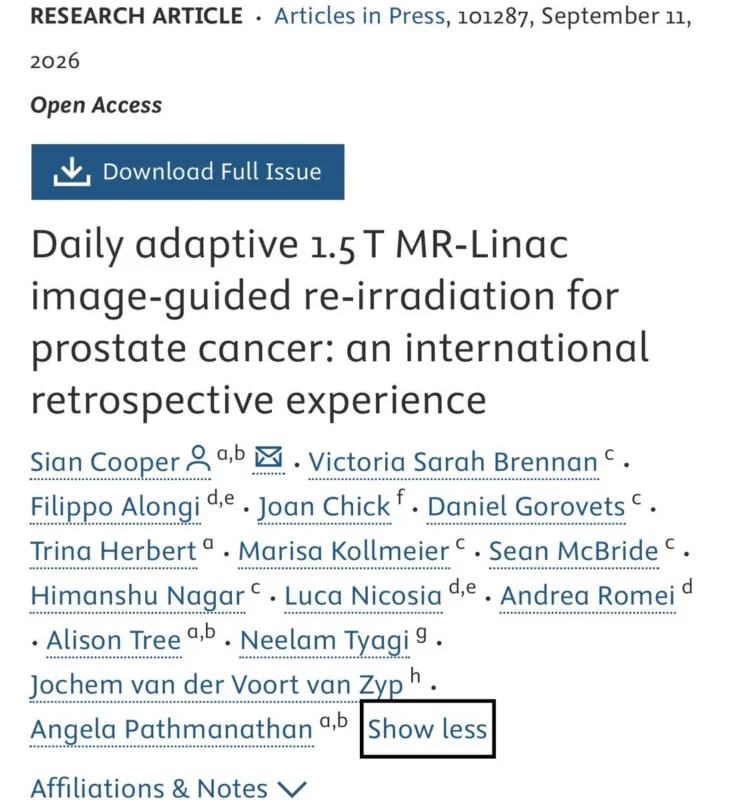
Filippo Alongi — Full Professor of Radiation Oncology at University of Brescia; Director, Department of Advanced Oncologic Radiotherapy, IRCCS Sacro Cuore Don Calabria Hospital | Italy
“MRI-guided adaptive re-irradiation was feasible for recurrent prostate cancer.
Thirty Gy in 5 fractions was the most common salvage regimen.
Twenty-month failure-free survival was 96.6%.
Grade 3 GU adverse events reached 12.5% by 12 months.
No grade 2 GI adverse events were reported.”
Pavlos Msaouel, MD, PhD — Associate Professor of Genitourinary Medical Oncology and Translational Molecular Pathology at MD Anderson Cancer Center | United States
“Consensus statements from the International Kidney Cancer Symposium North America 2025 Think Tank on advancing clinical trials for rare renal cell carcinoma subtypes are now published in Urologic Oncology: Seminars and Original Investigations.
Co-chaired with Martin Voss and organized with Salvatore La Rosa and the Kidney Cancer Association, this modified Delphi engaged 46 panelists spanning oncology, urology, pathology, genetics, biostatistics, regulatory affairs, industry, and patient advocacy, including KCA, KCCure, and the Chromophobe and Oncocytic Tumor Alliance.
Three rounds, including the November 13, 2025 Think Tank in Denver, produced 20 consensus statements, with a median score of ≥8/10, across five domains.
Several recommendations have direct implications for drug development:
• Generate evidence within biologically coherent, histology-specific or molecularly defined cohorts. Basket and platform trials can share infrastructure while preserving separate, prospectively planned analyses.
• Use randomized trials when feasible, particularly in papillary RCC. For ultra-rare subtypes, develop rigorous single-arm and adaptive approaches with appropriate external controls and explicit plans for confirmation.
• Recognize the work still needed in chromophobe RCC: stronger therapeutic hypotheses, collaborations, and referral networks before dedicated randomized trials become reliably feasible.
• Build access into the protocol. Patient advocacy partnerships, consented natural-history registries, travel support, and remote trial operations are essential to recruitment and participation.
• Connect clinical development to disease-specific models and pharmacodynamic biomarkers, so that trials help explain treatment activity and resistance.
Next steps include establishing shared registries with consistent diagnostic and outcome assessment, developing subtype-specific trials, and engaging patients, sponsors, and regulators early.”
Anna Amela Valsecchi — MD and PhD Student; Breast and Colorectal Cancer Research | Italy
“Look at our last MeetURO analysis about bone metastases, skeletal-related events, and bone-targeting agents in patients with metastatic renal cell carcinoma receiving first-line systemic therapy.”
Katy Beckermann — GU Medical Oncologist; Clinical Trials and Drug Development Specialist | United States
“We counsel men that androgen receptor blockade may raise fracture risk.
In STAMPEDE M1, abiraterone did the reverse.
In patients with M1 disease, 5-year fracture hospitalization was 22% with abiraterone versus 30% with standard of care, with an SDHR of 0.77, 95% CI 0.59–0.99.
In a separate comparison with abiraterone plus enzalutamide, 5-year fracture hospitalization was 28% versus 38% with standard of care, with an SDHR of 0.69, 95% CI 0.54–0.88.
No significant difference was observed in M0 disease.
This was a great secondary analysis by Ashwin Urol, using England HES linkage and hospitalized fractures.
This does not change the need to continue evaluating fracture risk assessment and bone-modifying agents.”
Gavin Ha — Associate Professor, Computational Biology, Fred Hutchinson Cancer Center | United States
“Excited to share our new study on the evolution and heterogeneity of bladder cancer subtypes, published in Nature.
Metastatic bladder cancer remains one of the most lethal malignancies, with limited long-term survival.
We sought to understand how these tumors evolve and spread, particularly for variant histology bladder cancers, which are often aggressive and clinically challenging.
In collaboration with Andrew Hsieh, Hung-Ming Lam, Omar Mian, colleagues across Fred Hutch and the University of Washington, and our broader Bladder Cancer Group, we performed multi-tumor and plasma profiling using a unique collection of specimens from patients enrolled in the UW/Fred Hutch Bladder Cancer Rapid Autopsy Program.
We are deeply grateful to the patients and families who chose to donate to this program. Their generosity and courage made this work possible.
This was a truly collective effort, led by outstanding postdoctoral scholars Pushpa Itagi and Samantha Schuster.
For over 5 years, we generated and integrated multi-omic data from tumors and plasma, yielding several important insights:
• Metastatic spread is often seeded by an early metastatic lesion that subsequently gives rise to widespread disease.
• Plasmacytoid and neuroendocrine variant histology tumors acquire early driver mutations that persist throughout disease progression, whereas conventional urothelial carcinomas continue to acquire new driver mutations over time.
• Plasmacytoid tumors avoid genomic scarring typically associated with cisplatin exposure. Instead, cisplatin resistance is associated with increased expression of Fanconi anemia pathway genes.
• The tumor microenvironment differs substantially across subtypes, including immune-active and immune-repressed states with potential implications for immunotherapy.
• Post-mortem ctDNA from plasma captured clonal heterogeneity and phenotypic signatures, supporting its potential as a noninvasive approach to identify aggressive bladder cancer subtypes.
We hope these findings will deepen our understanding of the molecular complexity underlying bladder cancer subtypes and ultimately guide better therapeutic strategies.”
Alex Wyatt — President’s Excellence Chair in Precision Oncology at University of British Columbia | Canada
“Here is our analysis of serial ctDNA, CTCs, and imaging features in metastatic castration-resistant prostate cancer treated with ¹⁷⁷Lu-PSMA-617 and pembrolizumab, published in The Journal of Nuclear Medicine.
This was the brainchild of Shahneen Sandhu and spearheaded by postdoc Sofie Tolmeijer, along with a host of engaged collaborators.
One aspect that was particularly new to us was intersecting bulk ctDNA genome data with single CTC profiles.”
Patrizia Giannatempo — Doctor of Medicine (M.D.) at IRCCS Istituto Nazionale dei Tumori Foundation | Italy
“Is this the end of the cisplatin eligibility era in muscle-invasive bladder cancer?
For 15 years, cisplatin eligibility has shaped treatment decisions in muscle-invasive bladder cancer.
With perioperative enfortumab vedotin plus pembrolizumab demonstrating benefit across both cisplatin-ineligible and cisplatin-eligible patients, are we ready to move beyond this historical binary divide?
Our new Letter in European Urology.”
Enrique Grande — Medical Oncologist; Head of Medical Oncology Unit at Quirónsalud | Spain
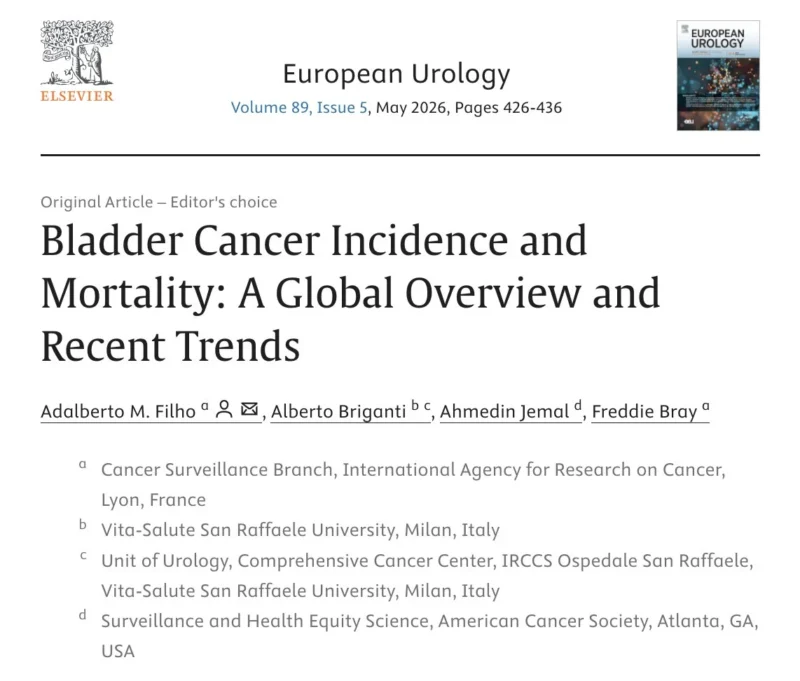
“Bladder cancer global overview from GLOBOCAN 2022:
614,298 new cases and 220,596 deaths worldwide.
Approximately 75% of the burden occurs in males.
The highest incidence rates are seen in Europe, particularly in southern and northern regions.
Mortality is declining in many high-income countries.”
Cem Onal — Professor and Chair at Başkent University | Turkey
“Pleased to share our latest study published in The Prostate.
Lower pretreatment tumor ADC was associated with a nearly fourfold higher risk of distant metastasis, highlighting its potential as a noninvasive imaging biomarker in intermediate-risk prostate cancer.”
Jonathan Evan Shoag, MD — Urologist at University Hospitals; Assistant Professor of Urology at Case Western Reserve University School of Medicine | United States
“Our latest in JAMA Oncology:
Prebiopsy MRI is now used in approximately two-thirds of U.S. prostate biopsies.
Use has increased sharply since 2017, but there is still work to do.”

Find out 10 Must-Read Posts in GU Oncology from the second week of September on OncoDaily.