
The second week of September brought together important updates across GU oncology, with expert posts covering prostate cancer, muscle-invasive bladder cancer, urothelial carcinoma, upper tract urothelial carcinoma.
This week’s selection includes updates on whole-pelvic radiotherapy versus prostate-only radiotherapy in clinically node-negative high-risk localized prostate cancer, whole-genome sequencing and mutational processes in prostate cancer, preoperative kidney function as a predictor of outcomes after radical cystectomy in muscle-invasive bladder cancer, and MRD assessment using whole-genome, tumor-informed ctDNA testing in muscle-invasive bladder cancer.
Other posts highlight clinical outcomes of synchronous versus metachronous bladder cancer and upper tract urothelial carcinoma, selective use of extended pelvic lymph node dissection in high-grade prostate cancer, perioperative enfortumab vedotin plus pembrolizumab and bladder preservation in muscle-invasive bladder cancer, NECTIN4 scoring and enfortumab vedotin response in metastatic urothelial carcinoma, THOR reanalysis and early FGFR testing in bladder cancer, and molecular imaging of neuroendocrine differentiation in advanced prostate cancer.
Together, these posts reflect the continued evolution of GU oncology across radiotherapy, molecular characterization, surgical decision-making, ctDNA-based surveillance, biomarker testing, antibody-drug conjugates, bladder preservation strategies, and multidisciplinary care.
Juan Gómez Rivas — Urologist at Hospital Clínico San Carlos; Director of ICUA La Milagrosa; Associate Professor at Universidad Complutense de Madrid | Spain
“Should we irradiate the whole pelvis in clinically node-negative high-risk localized prostate cancer?
A new systematic review and meta-analysis evaluated five available phase 3 randomized trials, including 5,172 patients, comparing whole-pelvic radiotherapy versus prostate-only radiotherapy. No overall survival benefit was observed with whole-pelvic radiotherapy: HR 1.07, 95% CI 0.94–1.21.
The apparent benefit in biochemical/progression-free survival and metastasis-free survival was largely driven by the POP-RT trial and was no longer evident when this study was excluded.
Whole-pelvic radiotherapy was associated with a modest increase in late grade ≥2 GU/GI toxicity, without a meaningful excess of severe events with modern radiotherapy techniques.
Key message: current randomized evidence does not support routine elective pelvic irradiation for all cN0 high-risk patients. Alone we can do so little; together, we can do so much.
Congratulations to all the team.”
Thorsten Schlomm — Professor of Urology and Chair, Department of Urology, Charité | Germany
“We have been treating prostate cancer without knowing what we were treating. A prostate cancer is not an event. It is a journey that unfolds over years or decades. If we travel too long in the wrong direction at the beginning, there is no way to reverse it later.
This is the problem we face today. When we newly diagnose prostate cancer, we usually assess the tumor only under the microscope. Only once the tumor has already spread do we add a search for a handful of known cancer genes through so-called gene panels. By then, the journey is far advanced. The decisive turns were taken years ago.
The map has been incomplete. We can think of a tumor’s genome as a map. Today’s diagnostics show, at best, the motorways.
The smaller roads, diversions, construction sites, and traffic jams remain invisible, even though this is exactly where the decisive signposts stand. Our international team within the Pan Prostate Cancer Group, led by Joachim Weischenfeldt, Andreas J. Gruber, Clarissa Gerhauser, Benedikt Brors, and colleagues at Universitätsklinikum Hamburg-Eppendorf and Martini-Klinik am UKE, has now looked at the complete map.
For around 1,000 prostate tumors, we read the entire genome. Eight recurring mutational processes underlie 85% of all prostate tumors. In some of these processes, the cancer takes its quiet path. In others, it is programmed to spread from the outset.
Crucially, these patterns do not only tell us how a tumor is likely to behave. They also tell us how it is likely to respond to treatment. That is, they are not only prognostic but also predictive.
One in three tumors arises from simple copying errors that accumulate when a cell divides and duplicates its genome. An accounting glitch in the nucleus builds up over decades. How common this mechanism actually is was not known before. If we know early where a tumor is heading, we can meet it head-on rather than chase it. That is why we are now bringing these insights into the clinic.
Under the name GALAPAGOS, we are launching an international clinical trial program led by the Department of Urology at Charité, together with the Berlin Institute of Health in der Charité, the University of Copenhagen, Martini-Klinik Hamburg, the NCT network, and others.
Our goal is to bring molecular tumor characterization into treatment decisions from the very first diagnosis.”
Balazs Odler — Assistant Professor | Consultant Nephrologist | Chair of the ERA YNP | Austria
“Our new collaborative paper is out in Clinical Genitourinary Cancer. We looked at whether preoperative kidney function independently predicts outcomes after radical cystectomy in patients with muscle-invasive bladder cancer.
Nephrology and urology do not publish together often enough. Big thanks to Renate Pichler, in the Department of Urology at Medical University of Innsbruck, and to all colleagues involved for this collaboration, and to Sebastian Lenart and David Augustin for driving it. Hopefully the first of many.”

Rebecca Previs, MD, MS — Rebecca Previs, MD, MS — Gynecologic Oncologist; Senior Director of Medical Affairs; Adjunct Assistant Professor at Duke University Medical Center | United States
“Excited to see today’s announcement of a collaboration between Labcorp and the Knight Cancer Institute at Oregon Health & Science University to study MRD in muscle-invasive bladder cancer.
This study, led by Dr. Jen-Jane Liu, will evaluate whether whole-genome, tumor-informed ctDNA testing can detect recurrence earlier than conventional surveillance approaches in patients with muscle-invasive bladder cancer.”
Giuseppe Basile, MD, FEBU — MD, FEBU Consultant Urologist Specialist Centre for Kidney Cancer Royal Free London NHS Foundation Trust | United Kingdom
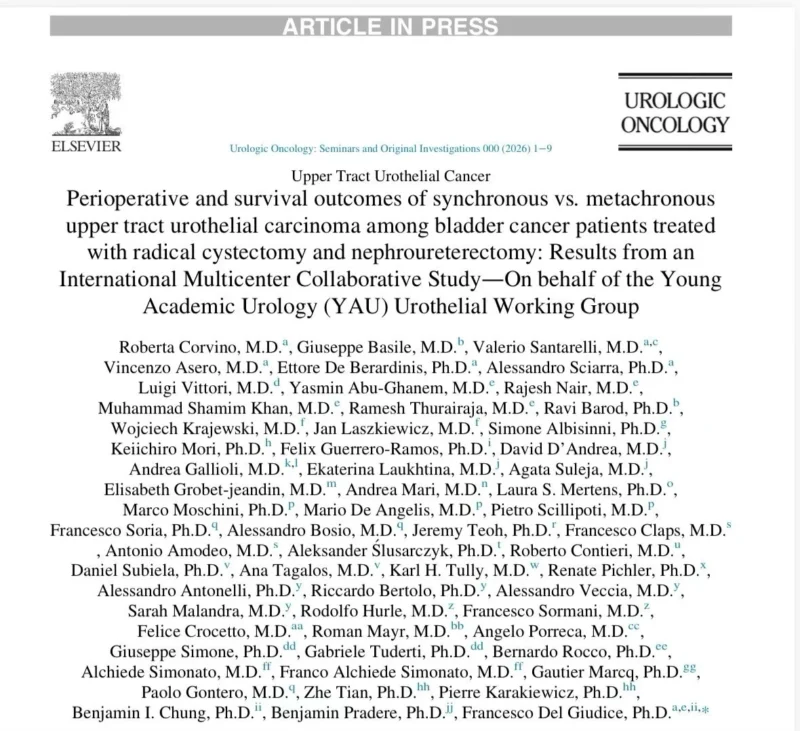
“Excited to share our latest work exploring clinical outcomes of synchronous versus metachronous bladder cancer and upper tract urothelial carcinoma, an international multicenter collaboration within the YAU Urothelial Working Group.
Synchronous disease presented with more aggressive features. Disease recurrence was more frequent in the synchronous group. A 12-month landmark analysis showed no clear differences in disease-free survival, cancer-specific survival, or overall survival.
These patients represent a complex clinical population requiring individualized treatment and careful multidisciplinary discussion.”
Adam B. Weiner, MD — Assistant Professor of Urology at Cedars-Sinai Medical Center; Adjunct Assistant Professor of Urology at UCLA | United States
“Long-term trial supports selective use of extended pelvic lymph node dissection in high-grade prostate cancer.”
Enrique Grande — Medical Oncologist; Head of Medical Oncology Unit at Quirónsalud | Spain
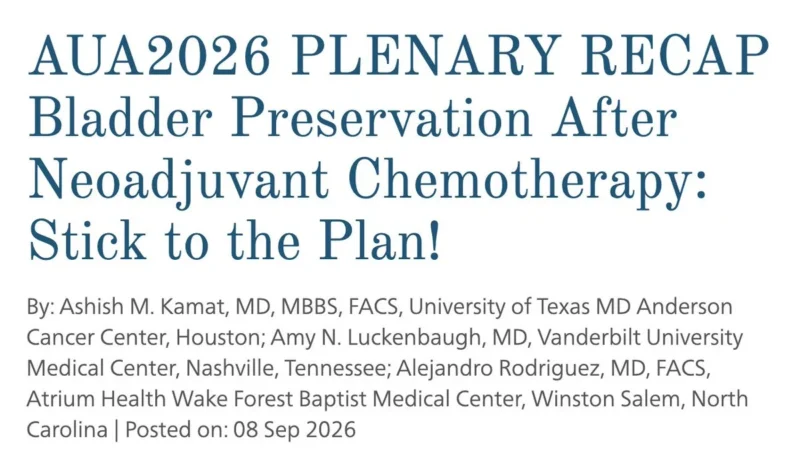
“pCR rates of 55–57% with perioperative enfortumab vedotin plus pembrolizumab in muscle-invasive bladder cancer are real. But clinical complete response is not a reliable surrogate for pathologic clearance. Fifty-two percent of patients with endoscopic clinical complete response still harbor residual tumor at cystectomy.
ctDNA misses up to one in five cases of residual disease. Bladder preservation is achievable in selected patients, but rigorous prospective validation is still needed before deferring cystectomy.”
Markus Eckstein — Institute of Pathology, University Hospital Erlangen; Comprehensive Cancer Center EMN; Friedrich-Alexander University Erlangen-Nürnberg | Germany
“Our NECTIN4 scoring system for predicting enfortumab vedotin response in urothelial carcinoma is now published. The short version: NECTIN4 is not a failed biomarker. It has been measured in the wrong compartment.
The study included 179 enfortumab vedotin-treated patients with metastatic urothelial carcinoma in a multicenter cohort, using FISH plus IHC and benchmarked against EV-301 EPAR data. In EV-301, the median H-score was 250, with 82.6% of tumors ≥150.
In our cohort, membranous H-score alone was 160, cytoplasmic H-score was 200, and combined H-score was 260, with 78.2% ≥150, almost exactly mirroring EV-301. So the trial numbers most likely reflect membranous plus cytoplasmic staining. That single methodological choice is why NECTIN4 appeared to be nearly universal. This matters because only one compartment predicts anything.
Membranous 2+/3+ versus 0/1+ was associated with ORR of 55.1% versus 25.5%, p<0.001; median PFS of 7.1 versus 2.9 months, HR 0.45; and median OS of 12.3 versus 6.9 months, HR 0.57. Cytoplasmic staining showed ORR of 49.6% versus 39.5%, p=0.4, with no PFS or OS signal. Bulk NECTIN4 mRNA, which cannot resolve localization, showed no association either.
Adding cytoplasmic staining inflates positivity and dilutes prediction. The negativity rate drops from 12% to 3.4%: more positives, less information. The scoring system uses four tiers, 0, 1+, 2+, and 3+, adapted from the ASCO/CAP HER2 gastric algorithm. It was chosen because it accounts for incomplete membranous staining.
In blinded interobserver testing of 44 cases, involving three raters, including two with no prior NECTIN4 experience, Fleiss’ κ was 0.749 across all four tiers and 0.874 for the clinically relevant 0/1+ versus 2+/3+ cutoff. This makes it reproducible, teachable in a short training session, and deployable in routine practice. Genomics adds further information.
NECTIN4 amplification was found in 25.1% of cases, 45 of 179 patients. Patients with NECTIN4 amplification had ORR of 76.2% versus 36.6%, median PFS of 12.2 versus 3.9 months, HR 0.40, and median OS of 30.1 versus 8.5 months, HR 0.33. At 24 months, 58.8% of patients with amplified tumors were alive versus 19.0%.
IHC also prescreens for amplification: 80% of amplified tumors were 3+, while under 5% of 0/1+ tumors carried an amplification. Restricting FISH to 2+/3+ tumors captured 97.8% of amplified cases while sparing 29.1% of patients molecular testing. The integrated three-tier model was:
- Amplified: ORR 76.2%, median OS 30.1 months
- Non-amplified, membranous high: ORR 42.9%, median OS 8.8 months
- Non-amplified, membranous low: ORR 26.1%, median OS 6.9 months
Both amplification and membranous expression remained independent in multivariable models. The C-index for OS improved from 0.557 to 0.621 when amplification and membranous expression were combined. Neither marker alone does what the two do together.
I do not read this as an argument for testing every patient. With enfortumab vedotin plus pembrolizumab as first-line standard and few alternatives, a negative result rarely changes what we do today and should not change it right now, given the high efficacy of EV plus pembrolizumab.
But that is an argument about the therapeutic landscape, not about the biology. The landscape is changing fast, including HER2 ADCs, TROP2, HER3/EGFR, NECTIN4 radioligands, and T-cell engagers. The moment two viable options compete for the same patient, the question stops being ‘does the target matter’ and becomes ‘which target first.’ Notably, unlike the HER2-low paradigm, EV-301 showed an attenuated treatment effect in NECTIN4-low disease, with a PFS HR around 0.9 and confidence intervals crossing 1.
Prospective validation is running in EVOKE, DRKS00034745. Immense thanks to Niklas Klümper and Jonas Saal, to Thomas Büttner, Sebastian Rauch, and Fabienne Lange, and to every center and biobank that contributed. This was a genuinely collaborative effort within the GUARDIANS and BRIDGE Consortium.”
Katy Beckermann — GU Medical Oncologist; Clinical Trials and Drug Development Specialist | United States
“Reanalysis of the THOR study gives further input on sequencing and why earlier biomarker-led targeting is important. Testing all bladder cancer patients upfront means the information is in hand when it is needed.
Overall survival HR was 0.59 during months 0–12, 95% CI 0.41–0.84, and 1.06 during months 12–24, 95% CI 0.48–2.48. This was based on reconstructed Kaplan-Meier data, not original THOR patient data. Why this matters for practice: the overall survival separation is in year one. Test FGFR early, not at the end of the line.”
Nat Lenzo — Nuclear Oncologist and Molecular Imaging Specialist; Clinical Director, Theranostics (ASEAN), Icon Group; Founder and Managing Director of Cyclowest | Australia
“It is a great pleasure for myself and Icon Cancer Centre – Australia & New Zealand to announce the latest publication by our colleagues and collaborators from The Jikei University, Nagoya University, Theranostics Yokohama, Bashamichi Sakura Clinic, and Jinsenkai MI Clinic in Japan.
The study looks at neuroendocrine differentiation using molecular imaging techniques in advanced prostate cancer. We look forward to further fruitful interactions and collaboration in the future.”

Find out 10 Must-Read Posts in GU Oncology from the last week of August on OncoDaily.