
The third week of August brought together important updates across GU oncology, with expert posts covering prostate cancer, renal cell carcinoma, renal medullary carcinoma, bladder cancer, penile cancer, and testicular cancer.
This week’s selection includes updates on NRG-GU005 and SBRT versus IMRT in intermediate-risk prostate cancer, radioligand therapy and Pluvicto in PSMA-positive metastatic hormone-sensitive prostate cancer, salvage therapies for locally recurrent renal cell carcinoma, real-world olaparib outcomes in HRR-altered metastatic castration-resistant prostate cancer, and whole-pelvis radiotherapy in high-risk localized prostate cancer.
Other posts highlight panitumumab-based EGFR blockade in SMARCB1-deficient renal medullary carcinoma, personalized mRNA cancer vaccine strategies in GU cancers, prevention and early detection of penile and testicular cancer in primary healthcare, disease-free survival as a surrogate endpoint in localized kidney cancer, and risk-adapted use of TURP histology in contemporary prostate cancer diagnostics.
Together, these posts reflect the continued evolution of GU oncology across radiotherapy, radioligand therapy, salvage treatment, precision medicine, targeted therapy, personalized cancer vaccines, rare GU tumors, survivorship endpoints, and risk-adapted diagnostic strategies.
Matt Manning, MD, FASTRO, FACCC — Radiation Oncologist; Clinical Informaticist | United States
“Is 88.6% disease-free survival at 3 years acceptable for curable intermediate-risk prostate cancer in 2026?
NRG-GU005 is now published in JAMA.
Three-year DFS was 88.6% with SBRT versus 92.1% with IMRT.
Convenience matters. But so does cure.
If we hypothesize that we need higher-dose SBRT, will we test that hypothesis in the next trial?”
Dillon Cockrell — GU Medical Oncologist and clinician investigator at Duke Cancer Institute | Prostate, Bladder, Kidney, Testicular cancers | Early Phase & GU Trials | AI in Oncology Validation | United States
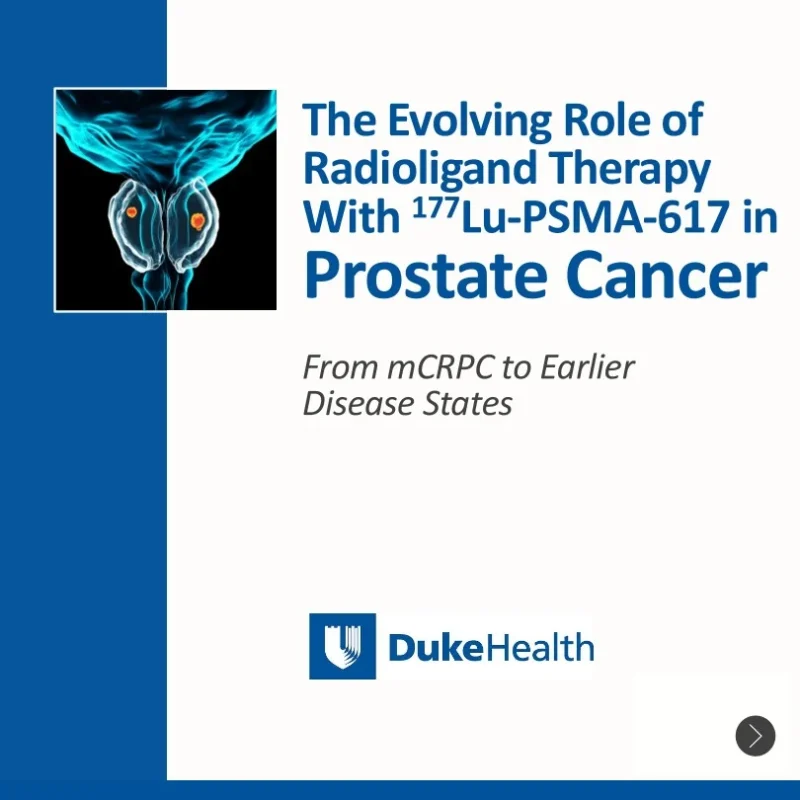
“Radioligand therapy has quickly become a major part of metastatic prostate cancer management.
With the recent FDA approval of Pluvicto, ¹⁷⁷Lu-PSMA-617, in PSMA-positive mAPMN/S prostate cancer, formerly mHSPC, based on the PSMAddition trial, we are now seeing this approach move earlier in the disease course.
While radioligand therapy is already changing how we treat prostate cancer, I expect targeted radioligand therapies to become an important part of the treatment landscape for many other cancers in the years ahead.
I enjoyed creating this Duke University Health System CME activity through Med-IQ, reviewing how to integrate these therapies into practice.”
Agata Suleja — MD with interests in uro-oncology, bioinformatics, and integration of new technologies into medical practice | Austria
“Where the recurrence comes from matters most.
Our systematic review and meta-analysis on salvage therapies for locally recurrent renal cell carcinoma is now out in World Journal of Urology.
The analysis included 47 studies and 2,039 patients, stratified by primary treatment.
Key findings:
• After primary ablation, repeat ablation performed well, with pooled 3-year RFS of 71%
• After partial nephrectomy, mainly pT1 disease, repeat surgery or ablation both remain reasonable options, but outcomes were heterogeneous, ranging from 7–19% recurrence in some series to distant failure in more than half of patients in others
• After radical nephrectomy, mainly pT3–4 disease, pooled 3-year RFS was 38%, with roughly two thirds of patients progressing by 3 years, mainly driven by distant metastases
Caveat: 45 of 47 studies were retrospective.
Expert consensus on quality indicators and prospective registries would move the field further than another single-center series.”

Giuseppe Procopio — Chief of Genitourinary Oncology | Director Prostate Program | Full Professor Qualified | FICOG and Meet-URO President | Italy
“New real-world evidence on olaparib in metastatic castration-resistant prostate cancer.
A new international study led by L. Incorvaia and published in the International Journal of Cancer provides important insights into the effectiveness of olaparib monotherapy in patients with HRR-altered mCRPC treated in routine clinical practice.
The analysis included 201 patients from 29 cancer centers across 12 countries, offering a global real-world perspective beyond the highly selected populations typically enrolled in clinical trials.
Olaparib demonstrated clinical activity across this molecularly heterogeneous population.
Interestingly, no significant difference in overall survival was observed between patients with BRCA1/2 alterations and those with non-BRCA HRR alterations, with median OS of 16.3 versus 14.2 months.
However, looking beyond broad molecular categories revealed important heterogeneity.
Key findings:
• Patients with BRCA2 alterations had a higher 1-year time-on-treatment rate than those with BRCA1 alterations: 39% versus 23%
• 18% of patients showed primary refractoriness to olaparib, which was associated with markedly poorer survival
• Within BRCA2-mutated disease, treatment outcomes also differed according to the type and location of the pathogenic variant
• BRCA2 frameshift variants were associated with shorter overall survival, while differences were also observed according to the affected BRCA2 functional domain
These findings reinforce an increasingly important concept in precision oncology: identifying an HRR alteration may not tell the whole story.
Understanding which gene is altered, the specific variant involved, and its functional location could help refine patient selection and improve our ability to predict benefit from PARP inhibition.
Real-world evidence such as this is particularly valuable for understanding how molecularly targeted treatments perform across heterogeneous patient populations and for moving toward increasingly precise therapeutic strategies in advanced prostate cancer.”
Felipe Couñago, MD, PhD — Medical Director GenesisCare Spain | Radiation Oncologist | Clinical Researcher | Professor | Passionate about innovation and value-based cancer care | Spain
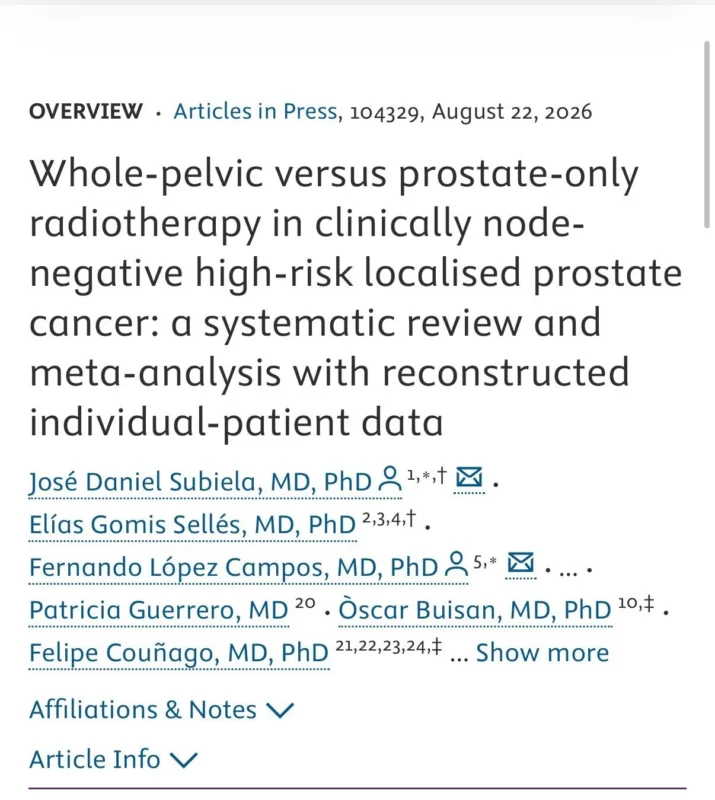
“Just published in Clinical Oncology.
Should we routinely irradiate the elective pelvic lymph nodes in high-risk localized prostate cancer?
Our systematic review and meta-analysis brings together all phase 3 randomized evidence, including 5 trials and 5,172 patients, complemented by a reconstructed individual patient data analysis.
Key findings:
• Whole-pelvis radiotherapy did not improve overall survival compared with prostate-only radiotherapy; HR 1.07, 95% CI 0.94–1.21
• The apparent benefit in biochemical/progression-free survival and metastasis-free survival was driven by a single PSMA-staged, single-center trial, POP-RT
• When this trial was excluded, the progression benefit disappeared
• Whole-pelvis radiotherapy modestly increased late grade ≥2 GU and GI toxicity, without a meaningful excess of severe events
Take-home message: current randomized evidence does not support routine elective pelvic irradiation in unselected patients with high-risk localized prostate cancer.
Importantly, POP-RT raises the possibility that a carefully selected subgroup of very-high nodal-risk, PSMA-staged patients could benefit, a hypothesis that deserves prospective validation.
Huge congratulations and thanks to all co-authors for the outstanding teamwork and collaboration.”
Pavlos Msaouel, MD, PhD — Associate Professor of Genitourinary Medical Oncology at MD Anderson Cancer Center | United States
“Our work on panitumumab-based EGFR blockade in SMARCB1-deficient renal medullary carcinoma is now published in Clinical Cancer Research.
Renal medullary carcinoma is an ultra-rare, lethal kidney cancer affecting predominantly young individuals of African descent with sickle cell trait.
It is refractory to therapies approved for other renal cell carcinomas, and beyond first-line chemotherapy, no strategy has achieved response rates above 20%.
We found that RMC expresses high levels of EGFR, but so do many tumors where EGFR inhibitors have failed.
Expression is not dependency.
What distinguishes RMC is how that expression arises: the tumor activates the EGFR locus through enhancer and promoter reprogramming rather than mutation or amplification, and simultaneously switches its ligand repertoire from EGF to epiregulin and amphiregulin.
Notably, this is uncoupled from SMARCB1 loss itself, as restoring SMARCB1 does not reduce EGFR, and other SMARCB1-deficient tumors express far less EGFR.
This matters because, whereas tyrosine kinase inhibitors are effective mainly against mutant EGFR, wild-type EGFR-driven cancers respond to extracellular blocking antibodies.
In our preclinical models, panitumumab markedly outperformed erlotinib, suppressed AKT and ERK signaling, and routed EGFR to lysosomes, producing a predominantly cytostatic effect.
In a subsequent prospective multinational registry of 26 heavily pretreated patients across 10 centers, panitumumab-based therapy produced a 53.9% objective response rate, including 15.4% complete responses, with median PFS of 5.8 months and median OS of 9.5 months.
These are non-randomized data, but they provide biological and clinical rationale for further prospective validation.
For a disease with no approved therapy, this is a strong foundation to build on.
Grateful to every collaborator and, above all, to our patients.
The broader lesson about rare cancers is that the tools needed to find this dependency, including immunohistochemistry and EGFR antibodies, have existed for decades.
What was missing was aggregated samples, purpose-built models, and a mechanism to act on the finding.
That is a solvable problem, and it is worth solving for the many rare cancers still waiting.”
Enrique Grande — One Oncology Madrid Program Director of Quirónsalud, Adjunct Professor at The University of Texas MD Anderson Cancer Center | Spain
“Can personalized mRNA cancer vaccines such as intismeran autogene, V940/mRNA-4157, work in genitourinary cancers?
Three ongoing studies are particularly interesting.
Kidney cancer: INTerpath-004 is a randomized, double-blind phase 2 study evaluating adjuvant V940 plus pembrolizumab versus placebo plus pembrolizumab following nephrectomy in patients with RCC at increased risk of recurrence.
The primary endpoint is disease-free survival, with distant metastasis-free survival and overall survival among the secondary endpoints.
If individualized neoantigen vaccination works in RCC, it could tell us something very important about the biology of this platform: its potential may extend beyond simply selecting tumors with very high mutational burden.
Muscle-invasive bladder cancer: INTerpath-005 is a phase 1/2 program exploring V940 in two different settings.
One cohort evaluates a perioperative strategy combining V940, pembrolizumab, and enfortumab vedotin in cisplatin-ineligible patients undergoing radical cystectomy.
Another randomized cohort evaluates adjuvant V940 plus pembrolizumab versus placebo plus pembrolizumab in patients with high-risk resected muscle-invasive urothelial carcinoma.
Could we combine three completely different therapeutic principles?
Enfortumab vedotin rapidly kills Nectin-4-expressing tumor cells.
Pembrolizumab releases PD-1-mediated immune inhibition.
V940 potentially generates an individualized T-cell response against that patient’s unique tumor neoantigens.
ADC plus checkpoint inhibition plus personalized vaccination: three mechanisms, one objective — eradicate micrometastatic residual disease before it becomes clinically visible.
Non-muscle-invasive bladder cancer: INTerpath-011 is an ongoing randomized phase 2 study evaluating V940 plus BCG versus BCG alone in treatment-naïve high-risk NMIBC.
This is particularly intriguing. BCG has successfully exploited the immune system against bladder cancer for decades.
Combining this established local immunotherapy with a systemic, individualized neoantigen-directed immune strategy represents a different way of thinking about treatment intensification in early bladder cancer.
Of course, none of these studies is guaranteed to reproduce what we have seen in melanoma.
For someone who has spent much of his career developing new treatments for kidney and bladder cancer, the possibility is particularly exciting.
Precision oncology has traditionally meant finding the right drug for the right patient.
Personalized mRNA vaccines introduce an even more ambitious concept: creating a different drug for each individual patient’s cancer.”
Ricado Sant’Ana, PhD, MSc, MBA, RN, BSN—Medical Science Liaison in Lung Cancer, Medical Affairs, AstraZeneca | Brazil
“Proud to share our latest publication: ‘Strategies for Prevention, Early Detection and Management of Penile and Testicular Cancer in Primary Healthcare: Scoping Review Protocol,’ published in BMJ Open.
This work represents another step toward strengthening the evidence base for the prevention, early detection, and management of penile and testicular cancers in primary healthcare.
My sincere thanks to all co-authors and collaborators, including Christine Maheu, Nicolas Hart, and Sabine Calleja, for their partnership, valuable contributions, and collective efforts in making this work possible.”
Katy Beckermann — GU Medical Oncologist; Clinical Trials and Drug Development Specialist | United States
“This meta-analysis looks at whether disease-free survival can be a surrogate for overall survival in localized kidney cancer.
The analysis included 13 trials, 15 study-level units, and 9,594 patients, spanning the cytokine, TKI, and PD-1 eras.
This was a trial-level analysis, not a patient-level analysis.
Approximately 57% of the variation in overall survival effect tracked with the disease-free survival effect across trials.
Era-mixing is a real confounder: when looking only at modern TKI and immunotherapy trials, R² was 0.34.
This reinforces disease-free survival as a trial endpoint for design and regulatory use, but not as a stand-in for overall survival at the bedside.”
Heikki Seikkula — MD, PhD; Adjunct Professor/Docent, Urologic Surgeon | Finland
“Our new mini review, ‘Should We Send TURP Histology for Pathological Examination?,’ has been published online in European Urology Focus.
We challenge the traditional practice of routinely submitting all TURP specimens for histopathological examination.
In contemporary prostate cancer diagnostics, incidental cancers detected in TURP specimens are predominantly low grade and rarely alter treatment, while routine examination consumes pathology resources and may lead to anxiety and unnecessary follow-up.
Our Finnish multicenter audit included 6,558 TURP specimens from Helsinki, Tampere, and Turku University Hospitals.
Prostate cancer was detected in 16.1%, but most cases were ISUP grade groups 1–2.
High-grade cancer was found in 2.5%, often in men with already known prostate cancer or undergoing palliative TURP.
Rather than an ‘always send’ or ‘never send’ policy, we propose a risk-adapted approach:
• Histology could be omitted in carefully selected men with low preoperative cancer suspicion, reassuring examination findings, low PSA density, and a recent negative prostate MRI
• Tissue should continue to be examined when clinical findings, PSA assessment, or MRI raise suspicion, or when adequate preoperative assessment is unavailable
The aim is not to detect fewer clinically important cancers, but to focus diagnostic resources where the result is most likely to benefit the patient.”

Find out 10 Must-Read Posts in GU Oncology from the secondweek of August on OncoDaily.